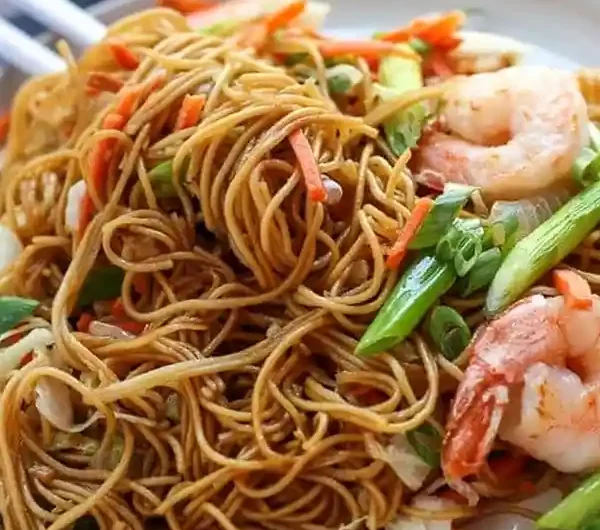
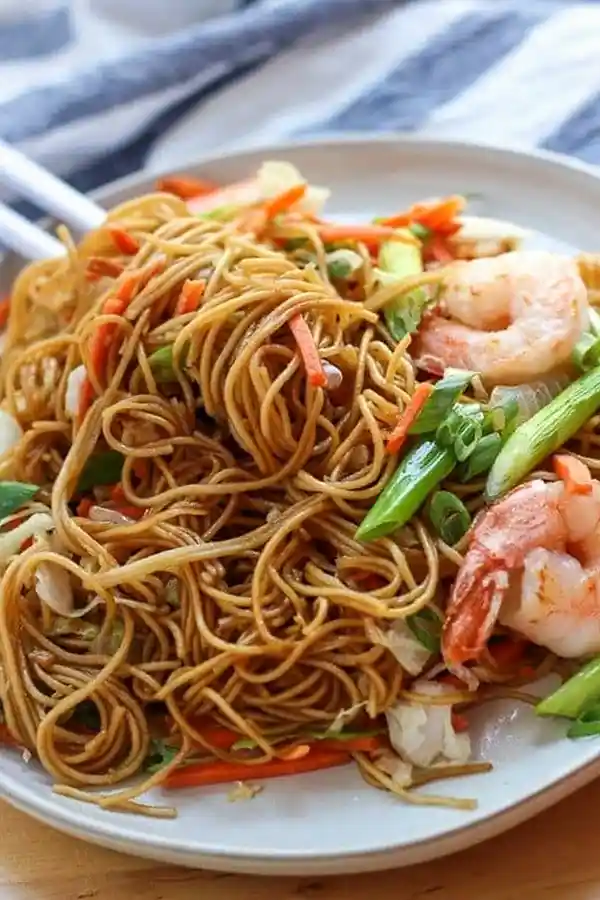
These Shrimp Stir Fried Noodles are a fast and flavorful meal perfect for busy weeknights. The dish combines succulent shrimp and crisp vegetables tossed in a rich, umami-filled sauce.
List of ingredients
- ~6 oz thin egg noodles or canton noodles (dried) – provide a classic stir fry texture.
- 6 oz shrimp – peeled and deveined for quick cooking.
- 1-2 tbsp minced garlic – adds a pungent, aromatic base.
- 1/4 cup sliced white onions – adds a mild sweetness and crunch.
- 1/2 cup chopped green onions (about 1-inch long) – used for both flavor and garnish.
- 1 cup shredded cabbage – adds bulk and a slight sweetness.
- 1 cup shredded carrots – provides color and nutritional value.
- 1-2 tbsp vegetable oil – used for searing and preventing sticking.
- 2 tbsp oyster (flavored) sauce – creates the primary savory depth.
- 1 tbsp soy sauce – adds saltiness and umami.
- 1/2 tbsp sesame oil – provides a toasted, nutty aroma.
- 1/2 tbsp alcohol-free cooking substitute – replaces traditional cooking wine for flavor balance.
- 1-2 dash white pepper or black pepper – adds a subtle heat.
- 1 tsp sugar – balances the salty notes of the soy sauce.
- 1 tsp dark soy sauce (optional) – used primarily for a richer, darker color.
step-by-step instructions
- Prepare the noodles: Fill a medium pot with water and bring it to a boil. Add the noodles and cook for 3 minutes, or follow the specific package instructions for fried noodles. Drain the water thoroughly. If the noodles will not be used immediately, mix in a small amount of vegetable oil to prevent clumping and sticking.
- Create the sauce: In a small mixing bowl, combine the oyster-flavored sauce, soy sauce, sesame oil, alcohol-free cooking substitute, white or black pepper, sugar, and optional dark soy sauce. Stir until the sugar is dissolved.
- Organize ingredients: Chop and prepare the shrimp, garlic, white onions, green onions, cabbage, and carrots. Having all ingredients ready is essential because the cooking process happens very quickly.
- Sear the shrimp: Heat a wok over high heat and add approximately 1/2 tbsp of vegetable oil. Once the oil is shimmering, add the defrosted shrimp, ensuring they are patted dry with a paper towel. Cook for a few minutes until they are just done, then remove them from the wok and set aside.
- Sauté aromatics: Add another 1 tbsp of vegetable oil to the hot wok. Once the oil is hot, add the minced garlic and sliced white onions. Cook for about 30 seconds, taking care not to burn the garlic.
- Fry the noodles: Add the cooked noodles to the wok and stir continuously for about 1 minute. Pour the prepared sauce over the noodles and continue stirring for another minute until the noodles are evenly coated.
- Combine all elements: Return the cooked shrimp to the wok and add the green onions, shredded cabbage, and shredded carrots. Stir-fry everything together for about 30 seconds, then remove the dish from the heat promptly to avoid overcooking the vegetables.
- Serve: Plate the noodles immediately and serve while hot.
Optimal Noodle Choices
Use Thin Egg Noodles for Authentic Texture
Thin egg noodles, often labeled as Canton noodles, are ideal for this dish because they hold their shape during high-heat frying. They have a slight chewiness that pairs well with the savory sauce. Ensure you do not overboil them, as they will soften further in the wok.
Substitute with Rice Noodles for a Gluten-Free Option
Rice noodles are a great alternative if you prefer a gluten-free base. These typically require soaking in warm water rather than boiling. If using rice noodles, reduce the frying time in the wok to prevent them from breaking apart.
Try Ramen Noodles for a Quick Alternative
Dried ramen noodles are a convenient substitute found in most grocery stores. Boil them for a shorter time than egg noodles to keep them firm. Discard the flavor packets to maintain control over the seasoning of the dish.
Customizing the Stir Fry Sauce
The Role of Oyster-Flavored Sauce
Oyster-flavored sauce provides the essential umami base that gives the noodles their restaurant-quality taste. It adds a thick consistency that helps the sauce cling to the noodles. Use a high-quality brand for the best flavor profile.
Adding Depth with Dark Soy Sauce
Dark soy sauce is used primarily for aesthetic reasons to give the noodles a rich, mahogany color. It has a slightly thicker consistency and a milder saltiness than regular soy sauce. If you omit it, the flavor will remain similar, but the dish will look paler.
Using Sesame Oil for Aroma
Sesame oil is a finishing oil that provides a distinct toasted scent. Because it has a lower smoke point than vegetable oil, it is best used as part of the sauce rather than for searing. This preserves the delicate aromatic compounds.
Vegetable Substitutions and Additions
Adding Bell Peppers for Crunch
Red and green bell peppers add vibrant color and a crisp texture to the noodles. Slice them into thin strips so they cook at the same rate as the cabbage. Add them at the same time as the shredded carrots for the best results.
Using Baby Corn for Texture
Baby corn provides a unique snap and a mild sweetness. Slice the baby corn diagonally into thin pieces. Since baby corn takes slightly longer to cook, you can sauté it briefly before adding the noodles.
Integrating Fresh Spinach
Fresh baby spinach is an excellent way to add more nutrients to the meal. Add the spinach leaves at the very last second of the cooking process. The residual heat from the noodles is enough to wilt the spinach without making it watery.
Professional Stir Frying Techniques
Managing High Heat in a Wok
The key to a great stir fry is maintaining high heat to sear the ingredients quickly. This prevents the vegetables from steaming and becoming mushy. Wait until the oil is shimmering or slightly smoking before adding your food.
Patting Shrimp Dry for a Better Sear
Always use a paper towel to pat defrosted shrimp completely dry before they hit the oil. Excess moisture creates steam, which prevents the shrimp from developing a golden-brown crust. Dry shrimp cook faster and have a better texture.
Preparing Ingredients Before Cooking
Stir frying is a fast process that leaves no room for chopping during the cook. Practice “mise en place” by measuring all sauces and cutting all vegetables beforehand. This ensures you don’t burn the garlic while searching for the cabbage.
Storage and Reheating Guide
Storing Leftovers in Airtight Containers
Place leftover noodles in an airtight container and refrigerate them immediately after they have cooled. They will stay fresh and safe to eat for up to three to four days. Keep the noodles separate from any fresh garnishes if you plan to add them later.
Reheating with Steam or Water
Microwaving is the fastest way to reheat stir fried noodles. To prevent the noodles from drying out, sprinkle a few drops of water over them before heating. Cover the dish loosely to trap steam and maintain the noodle texture.
Common Cooking Challenges
Preventing Noodle Clumping
Drained noodles often stick together as they cool, forming a dense mass. Tossing them with a teaspoon of vegetable oil immediately after draining creates a barrier between the strands. This ensures they separate easily when added to the wok.
Avoiding Burnt Garlic
Garlic burns quickly at high temperatures, which can make the entire dish taste bitter. Add the garlic and onions to the oil, and as soon as they become fragrant, immediately add the noodles. The noodles lower the temperature of the pan, protecting the garlic.
Stopping Noodles from Becoming Soggy
Overcooking the noodles during the initial boiling phase is the most common cause of sogginess. Boil them for 1-2 minutes less than the package suggests for boiling. The final stir fry process will finish the cooking while keeping the center firm.
Frequently Asked Questions
Can I use a different protein?
Yes, you can replace the shrimp with sliced chicken breast, beef strips, or firm tofu. Follow the same process of searing the protein first and removing it from the wok before cooking the vegetables and noodles.
How to make this dish vegan?
Omit the shrimp and replace the egg noodles with rice noodles. Use a mushroom-based vegetarian oyster sauce and soy sauce to maintain the savory umami flavor profile.
What is the best replacement for a wok?
A large non-stick skillet is the best alternative if you do not own a wok. The wide surface area allows you to move the ingredients around freely and ensures even heat distribution across the noodles.
Print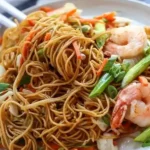
Savory Shrimp Stir Fried Noodles
- Total Time: 30 minutes
- Yield: 2 servings 1x
- Diet: General
Description
Stir fried egg noodles tossed in a savory sweet sauce, vegetables, and succulent shrimp.
Ingredients
- 6 oz thin egg noodles
- 6 oz shrimp
- 2 tbsp minced garlic
- 1/4 cup sliced white onions
- 1/2 cup chopped green onions
- 1 cup shredded cabbage
- 1 cup shredded carrots
- 2 tbsp vegetable oil
- 2 tbsp oyster (flavored) sauce
- 1 tbsp soy sauce
- 1/2 tbsp sesame oil
- 1/2 tbsp alcohol-free rice cooking wine
- 2 dashes white pepper
- 1 tsp sugar
- 1 tsp dark soy sauce
Instructions
- Step 1: Boil noodles for 3 minutes or per package instructions, drain, and toss with vegetable oil.
- Step 2: Mix all stir fry sauce ingredients together in a small bowl.
- Step 3: Prepare the shrimp, garlic, white onions, green onions, cabbage, and carrots.
- Step 4: Heat a wok with 1/2 tbsp vegetable oil, cook shrimp until done, then remove from wok.
- Step 5: Heat 1 tbsp vegetable oil in the wok, add garlic and onions, and cook for 30 seconds.
- Step 6: Add noodles, stir for 1 minute, add sauce, and stir for another minute until coated.
- Step 7: Add shrimp, green onions, cabbage, and carrots; stir for 30 seconds.
- Step 8: Serve and enjoy.
Notes
If doubling the recipe, cook noodles in multiple batches. Adjust frying time based on noodle type to prevent sogginess.
- Prep Time: 15 minutes
- Cook Time: 15 minutes
- Category: Main Course
- Method: Stir Fry
- Cuisine: Chinese
Nutrition
- Serving Size: 1 serving
- Calories: 323 kcal
- Sugar: 9 g
- Sodium: 1844 mg
- Fat: 6 g
- Saturated Fat: 2 g
- Unsaturated Fat: 4 g
- Trans Fat: 1 g
- Carbohydrates: 46 g
- Fiber: 6 g
- Protein: 19 g
- Cholesterol: 107 mg
Keywords: shrimp stir fry, asian noodles, chinese cuisine, quick dinner, egg noodles