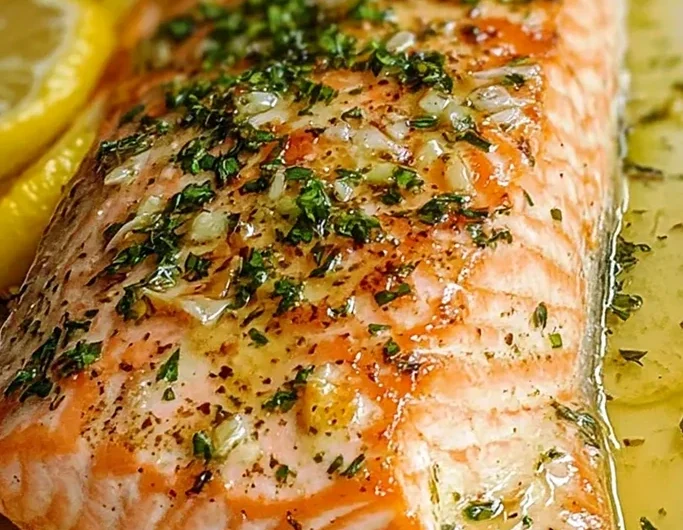
This baked salmon recipe uses a simple lemon and garlic marinade to create a heart-healthy meal rich in omega-3 fatty acids. It is an efficient dish for weeknight dinners that requires minimal preparation and clean-up.
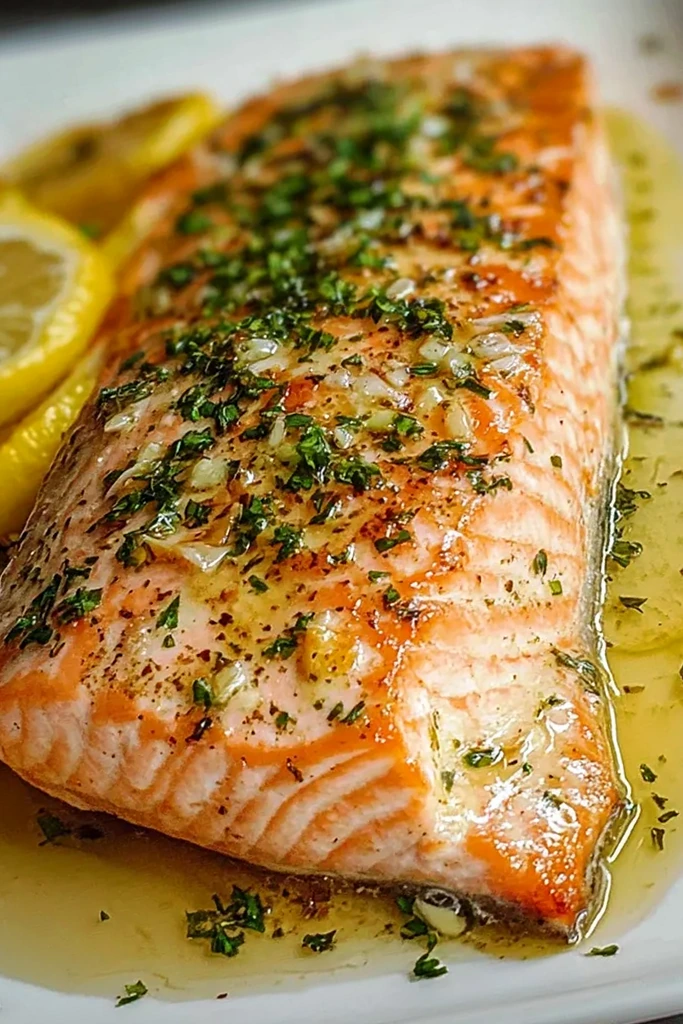
List of ingredients
- 4 salmon fillets (skin-on or skinless) – ensure they are of similar thickness for even cooking.
- 2 tablespoons olive oil – used as the base for the marinade.
- 2 tablespoons lemon juice – provides acidity to balance the fat of the fish.
- 2 cloves garlic, minced – adds pungent, savory flavor.
- 1 teaspoon dried oregano – introduces a subtle earthy herb note.
- 1 teaspoon salt – enhances all other flavors in the dish.
- 1/2 teaspoon black pepper – adds a slight spice and depth.
- 1 lemon, sliced – used for garnishing and adding fresh acidity.
- Fresh parsley, chopped – provides a fresh, green finish.
step-by-step instructions
- Preheat the Oven: Set your oven to 375°F (190°C) to ensure it is fully heated before the fish goes in.
- Prepare the Marinade: In a mixing bowl, whisk together the olive oil, lemon juice, minced garlic, dried oregano, salt, and black pepper until well combined.
- Marinate the Fillets: Place the salmon fillets in a baking dish and coat them thoroughly with the marinade, letting them sit for at least 15 minutes.
- Bake the Salmon: Cook the fish in the preheated oven for 12 to 15 minutes, or until the meat flakes easily with a fork.
- Garnish and Serve: Place lemon slices on top of the fillets and sprinkle with chopped fresh parsley before serving immediately.
Optimal Baking Techniques
Determine Salmon Thickness for Accurate Timing
The cooking time for salmon varies based on the thickness of the cut. Thinner fillets may cook in as little as 10 minutes, while thick center-cut fillets might require the full 15 minutes or slightly more. Always check the thickest part of the fish to determine doneness.
Use a Meat Thermometer for Precision
The most reliable way to prevent overcooking is using a digital meat thermometer. Salmon is perfectly cooked when the internal temperature reaches 145°F (63°C). Removing the fish slightly before this temperature allows carry-over cooking to finish the process without drying the meat.
Avoid Overcrowding the Baking Pan
Ensure there is enough space between each salmon fillet in the baking dish. Overcrowding can cause the fish to steam rather than bake, which affects the texture of the exterior. Proper spacing allows heat to circulate evenly around each piece of fish.
Control the Oven Temperature
Maintaining a steady 375°F (190°C) is crucial for achieving a flaky texture without burning the garlic in the marinade. If your oven runs hot, consider using an oven thermometer to verify the actual temperature. This prevents the exterior from browning too quickly before the center is cooked.
Ingredient Alternatives and Customizations
Substituting Olive Oil with Avocado Oil
If you prefer a more neutral taste, avocado oil is an excellent substitute for olive oil. It has a higher smoke point, which makes it stable at higher temperatures. The flavor profile remains light and does not overpower the lemon and garlic.
Using Fresh Herbs Instead of Dried Oregano
Fresh dill, thyme, or rosemary can be used to replace dried oregano for a different flavor profile. When using fresh herbs, increase the quantity to about one tablespoon to account for the difference in potency. Chop them finely to ensure they adhere to the marinade.
Adding Red Pepper Flakes for Heat
For those who prefer a spicy element, add a pinch of crushed red pepper flakes to the marinade. This adds a subtle warmth that complements the citrus notes. Adjust the amount based on your personal heat tolerance.
Replacing Alcohol-Based Additions with Non-Alcoholic Acids
To add a gourmet depth without using wine, incorporate a splash of non-alcoholic white grape juice or a teaspoon of apple cider vinegar. These options provide the necessary acidity and sweetness to enhance the salmon’s natural flavor. This keeps the dish practical and suitable for all dietary needs.
Suggested Side Dish Pairings
Roasted Asparagus and Broccoli
Roasted green vegetables pair well with the lemon-garlic profile of the salmon. You can roast asparagus or broccoli on a separate sheet pan at the same temperature. These vegetables typically cook in 12-15 minutes, matching the salmon’s timing perfectly.
Quinoa or Brown Rice
For a balanced meal, serve the salmon over a bed of cooked quinoa or brown rice. These whole grains absorb the extra marinade from the baking dish. They provide complex carbohydrates and additional protein to the plate.
Fresh Garden Salad with Vinaigrette
A crisp garden salad with a light lemon vinaigrette complements the richness of the fish. Use mixed greens, cucumber, and cherry tomatoes for a refreshing contrast. The acidity of the salad mirrors the lemon used in the salmon marinade.
Mashed Sweet Potatoes
Mashed sweet potatoes provide a creamy, sweet contrast to the savory garlic and salt. Boil peeled sweet potatoes until tender, then mash with a small amount of butter or olive oil. This adds a comforting element to the healthy meal.
Avoiding Common Baking Errors
Preventing Dry Fish through Flake Testing
Overcooking salmon leads to a dry, chalky texture. Use a fork to gently press the thickest part of the fillet; if the layers separate easily (flake), it is done. If the meat is still translucent or resists flaking, it needs more time.
Selecting High-Quality Fresh Salmon
The quality of the raw fish significantly impacts the final taste and texture. Look for fillets with a vibrant color and no off-smelling odors. Fresh salmon should feel firm to the touch and spring back when lightly pressed.
Ensuring Sufficient Marination Time
Skipping the marination period results in a bland fish. The 15-minute minimum allows the salt and acid to penetrate the outer layers of the fillet. For a deeper flavor infusion, marinate the fish for up to one hour in the refrigerator.
Preventing Garlic Burn
Minced garlic can burn and become bitter if exposed to extreme heat for too long. By mixing it into the oil and lemon juice, the garlic is protected. Ensure the garlic is evenly distributed in the marinade to avoid concentrated burnt spots.
Storage and Preservation Guidelines
Refrigeration Methods for Leftovers
Allow the cooked salmon to cool completely to room temperature before storing. Wrap the fillets tightly in aluminum foil or place them in an airtight glass container. This prevents the fish from absorbing other odors in the refrigerator.
Freezing Baked Salmon for Long-Term Use
Baked salmon can be frozen for up to three months. Wrap each fillet individually in freezer-safe wrap before placing them in a heavy-duty freezer bag. This method prevents freezer burn and preserves the integrity of the omega-3 fats.
Best Practices for Reheating
To avoid drying out the fish during reheating, use a low oven temperature around 275°F (135°C). Place the salmon in a covered dish with a teaspoon of water or lemon juice to create steam. Heat gently until warmed through, rather than using a microwave.
Preparation and Planning Advice
Marinating Salmon in Advance
You can prepare the marinade and coat the salmon several hours before you plan to cook. Keep the fillets in the refrigerator to maintain food safety. This allows you to simply slide the baking dish into the oven when you are ready for dinner.
Thawing Frozen Fillets Safely
If using frozen salmon, thaw the fillets slowly in the refrigerator overnight. Avoid thawing at room temperature to prevent bacterial growth. Ensure all ice crystals are gone before applying the marinade for an even coating.
Frequently Asked Questions
Can I use frozen salmon for this recipe?
Yes, frozen salmon works well. Ensure the fillets are completely thawed and patted dry with paper towels before adding the marinade to prevent the sauce from becoming watery.
What side dishes pair well with baked salmon?
Roasted vegetables like asparagus, whole grains like quinoa, and fresh green salads are the best pairings. These options balance the healthy fats of the salmon with fiber and vitamins.
How can I tell when salmon is cooked?
The salmon is cooked when it flakes easily with a fork and reaches an internal temperature of 145°F (63°C). The color should change from translucent pink to an opaque light pink.
Can I make baked salmon ahead of time?
Yes, you can marinate the fish in advance and store it in the fridge. You can also bake the salmon and store it as leftovers, then reheat it gently in the oven.
Print
Savory Baked Salmon with Lemon and Garlic
- Total Time: 30 minutes
- Yield: 4 servings 1x
- Diet: Gluten-Free
Description
Deliciously marinated and baked salmon fillets, perfect for a healthy meal.
Ingredients
- 4 salmon fillets (skin-on or skinless)
- 2 tablespoons olive oil
- 2 tablespoons lemon juice
- 2 cloves garlic, minced
- 1 teaspoon dried oregano
- 1 teaspoon salt
- 1/2 teaspoon black pepper
- 1 lemon, sliced (for garnish)
- Fresh parsley, chopped (for garnish)
Instructions
- Step: Preheat your oven to 375°F (190°C).
- Step: Combine olive oil, lemon juice, garlic, oregano, salt, and pepper in a bowl for the marinade.
- Step: Place salmon fillets in a baking dish and coat thoroughly with the marinade; let marinate for at least 15 minutes.
- Step: Bake the marinated salmon for 12 to 15 minutes or until it flakes easily with a fork.
- Step: Garnish with lemon slices and parsley before serving.
Notes
Marinating for up to an hour enhances flavor. Be careful not to overcook the salmon.
- Prep Time: 15 minutes
- Cook Time: 15 minutes
- Category: Main Course
- Method: Baking
- Cuisine: American
Nutrition
- Serving Size: 1 fillet
- Calories: 350 kcal
- Sugar: 1 g
- Sodium: 600 mg
- Fat: 22 g
- Saturated Fat: 4 g
- Unsaturated Fat: 18 g
- Trans Fat: 0 g
- Carbohydrates: 2 g
- Fiber: 0 g
- Protein: 34 g
- Cholesterol: 70 mg
Keywords: baked salmon, omega-3, healthy dinner, lemon garlic salmon