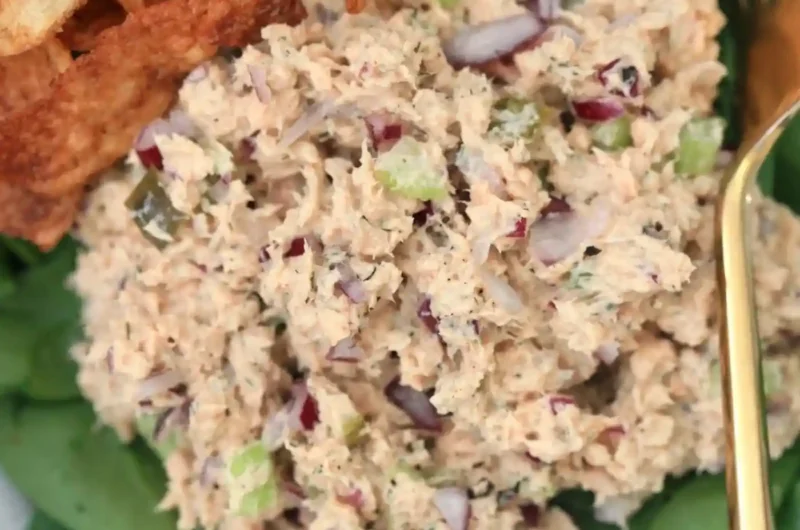
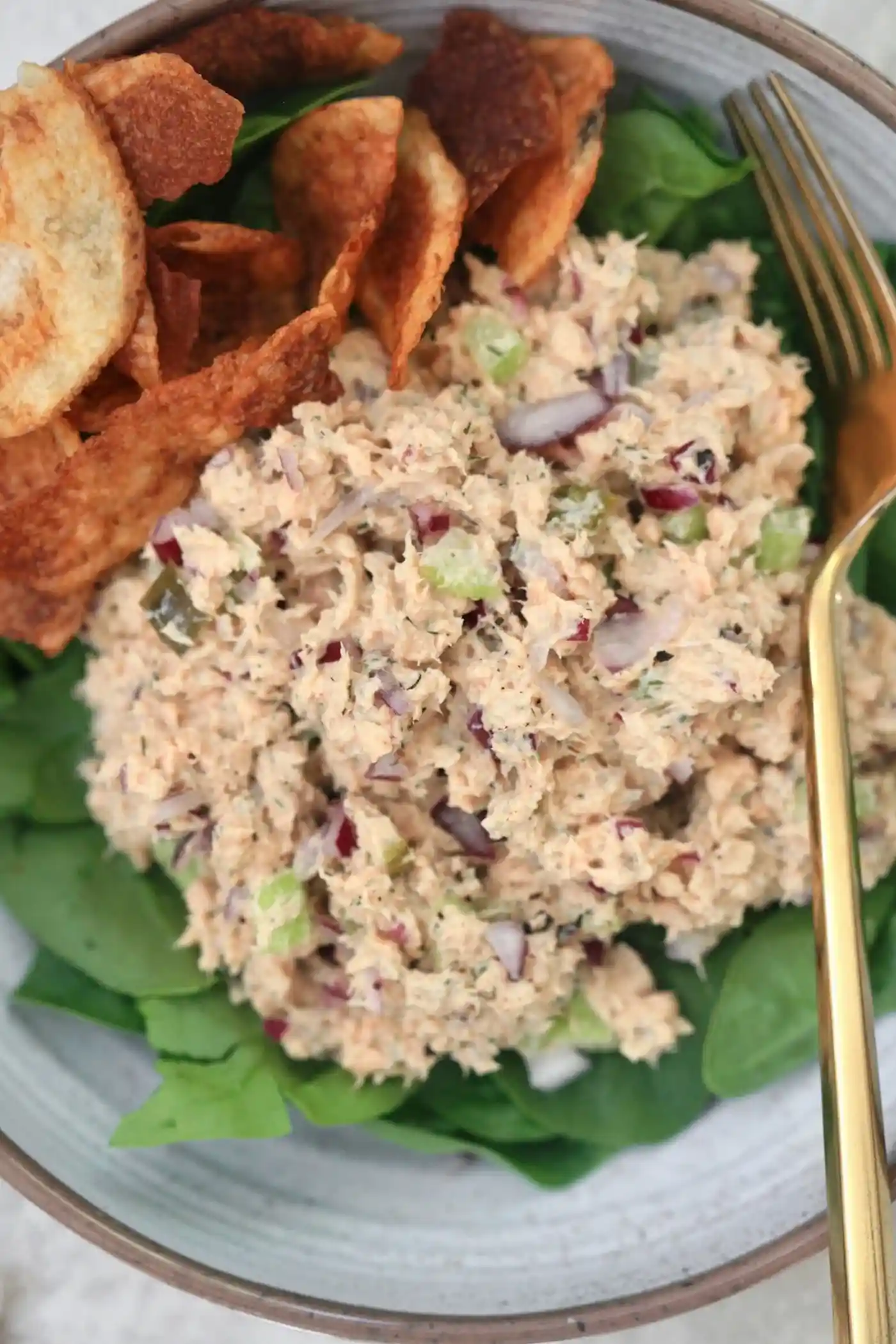
This quick and nutritious salmon salad uses Greek yogurt for a creamy texture without the heavy calories of traditional mayonnaise. It is a protein-rich meal that comes together in just minutes, making it ideal for busy weekdays.
List of ingredients
- 1 (14.75oz) can salmon, drained – remove skin and bones if preferred for a smoother texture.
- 1/3 cup red onion, finely chopped – provides a sharp, pungent contrast.
- 1/4 cup celery, finely chopped – adds a necessary refreshing crunch.
- 1/3 cup plain Greek yogurt – use 2% or full fat for maximum creaminess.
- 1 tbsp extra virgin olive oil or avocado oil – enhances the mouthfeel and richness.
- 1 tbsp Dijon mustard – adds a tangy, sophisticated zest.
- 2 tbsp chopped dill pickle – contributes acidity and a salty pop.
- 1 tsp dried dill – brings a classic herbal flavor.
- 1/4 tsp fine sea salt and freshly ground black pepper – adjust based on the saltiness of your canned salmon.
step-by-step instructions
- Combine ingredients: Place the drained salmon, chopped red onion, chopped celery, Greek yogurt, oil, Dijon mustard, chopped pickles, and dried dill in a large mixing bowl.
- Mix thoroughly: Use a fork to mash the salmon slightly and stir all ingredients together until the dressing is evenly distributed.
- Season and taste: Stir in the salt and black pepper, then taste the salad and add more seasoning if desired to balance the flavors.
- Serve: Plate the salad over fresh greens, scoop it onto toasted bread, or serve it alongside your favorite crackers.
Selecting the Best Ingredients
Choosing Canned Salmon Types
When selecting canned salmon, you will often find choices between wild-caught pink salmon and sockeye. Wild-caught options generally provide a cleaner taste and are rich in omega-3 fatty acids. If you prefer a completely smooth texture, look for cans specifically labeled as boneless and skinless.
Optimizing Yogurt Consistency
Greek yogurt is essential for the thickness of this salad. Avoid using regular plain yogurt, as its higher water content will make the salad runny and thin. Using 2% or full-fat Greek yogurt provides a richer flavor and better stability when stored in the fridge.
Evaluating Oil Choices
Extra virgin olive oil adds a fruity, peppery note that complements the salmon. If you prefer a more neutral flavor that lets the dill and mustard shine, avocado oil is an excellent alternative. Both oils provide healthy fats that help the body absorb the vitamins found in the vegetables.
The Importance of Dijon Mustard
Dijon mustard is preferred over yellow mustard because of its stronger flavor and smoother emulsion. It acts as a bridge between the creaminess of the yogurt and the acidity of the pickles. This ingredient ensures the salad has a professional, balanced taste profile.
Customizing Your Salmon Salad
Dairy-Free Substitutions
To make this recipe dairy-free, replace the Greek yogurt with a plant-based Greek-style yogurt or a high-quality avocado oil mayonnaise. If you use mayonnaise, you can omit the extra olive oil since mayo already contains a significant amount of fat. Tahini can also work for a nuttier, savory alternative.
Using Fresh Herbs
While dried dill is convenient, fresh dill adds a bright, grassy note that elevates the dish. Use one tablespoon of finely chopped fresh dill as a direct replacement for the dried version. You can also add a pinch of fresh parsley or chives for additional color and complexity.
Adding Extra Vegetable Crunch
For more texture, consider adding finely diced carrots, red bell peppers, or capers. Shredded carrots add a subtle sweetness that balances the red onion. Capers provide a briny punch that pairs exceptionally well with the salmon and lemon-like tones of the yogurt.
Incorporating Citrus Notes
A squeeze of fresh lemon juice or a pinch of lemon zest can brighten the overall flavor. This acidity cuts through the richness of the salmon and oil. If you find the salad too heavy, adding half a teaspoon of lemon juice will make it taste fresher.
Serving and Pairing Ideas
Low-Carb Serving Methods
For a keto or low-carb meal, serve the salmon salad inside large Romaine lettuce leaves or butter lettuce cups. Alternatively, scoop the mixture onto thick cucumber slices for a refreshing, hydrating snack. This keeps the meal light while maintaining high protein levels.
Hearty Bread Pairings
Toasted sourdough or sprouted grain bread provides a sturdy base that prevents the salad from making the bread soggy. A lightly toasted rye bread adds an earthy flavor that complements the dill and mustard. For a more indulgent version, use a toasted brioche bun.
Crunchy Accompaniments
Pair this salad with seed crackers, rice cakes, or pita chips for a satisfying crunch. Whole-grain crackers add a nutty flavor and extra fiber to the meal. For a lighter option, use sliced apple or pear wedges to add a sweet contrast to the savory salad.
Building a Salmon Power Bowl
Create a complete meal by placing a scoop of salmon salad atop a bed of quinoa or farro. Add sliced avocado, cherry tomatoes, and steamed spinach for a nutrient-dense lunch. Drizzle a small amount of additional olive oil or lemon juice over the bowl for extra moisture.
Storage and Meal Prep Guidelines
Proper Refrigeration Techniques
Store any remaining salmon salad in an airtight glass container to prevent it from absorbing other odors in the fridge. The salad will stay fresh and safe to eat for up to four days. Glass containers are preferable to plastic as they keep the salad cooler and are easier to clean.
Managing Texture Over Time
The celery and onion may release some moisture after a day or two in the fridge. If the salad appears slightly watery upon opening, give it a quick stir to re-incorporate the dressing. You can also stir in a teaspoon of Greek yogurt to thicken it back up.
Why You Should Not Freeze
Do not freeze this salmon salad, as the Greek yogurt and oil will separate upon thawing. The texture of the vegetables will become mushy and lose their characteristic crunch. If you need to prep for the week, freeze the canned salmon separately before mixing, or simply prep the salad every three days.
Advance Prep Components
To save time during the week, chop your red onion and celery in advance and store them in separate containers. You can also mix the yogurt, mustard, and oil into a dressing and keep it in a jar. When ready to eat, simply combine the prepped components with the drained salmon.
Reheating and Temperature Advice
Optimal Serving Temperature
This salad is best enjoyed chilled or at a cool room temperature. Chilling the salad for 30 minutes before serving allows the dried dill and mustard flavors to meld. Avoid heating the salad, as the Greek yogurt may break and the fish may develop a strong aroma.
Handling Ingredient Separation
Because this recipe uses a combination of oil and yogurt, slight separation can occur after storage. Simply use a fork to fold the mixture together for 10-15 seconds before serving. This ensures every bite has a consistent creamy texture.
Troubleshooting and Common Questions
Why is my salmon salad too watery?
The most common cause of wateriness is improperly drained canned salmon or overly moist vegetables. Ensure you press the salmon firmly against the can lid or use a mesh strainer to remove all excess liquid. You can also pat the chopped celery dry with a paper towel before adding it.
Can I use canned tuna instead of salmon?
Yes, the ratios in this recipe work perfectly for canned tuna. Tuna has a milder flavor than salmon, so you might want to slightly increase the amount of Dijon mustard or add a pinch more salt. The Greek yogurt base remains a healthy alternative for tuna salad.
How do I remove bones from canned salmon?
Use a fork to gently flake the salmon in a bowl, picking out the soft bones and skin as you go. While these parts are edible and high in calcium, removing them creates a more uniform texture. If you dislike this process, purchasing boneless salmon cans is the best solution.
Can I use regular yogurt instead of Greek yogurt?
Regular yogurt is much thinner and will likely turn the salad into a sauce rather than a spreadable salad. If you only have regular yogurt, strain it through a cheesecloth for two hours to remove excess whey. Alternatively, add a tablespoon of mayonnaise or mashed avocado to provide the necessary thickness.
What can I use if I don’t have dill pickles?
If dill pickles are unavailable, you can use capers or a splash of apple cider vinegar to provide the necessary acidity. Cornichons are also an excellent substitute as they offer a similar crunch and tang. If using vinegar, start with a teaspoon and adjust to taste.
How can I make the flavor more intense?
To deepen the flavor, let the salad sit in the refrigerator for an hour before serving. You can also add a dash of smoked paprika or a pinch of garlic powder to add complexity. Increasing the amount of red onion will also provide a sharper, more aggressive bite.
Print
Creamy Greek Yogurt Salmon Salad
- Total Time: 10 minutes
- Yield: 3 servings 1x
- Diet: Gluten Free
Description
Quick, foolproof, and mega flavorful Salmon Salad with canned salmon uses Greek yogurt and olive oil instead of mayo for a healthier take on the classic! Enjoy it for a protein-packed lunch or simple dinner with crackers, over lettuce, on bread, or with a spoon. Great for meal prep!
Ingredients
- 1 – 14.75oz can salmon, drained
- 1/3 cup red onion, finely chopped
- 1/4 cup celery, finely chopped
- 1/3 cup plain Greek yogurt
- 1 tbsp extra virgin olive oil or avocado oil
- 1 tbsp Dijon mustard
- 2 tbsp chopped dill pickle
- 1 tsp dried dill
- 1/4 tsp fine sea salt
- freshly ground black pepper, to taste
Instructions
- Prepare: Place all ingredients in a large mixing bowl.
- Mix: Combine with a fork. Taste and adjust seasoning if needed, adding more salt and pepper to suit your tastes. Serve over greens, on toasted bread, or with crackers!
Notes
Canned salmon contains skin and bones. They are perfectly fine to eat, but I prefer to remove them after draining. You can also buy boneless salmon to avoid this!
- Prep Time: 10 minutes
- Cook Time: 0 minutes
- Category: Main Meals
- Method: No Cook
- Cuisine: American
Nutrition
- Serving Size: 1 serving
- Calories: 265 kcal
- Sugar: 3 g
- Sodium: 480 mg
- Fat: 15 g
- Saturated Fat: 3 g
- Unsaturated Fat: 12 g
- Trans Fat: 0 g
- Carbohydrates: 6 g
- Fiber: 1 g
- Protein: 24 g
- Cholesterol: 18 mg
Keywords: 30 Minute Meals, Burgers & Sandwiches, Dips, Sauces & Spreads, Gluten Free, Grain Free, Nut Free, Greek Yogurt, Salmon