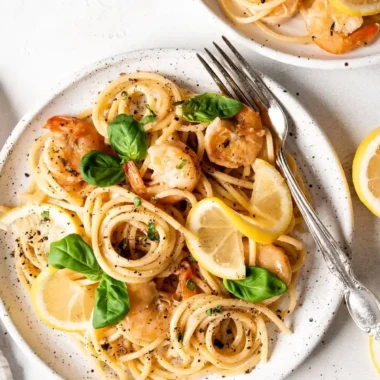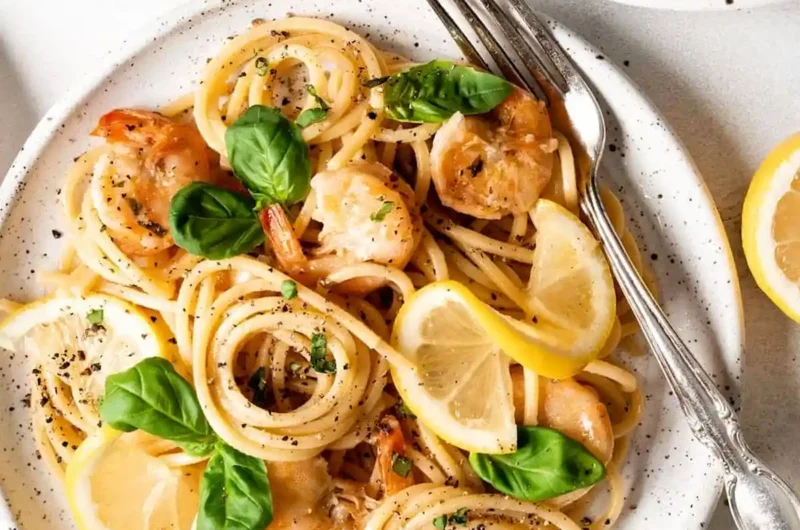
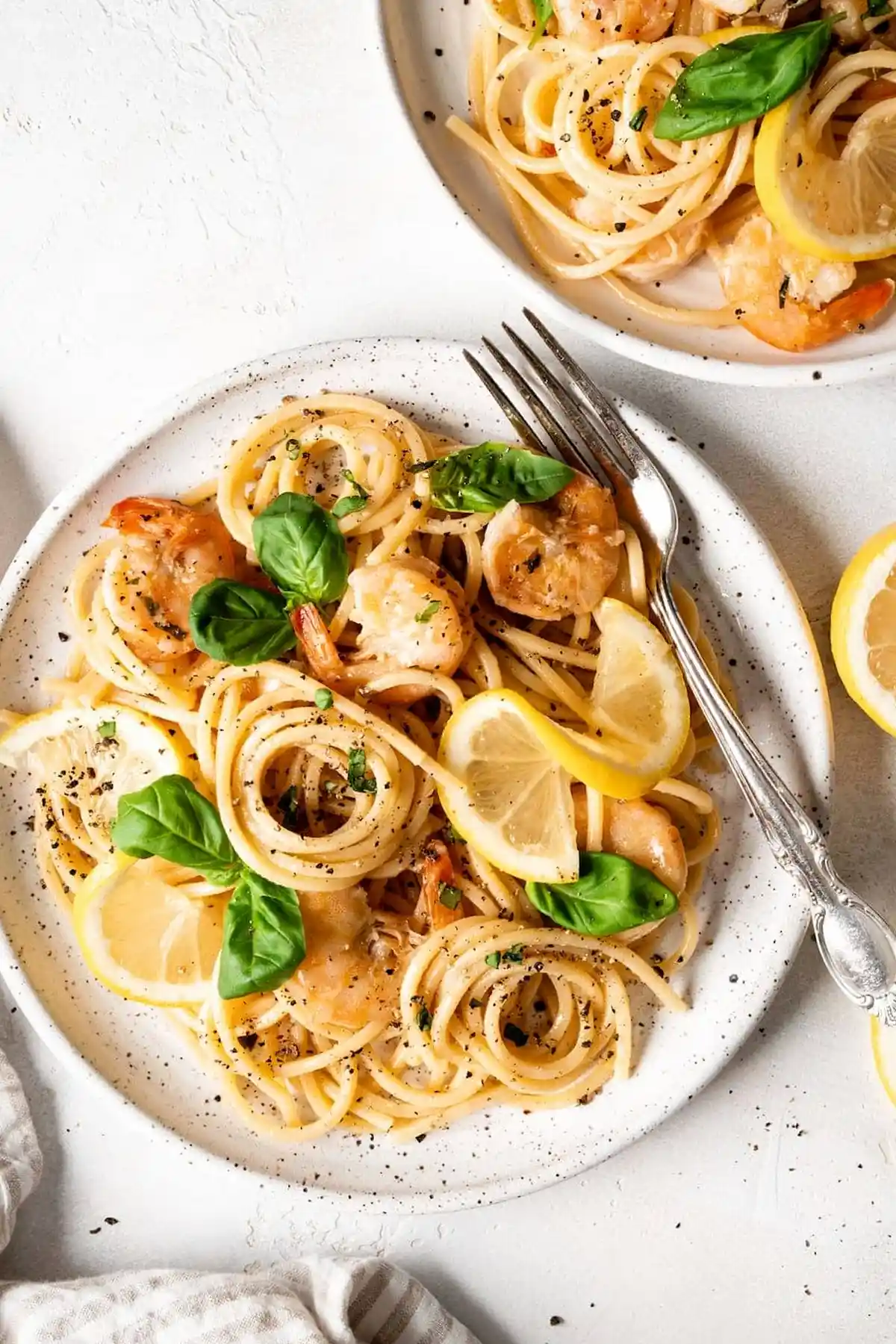
This vibrant lemon garlic shrimp pasta delivers a burst of Mediterranean-inspired brightness in just twenty minutes. By balancing rich, melted butter with the sharp aromatic punch of garlic and fresh citrus, this dish creates a sophisticated dinner that feels entirely effortless. It is a reliable go-to for busy weeknights when you want restaurant-quality results with minimal prep.
List of ingredients
- 8 ounces thin pasta (spaghetti, capellini, linguine, or angel hair)
- 6 tablespoons unsalted butter
- 1/3 cup minced shallots
- 3 cloves garlic, minced
- 1 lb large shrimp, shelled, peeled, and deveined
- 1/3 cup fresh lemon juice
- Zest from the lemons
- Salt and pepper to taste
- Roughly chopped fresh basil and lemon slices for garnish
step-by-step instructions
- Step: Cook pasta according to package instructions. Drain then return the pasta back to the pot. Add a drizzle of olive oil on top to keep the pasta from sticking together. Set aside.
- Step: In a large skillet, melt butter over medium heat. Add the shallots and cook for 1 minute then add the minced garlic and cook for another 30 seconds.
- Step: Add the shrimp to the skillet and cook for 2-3 minutes until pink. Careful not to overcook the shrimp! Remove the skillet from heat.
- Step: Add the lemon juice, lemon zest, salt, and pepper to the skillet over the cooked shrimp. Taste and adjust salt and pepper to your liking.
- Step: Toss in the cooked pasta until well combined. Garnish with basil. Serve and enjoy!
Refining Your Cooking Technique
Achieving the Perfect Al Dente Texture
To ensure your pasta reaches the ideal consistency, start checking it about two minutes before the recommended package time. Pasta should retain a slight bite, known as al dente, because it will continue to cook slightly when tossed into the hot skillet with the butter and shrimp. Draining the pasta thoroughly is crucial because excess water will dilute the richness of your lemon garlic butter sauce.
Mastering the Sautéed Shrimp
Shrimp possess a very narrow window of perfection during the cooking process. Using a wide skillet allows for even heat distribution so that the shrimp can be spread out in a single layer rather than stacked. This technique ensures that every shrimp cooks at the same rate, preventing the edges from overcooking while the centers remain raw.
Substitution and Adaptation Ideas
Adjusting the Aromatics
If you prefer a bolder flavor profile, you can swap the shallots for small yellow onions or even mild leeks. While shallots offer a distinct sweetness that complements citrus, yellow onions provide a more traditional, robust depth that holds up well against the acidity of the lemon. Always ensure your aromatics are finely minced so they integrate evenly into the sauce.
Selecting the Best Pasta
While long, thin strands are traditional for this dish, you can successfully use other varieties if that is what is in your pantry. Angel hair pasta provides a delicate experience, but it requires careful watching to avoid turning mushy. Alternatively, small shaped pastas like orecchiette or shells can trap the sauce effectively, offering a different textural experience while maintaining the core flavor profile.
Effective Serving Suggestions
Balancing the Dish with Sides
This meal is naturally rich, so serving it alongside a crisp, cold green salad adds a refreshing contrast. A simple bed of arugula with a light vinaigrette works exceptionally well to cleanse the palate between bites of the buttery pasta. Alternatively, steamed broccoli or sautéed asparagus provides a fiber-rich accompaniment that complements the lemon notes.
Elevating the Presentation
To make the dish feel more formal, consider using fresh herbs beyond just basil. A light dusting of finely chopped flat-leaf parsley adds a vibrant pop of color and a clean, peppery finish. Arrange thin lemon slices directly on the plate before serving to allow guests to add a final squeeze of fresh juice if desired.
Storage and Reheating Principles
Managing Leftovers Safely
This dish is best enjoyed immediately after preparation, but leftovers can be stored in an airtight container for up to two days. Keep the pasta and shrimp refrigerated promptly after the meal to maintain freshness. Because seafood is highly perishable, ensure your refrigerator temperature is consistently at or below 40 degrees Fahrenheit.
Restoring Texture During Reheating
When reheating, avoid the microwave as it can turn the shrimp rubbery and the pasta soft. Instead, place the pasta in a skillet over low heat with a tiny splash of water or a small pat of butter. Gently stir the mixture until it is warmed through, which helps re-emulsify the sauce and keeps the noodles from drying out.
Common Queries and Clarifications
How can I tell when the shrimp are fully cooked?
Shrimp are finished the moment they turn a uniform pink color and the flesh becomes opaque throughout. They should also curl into a loose “C” shape; if they curl into a tight “O” shape, they are typically overcooked and will have a tough, chewy texture. Always pull them from the heat the moment they hit that “C” stage to ensure they remain tender.
Is there a way to make the sauce thicker?
The butter and lemon juice combination is intended to be a light, glossy coating rather than a heavy cream sauce. If you prefer more adherence, ensure you do not rinse your pasta after draining, as the natural starches remaining on the noodles act as a binding agent. Additionally, reserving a tablespoon of pasta water and adding it to the skillet before tossing can help the sauce cling more effectively to the strands.
Can this recipe be prepared ahead of time?
While it is designed as a 20-minute meal, you can prep your ingredients by mincing the shallots, garlic, and zesting the lemons ahead of time to save on active kitchen minutes. Keep the raw shrimp cold in the refrigerator until the exact moment you are ready to start the skillet portion. This preparation makes the final assembly incredibly fast, which is ideal for hosting or quick weeknight dinners.
Print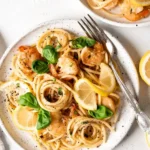
Zesty Lemon Garlic Shrimp Pasta
- Total Time: 20 minutes
- Yield: 4 servings 1x
- Diet: Pescatarian
Description
Light, fresh, and delicious lemon garlic shrimp pasta. This shrimp pasta recipe is made with shrimp, lemon, shallots, garlic, basil, and spaghetti. An easy 20-minute dinner!
Ingredients
- 8 ounces thin pasta (spaghetti, capellini, linguine, or angel hair)
- 6 tablespoons unsalted butter
- 1/3 cup minced shallots
- 3 cloves garlic, minced
- 1 lb large shrimp, shelled, peeled, and deveined
- 1/3 cup fresh lemon juice
- Zest from the lemons
- Salt and pepper to taste
- Roughly chopped fresh basil and lemon slices for garnish
Instructions
- Step: Cook pasta according to package instructions. Drain then return the pasta back to the pot. Add a drizzle of olive oil on top to keep the pasta from sticking together. Set aside.
- Step: In a large skillet, melt butter over medium heat. Add the shallots and cook for 1 minute then add the minced garlic and cook for another 30 seconds.
- Step: Add the shrimp to the skillet and cook for 2-3 minutes until pink. Careful not to overcook the shrimp! Remove the skillet from heat.
- Step: Add the lemon juice, lemon zest, salt, and pepper to the skillet over the cooked shrimp. Taste and adjust salt and pepper to your liking.
- Step: Toss in the cooked pasta until well combined. Garnish with basil. Serve and enjoy!
Notes
You can use onions if you prefer not to use shallots. If using frozen shrimp, ensure it is brought to room temperature before cooking to avoid overcooking. Serve immediately for the best texture.
- Prep Time: 5 minutes
- Cook Time: 15 minutes
- Category: Dinner, Lunch, Main Course
- Method: Stovetop
- Cuisine: American, Italian
Nutrition
- Serving Size: 1 serving
- Calories: 337 kcal
- Sugar: 2 g
- Sodium: 884 mg
- Fat: 11 g
- Saturated Fat: 6 g
- Unsaturated Fat: 4 g
- Trans Fat: 0 g
- Carbohydrates: 30 g
- Fiber: 2 g
- Protein: 29 g
- Cholesterol: 308 mg
Keywords: lemon garlic pasta, lemon garlic shrimp pasta, pasta recipe, shrimp pasta, shrimp pasta recipe, shrimp pasta recipes