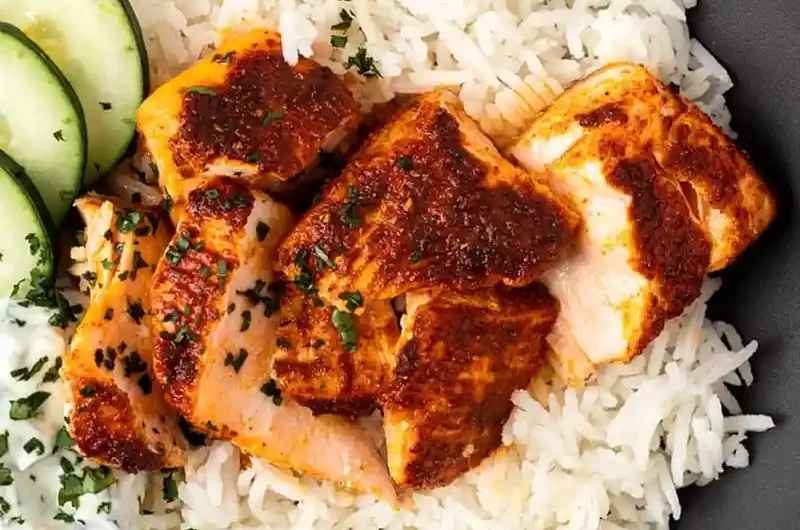
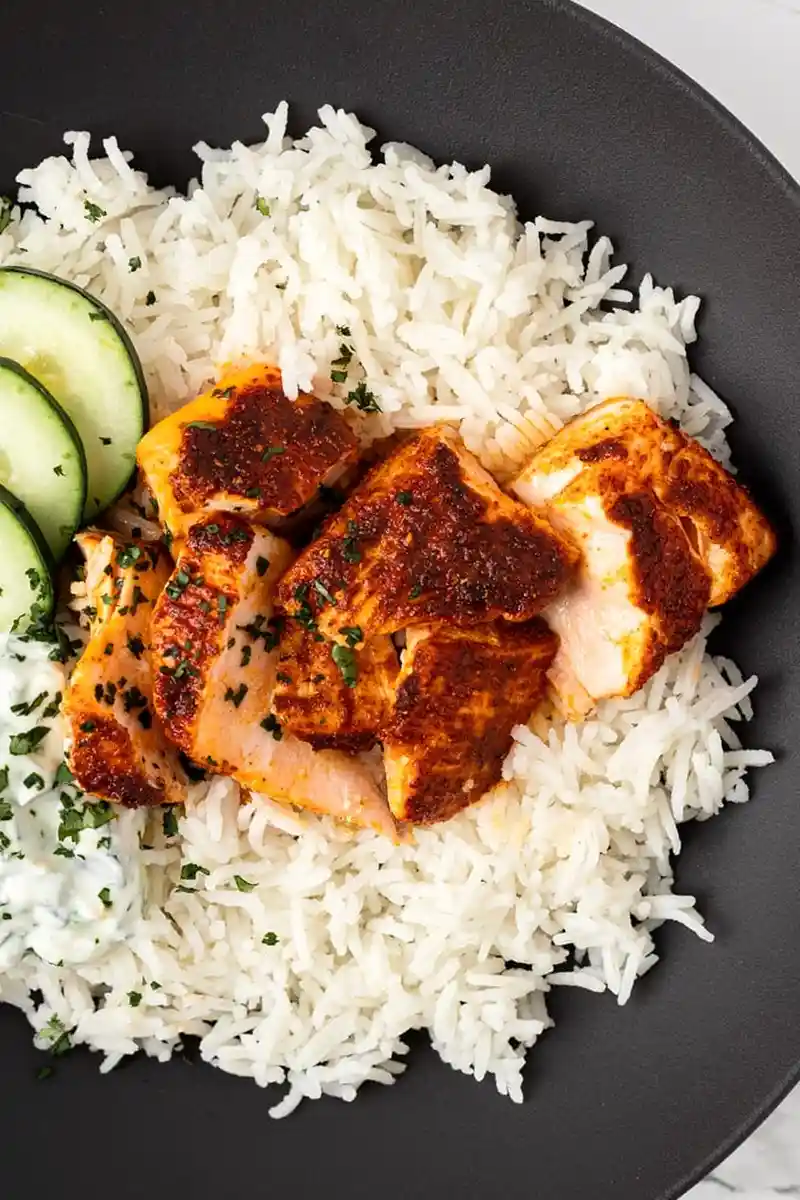
This tandoori-style salmon is a fast and healthy dinner option that brings bold Indian flavors to your table. It combines warm, aromatic spices with a cooling yogurt dip for a perfectly balanced meal.
List of ingredients
- 1 lb salmon (4 fillets) – skin-on or skinless based on preference.
- 1.5 teaspoon sweet smoked paprika – provides a deep red color and smoky base.
- 1/2 teaspoon ground coriander – adds a light, citrusy aroma.
- 1/2-1 teaspoon Cayenne pepper – adjust based on desired spice level.
- 1/4 teaspoon fine sea salt – enhances all the spice notes.
- 1/4 teaspoon garam masala – a warming blend of traditional Indian spices.
- 1/8 teaspoon pepper – adds a subtle sharp bite.
- 1 Tablespoon olive oil – helps the spices adhere and prevents sticking.
- 1/2 cup plain Greek yogurt – creates a thick, creamy base for the raita.
- 1/3 cup diced cucumber (seeds removed) – adds crunch and freshness.
- 1/8 teaspoon sea salt – seasons the yogurt mixture.
- 3 Tablespoons finely chopped cilantro – adds a fresh, herbal finish.
step-by-step instructions
- Prepare oven: Heat your oven to 400℉ and line a baking sheet with parchment paper.
- Create spice paste: Mix together the sweet paprika, garam masala, coriander powder, cayenne, sea salt, pepper and oil together in a small bowl.
- Season fish: Place the salmon on the parchment paper then brush all sides of the salmon with the spice mixture.
- Bake: Bake the salmon in the oven for 10-12 minutes depending on the thickness of the salmon fillets.
- Prepare raita: While the salmon bakes, make the raita by mixing together the greek yogurt, diced cucumbers, cilantro and salt.
- Serve: Serve with your favourite sides.
Achieving Perfect Salmon Texture
Avoid Overcooking for Moist Fillets
Salmon can dry out quickly if left in the oven too long. Aim for a medium cook where the center is still slightly translucent. This ensures the proteins do not tighten too much, keeping the fish succulent.
Use a Meat Thermometer for Precision
The most reliable way to check doneness is using an instant-read thermometer. Pull the salmon out of the oven when the internal temperature reaches 125-130°F. Carry-over cooking will bring it up to the ideal 135-145°F while resting.
Selecting the Best Salmon Cut
Center-cut fillets provide a uniform thickness, which ensures even cooking across all pieces. If using fillets of varying sizes, place the thicker pieces toward the center of the pan. This prevents the smaller pieces from overcooking while the large ones finish.
The Importance of Room Temperature
Take the salmon out of the refrigerator about 15-20 minutes before cooking. This helps the fish cook more evenly from the outside to the center. Cold fish in a hot oven can lead to unevenly cooked edges.
Customizing the Spice Rub
Adjusting the Heat Level
The cayenne pepper provides the primary heat in this recipe. For a mild flavor, stick to 1/2 teaspoon. If you prefer a spicy kick, use a full teaspoon or more depending on your tolerance.
Enhancing the Smoky Profile
Sweet smoked paprika is essential for the tandoori look and taste. If you want a deeper flavor, ensure you are using a high-quality Spanish pimentón. This adds an authentic charred taste without needing a clay tandoor oven.
Adding Fresh Aromatics
While the powder spices are traditional, adding a teaspoon of freshly grated ginger or garlic to the oil mixture can add depth. These fresh elements complement the garam masala and coriander. Be careful not to add too much to avoid masking the salmon flavor.
Using Alternative Oils
Olive oil is a great standard, but melted ghee provides a more authentic Indian flavor. Ghee has a higher smoke point, which is excellent for high-temperature roasting. Avocado oil is another neutral option that works well.
Raita Enhancements and Variations
Incorporating Fresh Mint
Adding one tablespoon of finely chopped fresh mint to the raita adds a layer of brightness. Mint pairs exceptionally well with both the cucumber and the warm tandoori spices. It provides an extra cooling effect against the cayenne pepper.
Adding Grated Carrots for Color
For extra texture and visual appeal, stir in two tablespoons of finely grated carrots. This adds a slight sweetness that balances the tang of the Greek yogurt. It also makes the raita more nutritionally dense.
Managing Yogurt Consistency
If the Greek yogurt is too thick, stir in a teaspoon of water or lemon juice. This creates a more pourable consistency if you prefer the raita as a sauce. Conversely, using strained yogurt ensures a thick dip that stays on the fish.
Substituting Yogurt Types
If Greek yogurt is unavailable, plain whole-milk yogurt can be used. To prevent it from becoming too runny, strain it through a cheesecloth for an hour before mixing. This removes excess whey and mimics the Greek yogurt texture.
Suggested Side Dish Pairings
Basmati Rice for Authentic Flavor
Long-grain basmati rice is the classic accompaniment for tandoori dishes. Cook it with a few green cardamom pods or a cinnamon stick for extra aroma. The fluffy texture absorbs the juices from the salmon and raita.
Roasted Cauliflower for Low Carb
Toss cauliflower florets in turmeric and cumin, then roast them on the same tray as the salmon. This keeps the meal low-carb while maintaining the Indian flavor profile. Roast them for slightly longer than the salmon to ensure they are tender.
Warm Naan Bread for Dipping
Freshly toasted naan is perfect for scooping up the raita and pieces of salmon. Brush the naan with melted butter and garlic before warming it in a pan. This adds a rich, savory element to the plate.
Sautéed Spinach with Lemon
Quickly sauté baby spinach with a squeeze of lemon and a pinch of salt. The acidity of the lemon cuts through the richness of the salmon and the creaminess of the yogurt. It provides a fresh, green contrast to the red spice rub.
Storage and Preservation
Refrigerating Leftover Salmon
Place cooled salmon in an airtight container and store it in the refrigerator for up to three days. To maintain quality, keep the salmon separate from the raita. This prevents the fish from absorbing too much moisture from the yogurt.
Storing Fresh Raita
Raita should be kept in a sealed glass jar and consumed within 48 hours. Because of the fresh cucumber, it can become watery over time. Give it a quick stir before serving to re-incorporate the ingredients.
Freezing the Spice Rub
You can make a large batch of the spice paste and freeze it in ice cube trays. Once frozen, transfer the cubes to a freezer bag. Simply thaw one cube in the fridge overnight when you are ready to cook more salmon.
Preserving Fresh Cilantro
Store leftover cilantro by placing the stems in a glass of water and covering the tops with a plastic bag. This keeps the herbs fresh for up to a week in the fridge. Always chop cilantro just before adding it to the raita.
Reheating Guidelines
Using the Oven for Best Texture
Reheat salmon in the oven at 275°F for about 10-15 minutes. This slow heating method prevents the fish from drying out. Avoid high temperatures, as they will overcook the center of the fillet.
Microwave Tips to Prevent Drying
If using a microwave, use a low power setting and cover the salmon with a damp paper towel. Heat in 30-second intervals to avoid rubbery texture. This method is fastest but less effective at maintaining the flaky texture.
Air Fryer Reheating Method
An air fryer is excellent for restoring the exterior texture of the spice rub. Heat at 350°F for 3-5 minutes. This provides a slight crispiness to the outside while keeping the inside moist.
Serving Cold Leftovers
Tandoori salmon is surprisingly delicious when served cold. Flake the chilled fish over a fresh green salad with a lemon vinaigrette. Use the remaining raita as a creamy dressing for the salad.
Troubleshooting Common Issues
What to Do if the Salmon Sticks
If your salmon sticks to the parchment paper, ensure you used enough olive oil in the rub. You can also lightly grease the parchment paper with cooking spray. For the easiest removal, let the fish rest for two minutes before lifting.
Fixing Watery Raita
Cucumber releases water when salted, which can make raita runny. To prevent this, dice the cucumbers and let them sit in a colander with a pinch of salt for 10 minutes. Pat them dry with a paper towel before stirring them into the yogurt.
Correcting Excess Heat
If the spice rub is too spicy after tasting, increase the amount of raita served on the side. The fats in the Greek yogurt neutralize the capsaicin from the cayenne pepper. Adding a squeeze of lime juice over the fish also helps balance the heat.
Addressing Uneven Cooking
If some fillets are done and others are not, remove the smaller ones and leave the larger ones in. Check the thickness of your fillets before they go in the oven. You can also tuck smaller pieces to the edges where heat is more consistent.
Frequently Asked Questions
Can I use frozen salmon?
Yes, but you must thaw it completely in the refrigerator before applying the spice rub. Cooking from frozen will result in uneven texture and the spices will not adhere properly to the surface.
Is this recipe keto-friendly?
This recipe is naturally keto-friendly as it contains high protein and healthy fats with very few carbohydrates. To keep it keto, pair the salmon with steamed vegetables or a salad instead of rice or naan.
Can I make the raita in advance?
You can prepare the raita up to 24 hours in advance. However, for the best texture and freshest taste, it is recommended to stir in the fresh cilantro just before serving.
Which type of salmon works best?
Sockeye or King salmon are excellent choices for their rich flavor and higher fat content. Atlantic salmon is also widely available and works well due to its mild taste and consistent texture.
How do I store the raita?
Store the raita in an airtight container in the coldest part of your refrigerator. Use a clean spoon every time you scoop it out to prevent spoilage and extend its shelf life.
Print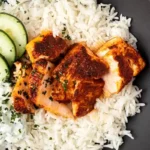
Tandoori Salmon with Raita
- Total Time: 20 minutes
- Yield: 4 servings 1x
- Diet: Pescatarian, Low Carb, Keto, Gluten Free
Description
Oven baked tandoori spiced salmon with a quick and easy raita
Ingredients
- 1 lb salmon (4 fillets)
- 1.5 teaspoon sweet smoked paprika
- 1⁄2 teaspoon ground coriander
- 1⁄2–1 teaspoon Cayenne pepper
- 1⁄4 teaspoon fine sea salt
- 1⁄4 teaspoon garam masala
- 1⁄8 teaspoon pepper
- 1 Tablespoon olive oil
- 1⁄2 cup plain Greek yogurt
- 1⁄3 cup diced cucumber (seeds removed)
- 1⁄8 teaspoon sea salt
- 3 Tablespoons finely chopped cilantro
Instructions
- Step 1: Heat your oven to 400℉ and line a baking sheet with parchment paper.
- Step 2: Mix together the sweet paprika, garam masala, coriander powder, cayenne, sea salt, pepper and oil together in a small bowl.
- Step 3: Place the salmon on the parchment paper then brush all sides of the salmon with the spice mixture.
- Step 4: Bake the salmon in the oven for 10-12 minutes depending on the thickness of the salmon fillets.
- Step 5: While the salmon bakes, make the raita by mixing together the greek yogurt, diced cucumbers, cilantro and salt.
- Step 6: Serve with your favourite sides
Notes
Adjust the cayenne pepper to ½ teaspoon for a mild bite or 1 teaspoon for more heat. To keep the salmon moist, cook to medium doneness; the flesh should be firm and flake easily under pressure.
- Prep Time: 10 minutes
- Cook Time: 10 minutes
- Category: Main Course
- Method: Baking
- Cuisine: Indian
Nutrition
- Serving Size: 1 fillet
- Calories: 219 kcal
- Sugar: 1 g
- Sodium: 280 mg
- Fat: 11 g
- Saturated Fat: 2 g
- Unsaturated Fat: 9 g
- Trans Fat: 0 g
- Carbohydrates: 2 g
- Fiber: 1 g
- Protein: 26 g
- Cholesterol: 64 mg
Keywords: tandoori salmon, raita, indian cuisine, baked salmon, healthy dinner, low carb