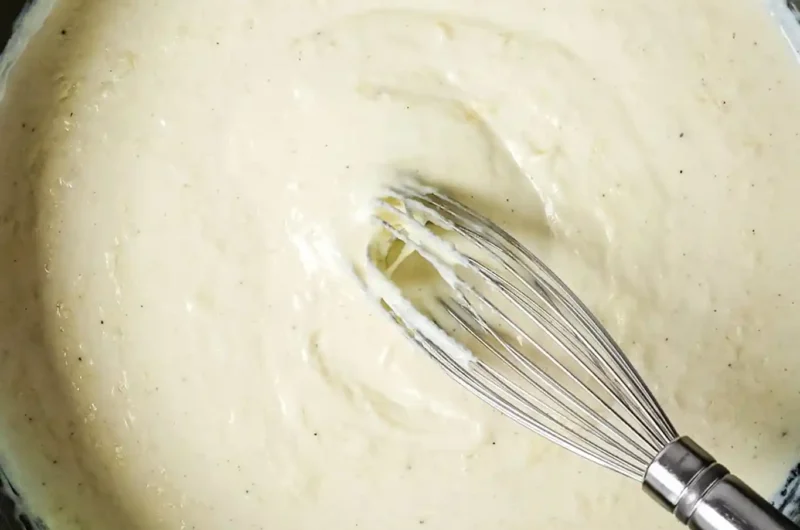
Prepare a rich and creamy white sauce in just ten minutes using simple pantry staples. This versatile homemade version serves as a perfect base for pasta, pizza, or grilled proteins.
List of ingredients
- 1/2 cup butter (1 stick, salted or unsalted) – forms the fat base for the roux.
- 2 Tablespoons flour – acts as the thickening agent to stabilize the sauce.
- 1 1/2 cup half and half – provides the creamy liquid consistency.
- 1 1/2 cup shredded Parmesan Romano cheese – adds a sharp, salty flavor and body.
- 1/2 teaspoon garlic salt – provides a savory depth of flavor.
- 1/4 teaspoon pepper – adds a subtle spicy note.
- 1/8 teaspoon ground nutmeg – adds a warm, professional finish to the sauce.
step-by-step instructions
- Create the Roux: Melt the butter in a large non-stick skillet over medium heat. Using a whisk, stir in the flour and cook for about 2 minutes, whisking continually until the mixture bubbles and thickens.
- Thicken the Base: Pour in 1 cup of the half and half while whisking constantly. Continue whisking for approximately 2 minutes until the sauce thickens, then stir in the shredded cheese and whisk until it is completely melted.
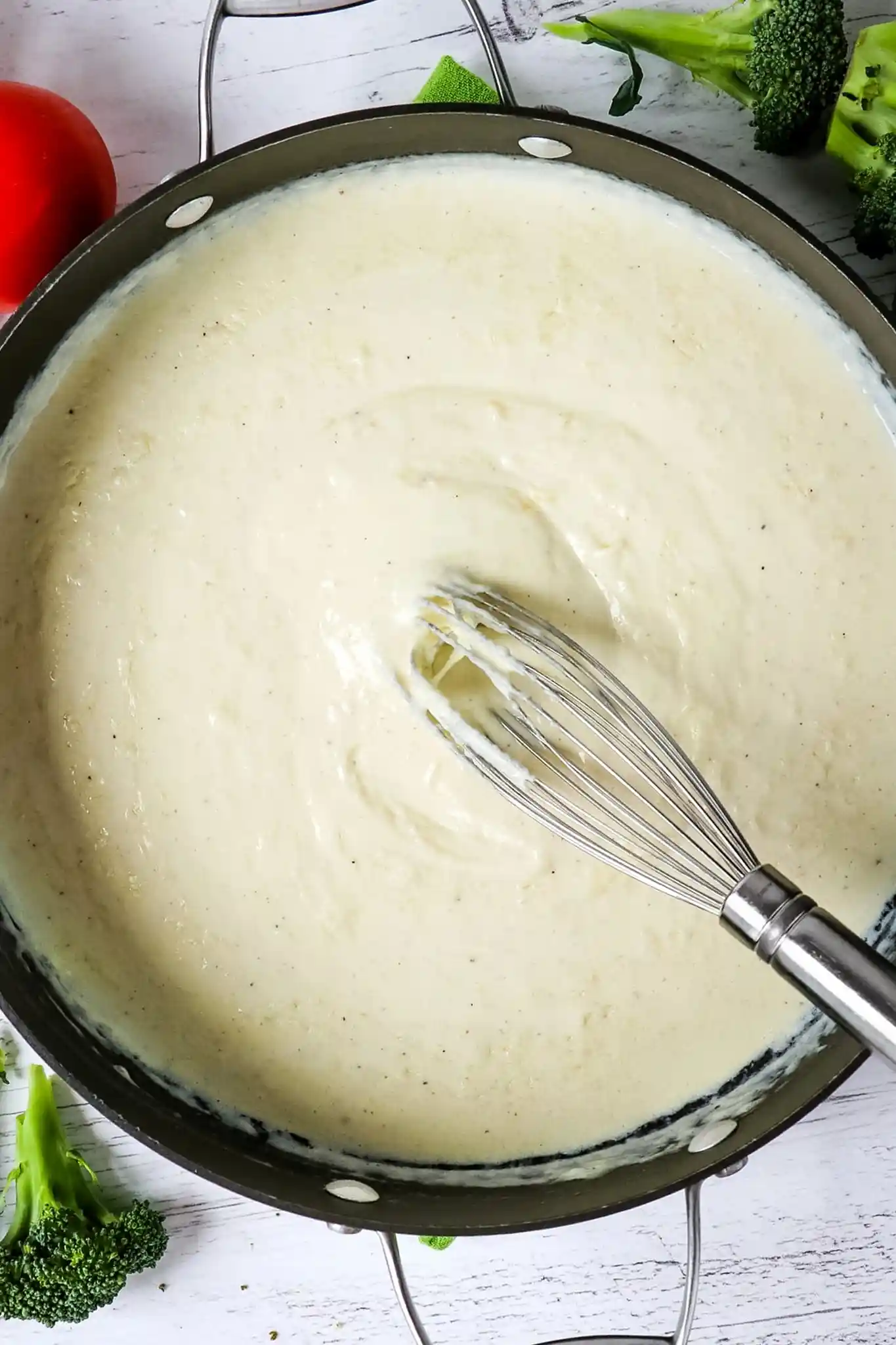
- Final Seasoning: Add the garlic salt, pepper, and ground nutmeg to the pan. Pour in the remaining half and half and whisk for one more minute until the sauce is smooth and creamy.
Professional Texture Techniques
Using a Non-Stick Pan
A high-quality non-stick skillet prevents the flour and butter mixture from sticking to the surface. This ensures that the roux cooks evenly without burning or leaving clumps. It also makes the final cleanup much easier after the cheese has thickened.
The Importance of a Roux
Combining cooked butter and flour creates a roux, which is a fundamental thickening agent. This process prevents the sauce from separating when the cheese is added. It provides a stable structure that keeps the sauce velvety rather than oily.
Constant Whisking Method
Using a whisk instead of a spoon helps incorporate air and break up any flour lumps. Constant movement ensures that the dairy is integrated smoothly into the fat. This technique is essential for achieving a professional, silky consistency.
Maintaining Medium Heat
Cooking the sauce over medium heat prevents the dairy from scorching or curdling. High heat can cause the cheese to separate or the butter to brown too quickly. A steady, moderate temperature allows the ingredients to emulsify properly.
Ingredient Substitutions
Substituting Half and Half with Milk
If half and half is unavailable, you can use an equal mixture of whole milk and heavy cream. For a lighter version of the sauce, you may substitute the entire amount with whole milk. Note that using only milk will result in a thinner sauce with less richness.
Using Heavy Cream for Richness
For a denser and more indulgent sauce, replace the half and half with heavy cream. This increases the fat content and creates a more luxurious mouthfeel. When using heavy cream, you may find the sauce thickens more quickly, so monitor the heat closely.
Selecting the Best Cheese
While pre-shredded Parmesan is convenient, grating your own cheese from a block often results in a smoother melt. Block cheese lacks the anti-clumping agents found in pre-shredded varieties. A blend of Parmesan and Romano provides a more complex, salty profile.
Salted vs Unsalted Butter
Either variety of butter works well for this recipe. If you use salted butter, you may want to taste the sauce before adding the full amount of garlic salt. This prevents the final product from becoming overly salty.
Replacing Garlic Salt
If you do not have garlic salt, use a combination of granulated garlic and standard table salt. Start with a pinch of each and adjust to your taste. Freshly minced garlic sautéed in the butter at the start is another excellent alternative.
Versatile Culinary Uses
Classic Pasta Pairings
This sauce pairs perfectly with fettuccine, penne, or farfalle. Toss the cooked pasta directly into the skillet to allow the noodles to absorb the sauce. Adding steamed broccoli or sautéed mushrooms creates a complete meal.
White Pizza Base
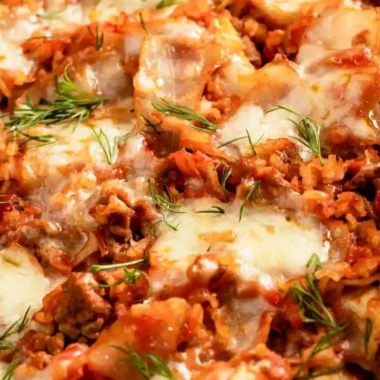
Use this Alfredo sauce as a replacement for traditional tomato sauce on a pizza crust. Top with mozzarella, ricotta, and sliced chicken or spinach. Bake until the crust is golden and the sauce is bubbling.
Grilled Protein Topping
Drizzle the warm sauce over grilled chicken breasts, salmon fillets, or shrimp. The creaminess balances the char of the grill and adds moisture to the meat. It also works well as a glaze for baked fish.
Creamy Sandwich Spread
Thicken the sauce further by reducing it on the stove, then use it as a spread for toasted paninis. It pairs exceptionally well with turkey, roasted red peppers, and provolone cheese. Apply it generously to the inside of the bread before grilling.
Vegetable accompaniment
Use the sauce as a topping for roasted cauliflower or asparagus. The richness of the Parmesan complements the earthiness of the vegetables. This transforms simple side dishes into a gourmet experience.
Storage and Reheating
Refrigeration Methods
Store leftover sauce in an airtight container in the refrigerator for up to four days. Ensure the sauce has cooled slightly before sealing the lid to prevent excessive condensation. The sauce will thicken significantly as it cools.
Freezing Instructions
While cream-based sauces can separate when frozen, you can freeze this sauce for up to two months. Store it in a freezer-safe bag or container. Thaw it slowly in the refrigerator overnight before reheating.
Stovetop Reheating
Return the sauce to a small saucepan over low heat. Whisk in a tablespoon of milk or cream to restore the original creamy consistency. Stir constantly to ensure the cheese reintegrates smoothly without breaking.
Microwave Warming
Place the sauce in a microwave-safe bowl and heat in short 30-second intervals. Stir the sauce thoroughly between each heating cycle. This prevents hot spots and ensures the sauce is heated evenly throughout.
Solving Common Sauce Problems
Fixing a Lumpy Sauce
If the sauce develops lumps, you can use a handheld immersion blender to smooth it out. If you don’t have one, whisking vigorously over low heat can sometimes resolve the issue. Sifting the flour before adding it to the butter also prevents initial clumping.
Correcting a Sauce That is Too Thick
If the sauce becomes too thick, whisk in small amounts of milk or pasta water. Add the liquid one tablespoon at a time until the desired consistency is reached. This allows you to control the thickness without watering down the flavor.
Managing Sauce Separation
Separation occurs when the sauce is overheated or the fat breaks. To fix this, remove the pan from the heat and whisk in a small amount of cold cream. This helps re-emulsify the fats and liquids into a smooth mixture.
Addressing Overly Salty Results
If the sauce tastes too salty, add a splash of unsalted cream or a pinch of sugar. You can also stir in a small amount of ricotta cheese to neutralize the saltiness. Increasing the volume of the sauce with more milk can also dilute the salt concentration.
Common Questions About Alfredo Sauce
Is flour necessary in Alfredo?
While traditional Italian Alfredo uses only butter and cheese, flour creates a roux that stabilizes the sauce. This makes it more forgiving and prevents it from separating during reheating. It also provides a consistent thickness regardless of the cheese brand used.
Can this be made in advance?
Yes, the sauce can be made ahead of time and stored in the fridge. When you are ready to serve, simply reheat it on the stove with a bit of extra liquid. This is a great way to save time during dinner preparation.
Why is nutmeg used?
Nutmeg adds a subtle, warm aromatic quality that enhances the cream and cheese. It does not make the sauce taste like dessert but rather adds a professional depth of flavor. It is a classic addition to white sauces like Béchamel.
How do I prevent the cheese from clumping?
Add the cheese slowly and keep the heat at a medium or low level. Constant whisking ensures that the cheese melts evenly into the liquid. Avoid boiling the sauce after the cheese has been added, as this can cause the proteins to clump.
Print
Simple Homemade Alfredo Sauce
- Total Time: 10 minutes
- Yield: 8 servings 1x
- Diet: General
Description
A go-to sauce for so many dishes, this easy homemade alfredo sauce is perfect for pasta, pizza and much more! Forget the store-bought stuff, this easy alfredo sauce recipe is made with just a few simple ingredients and comes together in just minutes!
Ingredients
- 1/2 cup butter
- 2 Tablespoons flour
- 1 1/2 cup half and half
- 1 1/2 cup shredded Parmesan Romano cheese
- 1/2 teaspoon garlic salt
- 1/4 teaspoon pepper
- 1/8 teaspoon ground nutmeg
Instructions
- Step 1: In a large non-stick skillet, melt the butter. Using a whisk, add the flour and cook for about 2 minutes whisking continually.
- Step 2: Pour in about 1 cup of the half and half, continually whisking until the sauce begins to thicken (about 2 minutes), then add the shredded cheese and continue to whisk until melted.
- Step 3: Add the garlic salt, pepper, nutmeg and the remaining half and half. Once cheese has completely melted and smooth, the sauce is done.
Notes
Ingredient substitutions: you can also use whole milk as a lighter option to half and half. Also, for more garlic flavor you can also sauté 1 tablespoon minced garlic when melting the butter.
- Prep Time: 5 minutes
- Cook Time: 5 minutes
- Category: Dressings and Sauces
- Method: Stovetop
- Cuisine: Italian
Nutrition
- Serving Size: 1 serving
- Calories: 236 kcal
- Sugar: 2 g
- Sodium: 522 mg
- Fat: 21 g
- Saturated Fat: 13 g
- Unsaturated Fat: 7 g
- Trans Fat: 1 g
- Carbohydrates: 6 g
- Fiber: 0 g
- Protein: 7 g
- Cholesterol: 61 mg
Keywords: homemade alfredo sauce recipe, easy homemade alfredo sauce, easy alfredo sauce