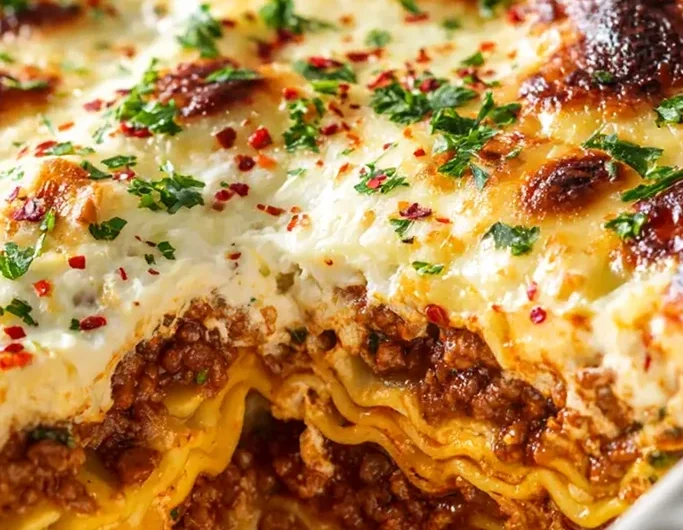
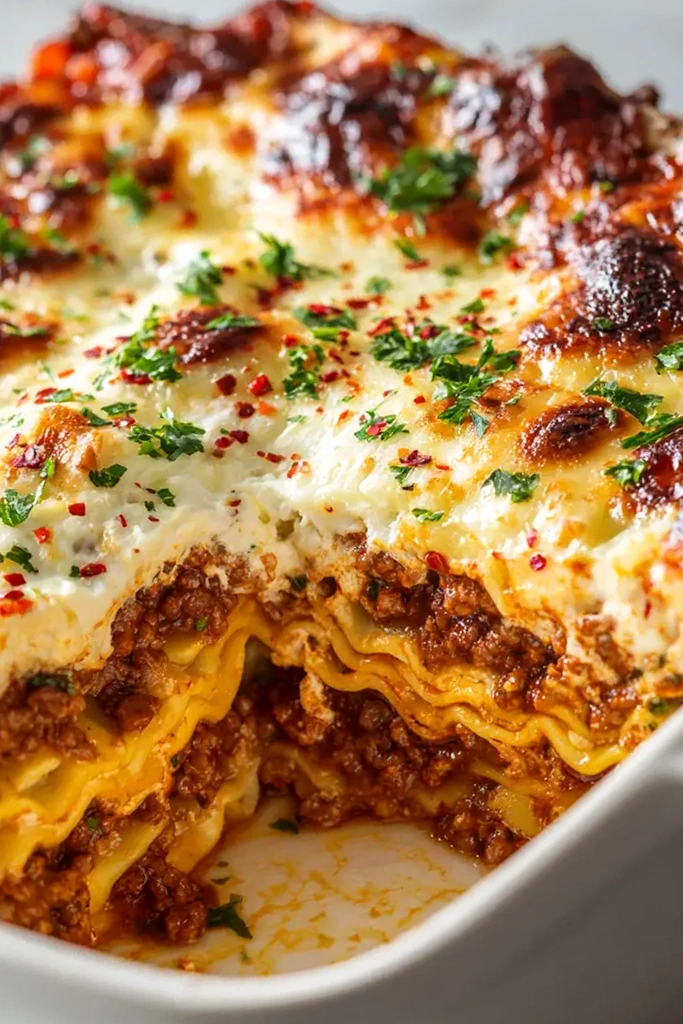
This rich, multi-layered lasagna combines a hearty beef sauce with creamy ricotta and a bubbling cheese crust. It is a sturdy, restaurant-style dish ideal for large gatherings and family dinners.
List of ingredients
- 16 oz (450g) dried wavy lasagna noodles – Boiled to al dente for structure.
- 1 lb (450g) ground beef (80/20) – Browned into crumbles for rich flavor.
- 1 tbsp (15ml) extra virgin olive oil – Used for searing meat and aromatics.
- 1 medium (150g) yellow onion – Diced finely.
- 4 cloves (12g) garlic – Minced for aromatic depth.
- 28 oz (800g) crushed tomatoes – The base for the chunky red sauce.
- 2 tbsp (30g) tomato paste – Adds concentrated tomato flavor and thickness.
- 2 cups (480g) whole milk ricotta cheese – Provides the creamy center layer.
- 1 large (50g) egg – Acts as a vital binder for the ricotta.
- 3 cups (300g) low-moisture shredded mozzarella cheese – Divided for layering and topping.
- 1 cup (100g) grated parmesan cheese – Divided for the filling and the crust.
- 2 tbsp (8g) fresh green parsley – Finely chopped for the final garnish.
- 1 tsp (2g) red pepper flakes – Scattered on top for a hint of heat.
step-by-step instructions
- Prepare the meat sauce: Heat olive oil in a large skillet over medium-high heat. Add the ground beef and cook until deep brown, crispy crumbles form.
- Sauté aromatics: Lower the heat and add diced onion and minced garlic, sautéing until the onion is translucent.
- Thicken the sauce: Stir in the tomato paste and cook for two minutes until it turns a rust color, then pour in the crushed tomatoes. Simmer for 20 minutes until the sauce is thick and chunky.
- Mix the cheese filling: In a medium bowl, combine ricotta cheese, the egg, and half of the parmesan cheese. Season with salt and pepper, stirring until the mixture is uniform and thick.
- Cook the pasta: Boil wavy lasagna noodles in salted water for 2 minutes less than the package instructions. Drain them thoroughly and pat dry with a kitchen towel.
- Start the assembly: Spread a thin layer of meat sauce across the bottom of a 9×13 inch ceramic baking dish to prevent sticking.
- Build the first layer: Place a layer of overlapping wavy noodles over the sauce. Spread half of the ricotta mixture over the noodles, then top with a ladle of meat sauce and a handful of mozzarella.
- Repeat the layers: Repeat the noodle, ricotta, meat sauce, and mozzarella sequence until the dish is full.
- Finish the top: Arrange the final layer of noodles, cover with the remaining meat sauce, and top with the remaining mozzarella and parmesan cheese.
- Bake the lasagna: Cover the dish tightly with greased aluminum foil. Bake at 375°F (190°C) for 35 minutes.
- Brown the cheese: Remove the foil and bake for another 15 minutes. Flip the oven to broil for 2-3 minutes until the cheese is golden-brown and slightly charred.
- Rest and garnish: Let the lasagna rest at room temperature for 20 minutes. Garnish with finely chopped parsley and red pepper flakes before slicing.
Professional Baking Techniques
The Importance of Low-Moisture Mozzarella
Using low-moisture mozzarella is essential to prevent excess water from leaking into the pasta layers. Fresh mozzarella contains higher water content, which can cause the lasagna to become soupy during the baking process. Low-moisture varieties provide a better melt and a more stable structure.
Using a Ceramic Baking Dish for Even Heat
A rectangular ceramic baking dish ensures that heat is distributed evenly throughout the pasta. Unlike thin metal pans, ceramic retains heat longer and prevents the bottom and edges from scorching before the center is hot. This results in consistent cooking across all slices.
The Role of the Egg in Ricotta Stability
Adding a large egg to the ricotta cheese mixture acts as a culinary binder. During the baking process, the egg sets, preventing the creamy cheese layer from thinning or running. This ensures that the lasagna maintains a clean, visible cross-section when sliced.
Achieving the Perfect Al Dente Pasta
Cooking the wavy noodles for two minutes less than the package directions is critical. Because the pasta continues to absorb moisture from the sauce while in the oven, undercooking them slightly prevents them from becoming mushy. This keeps the noodles tender but structurally sound.
Meat Sauce Optimization
Browning Beef for Maximum Flavor
Searing the ground beef until it forms deep brown, crispy crumbles creates foundational umami through the Maillard reaction. Avoid overcrowding the pan to ensure the meat browns rather than steams. This step adds a depth of flavor that cannot be achieved by simply graying the meat.
The Benefit of Using Tomato Paste
Incorporating tomato paste provides a concentrated burst of flavor and helps thicken the sauce. Cooking the paste for two minutes before adding the crushed tomatoes caramelizes the sugars and removes the raw metallic taste. This creates a richer, more professional red sauce.
Simmering for Thickness and Texture
Simmering the sauce for 20 minutes allows the water to evaporate, concentrating the flavors. A thick sauce is necessary to ensure the lasagna does not slide apart on the plate. The sauce should be chunky enough to coat the back of a spoon without running.
Managing Sauce Moisture
If the sauce appears too watery after simmering, continue to cook it uncovered for a few more minutes. Excess liquid in the meat sauce is a primary cause of watery lasagnas. Ensuring a thick consistency at the start protects the integrity of the final bake.
Layering and Assembly Secrets
Preventing Lasagna Slide
The secret to a stable lasagna is the careful overlapping of wavy noodles. By slightly overlapping the pasta edges, you create a cohesive foundation that grips the cheese and sauce. This prevents the layers from shifting during the slicing process.
Creating a Solid Pasta Foundation
Starting with a thin layer of meat sauce on the bottom of the dish is vital. This prevents the bottom layer of noodles from sticking to the ceramic and burning. It also ensures that every bite, including the bottom slice, is infused with flavor.
Balanced Distribution of Fillings
Using an offset spatula helps in spreading the ricotta mixture evenly to the very edges of the dish. Gaps in the cheese layer can lead to uneven cooking and structural weak points. Consistent thickness across each layer ensures a uniform mouthfeel.
Applying the Final Cheese Layer
The top layer should be a generous blend of mozzarella and parmesan. The mozzarella provides the gooey stretch, while the parmesan creates the salty, crisp crust. Ensuring the cheese reaches the edges of the pan encourages the formation of those desirable charred corners.
Cooking and Baking Mastery
The Foil Tent Method
Covering the lasagna with aluminum foil traps steam, which cooks the noodles and melts the internal cheese layers without drying out the top. Spraying the underside of the foil with non-stick spray prevents the cheese from sticking to the metal. This allows for a clean removal of the foil before the final browning step.
Timing the Uncovered Bake
Removing the foil for the final 15 minutes allows the moisture on the surface to evaporate. This transition is what transforms the melted cheese into a bubbling, golden-brown topping. It is the crucial step for achieving a professional texture contrast between the soft interior and crisp top.
Using the Broiler for a Charred Crust
A short burst of high heat under the broiler for 2-3 minutes creates a charred, caramelized finish. This adds a smoky dimension to the cheese and enhances the visual appeal. It is important to watch the oven closely during this phase to prevent the cheese from burning.
The Essential Resting Period
Allowing the lasagna to rest for at least 20 minutes is a non-negotiable step. This time allows the internal temperatures to stabilize and the ricotta and meat sauce to set. Cutting into a lasagna too early will cause the layers to collapse and the sauce to run.
Storage and Reheating Guide
Refrigeration Best Practices
Leftover lasagna should be stored in an airtight container in the refrigerator for up to four days. Many find that the flavor improves the next day as the herbs and spices meld further. Ensure the dish is completely cooled before sealing to prevent condensation from making the top soggy.
Freezing Individual Portions
To freeze, wrap individual slices tightly in plastic wrap and place them in a heavy-duty freezer bag. This prevents freezer burn and makes it easier to reheat only what you need. Frozen slices can be kept for up to three months without losing significant quality.
Best Methods for Reheating
Reheating in a 350°F (175°C) oven is the best way to preserve the texture of the cheese crust. Cover the slice with foil to prevent the top from drying out during the heating process. Heat until the center is bubbling and the cheese is once again melted.
Thawing Frozen Slices
For the best results, thaw frozen lasagna slices in the refrigerator overnight before reheating. Thawing ensures the center heats through evenly without overcooking the exterior. If reheating from frozen, lower the oven temperature and increase the time.
Ingredient Substitutions and Variations
Swapping Beef for Turkey or Chicken
Ground turkey or ground chicken can be used as a leaner alternative to beef. Since these meats have less fat, add an extra tablespoon of olive oil to the skillet to prevent sticking. This maintains the moisture level of the chunky red sauce.
Using Different Cheese Varieties
While mozzarella is standard, adding a small amount of provolone can add a sharper flavor profile. For a creamier interior, you can mix a tablespoon of mascarpone into the ricotta. Always ensure any substitute cheese is low-moisture to avoid a watery result.
Vegetable Add-ins for Extra Nutrition
Finely diced carrots, celery, and zucchini can be sautéed with the onions and garlic. These vegetables blend into the meat sauce, adding nutrients and texture without altering the core flavor. Ensure they are cooked down well so they don’t release too much water.
Adjusting Heat Levels
For those who prefer more spice, increase the red pepper flakes in the sauce itself rather than just as a garnish. A pinch of cayenne pepper added during the simmering stage provides a deep, consistent heat. For a milder version, omit the pepper flakes entirely.
Common Troubleshooting Solutions
Fixing a Watery Lasagna
If your lasagna is too watery, it is usually due to under-simmered sauce or wet noodles. To fix this in future batches, pat the boiled noodles completely dry with paper towels. Ensure the sauce is reduced until it is thick enough to hold its shape on a plate.
Preventing Burnt Edges
If the edges burn before the center is hot, lower the oven temperature by 25 degrees and bake for a slightly longer time. You can also shield the edges of the pan with strips of aluminum foil. This allows the center to catch up without overcooking the perimeter.
Correcting Overcooked Noodles
If your noodles are too soft, they may lose their shape and blend into the cheese. The solution is to strictly follow the al dente timing, pulling them off the heat while they still have a firm bite. They will finish cooking perfectly in the oven.
Dealing with Sauce Separation
Sauce separation often occurs if the meat wasn’t browned properly or if the heat was too high during simmering. Stirring in a small amount of tomato paste helps emulsify the sauce. Ensure you simmer on low-medium heat to keep the fats and liquids integrated.
Frequently Asked Questions
Can I make this ahead of time?
Yes, you can assemble the entire lasagna in the baking dish and refrigerate it for up to 24 hours. When baking from the fridge, add 10-15 minutes to the covered baking time to ensure the center reaches the proper temperature.
Do I have to boil the noodles?
While no-boil noodles exist, boiling traditional wavy noodles to al dente provides superior texture. It ensures the pasta is tender yet firm enough to hold the weight of the ricotta and meat sauce without becoming mushy.
How do I get a golden brown crust?
Use a combination of low-moisture mozzarella and parmesan cheese. Remove the foil for the last 15 minutes of baking and finish with a 2-3 minute broil, watching closely to avoid burning.
Why should I let it rest?
Resting for 20 minutes allows the proteins in the cheese and the starches in the sauce to set. This prevents the lasagna from sliding apart when you cut into it, ensuring a beautiful, layered appearance.
Why is my lasagna soupy?
Soupy lasagna is typically caused by omitting the egg in the ricotta or using fresh mozzarella. Always include the egg as a binder and use low-moisture cheese to keep the layers stable and dry.
Serving Suggestions
Pairing with Fresh Greens
A bright arugula salad with a lemon-based vinaigrette is an ideal side. The acidity and bitterness of the greens cut through the richness of the cheese and beef. This balances the meal and prevents it from feeling too heavy.
Adding Garlic Bread
Warm, toasted garlic bread is a classic accompaniment for soaking up extra meat sauce. Use a crusty baguette brushed with garlic butter and parsley. Bake it in the oven during the final 10 minutes of the lasagna’s cook time.
Incorporating Roasted Vegetables
Serving the lasagna alongside roasted broccoli or asparagus adds a healthy element to the plate. The charred flavor of roasted vegetables complements the browned cheese crust of the pasta. Lightly season them with lemon and salt.
Choosing the Right Garnish
Fresh parsley adds a pop of color and a clean, herbal note that refreshes the palate. Red pepper flakes provide a visual contrast and a subtle heat. Always add these garnishes immediately before serving to keep them vibrant.
Print
Million Dollar Italian Lasagna: The Ultimate Layered Baked Pasta
- Total Time: 90 minutes
- Yield: 8 slices 1x
- Diet: General
Description
This Million Dollar Italian Lasagna features a golden-brown charred parmesan crust, tender wavy noodles, a thick chunky red tomato meat sauce, and a creamy ricotta center. Perfectly layered for an unforgettable, restaurant-quality Italian dinner.
Ingredients
- 16 oz (450g) dried wavy lasagna noodles
- 1 lb (450g) ground beef (80/20)
- 1 tbsp (15ml) extra virgin olive oil
- 1 medium (150g) yellow onion
- 4 cloves (12g) garlic
- 28 oz (800g) crushed tomatoes
- 2 tbsp (30g) tomato paste
- 2 cups (480g) whole milk ricotta cheese
- 1 large (50g) egg
- 3 cups (300g) low-moisture shredded mozzarella cheese
- 1 cup (100g) grated parmesan cheese
- 2 tbsp (8g) fresh green parsley
- 1 tsp (2g) red pepper flakes
Instructions
- Sauté: Heat olive oil in a large skillet over medium-high heat.
- Brown: Add the ground beef and cook until deep brown, crispy crumbles form.
- Aromatics: Add diced onion and garlic, sautéing until translucent.
- Paste: Stir in tomato paste for 2 minutes, then pour in crushed tomatoes.
- Simmer: Simmer for 20 minutes until thick and chunky.
- Filling: In a bowl, mix the ricotta cheese, egg, half of the parmesan cheese, salt, and pepper until thick and creamy.
- Pasta: Boil wavy lasagna noodles in salted water for 2 minutes less than package instructions. Drain and pat dry.
- Base: Spread a thin layer of meat sauce in a white rectangular ceramic baking dish.
- Noodles: Add a layer of overlapping wavy noodles.
- Layer: Spread half the creamy ricotta mixture over the noodles, top with meat sauce, and a handful of mozzarella.
- Repeat: Repeat.
- Top: Finish with a final layer of noodles, remaining meat sauce, and a thick layer of the remaining mozzarella and parmesan cheeses.
- Bake: Cover tightly with greased foil and bake at 375°F (190°C) for 35 minutes.
- Uncover: Remove foil and bake another 15 minutes.
- Broil: Broil for 2-3 minutes until a thick, golden-brown crust with charred, crispy edges forms.
- Rest: Remove from oven and rest for 20 minutes.
- Garnish: Garnish the melted cheese surface with finely chopped fresh green parsley and tiny scattered red pepper flakes before slicing.
Notes
Always pat your boiled noodles dry to prevent a watery lasagna. Resting for 20 minutes ensures the cheese and sauce set up, giving you a perfect visual cross-section when sliced.
- Prep Time: 20 minutes
- Cook Time: 70 minutes
- Category: Main Course
- Method: Baking
- Cuisine: Italian
Nutrition
- Serving Size: 1 slice
- Calories: 520 kcal
- Sugar: 7 g
- Sodium: 1100 mg
- Fat: 28 g
- Saturated Fat: 14 g
- Unsaturated Fat: 12 g
- Trans Fat: 0 g
- Carbohydrates: 42 g
- Fiber: 5 g
- Protein: 32 g
- Cholesterol: 95 mg
Keywords: lasagna, baked pasta, Italian dinner, ricotta, mozzarella, ground beef