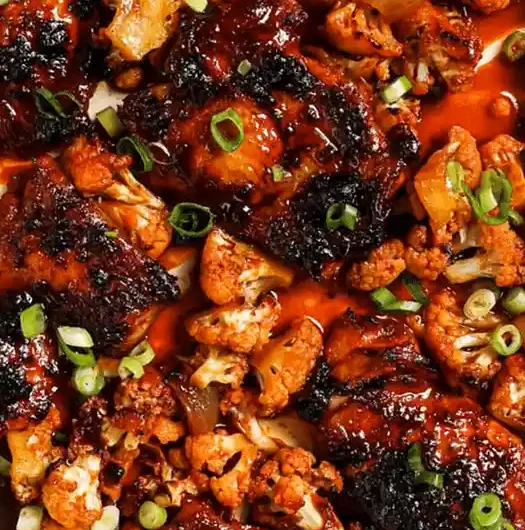
This easy sheet pan dinner combines spicy Korean flavors with roasted vegetables for a complete meal. It is an efficient way to prepare tender chicken and caramelized veggies in a single pan.
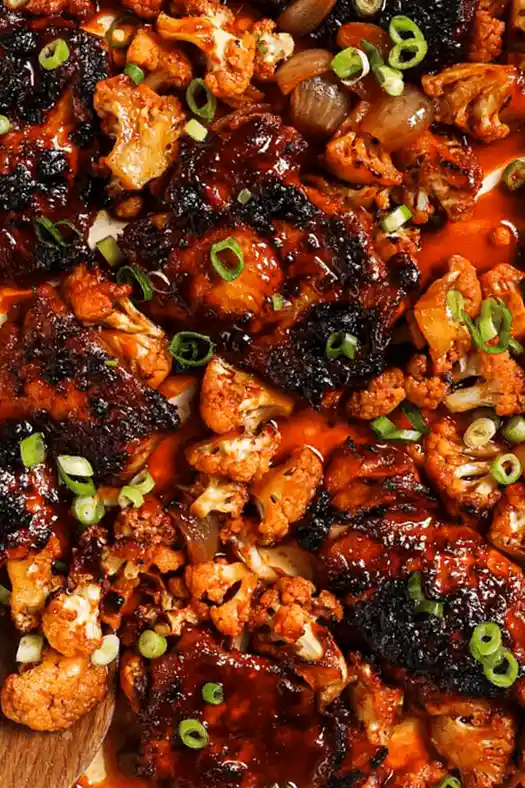
List of ingredients
- 3/4 cup gochujang paste – provides the base spicy and savory flavor.
- 4 tbsp hot honey – adds sweetness and an extra kick of heat.
- 3 tbsp soy sauce – contributes depth and umami.
- 4 tbsp olive oil – used for the marinade and to prevent sticking.
- 1 tbsp toasted sesame oil – adds a nutty aromatic finish.
- 4 boneless chicken thighs – juicy dark meat that holds up well to roasting.
- 1 head cauliflower – cut into medium-large florets for roasting.
- 4 large shallots – halved to provide a mild onion flavor.
- 1 tsp kosher salt – used to season the chicken and vegetables.
- scallions – thinly sliced for a fresh garnish.
step-by-step instructions
- Prepare the marinade: In a large mixing bowl, whisk together the gochujang, hot honey, soy sauce, olive oil, and sesame oil until smooth. Toss the chicken thighs in the bowl until they are fully coated and let them marinate, covered, for at least one hour or up to six hours.
- Heat the oven: Preheat your oven to 425F to ensure a hot environment for roasting.
- Arrange the pan: Place the marinated chicken, cauliflower florets, and halved shallots on a lightly greased baking sheet. Drizzle any remaining marinade over the cauliflower and shallots, then use your hands to coat the vegetables evenly. Sprinkle everything with kosher salt.
- Roast and crisp: Bake for 20-25 minutes, ensuring the internal temperature of the chicken reaches 165°F. For a crispier finish, switch the oven to high broil, move the pan to the top rack, and cook for 2-3 minutes while watching closely to prevent burning.
- Serve: Divide the chicken and roasted vegetables between four plates. Garnish with thinly sliced scallions and serve alongside rice or noodles.
Pro Cooking Tips for Better Results
Use a Digital Meat Thermometer
Checking the internal temperature of the chicken is the only way to ensure it is safe to eat without overcooking. Aim for exactly 165°F in the thickest part of the thigh to keep the meat juicy.
Cut Cauliflower Florets Uniformly
Ensure the cauliflower pieces are roughly the same size to allow them to roast at the same rate. Medium-large florets prevent the smaller pieces from burning before the larger ones soften.
Prevent Pan Sticking
Lightly greasing the baking sheet with a neutral oil or using a high-quality parchment liner prevents the sugary marinade from sticking. This makes cleanup easier and ensures the vegetables release from the pan cleanly.
Monitor the Broiler Closely
The high sugar content in the hot honey and gochujang can cause the chicken to char very quickly under the broiler. Stay by the oven and move the pan the moment the edges look caramelized.
Ingredient Substitutions and Alternatives
Replace Hot Honey with Regular Honey and Chili
If you do not have hot honey, use regular honey mixed with a pinch of cayenne pepper or red chili flakes. This maintains the sweetness while providing the necessary heat.
Swap Chicken Thighs for Chicken Breasts
You can use boneless, skinless chicken breasts, but reduce the roasting time slightly to avoid drying them out. Consider slicing the breasts into thick strips so they cook at the same speed as the vegetables.
Use Broccoli Instead of Cauliflower
Broccoli is an excellent alternative that pairs well with gochujang. Because broccoli can cook faster than cauliflower, add it to the pan 5-10 minutes after the chicken has started roasting.
Substitute Shallots with Red Onion
If shallots are unavailable, use a red onion cut into thick wedges. Red onions provide a bolder flavor and a vibrant color that complements the red gochujang sauce.
Use Avocado Oil for High-Heat Roasting
While olive oil works well, avocado oil has a higher smoke point. This is particularly useful if you prefer a higher oven temperature or a longer broiling time.
Flavor Variations for Different Palates
Add Miso Paste for Extra Umami
Stir 1/2 tablespoon of white or red miso paste into the marinade. This adds a fermented saltiness that deepens the savory profile of the dish.
Increase the Spice Level
For those who prefer more heat, add a teaspoon of sriracha or a pinch of gochugaru (Korean chili flakes) to the sauce. This enhances the fiery kick without altering the overall flavor balance.
Create a Creamier Finish
Drizzle a small amount of Kewpie mayonnaise or a Greek yogurt-lime sauce over the plated chicken. The creaminess helps balance the intensity of the gochujang spice.
Incorporate Toasted Sesame Seeds
Sprinkle toasted sesame seeds over the dish just before serving. This adds a subtle crunch and enhances the nutty aroma provided by the sesame oil.
Serving and Pairing Ideas
Pair with Steamed Jasmine Rice
White jasmine rice is the ideal base for this meal as it absorbs the extra spicy sauce from the pan. The neutral flavor of the rice balances the bold gochujang notes.
Serve with Ramen Noodles
Toss cooked ramen noodles in a small amount of the pan juices for a more filling meal. This transforms the recipe into a hearty noodle bowl with roasted toppings.
Complement with an Asian Cucumber Salad
A chilled cucumber salad with rice vinegar and sesame oil provides a refreshing contrast to the hot, roasted chicken. The acidity cuts through the richness of the chicken thighs.
Add Steamed Bok Choy
For extra greens, serve the sheet pan meal alongside lightly steamed bok choy. This adds a fresh, crisp texture to the plate and increases the nutritional value.
Storage and Preservation
Refrigerate in Airtight Containers
Place leftover chicken and vegetables in a sealed container once they have cooled to room temperature. Store them in the refrigerator for up to 3 to 4 days.
Freeze for Long-Term Storage
Cooked gochujang chicken can be frozen for up to 3 months. Freeze the portions in freezer-safe bags, removing as much air as possible to prevent freezer burn.
Prevent Veggie Sogginess
Store the chicken and cauliflower in separate containers if you plan to keep them for several days. This helps the vegetables maintain a better texture upon reheating.
Reheating Instructions
Quick Microwave Method
Place a portion on a microwave-safe plate and cover it with a damp paper towel. Heat in 1-minute intervals until the chicken is hot throughout to prevent the meat from becoming rubbery.
Oven Reheating for Better Texture
Preheat the oven to 350°F and place the leftovers on a baking sheet. Tent the food with aluminum foil to retain moisture and bake until heated through.
Thawing Frozen Portions
Transfer frozen chicken to the refrigerator several hours before you plan to eat. Slow thawing preserves the texture of the meat much better than rapid defrosting.
Meal Prep and Make-Ahead Advice
Prepare the Marinade in Advance
You can whisk the gochujang sauce together 2-3 days before you plan to cook. Keep it in a sealed jar in the fridge to allow the flavors to meld.
Pre-Cut the Vegetables
Chop the cauliflower and shallots a day early and store them in a breathable bag. This reduces the active prep time on the day of cooking to just a few minutes.
Marinate Overnight
For the deepest flavor penetration, marinate the chicken thighs overnight in the refrigerator. Ensure the bowl is tightly covered to prevent the chicken from absorbing other fridge odors.
Troubleshooting Common Issues
Fixing Burnt Marinade
If the sauce burns during broiling, simply wipe away the charred bits before serving. To prevent this next time, ensure there is enough oil in the marinade to protect the sugars.
Dealing with Undercooked Vegetables
If the chicken is done but the cauliflower is still too firm, remove the chicken from the pan. Return the vegetables to the oven for an additional 5-10 minutes.
Managing Excess Pan Moisture
If the vegetables are steaming rather than roasting, you may have crowded the pan. Use two separate baking sheets to ensure enough airflow around the ingredients for proper browning.
Frequently Asked Questions
What does gochujang taste like?
Gochujang is a fermented Korean chili paste that is simultaneously spicy, sweet, and savory. It has a thick consistency and a deep umami flavor resulting from the fermented soybeans and rice.
Can I use skin-on chicken thighs?
Yes, skin-on thighs work well and provide extra crispiness. However, you may need to increase the roasting time by 5 minutes to ensure the skin renders and the meat is cooked through.
How long can I marinate the chicken?
The minimum marinating time is one hour, while the maximum is six hours. Marinating for too long can break down the muscle fibers too much, potentially affecting the texture of the meat.
Is this dish too spicy for children?
The heat level depends on the brand of gochujang used. To make it milder for children, reduce the amount of gochujang and increase the honey or add a tablespoon of soy sauce.
Print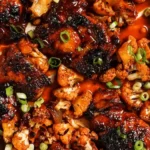
Roasted Gochujang Chicken with Cauliflower and Shallots
- Total Time: 25 minutes
- Yield: 4 servings 1x
- Diet: General
Description
Bold and flavorful, this sheet pan Gochujang Chicken thighs recipe includes roasted veggies for a full meal!
Ingredients
- 3/4 cup gochujang paste
- 4 tbsp hot honey
- 3 tbsp soy sauce
- 4 tbsp olive oil
- 1 tbsp toasted sesame oil
- 4 boneless chicken thighs
- 1 head cauliflower, cut into medium-large florets
- 4 large shallots, halved
- 1 tsp kosher salt
- scallions, thinly sliced
Instructions
- Step: In a large mixing bowl, combine the gochujang, hot honey, soy sauce, olive oil, and sesame oil.
- Step: Add the chicken to the bowl and toss until fully coated.
- Step: Let the chicken marinate, covered for at least one hour or up to six hours.
- Step: Preheat the oven to 425F.
- Step: Arrange the chicken, cauliflower, and shallots on a lightly greased baking sheet.
- Step: Drizzle the remaining marinade over the cauliflower and shallots and using your hands, mix the marinade into them.
- Step: Season everything with salt before baking.
- Step: Bake for 20–25 minutes, or until the internal temperature of the chicken has reached 165°F.
- Step: To crisp your chicken thighs, turn the broiler on high and move the sheet pan up to the top rack. Broil for 2-3 minutes.
- Step: Divide the chicken, cauliflower, and shallots between four plates. Serve with rice, ramen noodles, or more vegetables.
Notes
If the shallots and cauliflower are ready before the chicken, you can remove them and place them on a plate until the chicken is finished cooking. If you don’t plan on serving this with a filling side dish, consider doubling the cauliflower and shallots and baking them on their own pan. Add 1/2 tbsp of miso paste to the marinade for more umami flavor.
- Prep Time: 5 minutes
- Cook Time: 20 minutes
- Category: Main Course
- Method: Baking
- Cuisine: American
Nutrition
- Serving Size: 1 serving
- Calories: 528 kcal
- Sugar: 22 g
- Sodium: 677 mg
- Fat: 23 g
- Saturated Fat: 5 g
- Unsaturated Fat: 18 g
- Trans Fat: 0 g
- Carbohydrates: 25 g
- Fiber: 4 g
- Protein: 23 g
- Cholesterol: 111 mg
Keywords: sheet pan, gochujang chicken, roasted cauliflower, Korean-inspired, one pan dinner