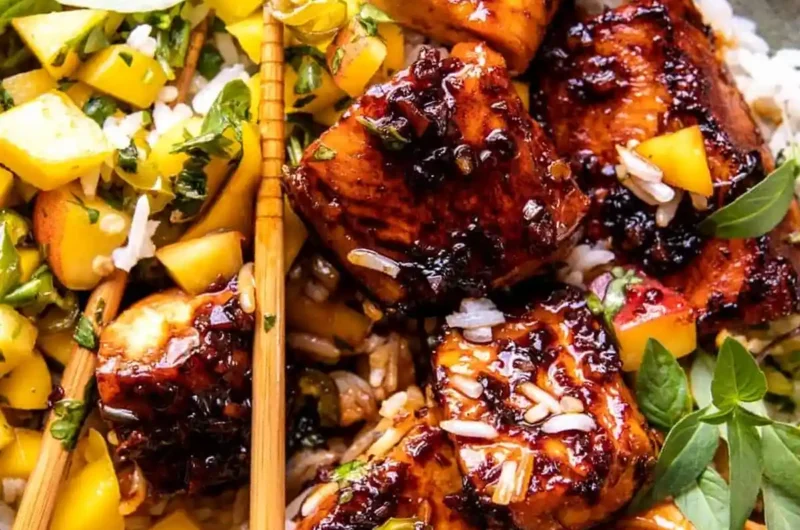
These vibrant bowls combine pan-seared salmon glazed in a sweet and savory ginger sauce with a refreshing fruit salsa. This meal is designed for quick preparation, offering a balanced blend of spicy, sweet, and salty flavors in about 30 minutes.
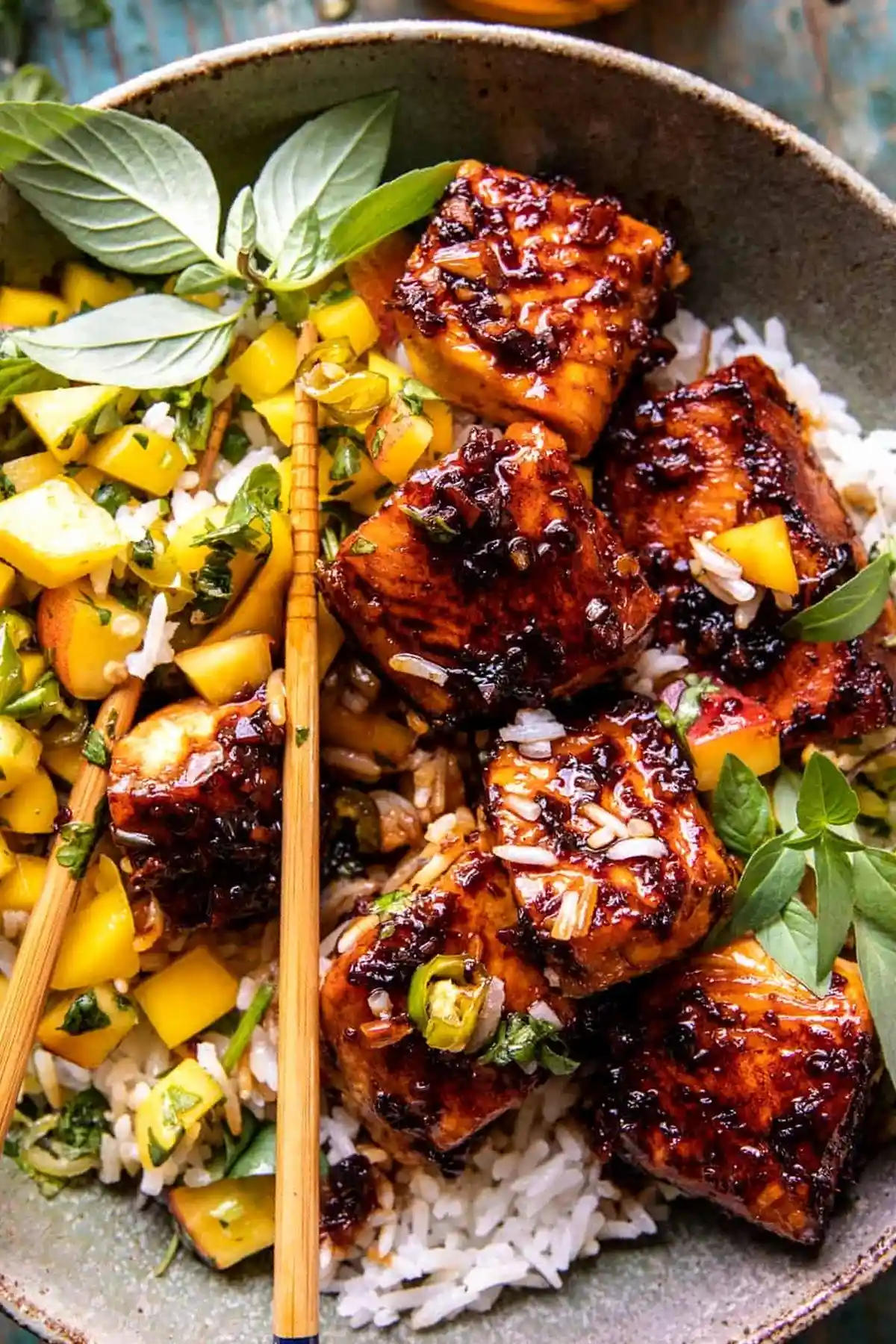
List of ingredients
- 1/4 cup tamari or soy sauce – provides the salty base for the glaze.
- 2 teaspoons fish sauce – adds a deep, savory umami layer.
- 3 tablespoons honey – creates sweetness and a sticky consistency.
- 1 tablespoon fresh grated ginger – adds a pungent, aromatic heat.
- 2 tablespoons chili paste (sambal oelek) – introduces a balanced spicy kick.
- 4 (4-6 ounce) salmon filets, cut into chunks – the main protein source.
- 4 tablespoons salted butter – used for searing to achieve a golden crust.
- 6 cloves garlic, chopped – enhances the savory profile of the sauce.
- 3-4 cups cooked rice – serves as the neutral base for the bowl.
- 1 cup diced mango – adds tropical sweetness to the salsa.
- 1 ripe peach, diced – provides a soft, juicy contrast in the salsa.
- 1/4 cup candied jalapeños – delivers a sweet-heat element.
- 1/4 cup cilantro, chopped – adds a fresh, herbal note.
- 1/4 cup basil, chopped – adds a peppery sweetness.
- 2 tablespoons lime juice – cuts through the richness with acidity.
step-by-step instructions
- Prepare the glaze: In a small mixing bowl, whisk together the tamari, fish sauce, honey, grated ginger, and chili paste until well combined.
- Sear the salmon: Melt the butter in a large skillet over medium-high heat. Place salmon chunks skin side down and cook for 3 minutes until the skin is crisp. Flip the pieces, reduce heat to medium, add the chopped garlic, and cook for one more minute.
- Thicken the sauce: Pour the prepared glaze into the skillet with the salmon. Cook for approximately 3 minutes, stirring occasionally, until the sauce thickens and coats the fish. Remove the salmon from the pan and set aside.
- Deglaze the pan: Pour 1/4 cup of water into the skillet. Scrape the bottom of the pan to release any browned bits and simmer until the sauce emulsifies and thickens again.
- Assemble the salsa: In a separate bowl, combine the diced mango, diced peach, candied jalapeños, cilantro, basil, and lime juice. Toss gently and season with a pinch of salt.
- Plate the bowls: Divide the cooked rice among four bowls. Spoon the glazed salmon over the rice, drizzle with the remaining pan sauce, and top with a generous portion of the fruit salsa.
Techniques for Perfect Salmon
Patting Salmon Dry for Maximum Crispiness
Always use a paper towel to pat the salmon chunks completely dry before they hit the pan. Excess moisture creates steam, which prevents the fish from searing and results in a rubbery texture rather than a crisp crust.
Bringing Fish to Room Temperature Before Cooking
Let the salmon sit at room temperature for about 15 to 20 minutes before searing. This ensures the interior cooks evenly without the exterior burning, leading to a more consistent medium-rare or medium finish.
Selecting the Right Skillet for Searing
Use a stainless steel or cast-iron skillet to achieve the best sear. These materials retain heat more effectively than non-stick pans, which is essential for developing the caramelized edges on the salmon chunks.
Avoiding Pan Overcrowding to Maintain Heat
Ensure there is plenty of space between the salmon chunks in the pan. Overcrowding drops the surface temperature of the oil or butter, which leads to the fish poaching in its own juices instead of searing.
Ingredient Substitutions and Variations
Using Alternative Grain Bases
While jasmine rice is traditional, you can substitute it with brown rice or quinoa for added fiber. Coconut rice is also an excellent choice, as the creaminess complements the spicy ginger glaze.
Swapping Tropical Fruits in the Salsa
If mangoes or peaches are out of season, try using diced pineapple or papaya. These fruits provide the same acidic and sweet balance needed to contrast the salty glaze of the salmon.
Adding Nutrient-Dense Vegetable Mix-ins
Incorporate steamed edamame, shredded carrots, or sliced cucumbers into the bowl for extra texture. These vegetables add a fresh crunch and increase the nutritional value of the meal.
Adjusting the Heat Level of the Dish
To reduce the spice, use a milder chili paste or omit the candied jalapeños. For those who prefer more heat, add a drizzle of Sriracha or a pinch of crushed red pepper flakes to the glaze.
Managing the Glaze
Using Maple Syrup Instead of Honey
If you prefer a different sweetness, maple syrup is a suitable replacement for honey. It provides a slightly more woody flavor and similar viscosity, though it may brown faster due to different sugar structures.
Controlling Saltiness with Tamari Adjustments
If the sauce tastes too salty, add an extra teaspoon of honey or a squeeze of lime juice. This helps balance the sodium from the tamari and fish sauce without altering the overall volume of the glaze.
Preventing the Sauce from Burning
Honey-based sauces can burn quickly if the heat is too high. Always reduce the burner to medium once the glaze is added to the pan to ensure it thickens slowly without scorching.
Deglazing the Pan for Extra Flavor
Adding water to the pan after removing the salmon is a critical step to recover the fond. These browned bits contain concentrated flavor that makes the final sauce richer and more cohesive.
Storing and Warming Leftovers
Refrigeration Guidelines for Salmon Bowls
Store the salmon, rice, and salsa in separate airtight containers in the refrigerator. Keeping the salsa separate prevents the rice and fish from becoming soggy and preserves the freshness of the fruit.
Best Method for Reheating Salmon
Reheat the salmon and rice in a skillet over medium heat with a splash of water or a small knob of butter. Avoid the microwave if possible, as it can make the salmon rubbery and dry.
Freezing the Glazed Salmon
The cooked salmon can be frozen for up to two weeks in a vacuum-sealed bag. However, the fruit salsa does not freeze well and should be consumed fresh or discarded before freezing.
Maintaining Salsa Freshness
The mango peach salsa will stay fresh for about two days in the fridge. Stir in a small amount of fresh lime juice before serving leftovers to revive the bright flavors and acidity.
Efficiency and Prep Tips
Pre-Mixing the Glaze for Speed
Whisk the tamari, fish sauce, honey, ginger, and chili paste in a jar the night before. This allows the flavors to meld and saves significant time during the actual cooking process.
Preparing the Salsa in Advance
The fruit salsa can be made several hours ahead of time and kept chilled. The flavors actually improve as the fruit marinates in the lime juice and cilantro.
Optimizing Rice Cooking Time
Start the rice first, as it takes the longest to cook and requires a resting period. This ensures the rice is fluffy and ready the moment the salmon finishes searing.
Organizing Ingredients with Mise en Place
Chop the garlic, ginger, and fruits before turning on the stove. Because the salmon cooks quickly, having all ingredients prepped prevents the garlic from burning while you search for the salsa components.
Common Cooking Fixes
Preventing Salmon from Sticking to the Pan
Wait for the butter to stop foaming and start to brown slightly before adding the fish. If the salmon doesn’t release easily after 3 minutes, it likely needs more time to develop a crust.
Fixing a Sauce That Is Too Thin
If the glaze hasn’t thickened enough, simmer it for an additional minute without the salmon. The reduction process concentrates the sugars in the honey, creating a sticky coating.
Correcting Overcooked Salmon
If the salmon is overcooked, serve it with extra salsa and a drizzle of lime juice. The acidity and moisture from the fruit help mask the dryness of over-seared fish.
Balancing Too Much Ginger Flavor
If the ginger is too overpowering, add a small amount of brown sugar or a splash of water. This dilutes the pungency of the fresh ginger and rounds out the flavor profile.
Frequently Asked Questions
Can I use frozen salmon filets?
Yes, but they must be completely thawed and patted dry. Cooking frozen salmon directly can lead to uneven cooking and a lack of crispiness on the exterior.
What is sambal oelek and where do I find it?
Sambal oelek is a Southeast Asian chili paste made from crushed raw chilies, vinegar, and salt. It is commonly found in the international aisle of most grocery stores.
Can I make this recipe dairy-free?
Substitute the salted butter with an equal amount of avocado oil or a plant-based butter alternative. This will maintain the searing capability while removing the dairy.
How do I make candied jalapeños at home?
Simmer 1/3 cup of honey for a few minutes, then pour it over sliced jalapeños in a jar with 2 tablespoons of apple cider vinegar and a pinch of salt.
Which type of rice works best for this dish?
Jasmine rice is preferred for its aroma and texture, but basmati or short-grain sushi rice are also excellent options for soaking up the glaze.
Print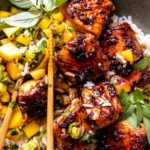
Crispy Honey Ginger Salmon Bowls
- Total Time: 30 minutes
- Yield: 4 servings 1x
- Diet: General
Description
Served with a fresh mango salsa with candied jalapeños for a balance of spicy, sweet, and savory…and made in 30 mins!
Ingredients
- 1/4 cup tamari or soy sauce
- 2 teaspoons fish sauce
- 3 tablespoons honey
- 1 tablespoon fresh grated ginger
- 2 tablespoons chili paste (sambal oelek)
- 4 (4-6 ounce) salmon filets, cut into chunks
- 4 tablespoons salted butter
- 6 cloves garlic, chopped
- 3–4 cups cooked rice
- 1 cup diced mango
- 1 ripe peach, diced
- 1/4 cup candied jalapeños
- 1/4 cup cilantro, chopped
- 1/4 cup basil, chopped
- 2 tablespoons lime juice
Instructions
- Step: In a bowl, combine the tamari, fish sauce, honey, ginger, and chili paste.
- Step: Melt the butter in a large skillet over medium-high heat. Add the salmon, skin side down and cook for 3 minutes, until the salmon is crisp. Flip, reduce the heat to medium and add the garlic. Cook another minute.
- Step: Pour in the sauce. Cook another 3 minute, until the sauce thickens. Remove the salmon from the skillet.
- Step: To the skillet add 1/4 cup water. Scrape up any sauce in the pan and simmer until the sauce comes back together.
- Step: Meanwhile, make the salsa. Combine all ingredients in a bowl. Season with salt.
- Step: Spoon the salmon over the bowls of rice. Pour the sauce over the salmon. Top with the salsa and enjoy!
Notes
Coconut Rice: Combine 1 (14 oz) can coconut milk, 1/2 cup water, 1 cup jasmine rice, and a pinch of salt. Boil, then cook on lowest setting for 10 mins, and sit covered for 15-20 mins. Candied Jalapeños: Simmer 1/3 cup honey for 3-5 mins, then pour over sliced jalapeños with 2 tbsp apple cider vinegar and a pinch of salt.
- Prep Time: 20 minutes
- Cook Time: 10 minutes
- Category: Main Course
- Method: Stovetop
- Cuisine: American
Nutrition
- Serving Size: 1 bowl
- Calories: 499 kcal
- Sugar: 18 g
- Sodium: 850 mg
- Fat: 22 g
- Saturated Fat: 9 g
- Unsaturated Fat: 13 g
- Trans Fat: 0 g
- Carbohydrates: 45 g
- Fiber: 4 g
- Protein: 30 g
- Cholesterol: 95 mg
Keywords: salmon bowl, honey ginger salmon, mango salsa, quick dinner, summer recipe