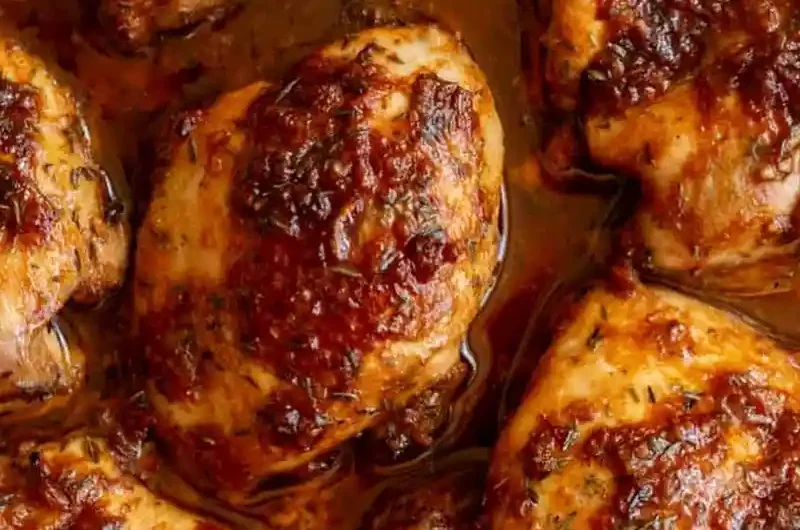
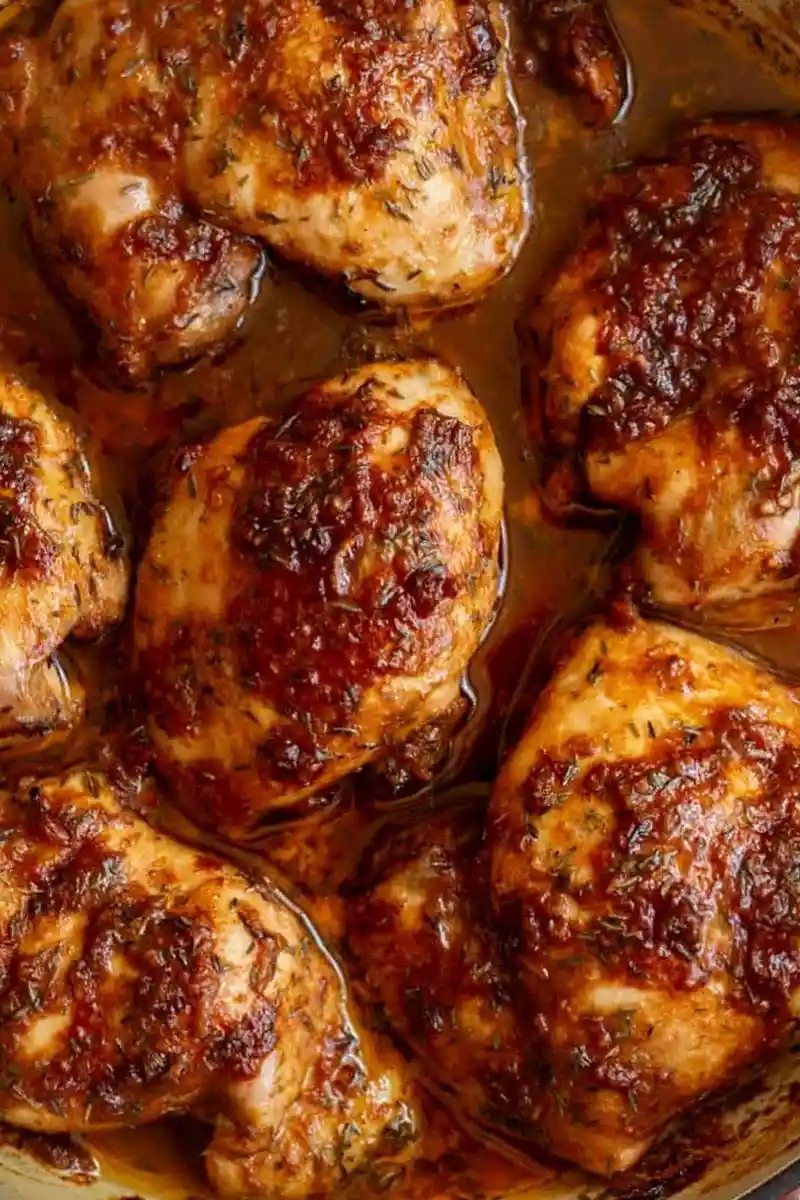
These oven-baked balsamic chicken thighs provide a perfect balance of savory and tangy notes with a signature sticky glaze that keeps the meat moist. This one-pan dinner is designed for busy weeknights, offering a simple preparation method that yields tender, flavor-packed results every time. By utilizing boneless, skinless thighs, you ensure a juicy texture that pairs exceptionally well with the concentrated balsamic marinade.
List of ingredients
- 2.5-3 pounds boneless skinless chicken thighs
- 1/2 cup extra virgin olive oil
- 1/4 cup balsamic vinegar
- 2 tablespoons Dijon mustard
- 2 tablespoons brown sugar
- 1 tablespoon tomato paste
- 1 tablespoon dried thyme
- 2 teaspoons kosher salt
step-by-step instructions
- Step: Mix the olive oil, balsamic vinegar, Dijon mustard, brown sugar, tomato paste, thyme, and salt in a small bowl and whisk until fully combined.
- Step: Place the boneless chicken thighs in a large mixing bowl or directly in the baking dish. Pour the marinade over the chicken thighs and toss until the chicken is fully coated in the balsamic marinade.
- Step: Cover with plastic wrap and let the chicken marinate in the refrigerator for at least 30 minutes or up to 2 hours.
- Step: Preheat your oven to 425°F. Transfer the chicken thighs to an oven-safe baking dish and arrange them in a single layer with the smooth side up.
- Step: Roast the chicken thighs for 25 minutes or until cooked through.
- Step: Once fully cooked, broil under high heat for 5 minutes to caramelize the tops.
- Step: Remove from the oven and let the chicken thighs rest for about 10 minutes, then serve, and enjoy!
Kitchen preparation tactics
Choosing the right baking vessel
Using a heavy-duty ceramic or enameled cast iron dish is ideal for this recipe. These materials hold heat consistently, which helps the edges of the balsamic marinade to caramelize properly without burning the bottom of the dish.
Consistent size for even cooking
When selecting your chicken thighs, try to choose pieces that are similar in size. If your package contains both very large and small thighs, consider placing the larger ones toward the edges of the pan where heat circulation is slightly more intense.
Managing marinade thickness
The tomato paste in this recipe is crucial not just for flavor, but for viscosity. If you find your marinade is too thin, ensure the tomato paste is whisked thoroughly so it can emulsify with the olive oil and vinegar during the roasting phase.
Refining your seasoning and profiles
Balancing the acid and sweetness
If you prefer a more pronounced sweet profile, you can increase the brown sugar by an extra half-tablespoon. Conversely, if you prefer a sharper, more acidic bite, finish the dish with a tiny splash of additional balsamic vinegar right after it leaves the oven.
Alternative sweetener options
While brown sugar provides a deep, molasses-like sweetness that is perfect for caramelization, raw honey or agave nectar are suitable alternatives. Note that honey may cause the glaze to darken slightly faster under the broiler, so keep a close watch during the final five minutes.
Selecting the right dried herbs
While dried thyme is the traditional pairing, dried oregano or an Italian seasoning blend can provide a different aromatic profile. Always crush the dried herbs between your fingers before adding them to the marinade to release their essential oils.
Smart storage and preparation
Maintaining quality in the refrigerator
Store your leftovers in an airtight glass or plastic container to prevent the balsamic aroma from permeating other items in your fridge. Properly sealed, the chicken will remain safe and flavorful for up to four days.
Freezing for future meals
This dish freezes exceptionally well, making it a great candidate for meal prep. Place the cooked chicken in a freezer-safe bag, pressing out as much air as possible to prevent ice crystals from forming, and store it for up to three months.
Gentle reheating methods
To reheat, it is best to place the chicken in a baking dish and add a tablespoon of water or broth to the pan. Cover tightly with foil and heat in a 350°F oven; the added moisture creates steam that keeps the meat from drying out.
Practical serving suggestions
Selecting complementary side dishes
The acidic, sticky glaze of this chicken pairs perfectly with mild, starchy sides that can soak up the excess sauce. Creamy mashed potatoes, buttered noodles, or roasted cauliflower are excellent choices that balance the intensity of the balsamic reduction.
Adding fresh textures
Consider serving this dish with a side of steamed broccoli or sautéed green beans tossed with a bit of lemon zest. The brightness of fresh, crisp vegetables helps cut through the richness of the chicken thigh meat and the sugar in the marinade.
Frequently asked questions
How can I tell when the chicken is fully cooked?
The most reliable method is to use a digital meat thermometer inserted into the thickest part of the largest thigh. You are looking for a reading of 165°F to ensure safety while maintaining the pull-apart tender texture that makes this recipe so popular.
Why is broiling the final step so important?
The broil stage is responsible for the signature sticky glaze that defines this dish. Without the high heat of the broiler, the marinade remains liquid; the intense heat caramelizes the sugars in the brown sugar and balsamic vinegar, turning them into a rich coating.
Can I prepare this in a slow cooker?
Yes, you can adapt this for a slow cooker by adding all ingredients into the basin and cooking on low for 4 to 5 hours. Keep in mind that the slow cooker method will not produce the same caramelized, sticky topping as the oven-roasting method, but it will yield very tender meat.
Is it necessary to trim the fat from the thighs?
While some fat is desirable for moisture, excessive thick deposits of fat can make the sauce greasy rather than sticky. A quick trim of any loose, dangling pieces of fat before marinating helps create a cleaner final dish.
Print
Oven-Baked Balsamic Chicken Thighs
- Total Time: 70 minutes
- Yield: 6 servings 1x
- Diet: High Protein
Description
Savory, tangy, and slightly sweet, these balsamic chicken thighs are a tender, pull-apart delight. With a sticky balsamic glaze, they are perfect for a simple family dinner. Marinating is optional, and slow cooker instructions are included.
Ingredients
- 2.5–3 pounds boneless skinless chicken thighs
- 1/2 cup extra virgin olive oil
- 1/4 cup balsamic vinegar
- 2 tablespoons Dijon mustard
- 2 tablespoons brown sugar
- 1 tablespoon tomato paste
- 1 tablespoon dried thyme
- 2 teaspoons kosher salt
Instructions
- Step: Mix the olive oil, balsamic vinegar, Dijon mustard, brown sugar, tomato paste, thyme, and salt in a small bowl and whisk until fully combined.
- Step: Place the boneless chicken thighs in a large mixing bowl or directly in the baking dish. Pour the marinade over the chicken thighs and toss until the chicken is fully coated in the balsamic marinade.
- Step: Cover with plastic wrap and let the chicken marinate in the refrigerator for at least 30 minutes or up to 2 hours.
- Step: Preheat your oven to 425°F. Transfer the chicken thighs to an oven-safe baking dish and arrange them in a single layer with the smooth side up.
- Step: Roast the chicken thighs for 25 minutes or until cooked through.
- Step: Once fully cooked, broil under high heat for 5 minutes to caramelize the tops.
- Step: Remove from the oven and let the chicken thighs rest for about 10 minutes, then serve, and enjoy!
Notes
Test for doneness using a meat thermometer to ensure the internal temperature reaches 165°F. Cooking times may vary based on the size of the thighs. You can store leftovers in an airtight container for 3-4 days.
- Prep Time: 5 minutes
- Cook Time: 35 minutes
- Category: Dinner
- Method: Baking
- Cuisine: American
Nutrition
- Serving Size: 1 thigh
- Calories: 416 kcal
- Sugar: 6 g
- Sodium: 1024 mg
- Fat: 26 g
- Saturated Fat: 4 g
- Unsaturated Fat: 20 g
- Trans Fat: 0 g
- Carbohydrates: 7 g
- Fiber: 1 g
- Protein: 37 g
- Cholesterol: 180 mg
Keywords: balsamic chicken, chicken thighs, dinner, oven-baked, easy recipe