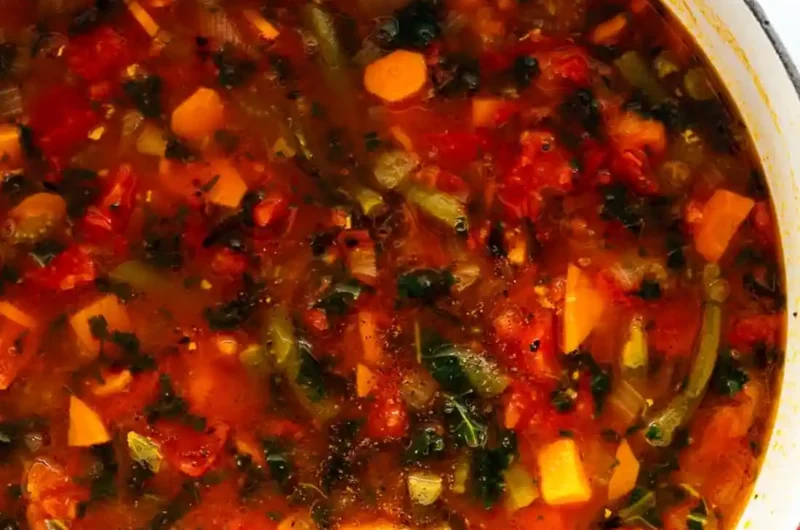
This vegetable soup is a versatile, nutrient-packed meal perfect for cold days or light dining. It combines basic pantry staples with fresh produce to create a rich and satisfying broth.
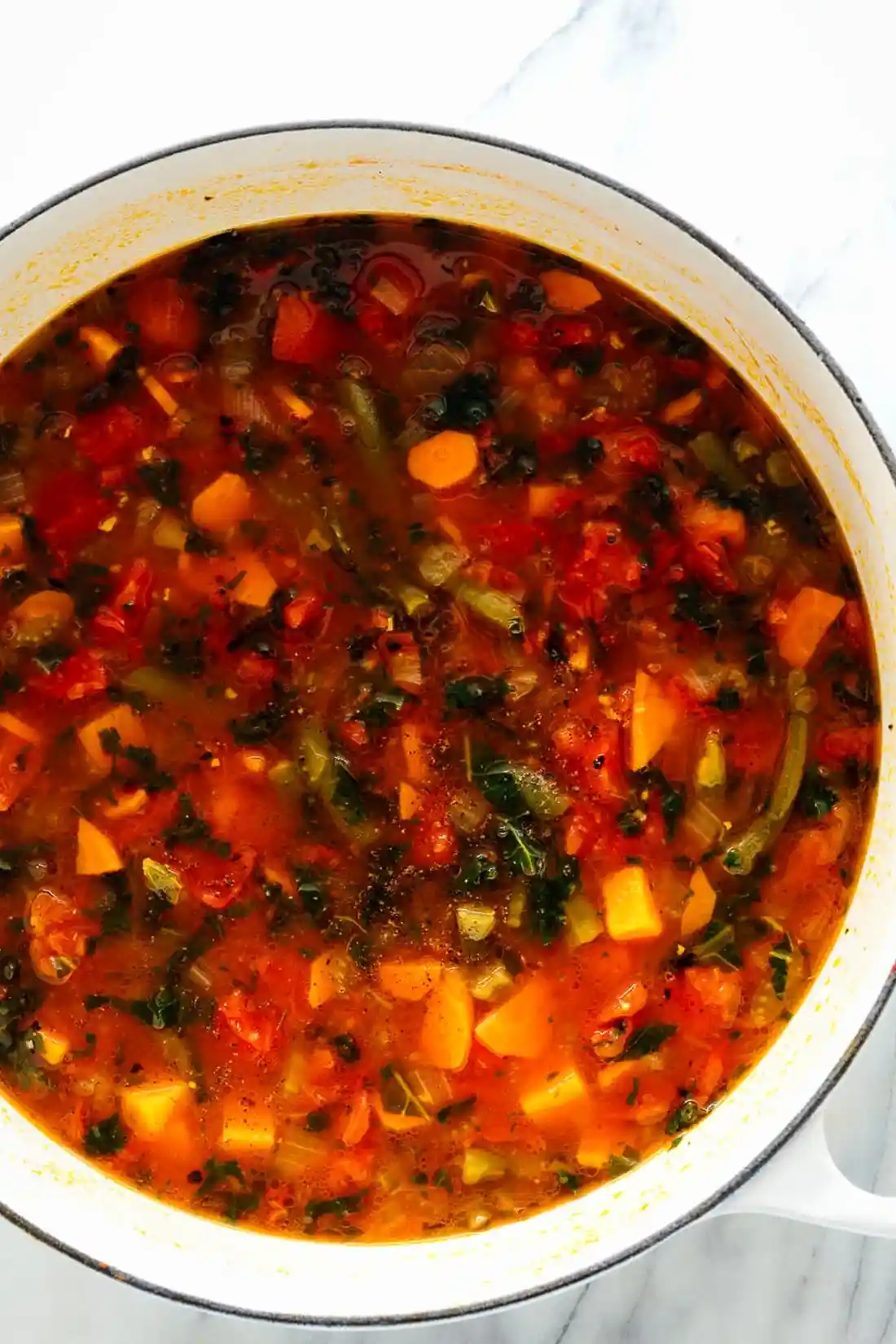
List of ingredients
- 4 tablespoons extra-virgin olive oil, divided – used for sautéing and finishing.
- 1 medium yellow or white onion, chopped – provides a savory base.
- 3 carrots, peeled and chopped – adds natural sweetness.
- 2 celery stalks, chopped – adds aromatic depth.
- 2 cups chopped seasonal vegetables – such as sweet potatoes, green beans, butternut squash, potatoes, bell pepper, zucchini or yellow squash.
- 1 teaspoon fine sea salt, divided – used to season in layers.
- 6 cloves garlic, pressed or minced – for pungent flavor.
- ½ teaspoon curry powder – provides warmth and subtle depth.
- ½ teaspoon dried thyme – adds an earthy herbal note.
- 1 large can (28 ounces) diced tomatoes – for acidity and body.
- 4 cups (32 ounces) vegetable broth – the main liquid base.
- 2 cups water – to adjust consistency.
- 2 bay leaves – adds a subtle floral aroma.
- ½ teaspoon red pepper flakes – adds optional heat.
- Freshly ground black pepper, to taste – basic seasoning.
- 2 cups chopped kale or collard greens or chard (thick ribs removed), or spinach – for nutrients and color.
- 1 tablespoon lemon juice – brightens the final taste.
step-by-step instructions
- Sauté Aromatics: Warm 3 tablespoons of the olive oil in a large Dutch oven or soup pot over medium heat. Once the oil is shimmering, add the chopped onion, carrot, celery, seasonal vegetables and ½ teaspoon of the salt. Cook, stirring often, until the onion has softened and is turning translucent, about 6 to 8 minutes.
- Bloom Spices: Add the garlic, curry powder and thyme. Cook until fragrant while stirring frequently, about 1 minute. Pour in the diced tomatoes with their juices and cook for a few more minutes, stirring often.
- Simmer Broth: Pour in the broth and water. Add ½ teaspoon more salt, 2 bay leaves and the red pepper flakes. Season generously with freshly ground black pepper. Raise the heat and bring the mixture to a boil, then partially cover the pot and reduce heat to maintain a gentle simmer.
- Wilt Greens: Cook for 25 minutes, then remove the lid and add the chopped greens. Continue simmering for 5 minutes or more, until the greens have softened to your liking.
- Final Touch: Remove the pot from heat and remove the bay leaves. Stir in the lemon juice and remaining 1 tablespoon of olive oil. Taste and season with more salt, pepper and/or red pepper flakes. Divide into bowls and enjoy.
Selecting Seasonal Add-ins
Autumn Root Vegetables
Use cubed butternut squash or sweet potatoes for a creamier texture. These root vegetables add a natural sweetness that balances the acidity of the tomatoes. They hold their shape well during the 25-minute simmer.
Summer Garden Produce
Incorporate chopped zucchini, yellow squash, or bell peppers for a lighter version. These vegetables cook quickly and keep the soup tasting fresh. They are ideal for warmer months when root vegetables are less available.
Spring Green Varieties
Add fresh peas or asparagus during the last 10 minutes of cooking. These additions keep the soup vibrant and seasonal. They provide a crisp contrast to the softer cooked carrots and onions.
Flavor Layering Strategies
The Importance of Salt Timing
Adding salt at the start with the aromatics draws out moisture from the vegetables. This allows them to sauté better and develops a deeper flavor profile. Seasoning in stages prevents the soup from tasting flat.
Using Curry Powder for Complexity
A small amount of curry powder adds an elusive warmth without making the soup taste like a traditional curry. It enhances the earthy tones of the carrots and celery. This is the key ingredient for a professional taste.
Finishing with Acidity
Stirring in lemon juice at the very end cuts through the richness of the oil and broth. This brightening effect wakes up all the other flavors in the pot. It is a simple trick to make the vegetables taste fresher.
Adding Oil as a Final Touch
A final tablespoon of olive oil adds a silky mouthfeel and a rich aroma. This technique is common in Mediterranean cooking to enrich the broth. It ensures the soup feels hearty and satisfying.
Protein and Texture Modifications
Incorporating Legumes
Add a can of drained chickpeas or cannellini beans during the simmering stage. This increases the protein content and makes the soup more filling. Legumes absorb the flavors of the broth beautifully.
Thickening the Broth
Use an immersion blender to puree a small portion of the soup directly in the pot. This creates a thicker consistency without needing to add flour or cornstarch. It maintains the nutritional integrity of the ingredients.
Adding Whole Grains
Stir in cooked quinoa or farro just before serving. Grains provide a chewy texture and additional fiber to the meal. Ensure the grains are pre-cooked so they do not absorb all the broth.
Storage and Long-term Preservation
Optimal Refrigeration
Store the soup in airtight glass containers in the fridge for up to 4 days. Keep the containers shallow to ensure the soup cools quickly and safely. This prevents bacterial growth and maintains quality.
Freezing for Future Use
Freeze the soup in freezer-safe bags or containers for up to 3 months. Leave a small amount of headspace to allow for expansion during freezing. This is an excellent way to prepare meals in bulk.
Thawing Instructions
Thaw the soup in the refrigerator overnight before heating. If you are in a rush, use the defrost setting on your microwave. Avoid thawing at room temperature to ensure food safety.
Reheating Guidelines
Stovetop Reheating
Place the soup in a pot over medium-low heat and stir occasionally. Add a splash of water or broth if the soup has thickened too much in the fridge. Heating slowly prevents the vegetables from breaking down.
Microwave Reheating
Heat in a microwave-safe bowl in 1-minute intervals. Stir between intervals to ensure the heat is distributed evenly. This prevents hot spots and ensures the greens are heated through.
Solving Common Cooking Issues
Managing Soup Consistency
If the soup is too thin, simmer it without a lid for an extra 10 minutes to reduce the liquid. If it is too thick, simply stir in more vegetable broth. Adjusting the liquid is the easiest way to customize the mouthfeel.
Preventing Overcooked Greens
Add the greens at the very end of the cooking process. Only simmer them until they are wilted to preserve their color and nutrients. Overcooking greens can make them lose their vibrant green hue.
Balancing Too Much Acidity
If the lemon juice or tomatoes make the soup too tart, add a pinch of sugar or maple syrup. This neutralizes the acidity without altering the overall flavor. A very small amount is usually sufficient.
Serving Suggestions
Pairing with Crusty Bread
Serve the soup with toasted sourdough or a warm baguette. The bread is perfect for soaking up the flavorful broth. Brush the bread with garlic butter for extra taste.
Adding Cheese Toppings
Garnish the soup with a sprinkle of microbial-rennet parmesan or a dollop of vegan ricotta. This adds a salty, creamy contrast to the fresh vegetable flavors. It transforms the soup into a more indulgent meal.
Grain Side Pairings
Serve alongside a portion of steamed brown rice or wild rice. This adds a nutty flavor and increases the satiety of the dish. It is a great option for those needing extra calories.
Make-Ahead Advice
Pre-chopping Vegetables
Chop the onion, carrots, and celery a day in advance and store them in a sealed container. This significantly reduces the active prep time on the day of cooking. Store them together as a mirepoix mix.
Batch Cooking for the Week
Prepare a double batch of the soup to cover multiple lunches. This saves time and energy by using the stove only once. The flavor often improves after a day in the fridge.
Using Meal Prep Containers
Divide the soup into individual portions immediately after cooling. This makes it easier to grab and go during a busy work week. Use leak-proof lids to avoid spills in your bag.
Nutritional Optimization
Maximizing Vitamin Retention
Keep the simmering heat gentle rather than a rolling boil. High heat can degrade some of the water-soluble vitamins in the vegetables. A gentle simmer preserves the nutritional value.
Low Sodium Options
Use a low-sodium vegetable broth to control the overall salt intake. You can then add sea salt gradually to taste, ensuring the flavor is balanced. This is healthier for those monitoring salt intake.
Adding Healthy Fats
Include avocado slices on top of the finished bowl. The healthy fats in the avocado help your body absorb the fat-soluble vitamins from the carrots and greens. It also adds a creamy texture.
Pot Selection and Equipment
Dutch Oven Benefits
A heavy-bottomed Dutch oven provides the most even heat distribution. This prevents the vegetables from burning during the sauté phase. It also transitions easily from the stove to the oven if needed.
Stainless Steel Pots
Stainless steel is a great alternative if you do not have a Dutch oven. Ensure you use enough oil to prevent sticking. These pots are durable and non-reactive with the acidic tomatoes.
Slow Cooker Conversion
Sauté the aromatics and spices in a pan first, then transfer them to the crockpot. Add the broth and water, then cook on low for 6 to 8 hours. Add the greens and lemon juice in the final 30 minutes.
Frequently Asked Questions
Is this soup gluten-free?
Yes, all the ingredients used in this recipe are naturally gluten-free. Ensure your vegetable broth is certified gluten-free if you have a strict allergy.
Can I use frozen vegetables?
Yes, frozen mixed vegetables can be used as the seasonal component. Add them during the initial sauté phase or slightly later if they are pre-blanched.
Which greens work best?
Kale and collard greens hold their texture well during simmering. Spinach and chard wilt quickly, so they should be added in the final minute of cooking.
How do I make it spicier?
Increase the amount of red pepper flakes during the simmering stage. You can also stir in a pinch of cayenne pepper or sriracha at the end for extra heat.
Print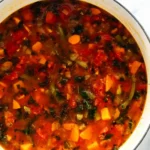
Hearty and Flavorful Vegetable Soup
- Total Time: 1 hour
- Yield: 6 bowls 1x
- Diet: Vegan, Gluten-free
Description
This vegetable soup recipe is seriously so good! It’s easy to make, and full of veggies and fresh flavor. If you’re feeing under the weather or just wanting to lighten up your meals, this soup is the answer. Recipe yields 6 bowls of soup.
Ingredients
- 4 tablespoons extra-virgin olive oil, divided
- 1 medium yellow or white onion, chopped
- 3 carrots, peeled and chopped
- 2 celery stalks, chopped
- 2 cups chopped seasonal vegetables, such as sweet potatoes, green beans, butternut squash, potatoes, bell pepper, zucchini or yellow squash
- 1 teaspoon fine sea salt, divided, to taste
- 6 cloves garlic, pressed or minced
- ½ teaspoon curry powder
- ½ teaspoon dried thyme
- 1 large can (28 ounces) diced tomatoes
- 4 cups (32 ounces) vegetable broth
- 2 cups water
- 2 bay leaves
- ½ teaspoon red pepper flakes, reduce or omit if sensitive to spice
- Freshly ground black pepper, to taste
- 2 cups chopped kale or collard greens or chard (thick ribs removed), or spinach
- 1 tablespoon lemon juice
Instructions
- Step: Warm 3 tablespoons of the olive oil in a large Dutch oven or soup pot over medium heat. Once the oil is shimmering, add the chopped onion, carrot, celery, seasonal vegetables and ½ teaspoon of the salt. Cook, stirring often, until the onion has softened and is turning translucent, about 6 to 8 minutes.
- Step: Add the garlic, curry powder and thyme. Cook until fragrant while stirring frequently, about 1 minute. Pour in the diced tomatoes with their juices and cook for a few more minutes, stirring often.
- Step: Pour in the broth and water. Add ½ teaspoon more salt, 2 bay leaves and the red pepper flakes. Season generously with freshly ground black pepper. Raise the heat and bring the mixture to a boil, then partially cover the pot and reduce heat to maintain a gentle simmer.
- Step: Cook for 25 minutes, then remove the lid and add the chopped greens. Continue simmering for 5 minutes or more, until the greens have softened to your liking.
- Step: Remove the pot from heat and remove the bay leaves. Stir in the lemon juice and remaining 1 tablespoon of olive oil. Taste and season with more salt, pepper and/or red pepper flakes. Divide into bowls and enjoy.
Notes
This soup keeps well in the refrigerator for about 4 days. It freezes and defrosts well for later use.
- Prep Time: 15 minutes
- Cook Time: 45 minutes
- Category: Soup
- Method: Stovetop
- Cuisine: Mediterranean
Nutrition
- Serving Size: 1 bowl
- Calories: 185 kcal
- Sugar: 8 g
- Sodium: 950 mg
- Fat: 11 g
- Saturated Fat: 1.5 g
- Unsaturated Fat: 9.5 g
- Trans Fat: 0 g
- Carbohydrates: 19 g
- Fiber: 6 g
- Protein: 5 g
- Cholesterol: 0 mg
Keywords: vegetable soup, healthy, vegan, gluten free, Mediterranean, hearty soup