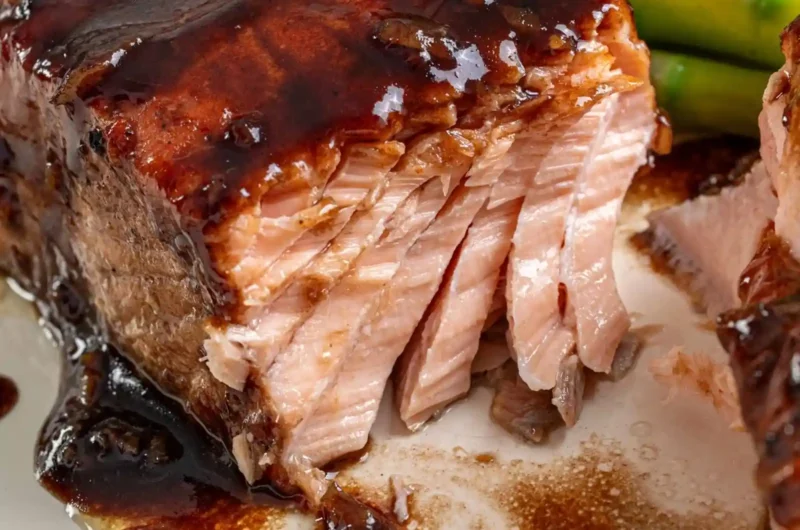
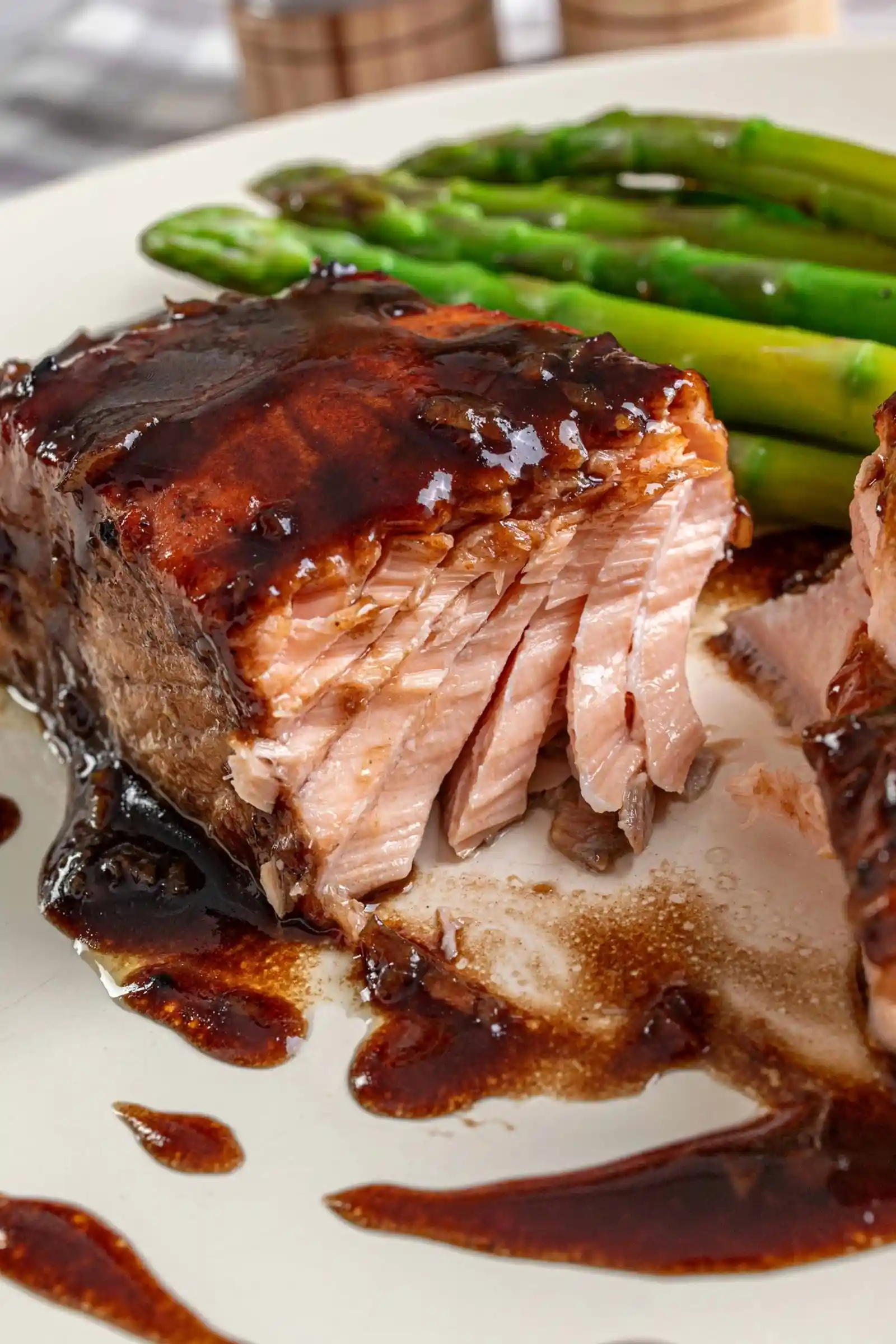
This fast-cooking salmon dish combines a sweet honey glaze with tangy balsamic vinegar for a restaurant-quality meal. It is a high-protein option that takes only 25 minutes to prepare and cook.
List of ingredients
- 4 salmon fillets (6 oz each) – skin on or off depending on preference.
- Salt and freshly ground black pepper to taste – for basic seasoning.
- 2 teaspoons olive oil – used to sauté the garlic.
- 1/3 cup balsamic vinegar – the primary tangy base for the glaze.
- 2 tablespoons honey – adds sweetness and helps the sauce thicken.
- 1 tablespoon Dijon mustard – provides depth and helps emulsify the glaze.
- 2 cloves garlic (minced) – for a savory aromatic punch.
step-by-step instructions
- Preheat your oven to 400 degrees F.
- Season the salmon fillets with salt and pepper on both sides.
- Heat olive oil in a small saucepan over medium heat. Add minced garlic and sauté until fragrant, about 1 minute.
- Add balsamic vinegar, honey, and Dijon mustard to the pan. Stir to combine and bring the mixture to a simmer. Reduce heat and let it simmer until the sauce thickens slightly, about 4-5 minutes.
- Place the salmon fillets on a baking sheet lined with foil. Brush the fillets generously with the balsamic glaze.
- Bake in the preheated oven for about 12-15 minutes, or until the salmon is cooked through and flakes easily with a fork.
- Serve the salmon hot, drizzled with any remaining glaze from the pan.
Professional Salmon Cooking Techniques
Checking for Doneness Using the Flake Method
The most reliable way to tell if salmon is cooked without a thermometer is to use a fork. Gently press the fork into the thickest part of the fillet and twist slightly. If the flesh flakes easily along the natural white lines, it is ready.
Using a Meat Thermometer for Precision
For those who prefer exact temperatures, use a digital instant-read thermometer. The USDA recommends an internal temperature of 145 degrees F. However, many chefs pull the fish at 135 degrees F and let it carry over to avoid drying out the meat.
Preventing Salmon from Sticking to the Pan
Lining your baking sheet with aluminum foil or parchment paper is essential for this recipe. This prevents the honey in the glaze from caramelizing and sticking to the metal. It also makes the cleanup process significantly faster.
Ensuring Even Cooking with Consistent Fillet Size
Try to purchase salmon fillets that are of similar thickness and weight. If one piece is significantly thicker than the others, it may remain raw while the others overcook. You can gently press the thicker parts down or cut them into more uniform shapes.
Customizing Your Balsamic Glaze
Replacing Honey with Maple Syrup
Maple syrup is an excellent alternative to honey and provides a more woody, autumnal sweetness. Use the same 2-tablespoon measurement to maintain the balance of the sauce. This works particularly well if you are serving the dish during the fall season.
Using Brown Sugar for Deeper Caramelization
If you prefer a thicker, more syrupy glaze, replace the honey with brown sugar. Brown sugar contains molasses, which creates a darker color and a richer flavor profile. This variation often results in a more pronounced charred edge when baked.
Adding Red Pepper Flakes for a Spicy Kick
To introduce a bit of heat, add a pinch of crushed red pepper flakes to the saucepan while sautéing the garlic. The spice cuts through the richness of the salmon and the sweetness of the honey. This adds a complex layer of flavor to the overall dish.
Using Apple Cider Vinegar for a Brighter Taste
If you find balsamic vinegar too heavy, you can swap half of it for apple cider vinegar. This creates a lighter, fruitier glaze that is less syrupy. It pairs exceptionally well if you are serving the salmon with fresh summer vegetables.
Recommended Side Dish Pairings
Roasted Green Beans and Mushrooms
Roasted green beans and mushrooms provide a savory contrast to the sweet glaze. Toss them in olive oil, salt, and a splash of balsamic vinegar before roasting them in the oven alongside the salmon. This creates a cohesive flavor profile across the plate.
Twice-Baked Potatoes for a Hearty Meal
For a more filling dinner, serve the salmon with twice-baked potatoes. The creamy texture of the potato balances the acidity of the balsamic reduction. Stuff the potatoes with chives and a bit of microbial-rennet cheese for extra flavor.
Steamed Asparagus with Fresh Lemon
Steamed asparagus offers a clean, crisp taste that refreshes the palate between bites of glazed salmon. Squeeze fresh lemon juice over the asparagus just before serving. The citrus notes complement both the fish and the honey glaze.
Quinoa or Wild Rice for Complex Carbohydrates
Serve the fillets over a bed of fluffy quinoa or wild rice to soak up the extra glaze. These grains add a nutty flavor and provide a good source of fiber. This transforms the recipe into a complete, balanced meal.
Storage and Preservation Guide
Refrigerating Leftover Salmon
Store any remaining cooked salmon in an airtight glass container in the refrigerator. It will stay fresh for up to three days. Ensure the fish is completely cooled before sealing the container to prevent excess moisture buildup.
Freezing Glazed Salmon Safely
If you need to freeze the salmon, wrap the fillets tightly in plastic wrap before placing them in a freezer-safe bag. This prevents freezer burn and preserves the glaze’s integrity. Cooked glazed salmon can be kept in the freezer for up to three months.
Thawing Methods for Frozen Fillets
The safest way to defrost frozen salmon is to place it in the refrigerator overnight. Avoid thawing fish on the counter at room temperature to prevent bacterial growth. If you are in a rush, use the defrost setting on your microwave on low power.
Storing the Extra Glaze Separately
If you made extra sauce, store it in a separate small jar in the fridge. The glaze can be used as a marinade for chicken or a dressing for a spinach salad. It typically lasts for about one week when refrigerated properly.
Best Reheating Methods
Oven Reheating for Optimal Texture
To keep the salmon moist, reheat it in the oven at 350 degrees F. Place the fillet on a baking sheet and cover it loosely with foil to trap the steam. Heat for 5-8 minutes or until just warmed through.
Microwave Tips for Quick Warming
When using a microwave, use a medium power setting and heat in 30-second intervals. Overheating salmon in the microwave can make it rubbery and dry. Adding a teaspoon of water to the plate can help maintain moisture.
Air Fryer Reheating for a Crisp Glaze
An air fryer is excellent for restoring the slight crispness of the glaze. Set the air fryer to 350 degrees F and heat the salmon for 2-3 minutes. This method is faster than the oven while maintaining better texture than the microwave.
Using a Pan for Reheating
You can reheat salmon in a non-stick skillet over low heat with a small amount of butter. Cover the pan with a lid to create a steaming effect. This helps the glaze liquefy again so it can be redistributed over the fish.
Glaze Troubleshooting and Fixes
Preventing the Sauce from Burning
Balsamic glaze reduces quickly because of its high sugar content. Stay close to the stove and stir constantly once the mixture begins to simmer. If the sauce becomes too thick or dark, remove it from the heat immediately.
Fixing a Glaze That Is Too Thin
If your glaze hasn’t thickened enough, simmer it for another 2-3 minutes on medium-low heat. Alternatively, you can whisk in a tiny amount of cornstarch slurry (cornstarch mixed with water). This will thicken the sauce almost instantly.
Adjusting the Balance of Sweet and Sour
If the glaze tastes too sweet, add a small splash of extra balsamic vinegar or a pinch of salt. If it is too acidic, whisk in a small amount of additional honey. Always taste the sauce before brushing it onto the fish.
Handling Garlic that Browns Too Quickly
If the garlic begins to brown too fast, immediately add the liquid ingredients to the pan. The liquid will drop the temperature of the pan and stop the garlic from burning. Burnt garlic can impart a bitter taste to the entire glaze.
Preparation and Make-Ahead Advice
Pre-making the Balsamic Reduction
You can prepare the balsamic glaze a few days in advance and store it in the refrigerator. When you are ready to cook, simply warm the glaze in a pan or microwave. This reduces the active cooking time on the night of dinner.
Marinating Salmon Before Baking
For a deeper flavor, you can marinate the salmon in the glaze for 30 minutes before baking. Place the fillets and glaze in a zip-top bag and refrigerate. Be careful not to marinate for too long, as the acid in the vinegar can change the texture of the fish.
Organizing Mise en Place for Efficiency
Prepare all your ingredients—mince the garlic, measure the honey, and line the pan—before turning on the heat. Because the glaze reduces so quickly, having everything ready prevents you from burning the sauce while searching for an ingredient.
Planning for a Crowd
If cooking for more than four people, use two separate baking sheets. Overcrowding the pan can lead to uneven cooking and prevent the glaze from caramelizing. Ensure there is at least an inch of space between each fillet.
Frequently Asked Questions
Can I use frozen salmon fillets?
Yes, but ensure they are completely thawed and patted dry with paper towels. Moisture on the surface of the fish can prevent the glaze from adhering properly and may cause the fish to steam rather than bake.
How do I know when the salmon is done?
The salmon is done when the internal temperature reaches 145 degrees F or when the meat transitions from translucent pink to an opaque light pink and flakes easily with a fork.
Can I grill this instead of baking?
Yes, you can grill the salmon over medium heat. Grill the fillets for 4-5 minutes per side, brushing the glaze on during the last few minutes of cooking to prevent the sugars from burning over the open flame.
Is this recipe gluten-free?
Yes, this recipe is naturally gluten-free as it uses honey, balsamic vinegar, and Dijon mustard. Always check the label of your specific brand of Dijon mustard to ensure there are no hidden gluten additives.
Print
Quick Honey Balsamic Glazed Salmon
- Total Time: 25 minutes
- Yield: 4 servings 1x
- Diet: Gluten-Free
Description
Savor this quick Balsamic Glazed Salmon recipe, ready in just 25 minutes! A sweet-savory, gluten-free, and high-protein dinner perfect for any night.
Ingredients
- 4 salmon fillets (6 oz each)
- Salt and freshly ground black pepper to taste
- 2 teaspoons olive oil
- 1/3 cup balsamic vinegar
- 2 tablespoons honey
- 1 tablespoon Dijon mustard
- 2 cloves garlic (minced)
Instructions
- Step: Preheat your oven to 400 degrees F.
- Step: Season the salmon fillets with salt and pepper on both sides.
- Step: Heat olive oil in a small saucepan over medium heat. Add minced garlic and sauté until fragrant, about 1 minute.
- Step: Add balsamic vinegar, honey, and Dijon mustard to the pan. Stir to combine and bring the mixture to a simmer. Reduce heat and let it simmer until the sauce thickens slightly, about 4-5 minutes.
- Step: Place the salmon fillets on a baking sheet lined with foil. Brush the fillets generously with the balsamic glaze.
- Step: Bake in the preheated oven for about 12-15 minutes, or until the salmon is cooked through and flakes easily with a fork.
- Step: Serve the salmon hot, drizzled with any remaining glaze from the pan.
Notes
Store in an airtight container in the refrigerator for up to 3 days or freeze for up to 3 months. Reheat at 350°F until warm.
- Prep Time: 10 minutes
- Cook Time: 15 minutes
- Category: Main Course
- Method: Baking
- Cuisine: American
Nutrition
- Serving Size: 1 fillet
- Calories: 314 kcal
- Sugar: 8 g
- Sodium: 122 mg
- Fat: 13 g
- Saturated Fat: 2 g
- Unsaturated Fat: 11 g
- Trans Fat: 0 g
- Carbohydrates: 13 g
- Fiber: 0.2 g
- Protein: 34 g
- Cholesterol: 65 mg
Keywords: balsamic glazed salmon, salmon