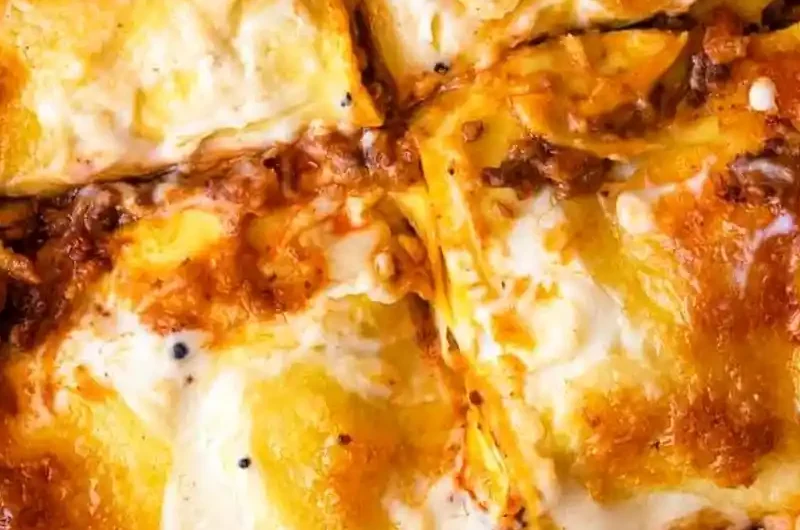
Creating a traditional Lasagne al Forno from scratch is a rewarding experience that transforms simple ingredients into a rich, comforting masterpiece. This recipe focuses on a slow-simmered beef ragu, a silky homemade bechamel sauce, and tender pasta sheets for a truly authentic dining experience. By following these professional techniques, you can achieve perfect, well-defined layers and deep, concentrated flavors that rival the best Italian trattorias.

List of ingredients
- 1 tbsp olive oil
- 1 cup carrot, finely chopped
- 1 cup stalk celery, finely chopped
- 1 cup white onion, finely chopped
- 2 lbs ground beef (mince)
- 2.5 cups passata (tomato puree)
- 3 tbsp tomato paste
- 1 cup vegetable stock (as a flavor-neutral substitute)
- 6 cups beef stock
- 2 bay leaves
- 1 tsp sea salt flakes
- 1 tsp black pepper
- 5 tbsp butter
- 5 tbsp all-purpose flour
- 4 cups full fat milk
- 1/2 tsp nutmeg
- 1 cup parmesan, freshly grated
- 1 lb fresh lasagna pasta sheets
- 2 balls mozzarella, torn
step-by-step instructions
- Step: Finely chop the carrot, onion, and celery and saute the vegetables gently in a large frying pan with the olive oil.
- Step: Once the vegetables are soft, add the ground beef and cook until browned, spooning out any excess fat if necessary.
- Step: Add the vegetable stock to deglaze the pan and reduce by half.
- Step: Once reduced, add the passata, tomato paste, bay leaves, 4 cups of beef stock, and a pinch of salt and pepper.
- Step: Stir everything together and leave to simmer on a low heat for 2.5-3 hours uncovered, adding the remaining beef stock halfway through.
- Step: To make the white sauce, melt the butter in a saucepan, stir in the flour to form a paste, and cook for 1 minute.
- Step: Slowly whisk in half of the milk until smooth, then add the rest of the milk, nutmeg, parmesan, and salt/pepper, cooking until thickened.
- Step: Preheat the oven to 350F (180C).
- Step: Assemble by spooning a small amount of ragu on the bottom of a baking dish, followed by a layer of pasta, then ragu and white sauce.
- Step: Repeat the layers (aiming for 4-5 layers) and finish with the remaining white sauce and torn mozzarella.
- Step: Bake for 45 minutes until bubbling and golden, then let cool for 5-10 minutes before serving.
Practical Preparation Strategies
Developing Deep Flavor through Simmering
The secret to a superior ragu lies in the duration of the simmer. By keeping the heat low and leaving the pan uncovered, the liquid slowly evaporates, concentrating the meat and vegetable juices. This slow process develops a complex, savory profile that cannot be rushed by high heat, ensuring every bite is packed with richness.
Achieving the Perfect Bechamel Consistency
The texture of your bechamel should be smooth and velvety, similar to heavy cream. If you notice lumps forming, immediately remove the pan from the heat and whisk vigorously, or use an immersion blender to smooth it out before adding the remaining milk. A perfectly thickened white sauce acts as the essential binding agent for the pasta layers.
Substitutions and Variations
Alternative Aromatics and Proteins
If you prefer a lighter profile, you can substitute the beef with a blend of ground turkey and minced mushrooms. The mushrooms add a meaty umami quality that holds up well during the long cooking time. For the vegetable base, adding finely diced bell peppers can introduce a slight sweetness that complements the tomatoes.
Customizing the Cheese Blend
While parmesan is classic for the bechamel, experimenting with aged pecorino can add a sharper, more intense saltiness. For the top layer, using a mixture of fresh mozzarella and a touch of fontina ensures a superior melt and a professional, golden-brown crust. Avoid using pre-shredded cheese, as the anti-caking agents prevent a smooth, cohesive melt.
Effective Storage and Reheating
Managing Leftovers for Future Meals
Lasagne often tastes even better the next day as the ingredients settle and meld. Store any leftovers in an airtight container in the refrigerator for up to three days. For longer storage, you can freeze individual portions, which makes for a convenient grab-and-go lunch during a busy week.
Restoring Texture During Reheating
To reheat, it is best to use a low oven setting rather than a microwave, which can make the pasta edges rubbery. Cover the baking dish with foil and heat until the center is steaming hot. If the edges seem dry, sprinkle a few drops of water or a tiny bit of extra beef stock over the top before covering with foil to revive the moisture.
Common Troubleshooting
Addressing a Runny or Collapsed Lasagne
If your lasagne falls apart when sliced, it usually indicates that the ragu or bechamel was too thin. Ensure the ragu is thick enough to hold its shape on a spoon before assembling. Furthermore, allowing the lasagne to rest for 10-15 minutes after removing it from the oven allows the starches in the pasta to stabilize, resulting in clean, firm slices.
Preventing Tough Pasta Layers
When using fresh pasta, be mindful not to overcook it before assembly. The moisture from the ragu and bechamel will continue to hydrate the noodles while baking. If you are using dried sheets that require boiling, cook them for one minute less than the package instructions suggest, as they will finish cooking in the hot, flavorful sauce in the oven.
Frequently Asked Questions
Can I assemble this dish entirely the night before?
Yes, assembling it the night before is a great way to save time. Keep the dish covered tightly in the refrigerator and add about 10-15 minutes to the baking time to compensate for the chilled ingredients. Ensure it comes to room temperature for about 20 minutes before placing it in the oven.
Why should I avoid covering the ragu while simmering?
Leaving the pan uncovered is essential for moisture control and flavor concentration. If the pan is covered, the steam remains trapped, which prevents the sauce from reducing properly and results in a thin, watery consistency. Monitoring the liquid levels and adding stock as needed ensures the meat remains tender without becoming bland.
Is there a way to make the crust crispier?
For a crunchier top layer, broil the lasagne for the final 2-3 minutes of the cooking process. Watch it closely, as the cheese can go from perfectly golden to burned in seconds. This creates a delightful contrast between the soft, creamy interior and the slightly caramelized edges on the surface.
Print
Classic Italian Beef Lasagne al Forno
- Total Time: PT255M
- Yield: 8 servings 1x
- Diet: High Protein
Description
A classic recipe for homemade Lasagne al Forno made entirely from scratch. There is truly nothing more comforting than a hot bubbling baked lasagna made with hearty beef ragu, creamy bechamel sauce, silky pasta, and topped with melted mozzarella cheese. This traditional comfort food favorite is perfect for a special Sunday dinner.
Ingredients
- 1 tbsp olive oil
- 1 cup carrot, finely chopped
- 1 cup stalk celery, finely chopped
- 1 cup white onion, finely chopped
- 2 lbs ground beef (mince)
- 2.5 cups passata (tomato puree)
- 3 tbsp tomato paste
- 1 cup vegetable stock (as a flavor-neutral substitute)
- 6 cups beef stock
- 2 bay leaves
- 1 tsp sea salt flakes
- 1 tsp black pepper
- 5 tbsp butter
- 5 tbsp all-purpose flour
- 4 cups full fat milk
- 1/2 tsp nutmeg
- 1 cup parmesan, freshly grated
- 1 lb fresh lasagna pasta sheets
- 2 balls mozzarella, torn
Instructions
- Step: Finely chop the carrot, onion, and celery and saute the vegetables gently in a large frying pan with the olive oil.
- Step: Once the vegetables are soft, add the ground beef and cook until browned, spooning out any excess fat if necessary.
- Step: Add the vegetable stock to deglaze the pan and reduce by half.
- Step: Once reduced, add the passata, tomato paste, bay leaves, 4 cups of beef stock, and a pinch of salt and pepper.
- Step: Stir everything together and leave to simmer on a low heat for 2.5-3 hours uncovered, adding the remaining beef stock halfway through.
- Step: To make the white sauce, melt the butter in a saucepan, stir in the flour to form a paste, and cook for 1 minute.
- Step: Slowly whisk in half of the milk until smooth, then add the rest of the milk, nutmeg, parmesan, and salt/pepper, cooking until thickened.
- Step: Preheat the oven to 350F (180C).
- Step: Assemble by spooning a small amount of ragu on the bottom of a baking dish, followed by a layer of pasta, then ragu and white sauce.
- Step: Repeat the layers (aiming for 4-5 layers) and finish with the remaining white sauce and torn mozzarella.
- Step: Bake for 45 minutes until bubbling and golden, then let cool for 5-10 minutes before serving.
Notes
The ragu requires at least 3 hours of uncovered simmering to develop its signature depth of flavor. You can prepare the ragu a day in advance to save time. If the sauce becomes too thick during simmering, add a little water, 1/2 cup at a time. The final dish should be allowed to rest briefly after baking to prevent it from collapsing when sliced.
- Prep Time: PT15M
- Cook Time: PT240M
- Category: Main Course
- Method: Baking
- Cuisine: Italian
Nutrition
- Serving Size: 1 slice
- Calories: 753 kcal
- Sugar: 12 g
- Sodium: 740 mg
- Fat: 39 g
- Saturated Fat: 18 g
- Unsaturated Fat: 15 g
- Trans Fat: 0 g
- Carbohydrates: 56 g
- Fiber: 4 g
- Protein: 39 g
- Cholesterol: 120 mg
Keywords: lasagne, beef lasagna, italian, comfort food, main course, pasta, homemade