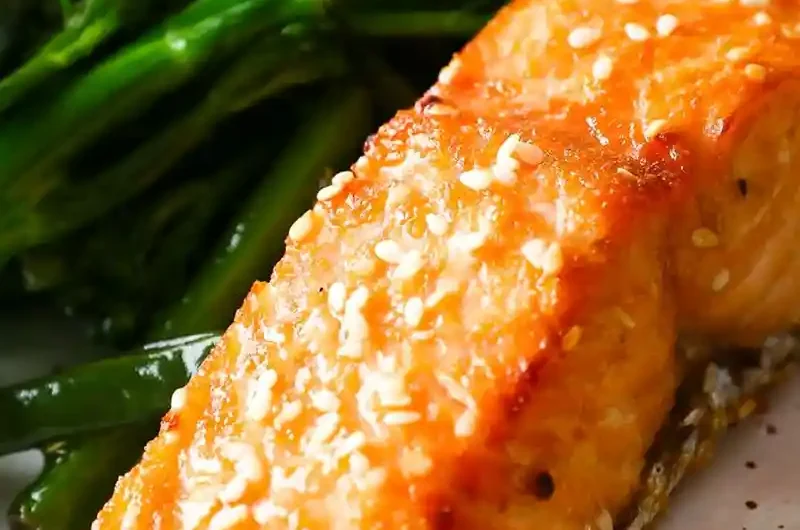
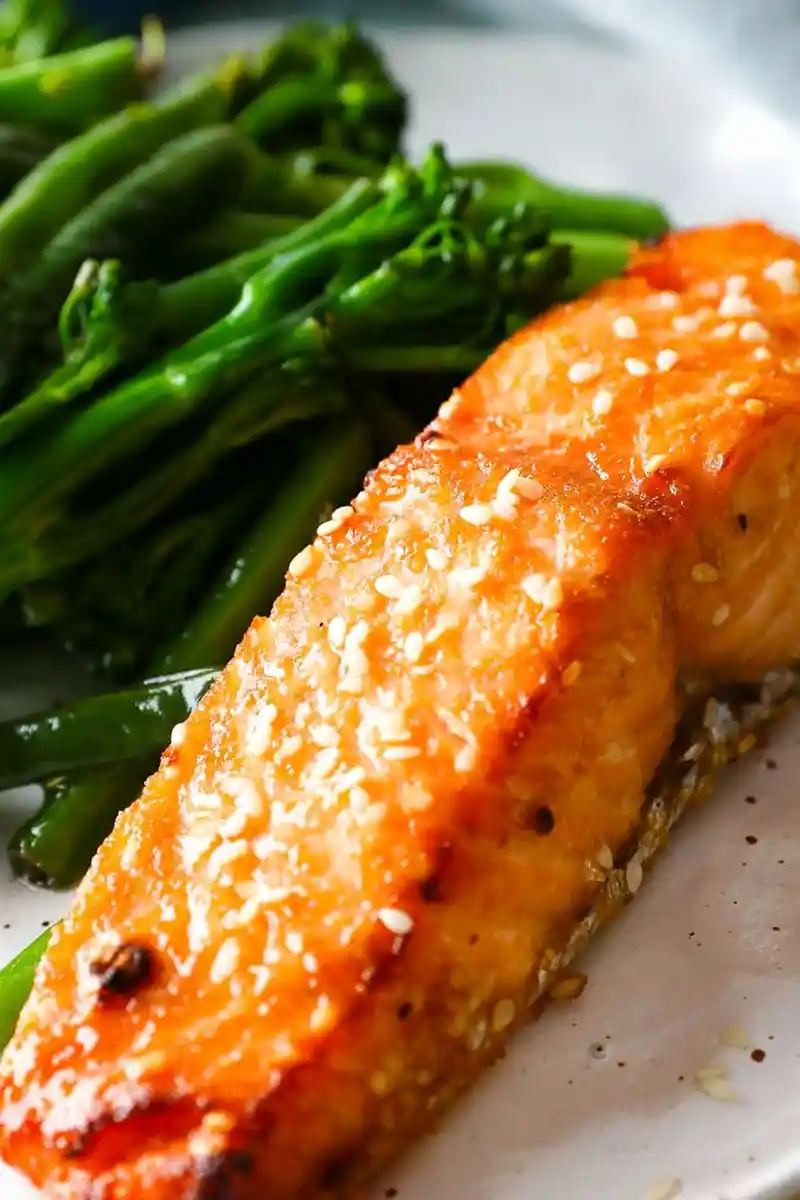
This healthy air fryer salmon is a quick, high-protein meal that delivers a restaurant-quality finish in under 20 minutes. It features a savory umami glaze that caramelizes perfectly under high heat.
List of ingredients
- 2 salmon fillets (fresh or slightly smoked) – ensure they are patted dry for best results.
- 2 tbsp low sodium soy sauce – provides a salty, savory base.
- ½ tsp apple cider vinegar – adds a bright acidity to balance the honey.
- 1 tbsp honey – creates a sticky, sweet glaze.
- 1 tsp onion powder – adds a subtle savory depth.
- 1 tsp garlic powder – enhances the overall flavor profile.
- 1 tsp sesame seeds – adds a nutty crunch to the finish.
step-by-step instructions
- Prepare the Glaze: Mix the soy sauce, apple cider vinegar, honey, onion powder, garlic powder, and sesame seeds in a small bowl until well combined.
- Marinate the Fish: Place the salmon fillets skin-side up on a tray or plate, pour the sauce over them, and let them sit for 5 to 10 minutes to absorb the flavors.
- Preheat the Air Fryer: Set the air fryer to 400F (200C) and let it preheat for 5 minutes to ensure an immediate sear.
- Prepare the Basket: Spray the air fryer basket with two pumps of olive oil to prevent the skin from sticking.
- Position the Fillets: Place the salmon fillets in the basket skin-side down and pour any remaining sauce over the top of the fish.
- Air Fry: Cook the fillets at 400F (200C) for exactly 7 minutes or until the fish is tender and flakes easily.
- Rest and Serve: Let the salmon cool for a few minutes before serving to allow the juices to redistribute.
Cooking Optimization and Technical Tips
Pat Salmon Dry Before Marinating
Always use a paper towel to pat the salmon fillets dry before applying the glaze. Removing surface moisture prevents the fish from steaming and allows the sauce to adhere more effectively. This step is essential for achieving a better sear and crispier edges.
Use a Meat Thermometer for Precision
To avoid overcooking, use an instant-read meat thermometer in the thickest part of the fillet. The USDA recommends an internal temperature of 145F (63C), but many prefer pulling it at 135F (57C) and letting it carry-over cook while resting. This keeps the fish moist and prevents a rubbery texture.
Preheat the Basket for Better Searing
Preheating the air fryer ensures that the salmon begins cooking the moment it hits the basket. This creates a better crust on the exterior and prevents the fish from sticking to the grate. A hot basket mimics the effect of a cast-iron skillet.
Avoid Overcrowding the Air Fryer
Ensure there is enough space between the fillets for air to circulate freely around each piece. Overcrowding can lead to uneven cooking and may cause the sides of the fish to remain soggy. If cooking for more people, work in batches to maintain high heat.
Ingredient Substitutions and Dietary Adjustments
Swap Soy Sauce for Coconut Aminos
For those avoiding gluten or soy, coconut aminos are an excellent alternative. They provide a similar salty and sweet profile with a slightly lower sodium content. The ratio remains 1:1 for this recipe.
Use Maple Syrup Instead of Honey
If you prefer a different kind of sweetness, pure maple syrup works well as a substitute for honey. It offers a more woody, robust flavor that complements the salmon and soy sauce. Use the same quantity as specified for honey.
Replace Apple Cider Vinegar with Rice Vinegar
Rice vinegar is a milder alternative to apple cider vinegar and fits the Asian-inspired flavor profile of this dish. It provides a subtle tang without the strong punch of apple cider vinegar. This is a great choice for those who prefer a more delicate acidity.
Use Fresh Minced Garlic and Onion
While powders are convenient, using finely minced fresh garlic and onion provides a more pungent and authentic flavor. Ensure the mince is very fine so it doesn’t burn in the air fryer. If using fresh, reduce the quantity slightly to avoid overpowering the fish.
Flavor Variations for Customization
Incorporate Sriracha for Heat
Adding a teaspoon of Sriracha or another chili paste to the glaze introduces a spicy element. This creates a sweet-and-spicy contrast that pairs well with the richness of the salmon. Mix it directly into the sauce before marinating.
Add Freshly Grated Ginger
Grated fresh ginger adds a zesty, aromatic quality that cuts through the fattiness of the salmon. Use about a teaspoon of freshly grated ginger root in the marinade. This enhances the umami flavor and adds a professional touch.
Use Lemon Zest for Brightness
Zesting a fresh lemon over the fillets after cooking adds a bright, citrusy aroma. The fresh oils in the zest provide a high-note contrast to the heavy soy and honey glaze. It is best applied immediately after the fish comes out of the air fryer.
Add a Drop of Toasted Sesame Oil
A small amount of toasted sesame oil added to the marinade increases the depth of the nutty flavor. Use only a few drops, as sesame oil is very potent. This gives the dish a more traditional aromatic profile.
Suggested Side Dishes and Pairings
Pair with Roasted Root Vegetables
Roasted carrots, parsnips, or baby potatoes make a hearty accompaniment. You can roast them in the oven while the salmon is in the air fryer to save time. The earthiness of root vegetables balances the sweet glaze of the fish.
Serve Over Quinoa or Brown Rice
A bed of fluffy quinoa or steamed brown rice is ideal for soaking up any extra glaze. These grains provide complex carbohydrates and extra fiber to make the meal more filling. For extra flavor, cook the rice in vegetable broth.
Complement with Steamed Asparagus or Broccoli
Green vegetables like asparagus or broccoli florets provide a fresh, crisp contrast to the rich salmon. You can steam them quickly or air fry them in a separate batch before the fish. A squeeze of lemon over the greens ties the whole plate together.
Create a Fresh Cucumber Salad
A chilled cucumber salad with rice vinegar and a pinch of sugar offers a refreshing palate cleanser. The cool temperature and crisp texture contrast beautifully with the warm, flaky salmon. Add a few sesame seeds to the salad for visual consistency.
Storage and Freshness Guidelines
Refrigerate in Airtight Containers
Store leftover salmon in a glass, airtight container to prevent it from absorbing other fridge odors. Cooked salmon will remain safe to eat for up to two days when kept at 400F. Keep the fish separate from the side dishes to maintain texture.
Avoid Freezing Cooked Salmon
It is not recommended to freeze the salmon after it has been cooked and glazed. Freezing and thawing cooked fish often results in a mushy texture and a loss of flavor. For best results, only cook what you plan to eat within 48 hours.
Label Containers with the Cooking Date
Always label your storage containers with the date the salmon was prepared. This ensures you track the two-day freshness window accurately. Using a masking tape and marker system is the most practical way to manage leftovers.
Effective Reheating Methods
Use the Air Fryer for Crispy Texture
To maintain the best texture, reheat the salmon in the air fryer at 350F for 3 to 4 minutes. This restores the slight crispness of the edges without overcooking the center. Avoid high temperatures to prevent the honey glaze from burning.
Microwave on Low Power for Speed
If you are in a rush, use a microwave on a medium or low power setting. Heat in short 30-second intervals, checking the fish frequently to avoid a rubbery consistency. Cover the fish with a damp paper towel to keep the moisture in.
Flash Pan-Sear for Texture Recovery
A quick sear in a non-stick pan over medium heat can revive the exterior of the fillet. Use a tiny amount of oil and heat for 1-2 minutes per side. This is the best method if you want to refresh the caramelized glaze.
Cooking Frozen Salmon in the Air Fryer
Adjust Temperature and Duration
When cooking from frozen, lower the temperature to 390F and increase the time to approximately 9 to 12 minutes. This ensures the center thaws and cooks through before the outside burns. Always check the internal temperature before removing.
Grease the Basket Thoroughly
Frozen fillets release more moisture as they thaw, which can lead to sticking. Use a generous amount of oil spray or a piece of perforated parchment paper. This ensures the fish slides out easily without breaking the fillet.
Verify the Internal Temperature
Frozen fish can be deceptive, appearing cooked on the outside while remaining raw in the middle. Use a meat thermometer to ensure the core reaches 145F. If the fillets are particularly thick, they may require an additional 2-3 minutes.
Troubleshooting Common Cooking Issues
Preventing Salmon from Sticking
If the salmon sticks to the basket, ensure you are using a high-smoke-point oil like avocado or canola oil. Make sure the basket is fully preheated before adding the fish. If sticking persists, try using a silicone air fryer liner.
Correcting Overcooked Fillets
If the salmon becomes too dry, serve it with a dollop of Greek yogurt or a drizzle of extra honey-soy glaze. Adding a creamy element helps mask the dryness. In the future, reduce the cooking time by one minute.
Managing Excessive Smoke
Smoke usually occurs when oil or honey drips onto the heating element. To prevent this, avoid over-spraying the basket and ensure the glaze is thick enough not to run. Cleaning the basket between batches also reduces smoke.
Fixing a Thin Sauce
If the marinade is too watery, simmer it in a small saucepan for a few minutes before applying it to the fish. This reduces the liquid and concentrates the sugars in the honey. A thicker sauce will cling better to the fillets.
Frequently Asked Questions
Can I use Atlantic or Sockeye salmon?
Both are excellent, but they behave differently. Atlantic salmon is fattier and more forgiving, while Sockeye is leaner and can overcook more quickly. If using Sockeye, check the temperature a minute or two earlier.
Is the skin edible after air frying?
Yes, the skin becomes deliciously crispy and is packed with omega-3 fatty acids. By placing the fish skin-side down in a preheated basket, you achieve a crackling texture. Some prefer to remove it, but it is completely edible.
How do I know when the salmon is done?
The salmon is done when the flesh changes from translucent pink to an opaque light pink. It should flake easily when pressed with a fork. For absolute certainty, the internal temperature should be 145F.
Can I marinate the salmon overnight?
It is not recommended to marinate salmon overnight due to the acidity of the vinegar. Long marination can begin to ‘cook’ the proteins, resulting in a mushy texture. 10 to 30 minutes is sufficient for deep flavor penetration.
Print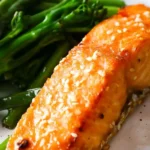
Air Fryer Salmon
- Total Time: 17 minutes
- Yield: 2 servings 1x
- Diet: Low Carb
Description
Elevate your dinner with our healthy air fryer salmon recipe. Enjoy a guilt-free meal that’s rich in omega-3 fatty acids and low in calories! This high protein, low calorie, and low carb dinner is the easiest family dinner you’ll make.
Ingredients
- 2 salmon fillets
- 2 tbsp low sodium soy sauce
- ½ tsp apple cider vinegar
- 1 tbsp honey
- 1 tsp onion powder
- 1 tsp garlic powder
- 1 tsp sesame seeds
Instructions
- Step 1: Mix together the sauce. Pour it over the salmon fillets and let them sit with the skin facing upwards for 5-10 minutes.
- Step 2: Preheat the air fryer for 5 minutes.
- Step 3: Spray the air fryer with 2 pumps of olive oil to prevent sticking and place the salmon fillets skin down. Pour over the sauce, making sure it covers the fillets beautifully.
- Step 4: Air fry for 7 minutes at 400F (200C).
- Step 5: Let them cool down for a few minutes before serving.
Notes
For a gluten-free option, swap soy sauce for coconut aminos. If using frozen salmon, bake at 390F for around 9 minutes after greasing the basket.
- Prep Time: 10 minutes
- Cook Time: 7 minutes
- Category: Air Fryer
- Method: Air Frying
- Cuisine: Asian
Nutrition
- Serving Size: 1 salmon fillet
- Calories: 287 kcal
- Sugar: 4.5 g
- Sodium: 380 mg
- Fat: 17 g
- Saturated Fat: 3.8 g
- Unsaturated Fat: 13.2 g
- Trans Fat: 0 g
- Carbohydrates: 7.2 g
- Fiber: 0.6 g
- Protein: 26 g
- Cholesterol: 66 mg
Keywords: air fryer salmon, omega-3, high protein, low calorie, low carb dinner