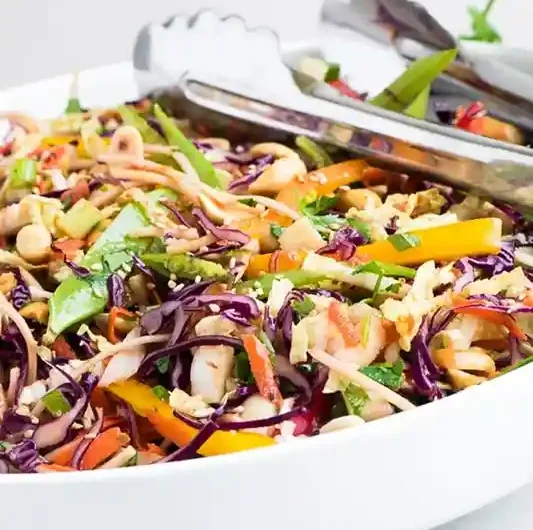
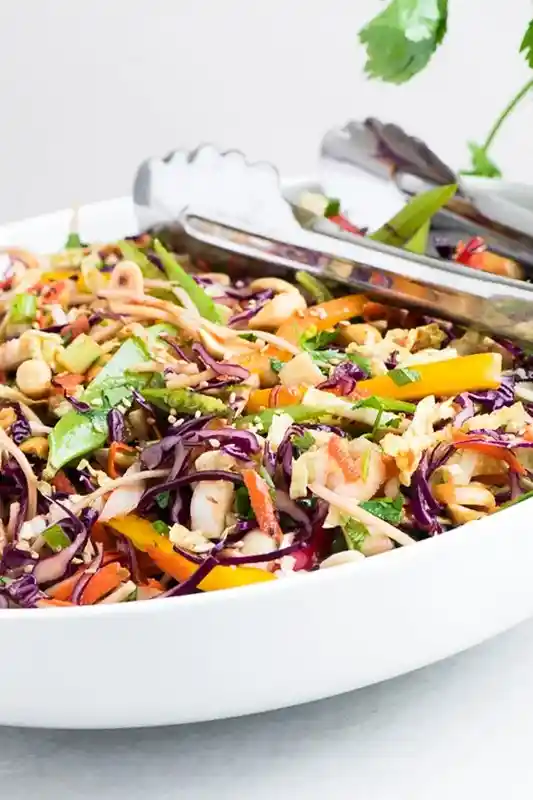
This crunchy Asian-style coleslaw combines vibrant vegetables with a rich, savory peanut dressing. It is a versatile dish that works perfectly as a refreshing side or a light main meal.
List of ingredients
- 8 Tbsp rice vinegar – provides a mild, tangy acidity.
- 8 Tbsp toasted sesame oil – adds a deep, nutty aroma.
- 3 Tbsp creamy peanut butter – creates the base for the creamy sauce.
- 3 Tbsp Tamari soy sauce – adds saltiness and umami flavor.
- 3 Tbsp brown sugar – balances the vinegar with sweetness.
- 2 cloves garlic – finely minced for a pungent kick.
- 2 Tbsp fresh ginger – finely minced for a zesty warmth.
- 3 ounces dried chow mein noodles – cooked until tender and rinsed in cold water.
- 3 cups red cabbage – shredded thinly on a 1/8 inch setting.
- 3 cups Napa or Savoy cabbage – shredded for a softer texture.
- 1 medium carrot – shredded for color and sweetness.
- 1 cup snowpeas – sliced lengthwise for better consistency.
- 1 cup red and yellow bell peppers – thinly sliced.
- 1/2 cup water chestnuts – sliced for extra crunch.
- 1 bunch scallions – thinly sliced, including white and green parts.
- 1/2 cup minced cilantro – adds a fresh, herbal note.
- 1/2 cup peanuts – for a nutty finish.
- 1/4 cup sliced almonds – optional for added texture.
step-by-step instructions
- Prepare the Dressing: Blend the rice vinegar, toasted sesame oil, peanut butter, Tamari, brown sugar, garlic, and ginger together. Use an immersion blender to emulsify the ingredients into a smooth, creamy sauce. Taste the mixture and adjust the seasoning to your preference.
- Prevent Noodle Sticking: Toss the cooked and rinsed chow mein noodles with a small amount of the peanut dressing. This step ensures the noodles do not clump together before being added to the vegetables.
- Combine Salad Components: Place the coated noodles in a large mixing bowl. Add the shredded red and Napa cabbage, shredded carrots, sliced snowpeas, bell peppers, water chestnuts, scallions, and minced cilantro.
- Toss Gently: Pour the remaining dressing over the salad. Gently toss all ingredients together until the vegetables are evenly coated, using only as much dressing as needed for your specific quantity of vegetables.
- Final Garnish: Sprinkle the salad with peanuts and optional sliced almonds. Add sesame seeds for an additional touch of flavor and visual appeal.
- Chill and Serve: Place the completed slaw in the refrigerator until you are ready to serve. For the best texture and crunch, serve the dish on the same day it is prepared.
Dressing Optimization Techniques
Using an Immersion Blender for Emulsification
An immersion blender is the most effective tool for this recipe because it forces the oil and peanut butter to emulsify. This creates a thick, creamy consistency that clings to the vegetables rather than pooling at the bottom of the bowl. If you do not have one, a standard blender or a vigorous whisking method will work, though the texture may be thinner.
Balancing the Sweet and Salty Notes
The balance between the Tamari and brown sugar is critical for the authentic flavor profile. If the dressing feels too salty, add a small amount of extra brown sugar or a teaspoon of water. If it is too sweet, a splash more rice vinegar will cut through the sugar and brighten the overall taste.
Enhancing the Nutty Aroma
Toasted sesame oil is vastly different from regular sesame oil in terms of flavor. Always ensure you are using the toasted variety to achieve that characteristic deep, roasted scent. If the aroma is too strong, you can replace a tablespoon of sesame oil with a neutral oil like avocado or canola oil.
Vegetable Preparation Tips
Using a Mandoline for Precision Shredding
For the red and Napa cabbage, using a mandoline set to 1/8 inch ensures that every piece is uniform. Uniform pieces allow the dressing to coat every surface evenly and provide a consistent bite. If using a knife, keep the blade very sharp to avoid bruising the cabbage leaves.
Prepping Snow Peas for Better Texture
Slicing snowpeas lengthwise instead of leaving them whole allows them to integrate better with the shredded cabbage. This also prevents the peas from rolling around the bowl and makes the salad easier to eat. Ensure you remove any tough strings from the sides of the pods before slicing.
Slicing Scallions for Maximum Flavor
Use both the white and green parts of the scallions to get a full range of flavor. The white parts provide a sharper, more onion-like pungency, while the green parts offer a milder, fresher taste. Slice them into thin rounds to distribute the flavor evenly throughout the slaw.
Customizing the Crunch
Alternative Nut and Seed Options
If you prefer a different flavor, you can swap the peanuts for toasted cashews or macadamia nuts. For a seed-based crunch, toasted sunflower kernels or pumpkin seeds provide a great alternative. These options maintain the textural integrity of the dish while shifting the flavor profile.
Integrating Crispy Wonton Strips
For an extra layer of texture, add fried wonton strips just before serving. These add a salty, crisp element that complements the softness of the noodles. To keep them from getting soggy, store them in an airtight container and add them as a final topping.
Adding Canned Mandarin Oranges
Mandarin orange slices add a burst of juicy sweetness that contrasts well with the savory peanut dressing. Drain the oranges thoroughly to prevent excess syrup from thinning the sauce. Fold them in gently at the end to avoid breaking the fruit pieces.
Protein Pairings for a Main Course
Adding Shredded Rotisserie Chicken
To turn this side dish into a filling dinner, mix in shredded rotisserie chicken. For the best results, shred the chicken while it is still slightly warm so it absorbs some of the peanut dressing. Once mixed, chill the salad to allow the flavors to meld.
Pairing with Grilled Shrimp
Grilled shrimp adds a succulent protein that pairs perfectly with the zesty ginger and garlic in the dressing. Marinate the shrimp in a bit of sesame oil and soy sauce before grilling. Place the warm shrimp on top of the chilled slaw for a temperature contrast.
Incorporating Crispy Tofu Cubes
Firm tofu, pressed to remove excess water and pan-fried until golden, is an excellent plant-based protein addition. The porous texture of the fried tofu allows it to soak up the creamy dressing. Cut the tofu into small cubes to match the size of the other salad ingredients.
Mixing in Shelled Edamame
Frozen shelled edamame, thawed and rinsed, adds both protein and a vibrant green color. These beans provide a different kind of crunch compared to the cabbage and nuts. They also add a creamy texture that complements the peanut butter base.
Dietary Modifications
Gluten-Free Noodle Alternatives
While chow mein noodles are traditional, Japanese soba noodles are a great gluten-free alternative since they are made from buckwheat. Ensure the soba brand is 100% buckwheat to avoid wheat fillers. Rinse them thoroughly in cold water after cooking to remove excess starch.
Nut-Free Dressing Substitutions
For those with nut allergies, replace the peanut butter with sunflower seed butter (Sunbutter). Sunflower butter has a similar creaminess and a toasted flavor that works well with the other ingredients. You should also replace the peanuts and almonds with toasted sesame seeds or sunflower kernels.
Substituting for Cilantro
If you have a dislike for cilantro, fresh Thai basil is the best substitute for an authentic Asian flavor. Alternatively, flat-leaf parsley or thinly sliced chives can provide the necessary herbal freshness without the soapy taste some associate with cilantro.
Storage and Freshness
Optimal Storage Duration
The dressing can be made 1-2 days in advance and stored in an airtight jar in the refrigerator. Once the vegetables are tossed with the dressing, the salad is best consumed within 24 hours. After this window, the salt in the dressing begins to draw moisture out of the cabbage, leading to a loss of crunch.
Preventing Soggy Cabbage
If you are preparing the salad for a party, keep the dressing and the vegetables in separate containers. Toss the slaw immediately before serving to ensure the vegetables remain crisp. This prevents the osmotic process where the salt pulls water from the cell walls of the cabbage.
Reviving Leftover Slaw
If the salad has sat in the fridge and seems flat, add a squeeze of fresh lime juice and a handful of fresh cilantro. This adds a new layer of acidity and freshness that can wake up the flavors. Give it a gentle stir to redistribute any dressing that has settled at the bottom.
Serving Suggestions
Plating for a Crowd
Serve the slaw in a wide, shallow bowl rather than a deep one. This prevents the heavier ingredients, like noodles and peanuts, from sinking to the bottom. A wide bowl also showcases the vibrant colors of the red cabbage and bell peppers.
Pairing with Grilled Meats
This slaw is an ideal accompaniment to grilled salmon or flank steak. The acidity of the rice vinegar helps cut through the richness of the grilled meats. Serve a generous scoop of slaw on the side or use it as a bed for the protein.
Lunchbox Meal Prep Tips
For meal prep, use glass containers and layer the ingredients. Place the peanut dressing at the very bottom, followed by the denser vegetables like carrots and water chestnuts, then the cabbage, and finally the noodles and nuts on top. Shake the container well just before eating.
Troubleshooting Common Issues
Fixing a Dressing That is Too Thick
Because peanut butter brands vary in oil content, your dressing might end up too thick to pour. If this happens, whisk in one tablespoon of warm water or extra rice vinegar at a time. Continue adding liquid until the sauce reaches a pourable, creamy consistency.
Managing Watery Salad Results
If you find your salad becomes watery too quickly, try salting the shredded cabbage first. Let the cabbage sit in a colander with a pinch of salt for 30 minutes, then rinse and pat dry. This removes excess water and allows the cabbage to stay crunchy longer.
Reducing an Overpowering Ginger Taste
Fresh ginger can vary in potency. If the ginger flavor is too dominant, add a small amount of extra peanut butter or a pinch more brown sugar. These ingredients help mellow out the sharp heat of the ginger without erasing it entirely.
Frequently Asked Questions
Can I use regular soy sauce instead of Tamari?
Yes, regular soy sauce can be used, but it will contain gluten and may have a slightly different salt profile. Tamari is generally richer and is a better choice for those avoiding gluten.
How long does the peanut dressing last in the fridge?
The dressing will stay fresh for about 5 to 7 days when stored in an airtight container. If it thickens too much during refrigeration, let it sit at room temperature for a few minutes and whisk it before using.
Can I use a food processor instead of an immersion blender?
A food processor works well, but you should use the pulse setting. Over-processing can cause the sesame oil to separate or make the dressing too airy. Pulse until the ingredients are just combined and smooth.
Print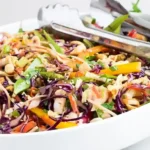
Asian Coleslaw with Creamy Peanut Dressing
- Total Time: 20 minutes
- Yield: 10 servings 1x
- Diet: Vegan
Description
Asian slaw with creamy peanut dressing is a crunchy Chinese-style coleslaw made with cabbage, colorful vegetables, peanuts, and chow mein noodles. It’s fresh, healthy, and easy to serve as a side dish or light meal.
Ingredients
- 8 Tbsp rice vinegar
- 8 Tbsp toasted sesame oil
- 3 Tbsp creamy peanut butter
- 3 Tbsp Tamari soy sauce
- 3 Tbsp brown sugar
- 2 cloves garlic, finely minced
- 2 Tbsp finely minced fresh ginger
- 3 ounces dried chow mein noodles, cooked and rinsed
- 3 cups shredded red cabbage
- 3 cups shredded Napa or Savoy cabbage
- 1 medium carrot, shredded
- 1 cup snowpeas, sliced lengthwise
- 1 cup red and yellow bell peppers, thinly sliced
- 1/2 cup sliced water chestnuts
- 1 bunch scallions, thinly sliced
- 1/2 cup minced cilantro
- 1/2 cup peanuts
- 1/4 cup sliced almonds, optional
Instructions
- Step: Blend together the dressing ingredients.
- Step: Toss the cooked noodles with a little bit of the dressing to keep them from sticking together, and then put them into a large mixing bowl along with the rest of the salad ingredients.
- Step: Toss everything together gently with enough dressing to coat well.
- Step: Garnish with sesame seeds and more peanuts.
- Step: Refrigerate until serving.
Notes
The salad can be made a few hours ahead, but is best the day it is made. It will last a day or two in the fridge for leftovers.
- Prep Time: 20 minutes
- Cook Time: 0 minutes
- Category: Salad
- Method: Blending
- Cuisine: Asian
Nutrition
- Serving Size: 1 serving
- Calories: 306 kcal
- Sugar: 21 g
- Sodium: 475 mg
- Fat: 14 g
- Saturated Fat: 2 g
- Unsaturated Fat: 12 g
- Trans Fat: 0 g
- Carbohydrates: 42 g
- Fiber: 14 g
- Protein: 11 g
- Cholesterol: 0 mg
Keywords: Asian, healthy, salad, slaw, vegan, vegetarian