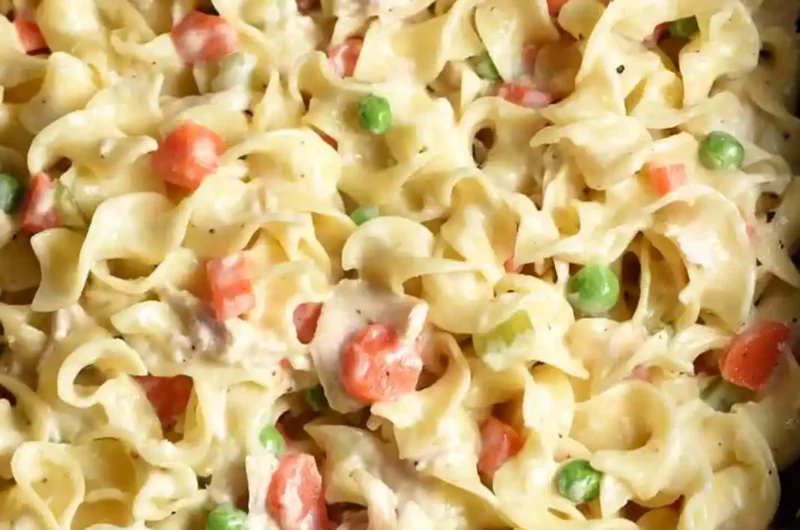
This creamy skillet meal combines the comforting flavors of a traditional chicken pot pie with the convenience of egg noodles. It is a fast, one-pan dinner designed for busy weeknights when you need a filling meal with minimal cleanup.
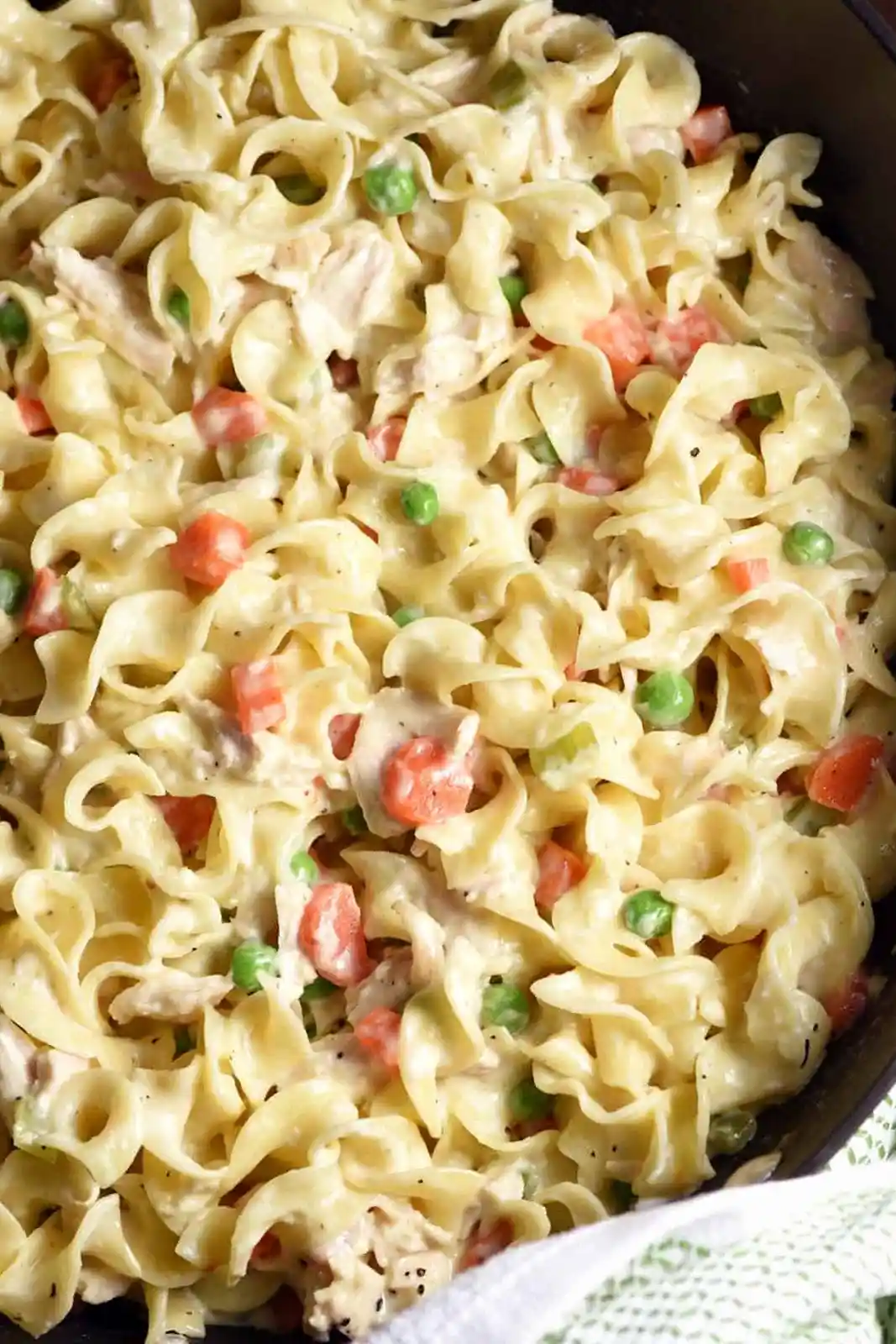
List of ingredients
- 10 ounces egg noodles – provides a soft, buttery base.
- 2 tablespoons unsalted butter – used for sautéing and building the sauce.
- 1 medium sweet onion, diced – adds a mild, aromatic sweetness.
- 2 cloves garlic, minced – provides essential savory depth.
- 1 & 1/2 cups frozen peas and carrots, thawed – the classic pot pie vegetable mix.
- 1/2 teaspoon coarse salt – enhances all the other flavors.
- 1/4 teaspoon black pepper – adds a subtle hint of spice.
- 2 tablespoons all-purpose flour – acts as the thickening agent for the gravy.
- 1 cup low-sodium chicken broth – creates a savory liquid base.
- 1 cup heavy cream – gives the sauce its characteristic richness.
- 1 & 1/2 cups cooked chicken breast, cut into small cubes – the primary protein source.
step-by-step instructions
- Cook the pasta: Boil the egg noodles al dente according to the package directions. Drain them well and set aside.
- Sauté the aromatics: Melt the butter in a large skillet over medium-high heat. Add the diced onion, minced garlic, and thawed peas and carrots; season with salt and pepper. Cook for about 3 minutes until the onions are translucent and soft.
- Create the roux: Stir the all-purpose flour into the vegetable mixture. Continue stirring until the flour is fully combined and no white patches remain in the pan.
- Simmer the sauce: Pour in the chicken broth and heavy cream. Bring the mixture to a boil, then immediately reduce the heat to a simmer. Stir occasionally for about 5 minutes until the sauce has thickened.
- Combine ingredients: Add the drained noodles and the cubed cooked chicken to the skillet. Toss all the ingredients together until the noodles and chicken are evenly coated in the sauce.
- Final seasoning: Taste the dish and add a small amount of extra salt or pepper if needed. Serve the meal immediately while hot.
Technical Tips for Perfect Execution
Preventing Overcooked Noodles
Always cook your egg noodles slightly under the package’s recommended time. Because the noodles are added to a hot sauce and tossed over heat, they will continue to cook during the final assembly. Removing them 1-2 minutes early ensures they maintain a firm bite rather than becoming mushy.
Achieving a Lump-Free Sauce
When adding the flour to the butter and vegetables, stir constantly with a whisk or a wooden spoon. Ensure the flour is fully cooked for about 60 seconds before adding the liquids to remove the raw flour taste. Gradually pouring in the broth while stirring prevents clumps from forming in the final gravy.
Managing Heat Levels
Use a skillet with a heavy bottom to ensure even heat distribution. When the sauce reaches a boil, reducing it to a simmer is critical to prevent the heavy cream from separating or breaking. A gentle simmer allows the flour to hydrate and thicken the liquid steadily.
Preparing the Chicken
Cut the cooked chicken breast into uniform, small cubes of about half an inch. This ensures that every bite contains a balance of meat, vegetables, and noodles. Uniform sizes also allow the chicken to heat through evenly without overcooking the exterior of the meat.
Ingredient Substitutions and Adaptations
Using Rotisserie Chicken
Pre-cooked rotisserie chicken is an excellent time-saving alternative to baked chicken breast. Simply remove the skin and bones, then dice the meat into small cubes. Rotisserie chicken often adds an extra layer of seasoning and moisture to the final dish.
Dairy-Free Cream Alternatives
For a dairy-free version, replace the heavy cream with full-fat canned coconut milk or a cashew-based cream. Note that coconut milk may introduce a slight coconut flavor, which can be balanced by adding a pinch more salt or a dash of lemon juice. Use a plant-based butter substitute for the initial sauté.
Alternative Pasta Choices
While egg noodles are traditional, you can use wide pasta shells or fusilli to capture more sauce in the folds. If using a denser pasta, you may need to increase the chicken broth by a quarter cup to ensure the dish remains creamy. Always ensure the pasta is boiled separately to control the starch levels.
Fresh Vegetable Options
If using fresh carrots and onions instead of frozen, increase the sautéing time. Fresh carrots require 5-7 minutes of cooking before adding the garlic to ensure they are tender. Fresh peas should be added toward the end of the sauce simmering process to keep them vibrant and snap-fresh.
Flavor Enhancements and Variations
Adding Earthy Herbs
Stir in half a teaspoon of dried thyme or sage during the flour-coating step. Toasting the herbs in the butter before adding the broth releases their essential oils and mimics the flavor profile of a traditional baked pot pie. Fresh parsley added at the end provides a bright, clean contrast.
Increasing Savory Depth
To deepen the savory profile, add one teaspoon of Worcestershire sauce or a pinch of onion powder to the chicken broth. These additions provide a subtle umami boost that complements the richness of the heavy cream. Ensure you adjust the salt levels after adding these flavored ingredients.
Incorporating Additional Vegetables
Celery is a staple of pot pie and can be added along with the onions. Dice it finely and sauté it until soft. You can also add frozen corn or diced potatoes, though potatoes should be pre-boiled to ensure they are fully cooked through before being added to the skillet.
Adjusting the Sauce Thickness
If you prefer a thinner, more soup-like consistency, increase the chicken broth by half a cup. Conversely, for a thicker, clingier sauce, simmer the gravy for an additional 2-3 minutes before adding the noodles. Avoid adding more flour after the liquid is already in the pan, as this will create lumps.
Serving and Presentation Ideas
Pairing with Side Salads
Because this dish is rich and creamy, it pairs best with acidic or crisp sides. A simple garden salad with a lemon vinaigrette or a Caesar salad helps cut through the heaviness of the cream. This creates a balanced meal that feels complete and lighter.
Adding a Garnish
Top the finished skillet with a sprinkle of freshly cracked black pepper or chopped chives. A dusting of paprika can add a pop of color and a very mild smoky undertone. These small additions enhance the visual appeal and the final taste profile.
Serving in Shallow Bowls
Serve the noodle skillet in shallow bowls rather than flat plates. This helps retain the heat of the sauce and prevents the gravy from spreading too thin. Using bowls makes it easier to scoop up the vegetables and chicken with every forkful.
Storage and Reheating Guidelines
Refrigeration and Shelf Life
Store leftovers in an airtight container in the refrigerator for up to 3 days. Ensure the dish is cooled slightly before sealing the lid to prevent excessive condensation. Keep the container tightly sealed to prevent the noodles from absorbing odors from other foods.
Best Reheating Methods
Reheat portions in a microwave or on a stovetop over low heat. Because the noodles absorb the sauce as they sit, the dish may appear dry when cold. Add a tablespoon of chicken broth or heavy cream during reheating to restore the original creamy texture.
Freezing Instructions
Allow the dish to cool completely before transferring it to a freezer-safe container. It can be stored in the freezer for up to 2 months. Thaw the meal overnight in the refrigerator before reheating to ensure the sauce emulsifies properly when heated.
Troubleshooting Common Issues
What to do if the sauce is too thick?
If the sauce becomes too thick or pasty, stir in a small amount of warm chicken broth or milk one tablespoon at a time. Continue stirring over low heat until the desired consistency is reached. This usually happens if the sauce was simmered for too long before the noodles were added.
How to fix a broken or separated sauce?
If the cream separates and looks oily, it is usually due to overheating. Quickly whisk in a teaspoon of cold water or a small knob of cold butter over low heat. This helps re-emulsify the fats and liquids into a smooth, cohesive gravy.
Dealing with clumping noodles
If the noodles clump together after being drained, toss them with a tiny bit of butter or oil before adding them to the skillet. Alternatively, ensure you toss the noodles vigorously with the sauce immediately upon adding them to distribute the coating evenly.
Frequently Asked Questions
Can I use frozen chicken breast?
Yes, but the chicken must be fully thawed and cooked before being added to the skillet. Do not add frozen raw chicken directly to the sauce, as it will release excess water and dilute the creaminess of the gravy.
Can I use whole wheat egg noodles?
Whole wheat noodles can be used, but they have a stronger, nuttier flavor and a firmer texture. You may need to boil them slightly longer than white egg noodles to ensure they aren’t too chewy in the final dish.
How do I prevent the sauce from separating?
Avoid boiling the sauce vigorously once the heavy cream has been added. Keep the heat at a gentle simmer and stir frequently. This prevents the proteins in the cream from overheating and splitting from the fats.
Can I add corn to this recipe?
Yes, frozen corn is a great addition. Add it at the same time as the peas and carrots. If using canned corn, drain it thoroughly so that the extra liquid does not make the sauce too watery.
Print
Creamy Chicken Pot Pie Noodle Skillet
- Total Time: 25 minutes
- Yield: 6 servings 1x
- Diet: General
Description
This Chicken Pot Pie Noodles recipe is like chicken pot pie transformed into a skillet dish with noodles instead of a crust. Easy delicious weeknight meal!
Ingredients
- 10 ounces egg noodles
- 2 tablespoons unsalted butter
- 1 medium sweet onion, diced
- 2 cloves garlic, minced
- 1 1/2 cups frozen peas and carrots, thawed
- 1/2 teaspoon coarse salt
- 1/4 teaspoon black pepper
- 2 tablespoons all-purpose flour
- 1 cup low-sodium chicken broth
- 1 cup heavy cream
- 1 1/2 cups cooked chicken breast, cut into small cubes
Instructions
- Step: Cook noodles al dente, according to package directions.
- Step: In a large skillet, melt the butter over medium-high heat. Stir in the onion, garlic, and peas and carrots; season with the salt and pepper. Cook for about 3 minutes until onions are soft and translucent.
- Step: Stir in the flour until combined and no white patches remain.
- Step: Pour in the chicken broth and heavy cream; bring to a boil. Reduce to a simmer. Stir occasionally until thickened, about 5 minutes.
- Step: Drain the pasta and add to the skillet, along with the chopped chicken. Toss to combine.
- Step: Taste and season with a touch more salt and pepper, if necessary. Serve hot and enjoy!
Notes
Feel free to use different frozen/thawed veggies of your choice, and baked chicken breast or rotisserie.
- Prep Time: 15 minutes
- Cook Time: 10 minutes
- Category: Main Course
- Method: Skillet
- Cuisine: American
Nutrition
- Serving Size: 1 serving
- Calories: 445 kcal
- Sugar: 1 g
- Sodium: 284 mg
- Fat: 22 g
- Saturated Fat: 12 g
- Unsaturated Fat: 10 g
- Trans Fat: 0 g
- Carbohydrates: 41 g
- Fiber: 2 g
- Protein: 20 g
- Cholesterol: 133 mg
Keywords: chicken pot pie noodles, skillet dinner, creamy chicken pasta, easy weeknight meal