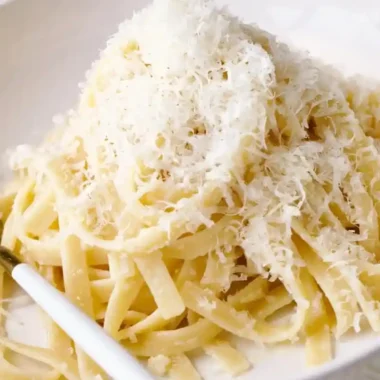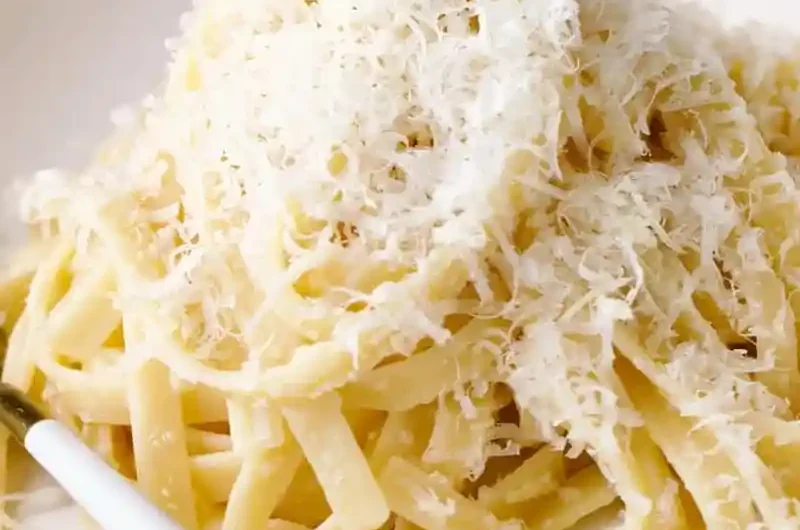
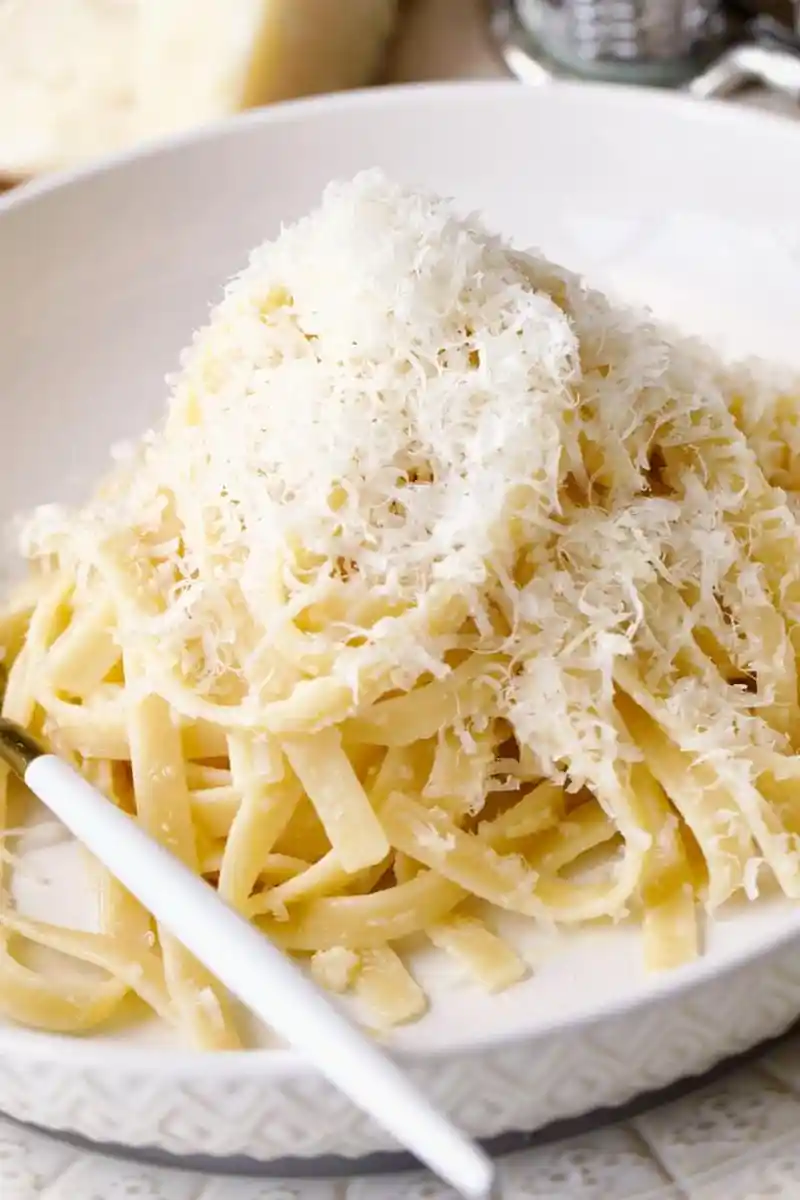
Experience the genuine taste of Roman culinary tradition with this authentic butter and cheese pasta. By relying on the magic of starchy pasta water instead of heavy cream, you create a silky, emulsified sauce that perfectly clings to every strand of fettuccine. This simple, elegant preparation requires only a handful of high-quality ingredients and about fifteen minutes of your time.
List of ingredients
- ½ cup grass fed butter (at room temperature; divided)
- 1 pound fettuccine pasta
- 1½ cups Parmigiano-Reggiano cheese (finely grated)
- freshly ground black pepper (to taste)
step-by-step instructions
- Step: Divide the butter into six equal pieces, then place half of the butter on a large serving platter.
- Step: In a large pot of boiling salted water, cook the fettuccine until al dente according to package directions. Save 1 cup of the starchy pasta water before straining.
- Step: Add half the pasta water (½ cup) to the serving platter with the butter. Stir the butter with the hot pasta water to melt the butter.
- Step: Add the hot pasta to the serving platter. Using kitchen tongs, mix until butter sauce coats all the strands of pasta.
- Step: Add the rest of the butter and pasta water. Mix the pasta with the kitchen tongs until a smooth, creamy sauce forms. Keep moving the pasta until all the butter melts. Add the freshly grated parmigiano cheese and keep mixing until it’s fully melted and well combined.
- Step: Serve immediately. Top individual portions with extra parmigiano cheese and freshly grated black pepper if desired.
Refining Your Technique for Perfect Results
Why the Grating Technique Matters
Using a microplane to grate your cheese is essential for achieving a restaurant-quality consistency. Finer gratings melt almost instantly when they hit the hot, starchy water, whereas coarser shreds may remain partially solid and create a grainy texture. Always avoid pre-grated bagged cheese, as it contains anti-caking agents that prevent the cheese from melting into a cohesive sauce.
The Role of Starchy Water in Sauce Emulsification
The starchy water is the primary binding agent in this recipe, acting as a bridge between the fat from the butter and the protein in the cheese. Without this specific liquid, the sauce would separate rather than forming a silky, cohesive coating. Always be sure to use a smaller volume of water in your pasta pot than you would for other dishes to ensure the starch concentration remains high.
Selecting the Best Pasta Shape
While fettuccine is the traditional choice for this dish due to its surface area, you can use other long, flat noodles like linguine or taglioni. Choosing bronze-cut pasta is highly recommended because the extrusion process creates a textured, porous surface. This surface is specifically designed to grab onto delicate sauces, ensuring you get the maximum amount of flavor in every forkful.
Selecting High-Quality Components
Importance of Authentic Parmigiano-Reggiano
Authentic Parmigiano-Reggiano is aged for a specific duration, which provides the complex, nutty flavor profile this dish requires. American-style parmesan often contains additives that interfere with the melting process and lack the depth of flavor found in the original Italian variety. Investing in a wedge of real cheese from Italy ensures your sauce remains balanced and savory rather than overly salty or waxy.
Choosing the Right Butter
Since the sauce relies on only three main ingredients, the quality of your butter is paramount. Grass-fed, European-style butter generally has a lower water content and a higher percentage of fat, which creates a more luxurious mouthfeel. If you use salted butter, adjust the amount of salt added to your pasta boiling water to prevent the final dish from becoming too saline.
Practical Serving and Storage Advice
Why Immediate Service is Mandatory
This sauce is a living emulsion that depends entirely on heat to stay fluid. As the dish cools, the fats begin to solidify and the cheese will start to seize, resulting in a clumped texture. For the best experience, warm your serving plates before adding the pasta to help retain the heat for an extra few minutes.
Proper Techniques for Reheating Leftovers
When reheating leftovers, avoid the microwave at all costs, as it will cause the cheese to separate and the butter to liquefy independently. Instead, place the pasta in a skillet over low heat and add a small splash of hot water or milk to loosen the sauce. Stir continuously and gently until the pasta is warmed through and the sauce regains its creamy consistency.
Effective Make-Ahead Strategies
Because the sauce relies on the immediate heat of the pasta, you cannot pre-make the sauce itself. However, you can grate the cheese, measure the butter, and prepare your serving equipment well in advance. Having your ingredients prepped and your workspace clear allows you to move quickly once the pasta finishes cooking, which is the most critical stage of the preparation.
Addressing Common Cooking Concerns
How to Adjust Sauce Consistency
If your sauce appears too thick or sticky, add a tablespoon of reserved pasta water at a time while tossing the noodles vigorously. If the sauce is too thin or watery, continue to stir the pasta; the agitation and the heat will help evaporate excess liquid while the starch continues to bind the fats. Always add liquid slowly to maintain total control over the final texture.
Can I Incorporate Protein into the Dish?
While the original recipe focuses purely on the interaction between butter and cheese, you can certainly serve this alongside grilled chicken or seared shrimp. Cook your proteins separately and place them on top of the pasta just before serving. This maintains the structural integrity of the delicate alfredo emulsion while adding variety to the meal.
FAQs
Is this recipe suitable for vegetarians?
Traditional Parmigiano-Reggiano is made using animal-based rennet, so it is not considered vegetarian. If you require a vegetarian-friendly option, look for a high-quality aged hard cheese that uses microbial or plant-based rennet instead.
Why did my cheese become clumpy?
Clumping usually occurs when the cheese is added while the pan is too hot or when the cheese is added too quickly without enough liquid. Ensure you remove the pasta from the heat source before adding the cheese and use the pasta water to create a slurry that melts the cheese gently.
Can I swap the butter for olive oil?
Replacing the butter with olive oil will change the fundamental nature of the sauce, as butter contains milk solids that contribute to the creaminess. While you can create a simple pasta with oil and cheese, it will not yield the rich, velvety texture characteristic of an authentic alfredo sauce.
Print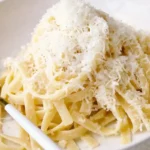
Authentic Alfredo Sauce
- Total Time: 15 minutes
- Yield: 6 servings 1x
- Diet: Vegetarian
Description
This authentic alfredo sauce recipe is made with four simple ingredients (fettuccine pasta, parmigiano cheese, butter, and freshly cracked pepper). It only takes 20 minutes to prepare! This is the original Italian recipe for fettuccine alfredo.
Ingredients
- ½ cup grass fed butter (at room temperature; divided)
- 1 pound fettuccine pasta
- 1½ cups Parmigiano-Reggiano cheese (finely grated)
- freshly ground black pepper (to taste)
Instructions
- Step: Divide the butter into six equal pieces, then place half of the butter on a large serving platter.
- Step: In a large pot of boiling salted water, cook the fettuccine until al dente according to package directions. Save 1 cup of the starchy pasta water before straining.
- Step: Add half the pasta water (½ cup) to the serving platter with the butter. Stir the butter with the hot pasta water to melt the butter.
- Step: Add the hot pasta to the serving platter. Using kitchen tongs, mix until butter sauce coats all the strands of pasta.
- Step: Add the rest of the butter and pasta water. Mix the pasta with the kitchen tongs until a smooth, creamy sauce forms. Keep moving the pasta until all the butter melts. Add the freshly grated parmigiano cheese and keep mixing until it’s fully melted and well combined.
- Step: Serve immediately. Top individual portions with extra parmigiano cheese and freshly grated black pepper if desired.
Notes
Salt the water to flavor the pasta from the inside out as it cooks; only cook until al dente. Grate your cheese preferably with a microplane for the creamiest result and quickest melting. Serve immediately while the sauce is still smooth and creamy. Store leftovers in an airtight container in the fridge for up to 3 days and reheat on the stovetop with a splash of water.
- Prep Time: 5 minutes
- Cook Time: 10 minutes
- Category: Main Course
- Method: Stovetop
- Cuisine: Italian
Nutrition
- Serving Size: 1 serving
- Calories: 524 kcal
- Sugar: 2 g
- Sodium: 538 mg
- Fat: 25 g
- Saturated Fat: 15 g
- Unsaturated Fat: 9 g
- Trans Fat: 0 g
- Carbohydrates: 55 g
- Fiber: 2 g
- Protein: 20 g
- Cholesterol: 121 mg
Keywords: authentic alfredo, fettuccine alfredo, pasta al burro e parmigiano, italian pasta, vegetarian pasta