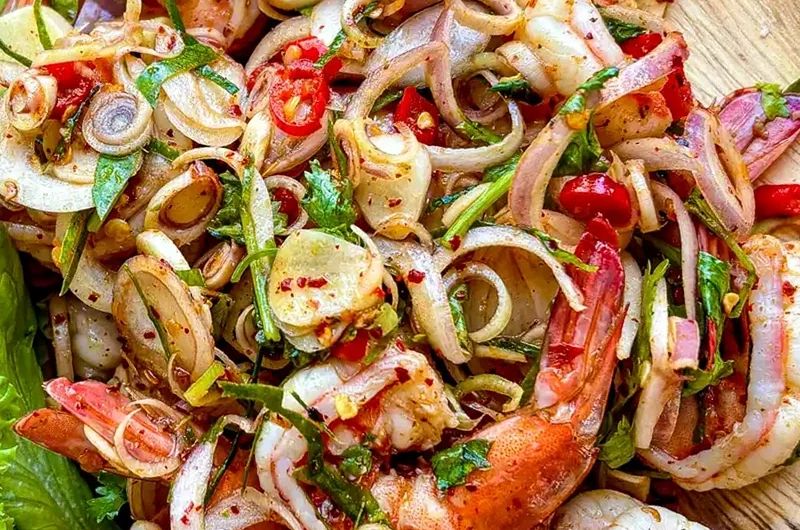
This spicy Thai shrimp salad is a light and refreshing dish that balances bold salty, sour, and spicy flavors. It is an ideal low-calorie meal that comes together quickly using fresh herbs and zesty aromatics.
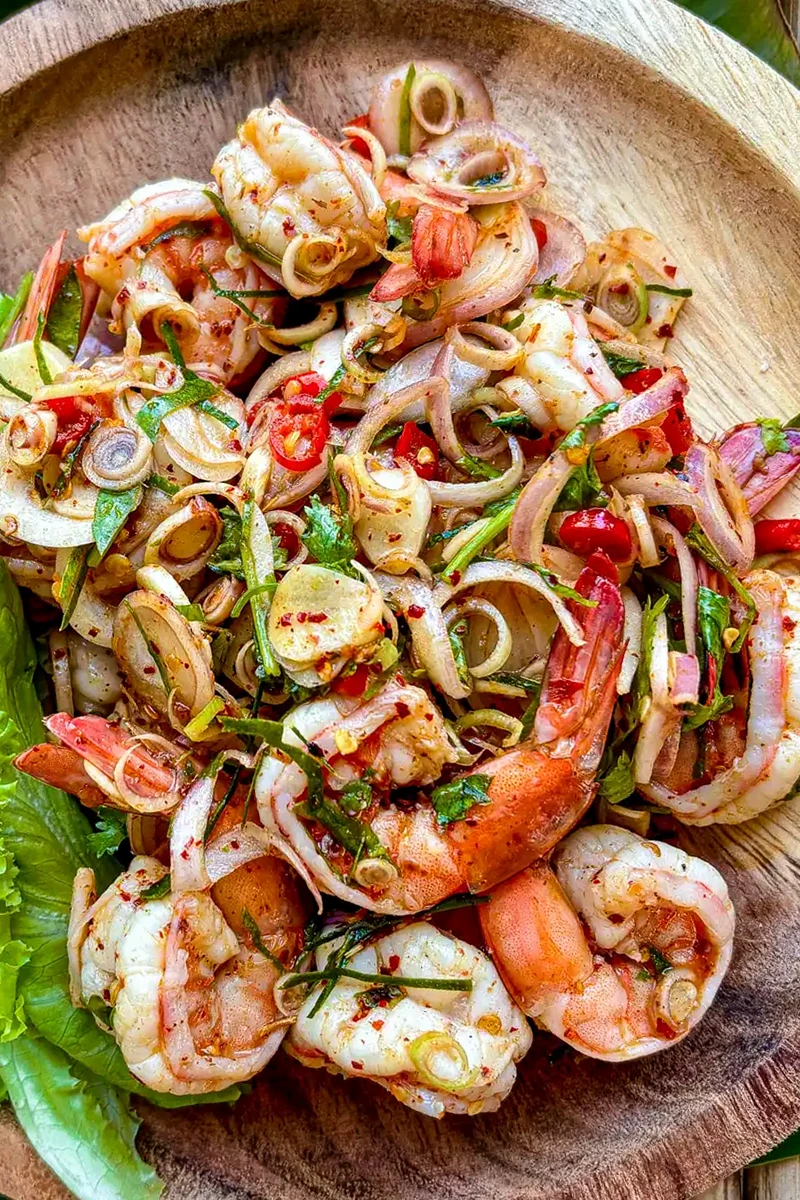
List of ingredients
- 10 large shrimp – cleaned and deveined for a clean taste.
- 1 tbsp fish sauce – provides the essential salty and umami base.
- 1 tbsp lime juice – fresh juice is required for a bright, tangy flavor.
- 1/2 tsp MSG – optional, used to enhance the overall savory notes.
- 1 tbsp chili paste – adds depth, color, and a sweet-spicy profile.
- 2 tsp chili flakes – adjust the quantity based on your heat preference.
- 2 cloves garlic – finely minced to distribute flavor evenly.
- 3 chilies – finely chopped; adjust based on desired spice level.
- 1/4 cup shallots – chopped for a mild, sweet crunch.
- 1 stalk of lemongrass – finely chopped, using only the tender inner part.
- 3 kaffir lime leaves – torn into small pieces to release essential oils.
- 2 tbsp coriander – chopped, including stems for extra herbal flavor.
step-by-step instructions
- Poach the shrimp: Bring a pot of water to a gentle simmer. Add the cleaned shrimp and poach for 1–2 minutes until they turn pink and opaque. Remove them immediately with a slotted spoon and let them cool slightly to maintain a tender texture.
- Make the dressing: In a mixing bowl, combine the fish sauce, lime juice, chili paste, chili flakes, and MSG if you are using it. Stir the mixture thoroughly until all ingredients are well combined and the paste is dissolved.
- Toss everything together: Add the poached shrimp to the dressing bowl along with the minced garlic, chopped chilies, shallots, lemongrass, torn kaffir lime leaves, and coriander. Toss gently to ensure every shrimp is evenly coated in the dressing and herbs.
- Taste and serve: Taste the salad and adjust the seasoning by adding more lime juice for extra tang or more chilies for increased heat. Serve the dish immediately while the herbs are fresh and the flavors are vibrant.
Expert Ingredient Selection
Choosing the Best Shrimp
Select large Black Tiger shrimp for the best results, as they maintain a firm, juicy texture after poaching. Ensure the shrimp are fresh, smelling of the ocean rather than fishy, and have translucent flesh. If using frozen shrimp, thaw them completely in the refrigerator overnight before poaching.
Handling Fresh Lemongrass
Use only the bottom 3 to 4 inches of the lemongrass stalk, which is the most tender part. Remove the tough outer layers and slice the inner white core into very thin, almost translucent rounds. This prevents the salad from having woody or fibrous pieces that are difficult to chew.
Preparing Kaffir Lime Leaves
Remove the central vein from the kaffir lime leaves before tearing them into small fragments. Tearing the leaves by hand rather than chopping them with a knife helps release the fragrant aromatic oils more effectively. If fresh leaves are unavailable, frozen ones can be used, though they should be thawed first.
Selecting the Right Chilies
Bird’s eye chilies provide the authentic sharp heat characteristic of Thai salads. For a milder experience, remove the seeds from the chilies before chopping them. If you prefer a different heat profile, Thai Jinda chilies are a suitable alternative that offer a slightly different flavor profile.
Working with Shallots
Use fresh shallots rather than red or white onions to maintain the authentic flavor profile. Shallots provide a subtle sweetness and a crisp texture that complements the acidity of the lime. Slice them thinly to ensure they integrate well with the other herbs.
Advanced Preparation Techniques
Perfecting the Poaching Process
Avoid using a rolling boil when poaching shrimp, as high heat can make the proteins tighten and become rubbery. A gentle simmer ensures the shrimp cook evenly and remain plump. Immediately removing them from the heat as soon as they turn opaque prevents overcooking.
Preparing the Aromatics
Mince the garlic and chilies together using a mortar and pestle if possible to create a coarse paste. This technique releases more flavor than simple chopping and allows the dressing to adhere better to the shrimp. Ensure all chopped herbs are kept cold until the moment of mixing.
Balancing the Dressing
Whisk the dressing ingredients thoroughly to ensure the chili paste is fully incorporated. If the dressing feels too thick, add a teaspoon of water to loosen it. The goal is a coating that is fluid enough to cover the shrimp but thick enough to cling to the herbs.
Cleaning the Shrimp
Always devein the shrimp by making a shallow incision along the back and removing the intestinal tract. This ensures a clean taste and a better presentation. Rinse the shrimp under cold water and pat them dry before adding them to the poaching liquid.
Customization and Variations
Adjusting the Spice Level
To create a mild version, reduce the chili flakes to one teaspoon and use only one chopped chili. For those who prefer extreme heat, increase the bird’s eye chilies to five or six. You can also add a pinch of sugar to balance the intensity of the heat.
Adding Texture and Crunch
Toss in a handful of roasted peanuts or toasted sesame seeds just before serving for added crunch. Sliced cucumber or shredded carrots can be added to increase the volume of the salad and add a cooling element. Keep these additions separate until the last moment to prevent them from becoming soggy.
Using Alternative Seafood
While shrimp is traditional, you can incorporate poached squid rings or scallops into the mix. Ensure these alternative seafood options are cooked using the same gentle poaching method. Adjust the quantities of dressing slightly to account for the additional volume of protein.
Substituting the Fish Sauce
If fish sauce is unavailable, a mixture of soy sauce and a pinch of salt can be used as a substitute. Note that this will alter the authentic funkiness of the dish, so you may need to add a small amount of extra lime juice to compensate. Vegetable-based fish sauce alternatives also work well.
Serving and Pairing Ideas
Accompaniments for a Complete Meal
Serve this salad alongside a bowl of steamed jasmine rice to help temper the spice and absorb the dressing. Fresh cucumber slices or raw cabbage leaves provide a refreshing contrast to the bold flavors. A side of Thai omelet (Kai Jeow) adds a rich, savory element to the meal.
Plating for Visual Appeal
Arrange the salad on a chilled platter to keep the herbs crisp. Garnish the top with a few whole coriander leaves and a slice of fresh lime for a professional presentation. Use a wide bowl to allow the dressing to pool slightly at the bottom for dipping.
Ideal Beverage Pairings
Pair this dish with a cold, unsweetened iced tea or a sparkling lime water to cleanse the palate between spicy bites. A chilled coconut water is also an excellent choice as its natural sweetness balances the saltiness of the fish sauce. Avoid heavy drinks that might mask the delicate herbal notes.
Storage and Maintenance
Refrigeration Guidelines
Store any remaining salad in an airtight glass container in the refrigerator for no more than one to two days. Because of the high acid content from the lime juice, the shrimp will continue to “cook” in the dressing, which can change the texture over time. Keep the container tightly sealed to prevent the salad from absorbing other fridge odors.
Managing Texture for Leftovers
Be aware that the herbs and shallots will soften as they sit in the dressing. To refresh the salad before eating leftovers, add a fresh squeeze of lime juice and a few newly chopped coriander leaves. This restores the brightness and crispness of the dish.
Make-Ahead Strategies
For the best results when preparing in advance, keep the poached shrimp, the chopped herbs, and the dressing in three separate containers. Combine them only immediately before serving. This prevents the shrimp from becoming over-marinated and keeps the lemongrass and coriander vibrant.
Troubleshooting Common Issues
Correcting Overly Salty Dressing
If the fish sauce makes the salad too salty, add an extra tablespoon of lime juice or a small pinch of brown sugar. The acidity and sweetness will neutralize the saltiness without ruining the flavor profile. Always taste the dressing before adding it to the shrimp.
Fixing a Too-Sour Salad
If the lime juice dominates the flavor, balance the acidity by adding a small amount of chili paste or a touch of sugar. You can also add more poached shrimp or chopped shallots to dilute the concentration of the acid. Stir gently to integrate the corrections.
Dealing with Bitter Lemongrass
If the lemongrass tastes bitter or woody, it is likely that the outer layers were not fully removed or the slices were too thick. To fix this in future batches, use a very sharp knife to shave the lemongrass into thinner pieces. For the current batch, adding a bit more chili paste can help mask the bitterness.
Frequently Asked Questions
Can I use frozen shrimp?
Yes, frozen shrimp work well as long as they are fully thawed and patted dry before poaching. Ensure you use high-quality frozen shrimp that have not been treated with excessive preservatives to maintain the best flavor.
Is there a substitute for fish sauce?
You can use light soy sauce or a vegan fish sauce alternative. While the flavor will be slightly different, the salty and umami components will still be present, making the dish enjoyable.
How do I store kaffir lime leaves?
Fresh kaffir lime leaves can be frozen in a freezer-safe bag for several months. To use them, simply take out the amount needed and let them thaw for a few minutes at room temperature before tearing.
Can I make this gluten-free?
This recipe is naturally gluten-free provided that your fish sauce and chili paste are certified gluten-free. Always check the labels of store-bought condiments to ensure there are no hidden wheat fillers.
Print
Authentic Thai Spicy Shrimp Salad (Pla Goong)
- Total Time: 15 minutes
- Yield: 2 servings 1x
- Diet: Gluten-free
Description
Pla goong salad is a spicy Thai shrimp salad recipe that’s healthy, low-kcal, and gluten-free, with a flavorful dressing, ready in just 15 minutes.
Ingredients
- 10 large shrimp (cleaned, deveined)
- 1 tbsp fish sauce
- 1 tbsp lime juice
- 1/2 tsp MSG (optional)
- 1 tbsp chili paste
- 2 tsp chili flakes
- 2 cloves garlic (minced)
- 3 chilies (finely chopped)
- 1/4 cup shallots (chopped)
- 1 stalk of lemongrass (chopped)
- 3 kaffir lime leaves (torn)
- 2 tbsp coriander (chopped)
Instructions
- Poach the shrimp: Bring a pot of water to a gentle simmer. Add cleaned shrimp and poach for 1–2 minutes, until pink and opaque. Remove with a slotted spoon and let cool slightly.
- Make the dressing: In a mixing bowl, combine fish sauce, lime juice, chili paste, chili flakes, and MSG (if using). Stir until well mixed.
- Toss everything together: Add the shrimp to the bowl along with garlic, chilies, shallots, lemongrass, kaffir lime leaves, and coriander. Toss gently until coated.
- Taste and serve: Adjust seasoning with more lime or chilies if needed. Serve immediately while fresh.
Notes
Store leftover pla koong in an airtight container in the refrigerator for up to 1–2 days. For the freshest taste and texture, prepare the shrimp, herbs, and dressing separately and toss together right before serving.
- Prep Time: 5 minutes
- Cook Time: 10 minutes
- Category: Salad
- Method: Poaching
- Cuisine: Thai
Nutrition
- Serving Size: 1 serving
- Calories: 130 kcal
- Sugar: 6 g
- Sodium: 812 mg
- Fat: 2 g
- Saturated Fat: 0.2 g
- Unsaturated Fat: 1.8 g
- Trans Fat: 0 g
- Carbohydrates: 19 g
- Fiber: 5 g
- Protein: 14 g
- Cholesterol: 81 mg
Keywords: Pla Goong, Thai shrimp salad, spicy shrimp salad, healthy Thai recipe, gluten-free