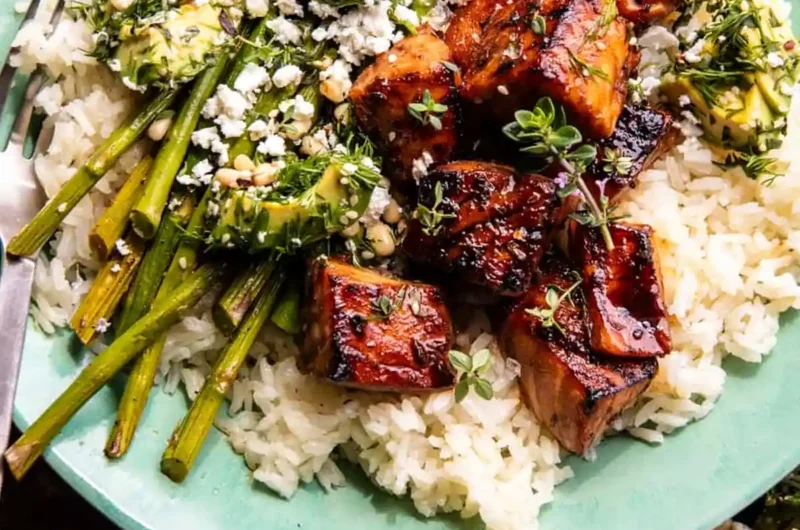
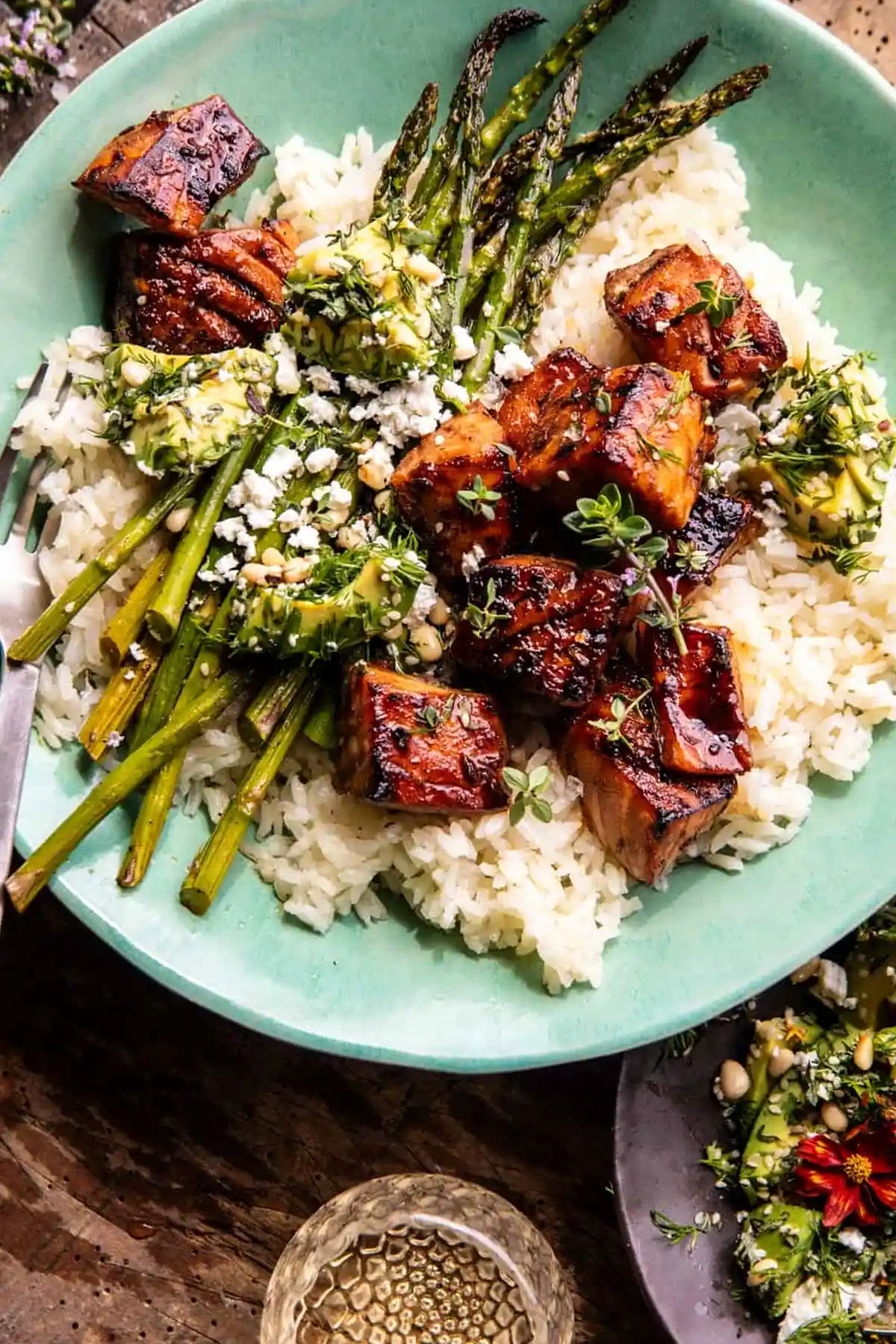
These nutrient-dense bowls feature tender salmon chunks glazed in a tangy balsamic reduction and paired with roasted asparagus. The dish is completed with a zesty avocado and feta salad for a refreshing contrast in every bite.
List of ingredients
- 1/3 cup balsamic vinegar – provides a tangy, acidic base for the glaze.
- 4 tablespoons honey – adds natural sweetness and helps the sauce caramelize.
- 2 tablespoons tamari or soy sauce – contributes a salty, umami depth.
- 2 cloves garlic, chopped – adds pungent, aromatic flavor.
- 1 teaspoon dried thyme – brings an earthy, herbal note.
- 1 teaspoon dried oregano – adds a classic Mediterranean flavor profile.
- chili flakes – adds a customizable level of spicy heat.
- 4 filets (4-6 ounce) salmon, cut into bite-size chunks – the main protein source.
- 1 bunch asparagus, ends trimmed – a fresh, spring vegetable for roasting.
- 2 tablespoons olive oil or sesame oil – used for roasting and the salad dressing.
- salt and black pepper – essential for seasoning the fish and vegetables.
- 2 avocados, diced – provides a creamy texture and healthy fats.
- 2 tablespoons lemon juice – brightens the salad and prevents avocado browning.
- 2 tablespoons toasted nuts or seeds – adds a necessary crunch to the topping.
- 1/2 cup mixed herbs, chopped (dill and basil) – provides fresh, vibrant color and taste.
- 1/2 cup crumbled feta – adds a salty, creamy finish to the bowl.
step-by-step instructions
- Prep the Oven: Preheat your oven to 450°F to ensure it is hot enough to sear the salmon and roast the asparagus quickly.
- Prepare the Glaze: In a saucepan over medium heat, combine the balsamic vinegar, honey, tamari, chopped garlic, thyme, oregano, and chili flakes. Bring the mixture to a boil and simmer for 3-4 minutes until the sauce bubbles and thickens slightly, then remove it from the heat.
- Arrange the Sheet Pan: Place the salmon chunks on a baking sheet and toss them with half of the prepared balsamic sauce. Arrange the trimmed asparagus around the salmon, tossing the stalks with 1 tablespoon of oil and seasoning them with salt and black pepper.
- Bake and Caramelize: Bake the pan for 10-15 minutes, depending on your preferred level of doneness. During the final minute of cooking, switch the oven to the broil setting to caramelize the glaze on the salmon, then remove from the oven and toss the salmon with the remaining sauce.
- Mix the Fresh Topping: While the salmon is baking, combine the diced avocado, 1 tablespoon of oil, lemon juice, toasted nuts or seeds, chopped herbs, and crumbled feta in a mixing bowl. Season the mixture with a pinch of salt and toss gently to avoid mashing the avocado.
- Assemble the Bowls: Spoon a portion of cooked rice into bowls and top with the roasted asparagus and glazed salmon. Add a generous scoop of the avocado and feta salad on top before serving immediately.
Optimizing Your Sheet Pan Technique
Ensure Salmon Cubes are Uniform
Cutting the salmon into equal bite-sized pieces ensures that every chunk cooks at the same rate. This prevents smaller pieces from drying out while larger ones remain raw in the center. Aim for pieces roughly one inch in size for the best results.
Avoid Overcrowding the Baking Sheet
Spread the salmon and asparagus out so there is space between the ingredients. If the pan is too crowded, the vegetables will steam rather than roast, resulting in a softer texture. Use a large rimmed baking sheet to allow moisture to evaporate efficiently.
Monitor the Broiler Closely
The honey in the balsamic glaze can burn very quickly under high heat. Stay by the oven during the final minute of broiling to ensure the sauce caramelizes into a sticky glaze without turning black. Remove the pan the moment you see deep brown bubbles.
Pat Salmon Dry Before Glazing
Using a paper towel to remove excess moisture from the salmon surface helps the glaze adhere better. This also promotes better searing and prevents the fish from releasing too much water on the pan. This small step significantly improves the final texture of the protein.
Ingredient Substitutions and Alternatives
Swapping the Balsamic Vinegar
If you do not have balsamic vinegar, you can use apple cider vinegar mixed with a teaspoon of brown sugar. While the flavor is slightly different, it maintains the necessary acidity and sweetness for the glaze. Red wine vinegar is another viable option for a sharper taste.
Using Different Roasted Vegetables
While asparagus is a classic choice, broccoli florets, halved Brussels sprouts, or sliced carrots work equally well. Ensure that denser vegetables are cut smaller so they cook in the same 10-15 minute window as the salmon. Toss them in oil and salt just as you would the asparagus.
Nut-Free Crunch Options
For those with nut allergies, replace toasted pine nuts or almonds with toasted sunflower seeds or pumpkin seeds. Sesame seeds also provide a great nutty flavor that complements the tamari in the sauce. These alternatives provide the same texture without the allergens.
Dairy-Free Feta Alternatives
To make this recipe dairy-free, omit the feta or use a plant-based feta alternative made from coconut oil or almonds. Alternatively, adding extra olives or a sprinkle of nutritional yeast can provide a similar salty, savory punch to the avocado salad. This keeps the flavor profile intact.
Creative Flavor Variations
Increasing the Spicy Element
For those who prefer more heat, increase the amount of chili flakes in the glaze or add a teaspoon of Sriracha. You can also add thinly sliced fresh jalapeños to the baking sheet for a spicy, charred flavor. Balance the heat by adding an extra squeeze of fresh lime to the finished bowl.
Introducing Citrus Notes
Adding a tablespoon of orange juice or zest to the balsamic reduction creates a citrusy, bright flavor that pairs beautifully with salmon. This variation reduces the intensity of the vinegar and adds a floral sweetness. It is especially effective when paired with the dill in the avocado salad.
Experimenting with Fresh Herbs
While dill and basil are recommended, parsley and cilantro offer a fresher, more zesty profile. Mint can also be added to the avocado salad for a refreshing cooling effect. Mix and match herbs based on what is currently in season in your garden.
Adjusting the Sweetness Level
If you prefer a less sweet glaze, replace half of the honey with maple syrup for a woodier flavor or reduce the honey by a tablespoon. For a more savory profile, increase the amount of tamari and add a pinch of smoked paprika. This shifts the balance from sweet-tangy to savory-smoky.
Serving and Pairing Suggestions
Selecting the Ideal Base Grain
While white rice is a standard choice, brown rice or quinoa adds more fiber and a nuttier taste. Farro or wild rice are also excellent options for those who prefer a chewier texture. Ensure the grains are fluffy and warm to contrast with the cool avocado salad.
Incorporating Fresh Leafy Greens
To increase the volume of the meal, place a handful of fresh baby spinach or arugula at the bottom of the bowl. The heat from the salmon and rice will slightly wilt the greens, adding a peppery or earthy dimension. This makes the bowl feel more like a complete salad.
Complementary Side Dish Pairings
This meal is hearty on its own, but a simple side of sliced cucumbers with rice vinegar and sesame oil adds a crisp element. A light soup, such as a clear miso broth, can also serve as a warming starter. Avoid heavy sides to keep the focus on the bright balsamic flavors.
Garnishing for Visual Appeal
Finish the bowls with a sprinkle of toasted sesame seeds or a few thin slices of fresh red radish. A final wedge of lemon on the side allows diners to add a burst of fresh acidity just before eating. Fresh thyme sprigs added at the end provide a professional, polished look.
Storage and Meal Prep Advice
Refrigerating the Components
Store the cooked salmon and roasted asparagus in an airtight container for up to three to four days. To maintain the best quality, store the avocado salad in a separate container. This prevents the salad from becoming watery and keeps the salmon from absorbing the lemon juice.
Preserving the Avocado Salad
Press a piece of plastic wrap directly onto the surface of the avocado salad before closing the lid. This minimizes air exposure, which prevents oxidation and browning. The lemon juice in the recipe already helps, but the physical barrier is the most effective method.
Preparing the Glaze in Advance
The balsamic glaze can be made several days ahead of time and stored in a glass jar in the refrigerator. When you are ready to cook, simply stir it or warm it slightly to loosen the consistency. This reduces the active prep time on the day of cooking.
Freezing Considerations
The cooked salmon can be frozen for up to a month, although the texture may change slightly. However, the avocado salad and roasted asparagus do not freeze well and should be consumed fresh. Always thaw frozen salmon in the refrigerator overnight before reheating.
Reheating Methods for Best Quality
Using the Oven for Texture
To maintain the firmness of the salmon and the snap of the asparagus, reheat them in the oven at 300°F. Place the components on a baking sheet and cover them loosely with foil to prevent drying. Heat for 5-10 minutes until warmed through.
Quick Microwave Technique
For a faster option, microwave the salmon and rice in short 30-second intervals. Add a teaspoon of water to the bowl and cover it with a damp paper towel to create steam. This prevents the salmon from becoming rubbery during the heating process.
Air Fryer Reheating
An air fryer is excellent for restoring the caramelized edges of the glazed salmon. Set the air fryer to 350°F and heat the salmon and asparagus for 2-3 minutes. This method provides a crispiness that the microwave cannot achieve.
Troubleshooting Common Issues
Fixing a Thin Glaze
If your balsamic sauce is too thin after simmering, continue to boil it for another 2-3 minutes. The honey and vinegar need enough time to reduce and concentrate their sugars. The sauce is ready when it coats the back of a spoon without running off immediately.
Preventing Dry Salmon
Dry salmon is usually a result of overcooking. Use a meat thermometer to check that the thickest part of the salmon chunk reaches 145°F. If you don’t have a thermometer, look for the fish to transition from translucent to opaque.
Addressing Soggy Asparagus
Soggy asparagus happens when the vegetables are crowded or under-heated. Ensure the oven is fully preheated to 450°F before the pan goes in. If your asparagus stalks are very thin, add them to the pan 5 minutes after the salmon has started cooking.
Managing Burnt Glaze
If the glaze burns during the broiling phase, it is likely due to the honey content. Reduce the broiling time or move the oven rack one level lower. If the salmon has already burnt, gently scrape off the charred bits before tossing with the fresh remaining sauce.
Frequently Asked Questions
Can I use frozen salmon for this recipe?
Yes, you can use frozen salmon filets. However, they must be completely thawed and patted dry with paper towels before being cut into chunks. Using partially frozen fish will release too much water, preventing the glaze from sticking and steaming the vegetables.
Which type of rice is best for these bowls?
Jasmine or Basmati rice are ideal because their light, aromatic profiles do not overpower the balsamic glaze. For a healthier alternative, quinoa or brown rice provide a great texture and extra nutrients. Any neutral-flavored grain will work well.
Is this recipe suitable for meal prep?
This is an excellent meal prep option. Cook the salmon, asparagus, and rice in bulk, and store them together. Prepare the avocado salad fresh daily or every two days to ensure the avocado remains creamy and bright green.
How do I stop the avocado from browning?
The lemon juice in the recipe acts as a natural preservative by lowering the pH on the surface of the avocado. For additional protection, store the salad in a container with as little air as possible. Adding a thin layer of olive oil over the top also helps seal out oxygen.
Print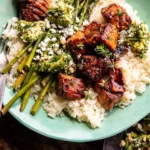
Baked Lemon Balsamic Salmon Bowls
- Total Time: 30 minutes
- Yield: 4 servings 1x
- Diet: Gluten-Free
Description
Salmon chunks glazed in a deliciously tangy, salty-sweet balsamic sauce, all baked on one sheet pan and done in 30 minutes!
Ingredients
- 1/3 cup balsamic vinegar
- 4 tablespoons honey
- 2 tablespoons tamari/soy sauce
- 2 cloves garlic, chopped
- 1 teaspoon dried thyme
- 1 teaspoon dried oregano
- chili flakes
- 4 filets (4-6 ounce) salmon, cut into bite-size chunks
- 1 bunch asparagus, ends trimmed
- 2 tablespoons olive oil or sesame oil
- salt and black pepper
- 2 avocados, diced
- 2 tablespoons lemon juice
- 2 tablespoons toasted nuts/seeds
- 1/2 cup mixed herbs, chopped (dill and basil)
- 1/2 cup crumbled microbial-rennet feta
Instructions
- Step 1: Preheat the oven to 450° F.
- Step 2: In a saucepan, combine balsamic vinegar, honey, tamari/soy sauce, garlic, thyme, oregano, and chili flakes. Set over medium heat. Bring to a boil for 3-4 minutes, until the sauce bubbles and begins to thicken. Remove from the heat.
- Step 3: On a baking sheet, toss the salmon with half of the balsamic sauce and arrange in an even layer. Arrange the asparagus around the salmon, toss with 1 tablespoon of oil and season with salt and pepper.
- Step 4: Bake for 10-15 minutes or until the salmon is cooked to your liking. During the last minute, switch the oven to broil and broil until lightly caramelized. Toss the salmon with the remaining balsamic sauce.
- Step 5: Meanwhile, combine the avocado with 1 tablespoon of oil, lemon juice, herbs, nuts/seeds, and feta in a bowl. Season with salt.
- Step 6: Spoon the asparagus and salmon over the bowls of rice. Top with lots of the avocado/feta salad mix.
Notes
Serve these bowls over steamy rice. You can substitute asparagus with broccoli if preferred.
- Prep Time: 15 minutes
- Cook Time: 15 minutes
- Category: Main Course
- Method: Baking
- Cuisine: American
Nutrition
- Serving Size: 1 bowl
- Calories: 416 kcal
- Sugar: 18 g
- Sodium: 620 mg
- Fat: 22 g
- Saturated Fat: 6 g
- Unsaturated Fat: 16 g
- Trans Fat: 0 g
- Carbohydrates: 24 g
- Fiber: 6 g
- Protein: 30 g
- Cholesterol: 85 mg
Keywords: salmon bowls, balsamic glaze, sheet pan dinner, healthy seafood, spring recipes