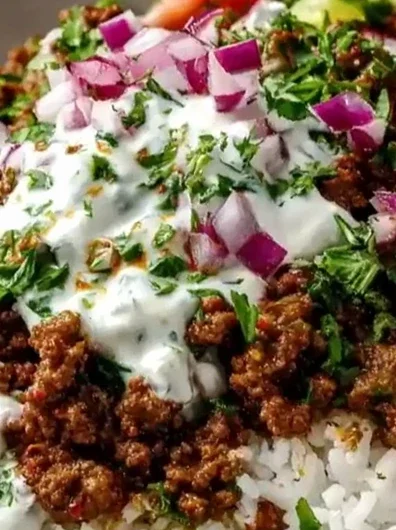
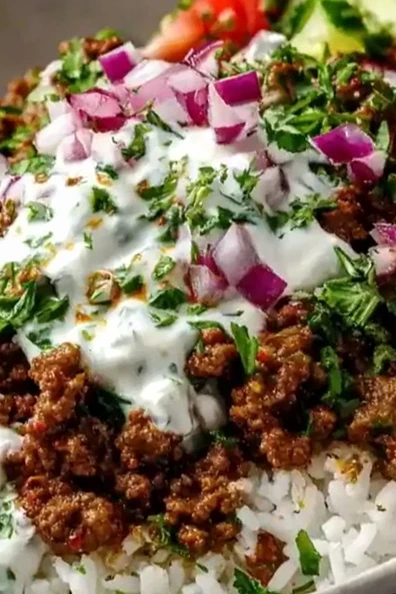
This Mediterranean-inspired meal combines seasoned ground beef, fresh vegetables, and fluffy rice topped with a creamy yogurt sauce. It is a balanced, high-protein dinner that can be prepared in under 20 minutes.
List of ingredients
- 1 lb ground beef – Use an 80/20 lean-to-fat ratio for optimal juiciness and flavor.
- 1 teaspoon olive oil – Used to prevent sticking and help sear the meat.
- 1 teaspoon garlic powder – Adds a concentrated aromatic base.
- 1 teaspoon onion powder – Provides a savory depth.
- 1 teaspoon paprika – Adds a subtle smokiness and color.
- Salt and pepper to taste – Essential for enhancing the natural flavors of the beef.
- 2 cups cooked rice – Season with salt and a squeeze of fresh lemon juice for brightness.
- 1 cup diced cucumber – Provides a cool, refreshing crunch.
- 1 cup diced tomatoes – Adds acidity and juiciness.
- 1/2 cup red onion, diced – Offers a mild, sharp contrast to the rich beef.
- 1/2 cup tzatziki sauce – A creamy, tangy condiment for drizzling.
- Fresh parsley for garnish – Adds a clean, herbal finish.
step-by-step instructions
- Brown the meat: Heat the olive oil in a heavy skillet over medium heat. Add the ground beef and cook for 5 to 7 minutes, using a spatula to break the meat into small crumbles until browned.
- Season the beef: Stir in the garlic powder, onion powder, paprika, salt, and pepper. Cook for an additional 3 to 5 minutes to allow the spices to toast and coat the beef evenly.
- Prepare the base: Divide the cooked, lemon-seasoned rice evenly among four serving bowls.
- Layer the protein: Spoon the seasoned ground beef over the rice base, ensuring an even distribution in each bowl.
- Add fresh toppings: Top the beef with diced cucumber, diced tomatoes, and diced red onion.
- Finish and serve: Drizzle the tzatziki sauce generously over the top of each bowl and garnish with chopped fresh parsley.
Optimizing Ground Beef Texture
Achieving a Deep Sear
To get the best flavor, avoid overcrowding the pan. Let the beef sit undisturbed for a few minutes before breaking it up, which allows the Maillard reaction to create a brown, savory crust on the meat.
Managing Excess Grease
If you use beef with a higher fat content, you may find too much liquid in the pan. Carefully drain the excess fat after browning but before adding the dry spices to ensure the seasonings adhere to the meat rather than floating in oil.
Blooming the Spices
Adding spices toward the end of the cooking process is key. Cooking the paprika and garlic powder in the residual beef fat for a few minutes wakes up the essential oils, creating a more robust flavor profile.
Perfecting the Rice Base
Rinsing the Grains
Rinse your uncooked rice under cold water until the water runs clear. This removes excess surface starch, which prevents the grains from sticking together and results in a fluffier texture.
Adding Citrus Acidity
Stir a squeeze of fresh lemon juice and a pinch of salt into the rice immediately after cooking. The acidity cuts through the richness of the beef and aligns the base with the Mediterranean flavor palette.
Preventing Clumping
If the rice has cooled and clumped together, add a teaspoon of water or olive oil before reheating. Gently fluff with a fork to separate the grains before placing them in the bowls.
Fresh Vegetable Preparation
Maintaining Cucumber Crispness
Dice the cucumbers and let them sit in a colander for ten minutes before adding them to the bowl. This prevents excess water from leaching into the rice and making the base soggy.
Optimizing Tomato Cuts
Remove the seeds and watery pulp from the tomatoes before dicing. Using only the firm outer walls of the tomato keeps the bowl clean and prevents the ingredients from sliding around.
Taming Red Onion Sharpness
If the raw red onion is too pungent, soak the diced pieces in cold water for five minutes. Rinse and pat dry before adding them to the bowl to maintain the crunch while mellowing the bite.
Tzatziki Sauce Customization
Selecting the Right Yogurt
Always use thick Greek yogurt rather than regular plain yogurt. The higher protein content and lower moisture level provide a creamy consistency that stays on top of the beef without running.
Infusing Fresh Garlic
For a more potent flavor, grate fresh garlic into the sauce instead of using powder. Let the sauce sit for at least 30 minutes in the refrigerator to allow the raw garlic to mellow and infuse.
Balancing the Tang
If the tzatziki is too tart, add a small pinch of sugar or a drizzle of honey. This balances the acidity of the lemon and yogurt without making the sauce taste sweet.
Alternative Ingredient Options
Leaner Protein Substitutions
Ground turkey or ground chicken can be used as a lighter alternative. Because these meats are leaner, you may need to add an extra teaspoon of olive oil to prevent them from drying out.
Low-Carb Grain Alternatives
Replace white rice with quinoa, farro, or cauliflower rice for different nutritional profiles. Cauliflower rice should be sautéed briefly and drained well to avoid adding excess moisture to the bowl.
Plant-Based Adaptations
Use a plant-based ground meat substitute and a coconut-based yogurt for the tzatziki. Ensure the plant-based meat is browned thoroughly to mimic the texture of beef.
Serving and Pairing Suggestions
Complementary Side Salads
A simple side of mixed greens with a lemon-oregano vinaigrette pairs well with these bowls. The bitterness of the greens balances the creaminess of the tzatziki sauce.
Incorporating Warm Pita Bread
Serve the bowls with warmed pita bread on the side. The bread can be used to scoop up the beef and vegetables, adding a different textural element to the meal.
Adding Roasted Vegetables
Roasted zucchini or eggplant can be added to the bowls for extra nutrition. Roast them with olive oil and salt at 400°F until tender before layering them with the beef.
Storage and Preservation
Airtight Container Strategy
Store the beef, rice, and fresh vegetables in separate airtight containers. Keeping the cold vegetables away from the warm beef prevents the produce from wilting and the rice from becoming mushy.
Safe Refrigeration Timelines
Cooked beef and rice are safe in the refrigerator for up to three to four days. The tzatziki sauce typically stays fresh for five days, though it may release some water over time.
Component-Based Storage
If prepping for the week, portion the rice and beef into containers but keep the diced vegetables in a single large container. Assemble the bowls fresh each day to maintain the temperature contrast.
Reheating Guidelines
Stovetop Beef Reheating
Reheat the seasoned beef in a skillet over medium heat with a splash of water. This method restores the moisture and prevents the meat from becoming tough or rubbery.
Microwaving Rice Properly
When microwaving rice, place a damp paper towel over the bowl. This creates a steam chamber that re-hydrates the grains, preventing them from drying out at the edges.
Handling Cold Components
Never reheat the tzatziki, cucumbers, or tomatoes. Add these fresh components only after the beef and rice have reached the desired temperature to preserve the cool contrast.
Make-Ahead Meal Prep Plan
Weekend Batch Cooking
Cook a double batch of rice and beef on Sunday. Store them in the fridge to reduce weekday cooking time to just a few minutes of assembly.
Pre-Chopping Vegetables
Dice the onions and cucumbers in advance and store them in containers with a damp paper towel. Avoid dicing the tomatoes until the day of serving to keep them from becoming too soft.
Advanced Sauce Prep
Prepare the tzatziki sauce 24 hours before serving. The flavors of the garlic and lemon deepen as the sauce chills, resulting in a more cohesive taste.
Troubleshooting Common Issues
Fixing Dry Meat
If the ground beef feels dry after cooking, stir in a tablespoon of beef broth or water. This re-emulsifies the fats and spices, creating a juicier mouthfeel.
Correcting Watery Sauce
If your tzatziki is too thin, stir in a tablespoon of strained Greek yogurt or a pinch of xanthan gum. Ensure the cucumbers were squeezed dry before being added to the sauce.
Adjusting Over-Seasoning
If the beef is too salty, add a bit more cooked rice or a squeeze of lemon juice. The neutral starch of the rice and the acidity of the lemon help neutralize excess salt.
Frequently Asked Questions
How can I tell if the ground beef is fully cooked?
The beef is done when it is uniformly brown with no pink remaining. For food safety, ensure it reaches an internal temperature of 160°F.
Can I use brown rice instead of white rice?
Yes, brown rice works well and adds more fiber. Be mindful that brown rice takes longer to cook, so prepare it ahead of time.
What is a good substitute for paprika?
If you lack paprika, smoked paprika is the best alternative for a deeper flavor. In a pinch, a small amount of mild chili powder can provide a similar color and warmth.
How do I keep the bowls from getting soggy?
Layer the ingredients carefully: rice on the bottom, then beef, then vegetables. This prevents the moisture from the vegetables from soaking directly into the rice.
Can I freeze the beef and rice?
Yes, the beef and rice can be frozen for up to three months. Freeze them separately and thaw in the refrigerator overnight before reheating.
Does tzatziki need to be homemade?
Store-bought tzatziki is a convenient option. To improve store-bought versions, stir in some fresh chopped dill or a squeeze of lemon juice.
Can I add cheese to these bowls?
Adding crumbled feta cheese is a traditional addition. Ensure you use a feta made with microbial rennet to keep the ingredients clean.
Print
Greek Ground Beef Bowls with Tzatziki
- Total Time: 20 minutes
- Yield: 4 servings 1x
- Diet: General
Description
A quick and satisfying meal featuring ground beef, fresh vegetables, fluffy rice, and creamy tzatziki sauce, perfect for busy weeknights.
Ingredients
- 1 lb ground beef
- 1 teaspoon olive oil
- 1 teaspoon garlic powder
- 1 teaspoon onion powder
- 1 teaspoon paprika
- Salt and pepper to taste
- 2 cups cooked rice
- 1 cup diced cucumber
- 1 cup diced tomatoes
- 1/2 cup red onion, diced
- 1/2 cup tzatziki sauce
- Fresh parsley for garnish
Instructions
- Cooking the Beef: In a skillet, heat the olive oil over medium heat.
- Cooking the Beef: Add the ground beef and cook for 5–7 minutes, breaking it apart as it browns.
- Cooking the Beef: Stir in the garlic powder, onion powder, paprika, salt, and pepper. Cook for an additional 3-5 minutes.
- Assembling the Bowls: Prepare your serving bowls by layering cooked rice at the bottom.
- Assembling the Bowls: Top the rice with seasoned ground beef ensuring even coverage.
- Assembling the Bowls: Add diced cucumber, tomatoes, and red onion atop the beef layer.
- Assembling the Bowls: Drizzle tzatziki sauce generously over the assembled bowls and garnish with fresh parsley.
Notes
Meal prepping is easy; cook a double batch and store components separately to reheat and assemble throughout the week. Adjust spices according to taste preferences.
- Prep Time: 10 minutes
- Cook Time: 10 minutes
- Category: Dinner
- Method: Stovetop
- Cuisine: Greek
Nutrition
- Serving Size: 1 bowl
- Calories: 550 kcal
- Sugar: 5 g
- Sodium: 500 mg
- Fat: 25 g
- Saturated Fat: 10 g
- Unsaturated Fat: 15 g
- Trans Fat: 0 g
- Carbohydrates: 45 g
- Fiber: 3 g
- Protein: 30 g
- Cholesterol: 85 mg
Keywords: Ground Beef, meal prep, Mediterranean Bowl, Tzatziki, Weeknight Dinner