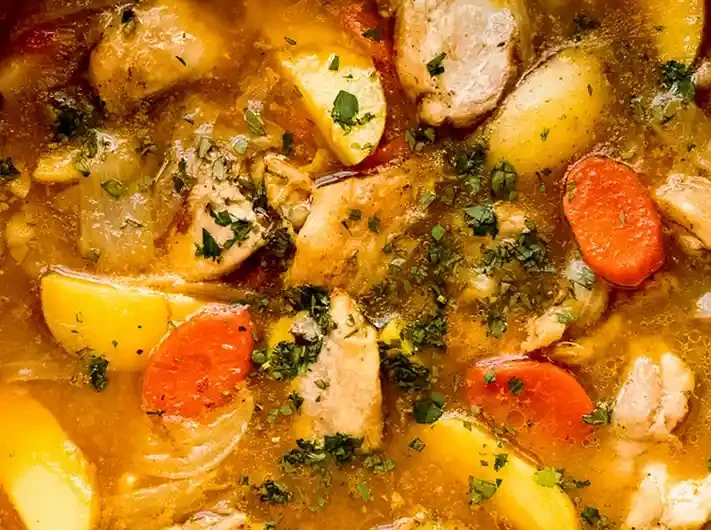
This one-pot chicken stew is a filling and comforting meal that combines tender meat with savory root vegetables. It is designed for simple preparation and easy cleanup, making it an ideal choice for cold weather dinners.
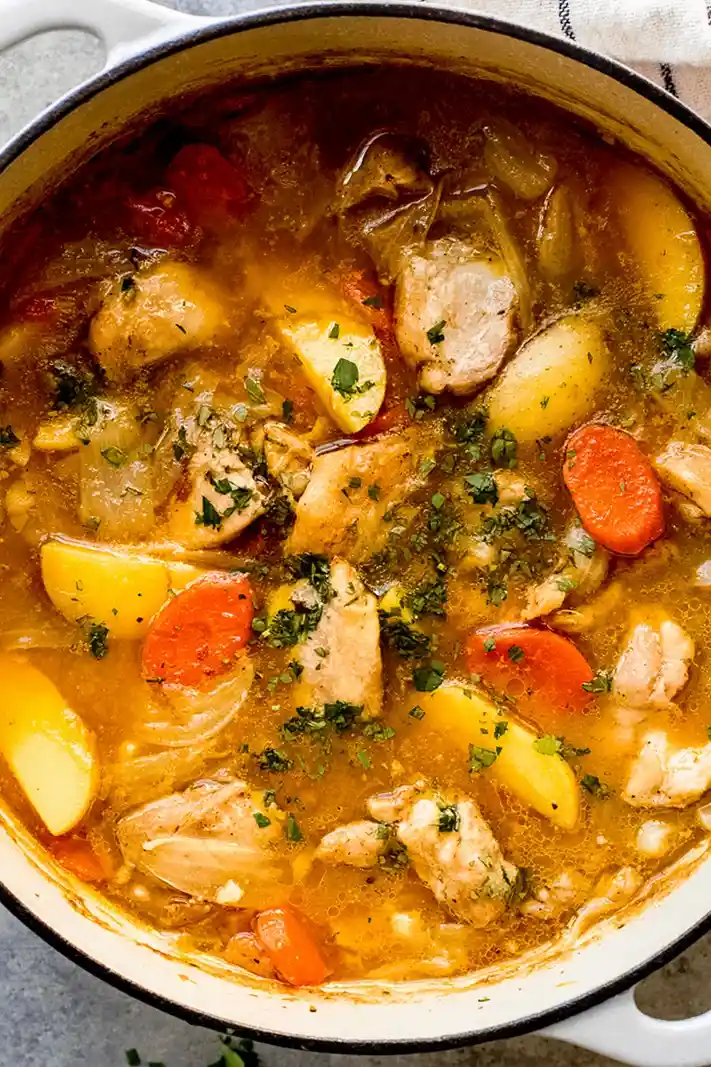
List of ingredients
- 1 1/2 lbs. chicken thighs, boneless, skinless, cut into 2-inch chunks – provides the best flavor and tenderness.
- 2 Tbsp. avocado oil, divided – used for searing the meat and vegetables.
- 3 medium carrots, peeled and sliced diagonally into 1/2-inch pieces – adds sweetness and color.
- 1 medium sweet onion, cut into 12 wedges – provides a savory aromatic base.
- 6 garlic cloves, chopped – adds depth of flavor.
- 5 cups chicken broth or stock, divided – the liquid base for the stew.
- 2 Tbsp. all-purpose flour – used to thicken the broth.
- 1 dried bay leaf – adds a subtle herbal note.
- 12 oz. baby white potatoes, scrubbed and quartered – adds heartiness.
- 1/4 cup fresh chopped parsley – used for a fresh finish.
- Kosher salt and freshly ground black pepper – used for seasoning.
step-by-step instructions
- Prepare the meat: Pat dry the chicken with a few sheets of paper towel and season thoroughly with salt and pepper, to taste.
- Brown the chicken: Heat 1 tablespoon of oil in a heavy-bottom dutch oven or a soup pot over high heat. When oil is hot, add chicken and cook, stirring occasionally, until brown on all sides, about 5-6 minutes total. Transfer the browned chicken to a plate.
- Sauté the aromatics: Reduce heat to a medium and add the remaining 1 tablespoon of oil. Add carrots and onions. Cook, stirring often until onions begin to soften and tips turn golden, about 4-5 minutes.
- Deglaze the pot: Add garlic and cook for about 30 seconds or until fragrant, while stirring nonstop. Add 1/2 cup chicken broth while stirring and scraping to loosen browned bits from the bottom of the dutch oven.
- Create the base: In a small bowl, whisk together flour and 1/2 cup broth; add to the dutch oven. Stir in the browned chicken and the remaining 4 cups of chicken broth.
- Simmer the stew: Add the bay leaf and season with salt and pepper, to taste. Bring back to a boil, then reduce heat to medium-low and simmer for 25 minutes, partially covered.
- Cook the potatoes: Add potatoes and cook uncovered until potatoes are tender, about 18-20 minutes. If needed, increase the heat slightly to maintain a gentle simmer.
- Final touches: Taste the broth for salt and pepper and adjust if necessary. Stir in the fresh parsley and discard the bay leaf before serving.
Essential Cooking Tips for Success
Selecting the Right Chicken Cut
Using boneless, skinless chicken thighs is highly recommended over chicken breasts. Thighs have a higher fat content and more connective tissue, which prevents them from drying out during the simmering process. This ensures the meat remains succulent and tender even after an hour of cooking.
The Importance of Searing at High Heat
Searing the chicken over high heat is crucial for developing a deep, savory flavor through the Maillard reaction. If the heat is too low, the chicken will release its juices and steam instead of browning. Ensure the oil is shimmering and hot before adding the meat to achieve a golden-brown crust.
Ensuring Uniform Vegetable Sizing
Cut your carrots and onions into consistent, larger chunks to prevent them from overcooking. If the pieces are too small, they may disintegrate into the broth before the chicken and potatoes are fully cooked. Slicing carrots into 1/2-inch pieces and onions into wedges helps them maintain their structure.
Deglazing for Maximum Flavor
Deglazing involves adding liquid to the hot pan to lift the browned food particles, known as fond, from the bottom. These particles are concentrated flavor bombs that enrich the overall taste of the stew. Stirring vigorously while adding the broth ensures all those savory bits are incorporated into the sauce.
Customizing Your Stew
Substituting the Vegetables
While carrots and potatoes are classic, you can swap them for other root vegetables. Parsnips or rutabaga can replace carrots for a more earthy flavor, and Yukon Gold potatoes can be used instead of baby whites for a creamier texture. Celery can also be added during the sauté phase for extra aromatic depth.
Using Alternative Fresh Herbs
If you do not have parsley, fresh dill is an excellent substitute that pairs beautifully with chicken. Thyme and rosemary are also great additions, though they should be added earlier in the simmering process. These herbs add a woody, aromatic quality that complements the savory broth.
Ways to Enhance the Broth
To add a richer umami profile to the stew, consider stirring in a tablespoon of soy sauce or a mushroom-based seasoning. A small squeeze of lemon juice or a teaspoon of apple cider vinegar added at the end can brighten the flavor. For a hint of warmth, a pinch of smoked paprika can be added during the sautéing of the vegetables.
Gluten-Free Thickening Options
To make this recipe gluten-free, replace the all-purpose flour with arrowroot powder or a cornstarch slurry. If using arrowroot, whisk it with a small amount of cold broth before stirring it into the pot. Be mindful that cornstarch can create a glossier, more gravy-like consistency than flour.
Thickness and Texture Adjustments
Increasing the Slurry Concentration
If you prefer a much thicker stew, increase the amount of flour in the initial slurry by one additional tablespoon. This will increase the viscosity of the liquid without altering the flavor profile. Ensure the slurry is fully whisked to avoid any flour lumps in the final dish.
Reducing Liquid Through Evaporation
Simmering the stew with the lid off during the final stages of cooking allows more water to evaporate. This concentrates the flavors and naturally thickens the broth as the liquid reduces. This is particularly effective during the 20 minutes while the potatoes are cooking.
Preventing Mushy Potatoes
Add the potatoes toward the end of the cooking process rather than at the beginning. By simmering them for only 18-20 minutes, they will be tender on the inside while remaining intact on the outside. Overcooking potatoes can cause them to break down and cloud the broth.
Serving and Pairing Suggestions
Recommended Breads for Dipping
A crusty sourdough loaf or a warm French baguette is perfect for soaking up the savory broth. Garlic bread or buttered ciabatta also provide a great textural contrast to the tender stew. Toasting the bread slightly helps it hold up better when dipped into the liquid.
Complementary Side Dishes
While the stew is a complete meal, a light side salad with a vinaigrette can add a refreshing contrast. Steamed green beans or sautéed spinach are also excellent pairings that add a vibrant color and nutritional balance to the plate. A simple side of roasted Brussels sprouts works well for a more wintry feel.
Fresh Garnish Ideas
Beyond parsley, you can garnish the stew with freshly chopped chives or scallions for a mild onion flavor. A sprinkle of cracked black pepper or a dusting of paprika on top adds a professional visual touch. A dollop of sour cream or Greek yogurt can be added for those who prefer a creamier finish.
Storage and Preservation
Guidelines for Refrigeration
Allow the stew to cool completely before transferring it to an airtight container. Once sealed, the stew can be stored in the refrigerator for up to four days. Keeping it in a shallow container helps the stew cool more quickly and evenly, reducing the risk of spoilage.
Effective Reheating Methods
The best way to reheat the stew is on the stovetop over medium-low heat, stirring occasionally. Since the potatoes and flour continue to thicken the liquid as it sits, you may need to add a splash of chicken broth or water to restore the original consistency. A microwave also works, provided you heat in short intervals and stir between each one.
Why Freezing is Not Recommended
Freezing this specific stew is generally discouraged because of the potato content. When potatoes are frozen and then thawed, their cellular structure breaks down, often resulting in a grainy or mealy texture. Additionally, the thickened broth may separate upon thawing, affecting the overall mouthfeel of the dish.
Common Cooking Questions
Can I use chicken breast instead of thighs?
You can use chicken breast, but it is not recommended for this recipe. Breast meat is much leaner and prone to becoming tough and dry when simmered for long periods. If you must use breast, add it later in the process to avoid overcooking.
Can this be made in a slow cooker?
While possible, a slow cooker will not produce the same depth of flavor because you cannot sear the meat and vegetables. The browning process creates essential flavor compounds that are missing in slow cooking. For the best results, stick to the stovetop method.
How do I stop the stew from being too salty?
If the stew tastes too salty, you can add a peeled, halved potato to the pot and simmer it for a few minutes to absorb some of the excess salt. Alternatively, adding more unsalted chicken broth or a splash of water can dilute the saltiness.
What is the best type of potato to use?
Baby white potatoes or Yukon Gold potatoes are the best choices because they hold their shape well during simmering. Red potatoes can also work, though they are slightly denser. Avoid using russet potatoes as they tend to fall apart and thicken the stew too much.
Can I make this without oil?
You can use a non-stick pot and a small amount of water or broth to sauté, but you will lose the flavor benefits of searing. Avocado oil is used for its high smoke point, which allows the chicken to brown properly without the oil burning.
How do I prevent the chicken from getting tough?
Ensure that the stew is at a gentle simmer rather than a rolling boil during the cooking process. High heat during the simmering stage can cause the muscle fibers in the chicken to tighten and become rubbery. Keeping the heat on medium-low ensures a tender result.
Print
Hearty One-Pot Chicken and Vegetable Stew
- Total Time: 1 hour 15 minutes
- Yield: 4–6 servings 1x
- Diet: General
Description
This hearty one-pot chicken stew practically cooks itself! It’s made all in one-pot with tender chunks of chicken and savory veggies. Enjoy it with crusty bread for an ultimate cold weather meal!
Ingredients
- 1 1/2 lbs. chicken thighs, boneless, skinless, cut into 2-inch chunks
- 2 Tbsp. avocado oil, divided
- 3 medium carrots, peeled and sliced diagonally into 1/2-inch pieces
- 1 medium sweet onion, cut into 12 wedges
- 6 garlic cloves, chopped
- 5 cups chicken broth or stock, divided
- 2 Tbsp. all-purpose flour
- 1 dried bay leaf
- 12 oz. baby white potatoes, scrubbed and quartered
- 1/4 cup fresh chopped parsley
- Kosher salt and freshly ground black pepper
Instructions
- Step 1: Pat dry the chicken with a few sheets of paper towel and season thoroughly with salt and pepper, to taste.
- Step 2: Heat 1 tablespoon of oil in a heavy-bottom dutch oven or a soup pot over high heat. When oil is hot, add chicken and cook, stirring occasionally, until brown on all sides, about 5-6 minutes total. Transfer to a plate.
- Step 3: Reduce heat to a medium and add the remaining 1 tablespoon of oil. Add carrots and onions. Cook, stirring often until onions begin to soften and tips turn golden, about 4-5 minutes. Add garlic and cook for about 30 seconds or until fragrant, while stirring nonstop. Add 1/2 cup chicken broth while stirring and scraping to loosen browned bits from the bottom of the dutch oven.
- Step 4: In a small bowl, whisk together flour and 1/2 cup broth; add to the dutch oven. Stir in chicken and remaining 4 cups of chicken broth. Add bay leaf and season with salt and pepper, to taste. Bring back to a boil, reduce heat to medium-low and simmer for 25 minutes, partially covered.
- Step 5: Add potatoes and cook uncovered until potatoes are tender, about 18-20 minutes. If needed, increase the heat so the stew is at a gentle simmer. Taste the broth for salt and pepper and add more if needed. Stir in parsley and discard bay leaf before serving.
Notes
Leftover chicken stew will last in the refrigerator for about 3 days. I do not recommend freezing as it will change the texture of the potatoes and the consistency of the broth. I do not recommend making this stew in a crockpot to ensure the meat and vegetables are properly seared for flavor.
- Prep Time: 15 minutes
- Cook Time: 1 hour
- Category: Dinner
- Method: Stovetop
- Cuisine: American
Nutrition
- Serving Size: 1 serving
- Calories: 486 kcal
- Sugar: 12.1 g
- Sodium: 679.7 mg
- Fat: 14.6 g
- Saturated Fat: 4.2 g
- Unsaturated Fat: 10.4 g
- Trans Fat: 0 g
- Carbohydrates: 42.6 g
- Fiber: 6.5 g
- Protein: 44.9 g
- Cholesterol: 168.8 mg
Keywords: chicken stew, one pot meal, hearty soup, comfort food, dinner