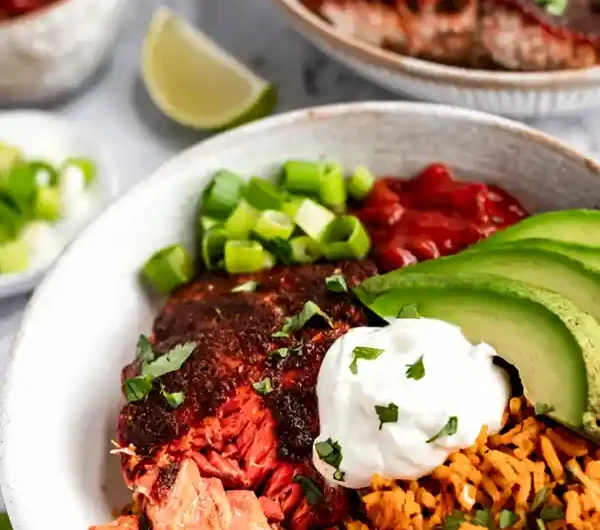
These Salmon Taco Bowls provide a nutrient-dense meal featuring seasoned wild salmon and flavorful sofrito rice. This recipe is designed for two people and works exceptionally well for a balanced weekday dinner.
List of ingredients
- 2 wild salmon filets (6 oz each) – use skin-on for better moisture retention.
- ½ lime, juiced – adds necessary acidity to the fish.
- ½ tbsp olive oil – for drizzling over the salmon.
- 1 tbsp coconut sugar (or brown sugar) – creates a caramelized crust.
- freshly-ground black pepper – to taste.
- ¾ tsp chili powder – provides a mild earthy heat.
- &frac1}{8} tsp cayenne pepper (or a pinch) – adds a sharp spicy kick.
- ½ tsp paprika – for color and sweetness.
- ¾ tsp cumin – essential for a taco-style flavor profile.
- ½ tsp garlic powder – adds concentrated savory notes to the rub.
- ¼ tsp salt – enhances all other spices.
- ¼ cup very finely diced green bell pepper – part of the sofrito base.
- ½ cup tomato sauce – adds body and acidity to the rice.
- ¼ cup very finely diced yellow onion – provides a aromatic foundation.
- 2 cloves garlic, minced – for fresh pungent flavor.
- ¼ tsp garlic powder – used again in the rice for depth.
- ¾ cup uncooked jasmine or basmati white rice – provides a fluffy base.
- ½ tsp cumin – for seasoning the rice.
- freshly-ground black pepper – to taste.
- ½ tsp coriander – adds a citrusy floral note to the grains.
- ¼ tsp ground turmeric – gives the rice a vibrant yellow hue.
- ¼ cup finely diced cilantro – mixed into the rice.
- 1 ¼ cups water – the primary cooking liquid for the rice.
- ¼ tsp salt – for seasoning the rice water.
- 2 tsp olive oil – for sautéing the aromatics.
- greek yogurt – used as a creamy cooling topping.
- avocado, sliced – provides healthy fats and creaminess.
- diced green onion or red onion – for a fresh, sharp crunch.
- fresh cilantro – for garnishing.
- lime wedges – for final seasoning.
- salsa or hot sauce – to adjust the heat level.
step-by-step instructions
- Prep Oven: Preheat your oven to 400°F. Line a large baking sheet with parchment paper or foil and grease it lightly with olive oil or non-stick cooking spray.
- Prepare Salmon: Place salmon filets skin side-down on the sheet. Drizzle the filets with olive oil and the fresh lime juice.
- Mix Rub: In a small bowl, combine coconut sugar, garlic powder, chili powder, cumin, cayenne pepper, paprika, black pepper, and salt.
- Season Fish: Sprinkle the taco seasoning onto the salmon. Use your fingertips to rub the spices evenly across the top and sides of the filets, then set them aside.
- Sauté Aromatics: Heat 2 tsp of olive oil in a medium pot over moderate heat. Add the finely diced green pepper, yellow onion, minced garlic, and diced cilantro.
- Soften Vegetables: Sauté the mixture for 2-4 minutes until the peppers and onions have softened.
- Build Sauce: Lower the heat to medium-low. Stir in the tomato sauce, coriander, garlic powder, cumin, black pepper, and salt. Simmer for 2 minutes until the sauce thickens slightly.
- Cook Rice: Pour in the water and bring the mixture to a boil. Stir in the uncooked rice, cover the pot immediately with a tight lid, and reduce heat to low. Simmer for 15-20 minutes or until the rice is tender.
- Steam Rice: Remove the pot from the heat. Stir the rice gently with a fork to fluff it, then replace the lid. Let the rice steam undisturbed for 10 minutes.
- Bake Salmon: While the rice is steaming, place the seasoned salmon in the oven. Bake for 15-20 minutes, or until the fish flakes easily with a fork.
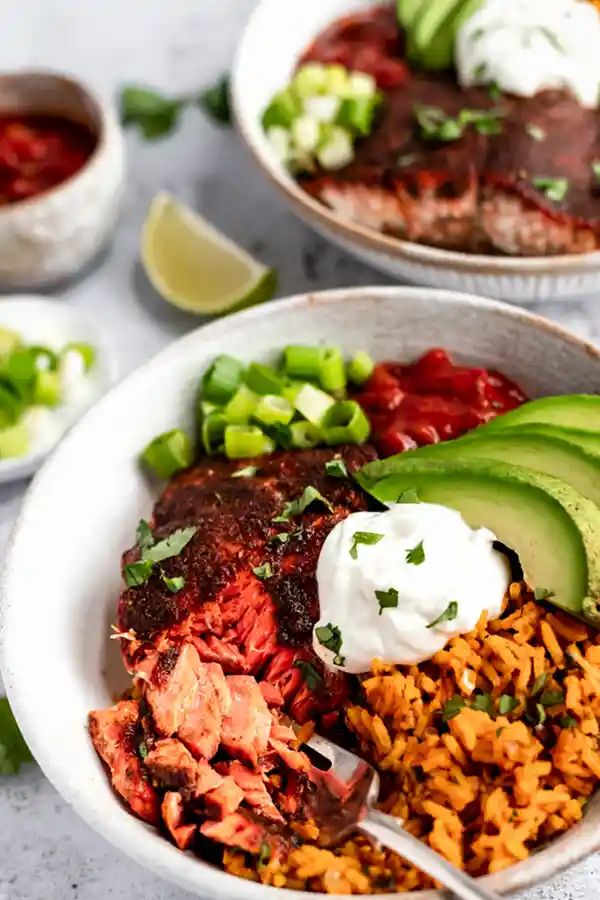
- Assemble: Divide the sofrito rice between two bowls. Place a salmon filet on the side. Top with sliced avocado, cilantro, salsa or hot sauce, greek yogurt, lime wedges, and green onion.
Rice Cooking Optimizations
Selecting the Best Grain Type
Jasmine rice is ideal for this recipe because of its natural aroma and slightly sticky texture, which helps the sofrito sauce cling to the grains. Basmati rice is a great alternative if you prefer longer, separate grains that are less sticky. If using brown rice, increase the water by ½ cup and extend the simmering time to 40-45 minutes.
Ensuring Fluffy Results
The key to fluffy rice is resisting the urge to peek. Lifting the lid during the simmering process releases essential steam and drops the internal temperature, which can lead to unevenly cooked grains. Stirring with a fork only after the resting period preserves the structure of the rice and prevents it from becoming mushy.
Managing Liquid Ratios
Depending on the brand of rice and the humidity of your kitchen, you may need to adjust the water. If the rice is still firm after the simmering time, add 2 tablespoons of hot water and steam for another 5 minutes. Conversely, if the rice is too wet, extend the off-heat steaming time by an additional 5 minutes to allow the excess moisture to evaporate.
Salmon Preparation Techniques
Optimizing Seasoning Adhesion
For the best crust, pat the salmon filets dry with a paper towel before applying the olive oil and lime juice. Removing surface moisture prevents the seasoning from turning into a paste and allows the spices to sear directly onto the fish. This process creates a more distinct flavor profile and a better texture.
Avoiding Overcooking
Salmon continues to cook for a few minutes after being removed from the oven due to carryover heat. To prevent the fish from becoming dry, remove the filets when they reach an internal temperature of 135°F to 140°F. The center should be slightly translucent, which ensures a moist and tender finish.
Temperature Management
Allow the salmon to sit at room temperature for about 15 minutes before baking. Putting ice-cold fish into a 400°F oven can cause the exterior to overcook before the thickest part of the filet is done. Tempering the fish ensures more uniform heat penetration from the edges to the center.
Ingredient Substitutions and Variations
Alternative Sweeteners for the Rub
While coconut sugar provides a deep, caramel-like flavor, light brown sugar is a direct substitute that offers a similar molasses note. For a refined sugar-free option, a small amount of maple syrup can be used, though you should reduce the olive oil slightly to maintain the rub’s consistency.
Dairy-Free Creamy Toppings
If you prefer to avoid Greek yogurt, a dollop of cashew cream or a vegan sour cream alternative works well. Avocado puree can also serve as the creamy element, providing the same cooling effect against the spicy taco seasoning without the need for dairy.
Adjusting the Heat Levels
To reduce the spice, omit the cayenne pepper entirely and replace the chili powder with mild paprika. For those who prefer a more intense heat, add a pinch of chipotle powder to the rub for a smoky flavor or use a habanero-based hot sauce during the final assembly.
Substituting the Vegetables
If green bell peppers are unavailable, red or orange peppers can be used to add a sweeter flavor to the sofrito. Diced carrots or celery can be added to the sauté phase to increase the nutritional density and add different textures to the rice base.
Assembly and Serving Suggestions
Layering the Bowl
Start by placing a generous scoop of sofrito rice at the bottom of a wide, shallow bowl. Position the salmon filet slightly off-center to create a professional presentation. Arrange the avocado slices in a fan shape and place the yogurt dollop in the center for a balanced visual appeal.
Adding Fresh Crunch
While the recipe includes green onions, adding shredded red cabbage or thinly sliced radishes provides an extra layer of crunch. These raw vegetables contrast the softness of the rice and the tenderness of the salmon, making the bowl more satisfying.
Complementary Side Pairings
A side of grilled corn on the cob or a simple cucumber salad with lime and salt complements the flavors of the taco bowl. For a more filling meal, serve with a side of black beans seasoned with the same cumin and garlic powder used in the rice.
Storage and Reheating Advice
Refrigeration Guidelines
Store the rice and salmon in airtight containers separate from the fresh toppings like avocado and yogurt. The cooked components can be kept in the refrigerator for up to three days. Ensure the containers are completely cooled before sealing to prevent excess condensation from making the rice soggy.
Reheating the Rice
To prevent the rice from drying out in the microwave, add a teaspoon of water over the top and cover the dish with a damp paper towel. Heat in 30-second intervals, stirring in between, until the rice is steaming. This recreates the moisture lost during refrigeration.
Warming the Salmon Gently
Avoid high-heat microwave settings for the salmon, as this often makes the fish rubbery. Instead, heat the filet in a covered skillet over low heat with a splash of water or vegetable broth. The resulting steam will warm the fish through without overcooking the delicate proteins.
Make-Ahead Strategies
Preparing the Sofrito Base
The sautéed vegetable mixture (peppers, onions, garlic) can be prepared in a large batch and frozen in portions. When ready to cook, simply thaw the mixture and add it to the pot before adding the tomato sauce and water. This reduces the active prep time on dinner nights.
Pre-Mixing Spices
You can create a large jar of the taco seasoning rub in advance. Store the dry mix in an airtight container in a cool, dark pantry to preserve the potency of the paprika and cumin. This allows you to simply measure out a tablespoon whenever you prepare the salmon.
Component Prepping
Dice the onions, peppers, and cilantro a day in advance and store them in separate containers. Slicing the avocado should only be done immediately before serving to prevent oxidation and browning, regardless of whether you use lime juice to preserve it.
Troubleshooting Common Issues
Handling Mushy Rice
If the rice becomes too soft or mushy, it is usually due to too much water or excessive stirring. To fix this, you can spread the rice on a baking sheet and put it in a low oven for 5-10 minutes to dry it out. In the future, ensure the lid remains sealed throughout the simmering process.
Correcting Overly Salty Rubs
If the seasoning rub tastes too salty, you can balance it by adding a small amount of extra coconut sugar or a squeeze of extra lime juice. The acidity of the lime helps neutralize the perception of salt on the palate, brightening the overall flavor of the fish.
Preventing Salmon Sticking
If the salmon sticks to the parchment paper, ensure you are using a high-quality non-stick spray or enough olive oil. If it still sticks, let the fish rest for two minutes after taking it out of the oven before attempting to lift it; this allows the proteins to set and release from the surface.
Frequently Asked Questions
Can I use frozen salmon filets?
Yes, but you must thaw them completely in the refrigerator before seasoning. Cooking salmon from frozen leads to uneven cooking and prevents the taco rub from adhering properly to the fish.
How do I store the leftover bowls?
Store the cooked rice and fish together or separately in airtight containers. Keep the avocado, Greek yogurt, and fresh greens in separate containers to maintain their texture and flavor until you are ready to assemble the bowl.
Is there a way to make this dairy-free?
You can easily make this dish dairy-free by replacing the Greek yogurt with a plant-based alternative or omitting it entirely. The sliced avocado provides enough creaminess to satisfy the palate without the need for dairy.
Which rice is better for meal prep?
Basmati rice is generally better for meal prep because it maintains its individual grain structure better than Jasmine rice when reheated. It is less likely to clump together after spending a few days in the refrigerator.
Can I bake the salmon and rice together?
No, as the rice requires a stovetop simmering process and the salmon requires dry oven heat. However, you can time them so that the salmon is baking while the rice is in its final 10-minute steaming phase.
Print
Zesty Salmon Taco Bowls with Sofrito Rice
- Total Time: 60 minutes
- Yield: 2 servings 1x
- Diet: Pescatarian
Description
Delicious salmon taco bowls with homemade-taco seasoned salmon and served with sofrito rice. Add avocado, green onion, salsa, cilantro and some additional toppings you needs for a superb meal-prep dinner!
Ingredients
- 2 wild salmon filets (6 oz each)
- ½ lime, juiced
- ½ tbsp olive-oil
- 1 tbsp coconut-sugar or brown sugar
- freshly-ground black-pepper
- ¾ tsp chili-powder
- ⅛ tsp cayenne-pepper
- ½ tsp paprika
- ¾ tsp cumin
- ½ tsp garlic-powder
- ¼ tsp salt
- ¼ cup very finely diced green-bell-pepper
- ½ cup tomato-sauce
- ¼ cup very finely diced yellow-onion
- 2 cloves garlic, minced
- ¼ tsp garlic-powder
- ¾ cup uncooked jasmine or basmati white-rice
- ½ tsp cumin
- freshly-ground black-pepper
- ½ tsp coriander
- ¼ tsp ground-turmeric
- ¼ cup finely diced cilantro
- 1 ¼ cups water
- ¼ tsp salt
- 2 tsp olive-oil
- greek-yogurt
- avocado, sliced
- diced green-onion or red-onion
- cilantro
- lime wedges
- salsa or hot-sauce
Instructions
- Preheat: Preheat oven to 400°F. Line a large baking-sheet with parchment-paper or foil and grease lightly with olive-oil or non-stick cooking-spray.
- Prepare Salmon: Put salmon skin side-down. Then drizzle salmon filets with olive-oil and a squeeze of lime-juice.
- Season Salmon: In a small-bowl mix together the coconut sugar, garlic powder, chili powder, cumin, cayenne pepper, paprika, pepper and salt. Sprinkle your taco-seasoning onto the salmon and rub in evenly.
- Sauté Aromatics: Add olive-oil into a medium-pot over moderate heat. After oil is hot, add green pepper, onion, garlic and cilantro; saute for 2-4 minutes.
- Simmer Sauce: Bring heat to medium-low, then add tomato sauce, coriander, garlic powder, cumin, pepper and salt. Simmer for 2 minutes.
- Cook Rice: Add water and bring to a boil. Stir in rice, cover instantly, reduce heat to low and simmer 15-20 minutes or until rice is tender.
- Steam Rice: Remove pot from heat, stir rice with a fork then put cover back on. Allow rice to steam for another 10 minutes.
- Bake Salmon: While the rice is steaming, put salmon in oven for 15-20 minutes or until salmon easily-flakes with a fork.
- Assemble: Pile rice into 2 bowls and add salmon filet on the side. Serve with avocado slices, cilantro, salsa or hot sauce, greek yogurt, lime wedges and green onion.
Notes
If you would like you can use brown-rice rather than jasmine, but you will probably have to cook it for more based on the instructions on the package.
- Prep Time: 20 minutes
- Cook Time: 40 minutes
- Category: Main Dish
- Method: Baking
- Cuisine: Mexican-inspired
Nutrition
- Serving Size: 1 bowl
- Calories: 616 kcal
- Sugar: 12 g
- Sodium: 980 mg
- Fat: 24 g
- Saturated Fat: 5 g
- Unsaturated Fat: 19 g
- Trans Fat: 0 g
- Carbohydrates: 52 g
- Fiber: 7 g
- Protein: 38 g
- Cholesterol: 95 mg
Keywords: salmon taco bowls, sofrito rice, healthy dinner, meal prep, wild salmon