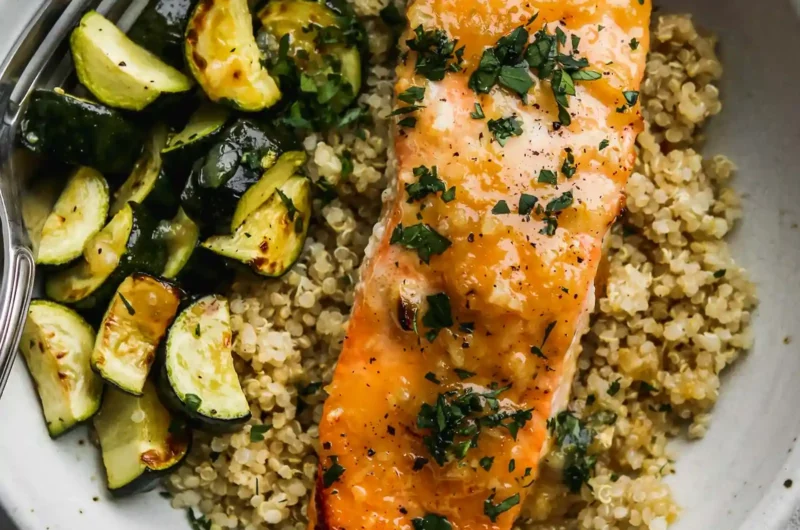
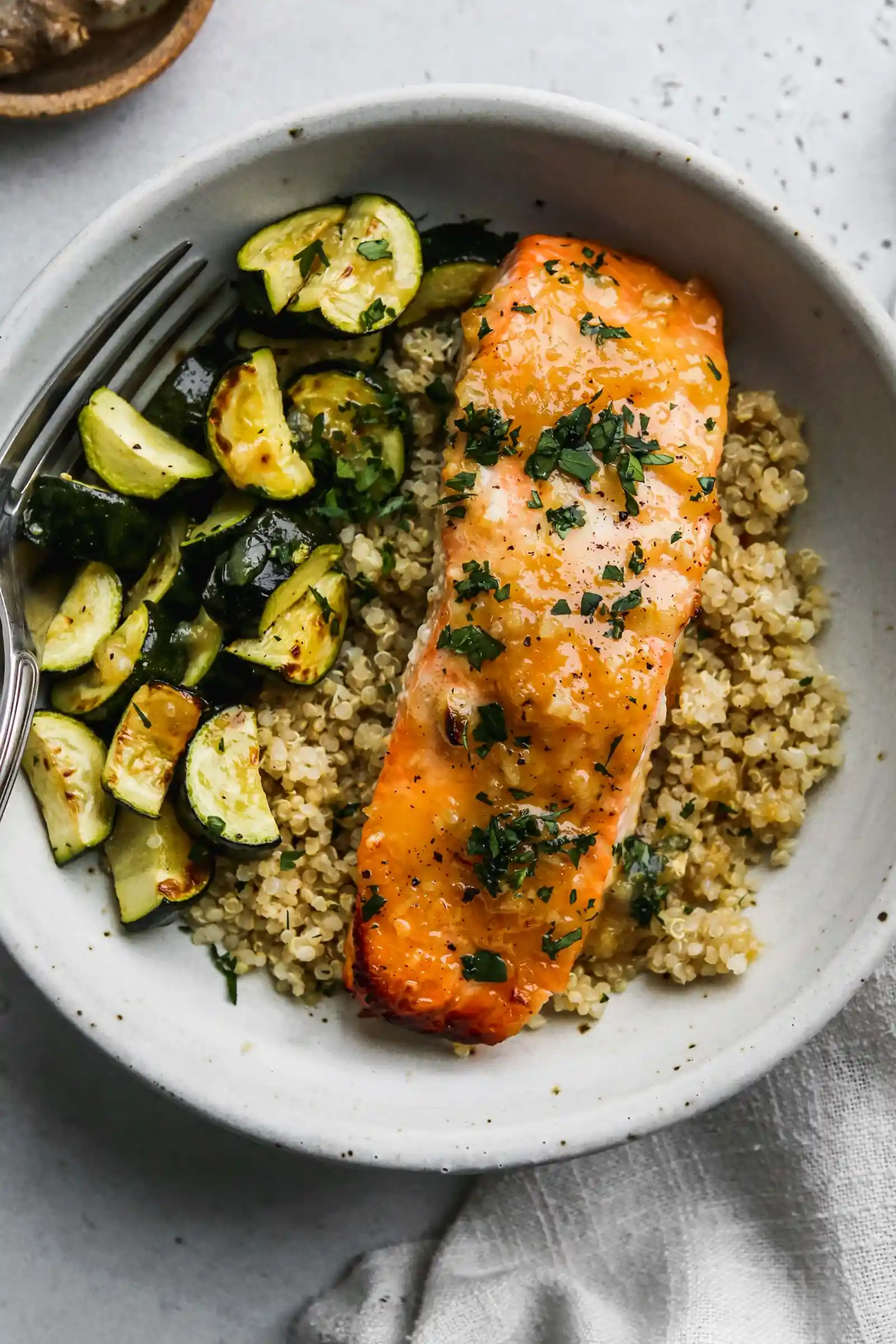
This recipe features a savory and sweet glaze that transforms salmon fillets into a restaurant-quality meal. It is a fast, nutrient-dense dinner that takes only 30 minutes from start to finish.
List of ingredients
- 2 pieces of salmon (about 4-6 ounces each) – use center-cut fillets for even cooking.
- Black pepper, to taste – used as a finishing spice.
- 1/4 cup white grape juice – a non-alcoholic substitute for mirin.
- 2 cloves garlic, minced – provides a pungent, aromatic base.
- 1 Tbsp miso paste – adds a salty, fermented depth of flavor.
- 1 tsp ginger, grated – adds a fresh, zesty heat to the glaze.
- 1 Tbsp rice vinegar – balances the sweetness with acidity.
- 1 Tbsp maple syrup – provides a rich sweetness and sticky texture.
- 1 Tbsp avocado oil – a neutral oil with a high smoke point.
step-by-step instructions
- Prepare the oven: Preheat your oven to 400F. Line a baking sheet with parchment paper and place the salmon fillets on top to prevent sticking.
- Reduce the base: Pour the white grape juice into a small saucepan over medium-high heat. Bring it to a boil and allow it to bubble for about 1 minute to concentrate the sugars.
- Infuse aromatics: Reduce the heat to medium and add the minced garlic. Stir for about 30 seconds, then whisk in the miso paste until it is fully dissolved and smooth.
- Complete the sauce: Add the grated ginger, rice vinegar, maple syrup, and avocado oil to the pan. Bring the mixture back to a boil and whisk continuously for 1 minute until a smooth glaze forms.
- Glaze the fish: Turn off the heat. Spoon half of the prepared sauce over the salmon fillets, coating the tops evenly.
- Bake the salmon: Place the baking sheet in the oven for 12-15 minutes. The exact time depends on the thickness of the fillets and your preferred level of doneness.
- Finish and serve: Remove the salmon from the oven. Serve with your choice of sides and drizzle the remaining sauce over the fish before seasoning with black pepper.
Pro Tips for Cooking Salmon
Select the Right Cut of Fish
Choose center-cut fillets to ensure the thickness is uniform from side to side. This prevents the thin tail end from overcooking while the center remains raw. Wild-caught salmon offers a more robust flavor, while farmed salmon is typically fattier and more tender.
Prevent Overcooking the Fillets
Use a meat thermometer to check for an internal temperature of 145F (63C). If you do not have a thermometer, the fish should flake easily with a fork and be opaque in the center. Remove the fish from the oven slightly early, as it will continue to cook for a few minutes while resting.
Create a Caramelized Crust
For a deeper color and a slightly charred finish, turn the oven to the broiler setting for the final 2 minutes of cooking. Keep a close eye on the fillets, as the maple syrup can burn quickly under direct heat. This step enhances the sweetness of the glaze through caramelization.
Dry the Salmon Before Glazing
Use a paper towel to pat the salmon fillets completely dry before applying the sauce. Excess moisture on the surface can cause the glaze to slide off or lead to steaming rather than roasting. Dry fish allows the sauce to adhere better and develop a thicker coating.
Ingredient Substitutions and Variations
Using Ground Ginger Instead of Fresh
If fresh ginger is unavailable, you can use ground ginger powder. Use approximately 1/4 to 1/2 teaspoon of ground ginger to replace 1 teaspoon of fresh. Start with a smaller amount and taste the sauce, as dried spices can be more concentrated.
Substituting Garlic Powder
Garlic powder can be used as a replacement for fresh minced garlic. Use 1/4 to 1/2 teaspoon of powder for every two cloves of fresh garlic. Whisk it thoroughly into the liquid to avoid any clumps in the final glaze.
Alternative Neutral Cooking Oils
While avocado oil is recommended for its high smoke point, other neutral oils work well. Grapeseed oil, sunflower oil, or canola oil are excellent alternatives that will not alter the flavor of the dish. Avoid using extra virgin olive oil if you prefer a completely neutral taste.
Honey as a Maple Syrup Alternative
Honey can be substituted for maple syrup in a 1:1 ratio for a similar sweetness. Honey has a slightly thicker consistency and a more floral flavor profile. This variation still produces a sticky, delicious glaze that pairs well with miso.
Choosing Different Miso Paste Types
White miso (Shiro miso) is milder and sweeter, making it ideal for this recipe. Red miso (Aka miso) is saltier and more intense; if using red miso, reduce the amount slightly or add a pinch more maple syrup. Yellow miso is a middle-ground option that works well for balanced flavors.
Recommended Side Dish Pairings
Whole Grain Bases
Serve the miso salmon over a bed of quinoa, brown rice, or farro to soak up the extra sauce. These grains provide a nutty flavor and a hearty texture that complements the rich fish. Millet is another great gluten-free option for a lighter grain base.
Roasted Root Vegetables
Pair the fish with roasted carrots, parsnips, or sweet potato cubes. Toss the vegetables in a small amount of oil and salt, then roast them at 400F. Since they take longer to cook, place them in the oven about 15-20 minutes before adding the salmon.
Sautéed Leafy Greens
Quickly sautéed spinach, kale, or Swiss chard adds a fresh, bitter contrast to the sweet glaze. Use a touch of garlic and a squeeze of lemon juice during sautéing to brighten the greens. This ensures a balanced meal with a variety of textures.
Steamed Broccoli or Zucchini
Steamed broccoli florets or roasted zucchini slices are excellent non-starchy vegetable options. The florets of the broccoli are particularly good at catching droplets of the miso sauce. Roast them on the same sheet pan as the salmon for a convenient one-pan meal.
Storage and Reheating Guidance
Refrigeration and Shelf Life
Store leftover salmon and sauce in an airtight container in the refrigerator. The fish will remain safe to eat for up to 3 days. Keep the extra sauce in a separate small container to maintain the texture of the salmon.
Gentle Microwave Reheating
To reheat in the microwave, use a low-to-medium power setting to avoid toughening the fish. Heat in short 30-second intervals, gently stirring or flipping the fish. Drizzle a bit of fresh sauce over the top to restore moisture.
Oven Reheating Method
Place the salmon on a baking sheet and cover it loosely with aluminum foil to trap moisture. Heat in a low oven at 275F (135C) until the fish is warmed through. This method prevents the salmon from drying out compared to high-heat methods.
Freezing Salmon Fillets
While cooked salmon can be frozen, the texture may change upon thawing. Vacuum seal the cooked fillets and store them for up to 2 months. Thaw slowly in the refrigerator overnight before reheating in the oven.
Creative Ways to Use Leftovers
Cold Salmon Salad
Flake cold leftover salmon into a bowl of fresh arugula or baby spinach. Add sliced cucumbers, cherry tomatoes, and a light lemon vinaigrette. The savory miso flavor of the fish acts as a built-in seasoning for the salad.
Integration into Stir-Fries
Add flaked miso salmon to a vegetable stir-fry during the last minute of cooking. This ensures the fish is heated through without breaking apart too much. The ginger and garlic in the salmon glaze will blend perfectly with stir-fry aromatics.
Customized Grain Bowls
Combine leftover salmon with cooked quinoa, sliced avocado, edamame, and pickled ginger. Drizzle with a bit of the remaining miso sauce or a touch of sesame oil. This creates a nutrient-dense lunch that is easy to transport.
Troubleshooting and FAQs
Why is my sauce too thin?
If the sauce is too thin, simmer it for an additional 2-3 minutes over medium heat to allow more evaporation. Alternatively, whisk in a tiny pinch of cornstarch mixed with water to thicken it instantly. Ensure the sauce reaches a syrupy consistency before glazing the fish.
How do I know when the salmon is perfectly done?
The salmon is done when the flesh changes from translucent pink to an opaque light pink. Use a fork to gently press the thickest part of the fillet; if it flakes easily along the natural lines, it is ready. Avoid overcooking, as the fish will become dry and chalky.
Can I make this recipe in an air fryer?
Yes, you can cook the glazed salmon in an air fryer at 380F. Cook for 8-12 minutes depending on the thickness of the fillet. Be careful with the glaze, as the high air circulation can cause the sugars to burn faster than in a traditional oven.
Why did my glaze burn in the oven?
The high sugar content in maple syrup and white grape juice can burn if the oven is too hot or the fish is placed too high on the rack. Ensure your oven is properly calibrated to 400F. If burning occurs, lower the rack position or cover the fillets loosely with foil.
What can I use if I don’t have rice vinegar?
Apple cider vinegar is a suitable substitute for rice vinegar in this recipe. It has a similar acidity level, though it is slightly more fruity. Use the same 1 tablespoon measurement to maintain the balance of the glaze.
Print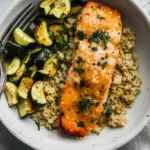
Baked Miso Maple & Ginger Salmon
- Total Time: 30 minutes
- Yield: 2 servings 1x
- Diet: Gluten Free, Low Lactose
Description
This baked miso maple ginger salmon recipe is such an easy, delicious, and nutritious weeknight dinner! You only need 8 ingredients and about 30 minutes to make the salmon.
Ingredients
- 2 pieces of salmon (about 4–6 ounces each)
- Black pepper, to taste
- 1/4 cup non-alcoholic mirin seasoning
- 2 cloves garlic, minced
- 1 Tbsp miso paste
- 1 tsp ginger, grated
- 1 Tbsp rice vinegar
- 1 Tbsp maple syrup
- 1 Tbsp avocado oil
Instructions
- Step: Preheat oven to 400F. Line a baking sheet with parchment paper and place salmon fillets on top.
- Step: Add non-alcoholic mirin seasoning to a small saucepan over medium-high heat. Bring the seasoning to a boil, and allow to boil for about 1 minute.
- Step: Then, reduce the heat and add minced garlic. Stir around for about 30 seconds, then add miso paste. Whisk until the miso paste starts to dissolve and break down.
- Step: Then, add the grated ginger, rice vinegar, maple syrup, and avocado oil. Bring everything to a boil again, whisking continuously for 1 minute.
- Step: Once a smooth sauce has formed, turn off the heat. Spoon 1/2 of the sauce over top of the salmon fillets, coating evenly.
- Step: Place salmon in the oven for 12-15 minutes, depending on thickness and desired doneness.
- Step: When salmon is cooked, remove from oven. Serve with desired sides and finish with the remainder of sauce and some black pepper.
Notes
Leftovers can be kept in an airtight container in the fridge for up to 3 days. Substitutions: Use 1/4-1/2 tsp ground ginger instead of fresh, and 1/4-1/2 tsp garlic powder instead of fresh. Recommended sides include quinoa, brown rice, or roasted broccoli and zucchini.
- Prep Time: 5 minutes
- Cook Time: 25 minutes
- Category: Main Course
- Method: Baking
- Cuisine: Asian
Nutrition
- Serving Size: 1 fillet
- Calories: 435 kcal
- Sugar: 12 g
- Sodium: 850 mg
- Fat: 22 g
- Saturated Fat: 4 g
- Unsaturated Fat: 18 g
- Trans Fat: 0 g
- Carbohydrates: 18 g
- Fiber: 1 g
- Protein: 34 g
- Cholesterol: 85 mg
Keywords: dinner, ginger, maple, miso, salmon