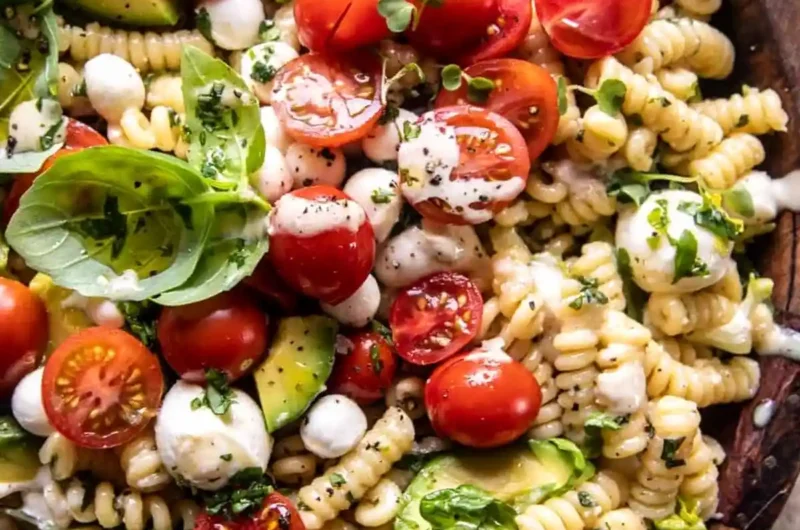
This creamy pasta salad blends the bold flavors of a Caesar dressing with the fresh components of a classic Caprese salad. It is an efficient, mostly no-cook meal that works perfectly for light lunches or outdoor gatherings.
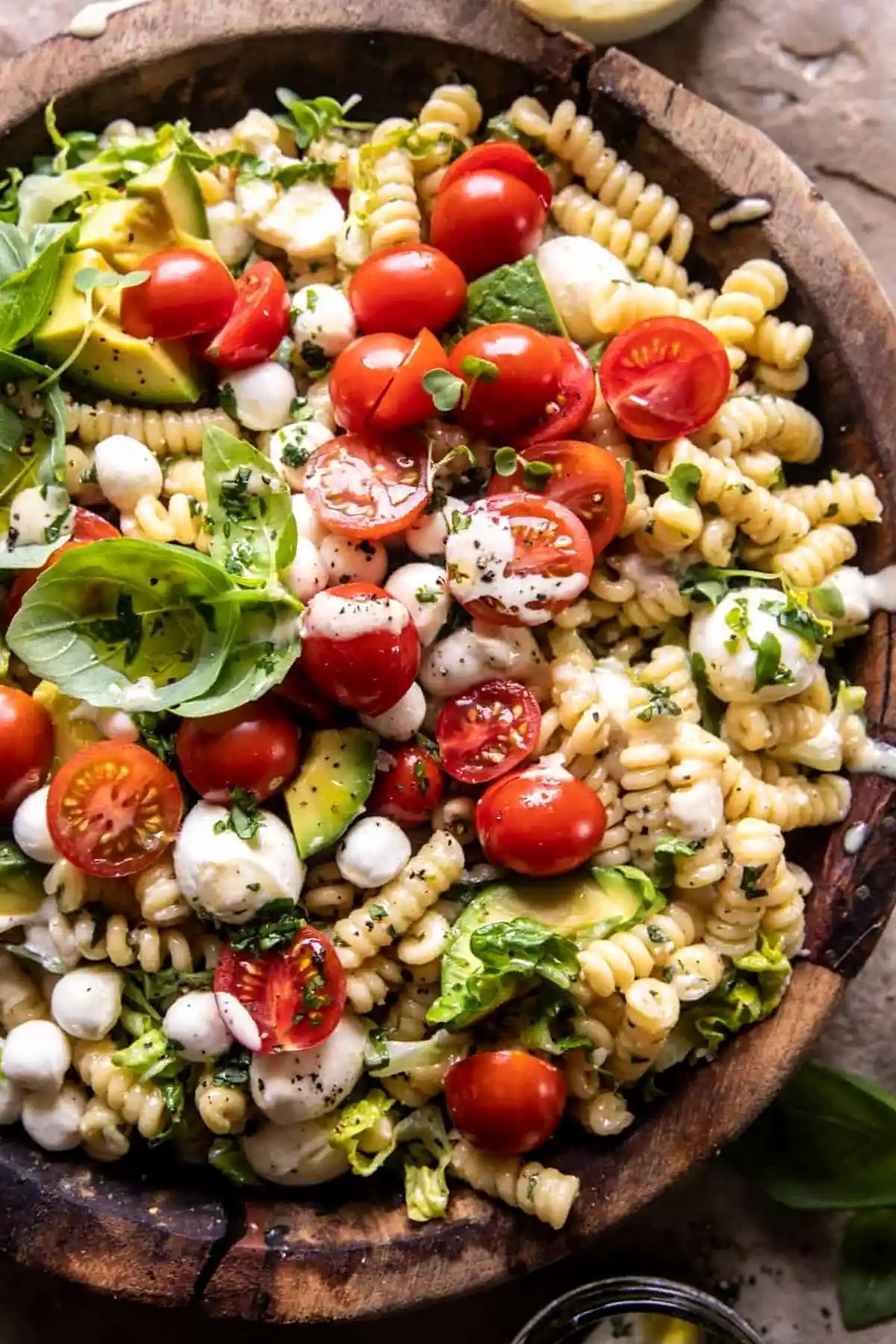
List of ingredients
- 1/2 cup mayo – provides a creamy base for the dressing.
- 2 tablespoons extra virgin olive oil – adds richness and smooths the texture.
- 2 tablespoons lemon juice – provides essential acidity to balance the fats.
- 1 tablespoon Dijon mustard – adds a sharp, tangy depth.
- 2 teaspoons Worcestershire sauce – contributes umami and savory notes.
- 1-2 cloves garlic, grated – provides a pungent, aromatic punch.
- 1/2 cup grated parmesan cheese (microbial-rennet) – adds salty, nutty flavor.
- kosher salt and black pepper – used for basic seasoning to taste.
- 1 pinch chili flakes, to taste (optional) – adds a subtle heat.
- 1 pound short cut pasta – the hearty base of the salad.
- 1 head romaine lettuce, shredded – adds crunch and freshness.
- 2 cups mozzarella balls – use marinated versions for extra flavor.
- 2 cups cherry tomatoes halved – adds sweetness and juicy texture.
- 1 cup fresh basil leaves, torn – provides a peppery, aromatic herbal note.
- 1/2 cup cubed spicy cheddar cheese (optional) – adds a sharp contrast.
- 1 avocado, diced – contributes a buttery, creamy element.
step-by-step instructions
- Prepare the dressing: Combine the mayo, olive oil, lemon juice, Dijon mustard, Worcestershire sauce, grated garlic, and parmesan cheese in a glass jar. Whisk the mixture until completely smooth, then season with salt and pepper.
- Cook the pasta: Bring a large pot of salted water to a rolling boil. Add the short cut pasta and cook until al dente according to the package instructions. Drain the pasta thoroughly in a colander.
- Assemble the salad: In a large mixing bowl, combine the cooked pasta, shredded romaine, mozzarella balls, halved cherry tomatoes, cubed cheddar, and diced avocado. Pour the prepared dressing over the ingredients and toss gently to ensure everything is evenly coated. Serve immediately while warm, or refrigerate and serve cold.
Optimal Pasta Selection
Farfalle for Dressing Retention
Farfalle, or bowtie pasta, is highly recommended for this recipe because of its unique shape. The pinch in the middle creates a small pocket that captures the creamy Caesar dressing effectively. This ensures that every bite has a balanced ratio of sauce to pasta.
Rotini for Maximum Surface Area
Rotini is a spiral-shaped pasta that provides a large surface area for ingredients to cling to. The twists allow small pieces of grated parmesan and bits of basil to get trapped in the coils. This results in a more consistent flavor distribution throughout the bowl.
Penne for a Heartier Texture
Penne is a sturdy choice that holds up well if the salad is stored for several days. Its hollow center allows the dressing to enter the pasta, flavoring it from the inside out. It is particularly useful if you are adding larger chunks of spicy cheddar.
Dressing Customization
Adjusting the Creaminess
For a lighter version of the dressing, you can replace half of the mayonnaise with plain Greek yogurt. This reduces the total fat content while maintaining the thick consistency. It also adds a slight tang that complements the lemon juice.
Increasing the Acidity
If you prefer a sharper taste, increase the lemon juice by one tablespoon or add a teaspoon of apple cider vinegar. This brightness cuts through the richness of the avocado and mozzarella. It is especially helpful when serving the salad on a hot day.
Adding a Spicy Kick
Beyond the optional chili flakes, you can stir in a teaspoon of sriracha or chopped jalapeños. This heat pairs well with the spicy cheddar cheese optional ingredient. Ensure you taste the dressing after adding heat to avoid overpowering the fresh basil.
Ingredient Preparation Techniques
Grating Garlic for Smoothness
Using a microplane or a fine grater for the garlic is essential to avoid large, raw chunks in the dressing. Grating the garlic creates a paste that emulsifies easily with the mayo and olive oil. This ensures a uniform flavor without any harsh bites of raw garlic.
Preventing Avocado Oxidation
To keep the diced avocado from turning brown, toss the cubes in a small amount of the lemon juice before adding them to the bowl. This acidic barrier slows down the oxidation process. It is best to add the avocado as the final step before serving.
Handling Fresh Basil
Tearing the basil leaves by hand instead of chopping them with a knife prevents the edges from bruising and turning black. Tearing releases the aromatic oils more naturally. Ensure you include some of the smaller stems for extra flavor.
Vegetable and Cheese Alternatives
Substituting Romaine Lettuce
If romaine is unavailable, baby spinach or arugula are excellent alternatives. Spinach offers a milder, earthier taste, while arugula provides a peppery bite. Ensure the greens are thoroughly dried to prevent the dressing from becoming watery.
Swapping Mozzarella Varieties
While mozzarella balls are traditional, you can use cubed fresh mozzarella or even shredded mozzarella. For a different flavor profile, try using feta cheese, which adds a salty, briny contrast. Just be mindful of the salt levels in the dressing if using feta.
Alternative Tomato Options
Grape tomatoes are a direct substitute for cherry tomatoes and offer a similar sweetness. If you only have large tomatoes, seed them first and dice them into small cubes. This prevents excess water from leaking into the pasta salad.
Dairy-Free Cheese Options
For those avoiding traditional dairy, use a plant-based mozzarella and a vegan parmesan alternative made from nutritional yeast. Ensure the vegan cheese is a variety that does not melt at room temperature. This maintains the distinct texture of the cheese cubes.
Serving and Presentation
Platter Arrangement
To present this as a party dish, spread the salad across a large, shallow platter rather than a deep bowl. This prevents the heavier ingredients like mozzarella and avocado from sinking to the bottom. Garnish the top with whole basil leaves and a sprinkle of extra parmesan.
Individual Portioning
For meal prep or lunch boxes, divide the salad into airtight glass containers. Leave a small amount of extra dressing on the side to refresh the salad before eating. This prevents the pasta from absorbing all the moisture over time.
Complementary Side Dishes
Serve this salad alongside grilled chicken breast or roasted chickpeas for added protein. A side of toasted garlic bread or focaccia helps soak up any remaining dressing. It also works well as a standalone light dinner during the summer.
Storage and Preservation
Refrigeration Guidelines
Store the assembled salad in an airtight container in the refrigerator for up to three days. Keep the temperature consistent to maintain the freshness of the romaine and avocado. Stir gently before serving to redistribute the dressing.
Separating Components
For the longest shelf life, store the dressing, the cooked pasta, and the fresh vegetables in separate containers. Combine them just before serving to ensure the lettuce remains crisp. This method is ideal if you are preparing the meal several days in advance.
Handling Leftover Avocado
If the salad contains avocado, it will have a shorter peak freshness window. To extend this, press a piece of plastic wrap directly onto the surface of the salad before closing the lid. This minimizes the avocado’s exposure to air.
Reheating and Refreshing
Room Temperature Serving
This salad is best enjoyed chilled or at room temperature. If it has been in the fridge, let it sit on the counter for 15 to 20 minutes before serving. This allows the flavors of the garlic and parmesan to become more pronounced.
Refreshing Wilted Greens
If the romaine lettuce wilts after a day in the fridge, do not attempt to reheat the salad. Instead, stir in a handful of fresh shredded lettuce just before serving. This restores the necessary crunch and visual appeal.
Adding Extra Moisture
Pasta tends to absorb dressing as it sits, which can lead to a dry salad. If the mixture looks dull, stir in a tablespoon of extra virgin olive oil or a squeeze of fresh lemon juice. This reactivates the emulsion of the Caesar dressing.
Make-Ahead Strategies
Pre-Cooking the Pasta
You can boil the pasta up to 24 hours in advance. After draining, toss the pasta with a teaspoon of olive oil to prevent the noodles from sticking together. Store the oiled pasta in a sealed container in the refrigerator.
Advance Dressing Preparation
The Caesar dressing can be made up to a week in advance. Store it in a glass jar with a tight-fitting lid. Shake the jar vigorously before pouring it over the salad to re-emulsify the oil and mayo.
Timing the Assembly
Assemble the pasta and cheese base a few hours before your event. Wait to add the shredded lettuce and avocado until 30 minutes before serving. This timing ensures the pasta is well-flavored while the fresh produce remains crisp.
Troubleshooting Common Issues
Dealing with Watery Salad
If the salad becomes watery, it is usually due to poorly drained pasta or wet lettuce. Ensure you use a salad spinner for the romaine and let the pasta steam-dry for a few minutes after draining. You can also add a bit more parmesan cheese to thicken the sauce.
Preventing Mushy Pasta
To avoid mushy pasta, always cook it one minute less than the package directions for al dente. Since the pasta will continue to soften slightly as it absorbs the dressing, an undercooked center is preferable. Always rinse pasta for cold salads to stop the cooking process immediately.
Fixing Separated Dressing
If the dressing separates in the jar, it is usually because of temperature changes. Simply shake the jar firmly or whisk it with a fork for 30 seconds. If it remains broken, whisk in a teaspoon of warm water to help the emulsion reform.
Frequently Asked Questions
Can I use frozen pasta for this recipe?
It is not recommended to use frozen or pre-cooked frozen pasta. The freezing process breaks down the starch structure, leading to a mushy texture that cannot hold the creamy dressing. Always use freshly boiled pasta for the best results.
How do I store the avocado to prevent browning?
Keep the avocado pit in the diced pieces or coat them heavily in lemon juice. Both methods create a barrier that slows down the enzymatic browning. Alternatively, add the avocado only at the moment of serving.
Is this dressing suitable for a vegan diet?
The original dressing is not vegan because it contains mayonnaise, parmesan, and mozzarella. To make it vegan, use a plant-based mayonnaise, nutritional yeast instead of parmesan, and dairy-free cheese alternatives.
Can I add protein to this salad?
Yes, grilled shrimp, sliced chicken breast, or chickpeas are excellent additions. Add the protein while it is still slightly warm to help it bond with the dressing. Ensure the protein is diced into bite-sized pieces to match the pasta.
Print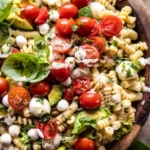
Caprese Caesar Pasta Salad
- Total Time: 25 minutes
- Yield: 6 servings 1x
- Diet: General
Description
Almost completely no-cook, comes together quickly with very little effort, delicious, and perfect for Mother’s Day!
Ingredients
- 1/2 cup mayo
- 2 tablespoons extra virgin olive oil
- 2 tablespoons lemon juice
- 1 tablespoon Dijon mustard
- 2 teaspoons Worcestershire sauce
- 1–2 cloves garlic, grated
- 1/2 cup grated parmesan cheese
- kosher salt and black pepper
- 1 pinch chili flakes, to taste (optional)
- 1 pound short cut pasta
- 1 head romaine lettuce, shredded
- 2 cups mozzarella balls
- 2 cups cherry tomatoes, halved
- 1 cup fresh basil leaves, torn
- 1/2 cup cubed spicy cheddar cheese (optional)
- 1 avocado, diced
Instructions
- Step 1: Combine all dressing ingredients in a glass jar and whisk until smooth. Season with salt and pepper.
- Step 2: Bring a large pot of salted water to a boil. Boil the pasta to al dente, according to package directions. Drain.
- Step 3: In a large bowl, toss together the pasta, lettuce, mozzarella, tomatoes, cheddar, and avocado. Pour over the dressing and toss well to combine.
Notes
Serve warm or cold. The salad will develop more flavor as it sits.
- Prep Time: 15 minutes
- Cook Time: 10 minutes
- Category: Light Meal, Side Dish
- Method: Boiling, Mixing
- Cuisine: American, Italian
Nutrition
- Serving Size: 1 serving
- Calories: 592 kcal
- Sugar: 8 g
- Sodium: 850 mg
- Fat: 38 g
- Saturated Fat: 14 g
- Unsaturated Fat: 20 g
- Trans Fat: 0 g
- Carbohydrates: 42 g
- Fiber: 7 g
- Protein: 22 g
- Cholesterol: 65 mg
Keywords: Caprese, Caesar, pasta salad, summer recipes, side dish