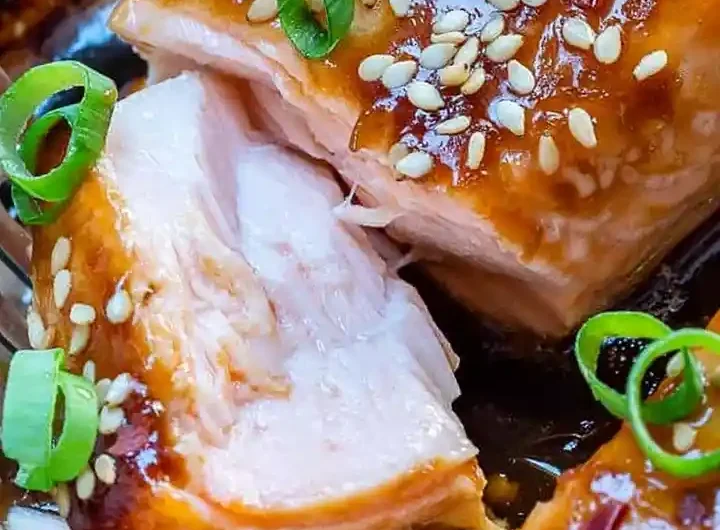
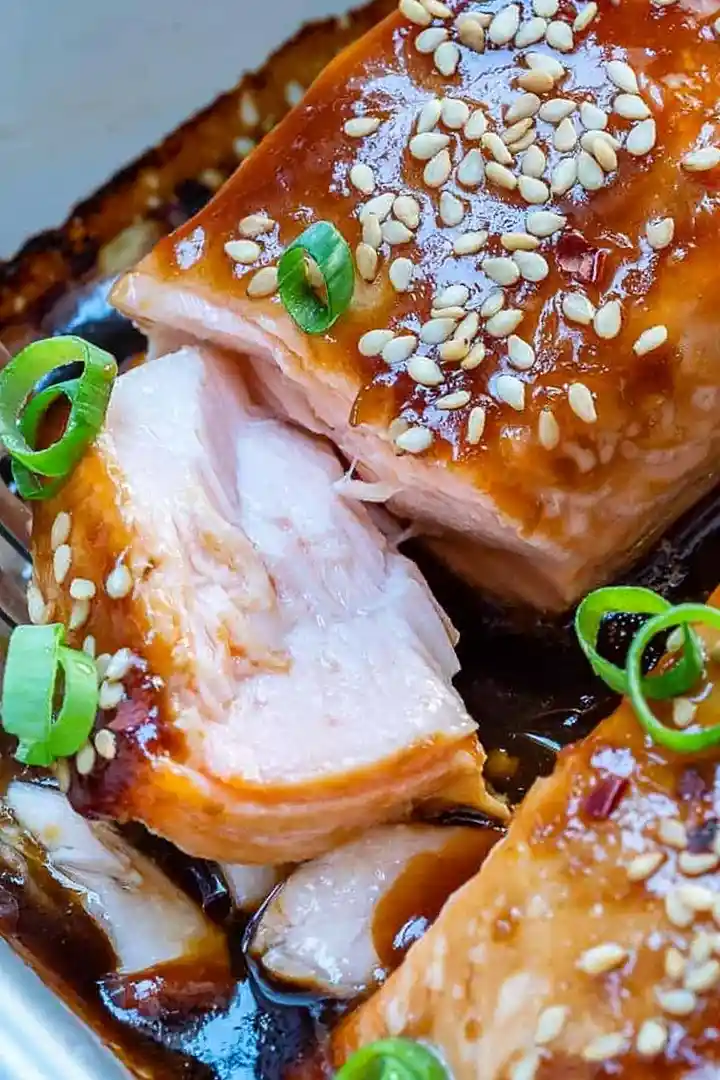
This oven-baked teriyaki salmon is a quick and nutritious meal that delivers tender fillets with a savory, homemade glaze. It is an ideal choice for weeknight dinners or healthy meal prepping due to its short cook time.
List of ingredients
- 4 Skinless Salmon Fillets (about 6 oz each) – use wild-caught for best quality.
- 1 Green Onion (sliced) – used for fresh garnish.
- 1 tablespoon Sesame Seeds – adds a nutty crunch.
- 1/3 Cup Low-sodium soy sauce – provides the salty base for the glaze.
- 1/4 Cup Fresh orange juice – adds a bright, citrusy sweetness.
- 2-3 tablespoons Water – used to adjust the sauce consistency.
- 2 tablespoons Honey – acts as a natural sweetener and thickener.
- 2 Garlic Cloves (minced) – provides aromatic depth.
- 1 tablespoon Minced fresh ginger – adds a spicy, zesty note.
- 1 teaspoon Chili Flakes (or to taste) – introduces a mild heat.
- 1/2 Lemon (juiced) – cuts through the richness of the fish.
- 1/2 tablespoon Gluten-free flour – ensures the sauce thickens properly.
step-by-step instructions
- Preheat Oven: Set your oven to 400 degrees Fahrenheit to ensure a hot environment for baking.
- Prepare Glaze: In a small mixing bowl, whisk together the low-sodium soy sauce, fresh orange juice, water, honey, minced garlic, minced fresh ginger, chili flakes, lemon juice, and gluten-free flour until smooth.
- Arrange Fish: Spray a baking dish with non-stick cooking spray to prevent sticking, then place the four skinless salmon fillets inside.
- Bake: Pour the prepared teriyaki sauce evenly over the fillets and bake in the preheated oven for 12-15 minutes until the fish is cooked through and flakes easily with a fork.
- Glaze: Remove the dish from the oven and carefully spoon the thickened sauce from the bottom of the pan back over the top of the salmon.
- Garnish: Sprinkle with one tablespoon of sesame seeds and the sliced green onion before serving.
Optimizing Your Salmon Selection
Choosing Wild-Caught Versus Farmed Salmon
Wild-caught salmon generally offers a more robust flavor and a higher concentration of omega-3 fatty acids. Farmed salmon tends to be milder in taste and has a higher fat content, which can make the fillets more forgiving during the baking process.
Checking for Freshness
Fresh salmon should have a mild, briny scent and a firm texture that springs back when pressed. Avoid fillets that have a strong fishy odor or a slimy surface, as these are signs of degradation.
Ensuring Consistent Fillet Thickness
Try to select fillets that are roughly the same thickness to ensure they cook evenly. If one fillet is significantly thicker than the others, it may remain raw while the thinner pieces overcook.
Teriyaki Sauce Customizations
Using Coconut Aminos for Lower Sodium
For those monitoring their salt intake, coconut aminos are an excellent substitute for soy sauce. They provide a similar savory profile with significantly less sodium and are naturally soy-free.
Substituting Honey with Other Sweeteners
If honey is not available, maple syrup or agave nectar work well as alternatives. Brown sugar can also be used, though it may change the viscosity of the sauce slightly.
Adjusting the Heat Level
While one teaspoon of chili flakes provides a subtle warmth, you can increase this amount for a spicier kick. Alternatively, a pinch of cayenne pepper can add a sharper heat to the glaze.
Enhancing Flavor with Toasted Sesame Oil
Adding a teaspoon of toasted sesame oil to the sauce mixture introduces a deep, nutty aroma. This is an optional step that elevates the overall Asian-inspired flavor profile.
Ideal Side Dish Pairings
Selecting Complementary Grains
White rice, brown rice, or quinoa serve as the perfect base to soak up the extra teriyaki sauce. For a lower-carb option, cilantro lime cauliflower rice provides a fresh and zesty contrast.
Preparing Roasted Vegetables
Garlic roasted broccoli, asparagus, or Brussels sprouts pair beautifully with the sweetness of the glaze. Roasting these vegetables at the same temperature as the salmon allows for a coordinated meal prep.
Incorporating Fresh Salads
A simple green bean and tomato salad with a light vinaigrette adds acidity to the dish. This helps balance the richness of the salmon and the sweetness of the honey glaze.
Detailed Storage Guidelines
Refrigerating Leftover Salmon
Place cooked salmon in an airtight glass container once it has cooled to room temperature. Store it in the coldest part of the refrigerator for up to 3 to 4 days.
Freezing for Long Term Storage
Salmon can be frozen for up to 3 months in freezer-safe containers or vacuum-sealed bags. Ensure the sauce is included in the container to prevent the fish from drying out during the freezing process.
Preventing Condensation in Containers
Allow the salmon to cool completely before sealing the lid to avoid steam buildup. Excess moisture inside the container can make the texture of the fish mushy and degrade the glaze.
Proper Reheating Methods
Using the Microwave for Speed
Heat the salmon for 60 to 90 seconds on medium power to avoid overcooking. Adding a teaspoon of water to the dish can help create steam and keep the fish moist.
Reheating in the Oven for Texture
Place the fillets on a baking sheet and warm them at 300 degrees Fahrenheit for 5 to 10 minutes. This method better preserves the structural integrity of the fish compared to microwaving.
Managing Sauce Consistency During Warming
If the sauce has thickened too much in the fridge, add a small amount of water or orange juice before reheating. Stir the sauce gently to ensure it redistributes evenly over the fillet.
Troubleshooting Common Issues
Preventing Salmon from Overcooking
Use a meat thermometer to check the internal temperature, aiming for 145 degrees Fahrenheit or slightly lower for a more tender result. Salmon continues to cook for a few minutes after being removed from the oven.
Fixing a Sauce That Is Too Thin
If the glaze remains too runny after baking, you can simmer the remaining sauce in a small pan over medium heat. This reduces the liquid and concentrates the flavors into a thick syrup.
Resolving a Sauce That Is Too Thick
If the sauce becomes overly sticky or thick, whisk in a tablespoon of water or fresh orange juice. This thins the glaze without compromising the overall flavor profile.
Frequently Asked Questions
Should I cover the salmon when baking?
Covering is generally unnecessary as salmon cooks quickly and the open air helps the sauce reduce. If you prefer a more steamed texture, you can cover it with foil for the first half of the cooking time.
Is homemade teriyaki sauce naturally gluten-free?
Standard soy sauce contains wheat, so it is not gluten-free. To make this recipe gluten-free, use tamari or coconut aminos and ensure the flour used is a gluten-free variety.
Can I use frozen salmon for this recipe?
Yes, but you must thaw the fillets completely in the refrigerator overnight before cooking. Baking frozen fillets directly can lead to uneven cooking and an excess of water in the baking dish.
Which cut of salmon is best for baking?
Center-cut fillets are ideal because they have a consistent thickness. Avoid the tail end if you want a uniform cook, as the thinner parts can dry out more quickly.
Can I use a different fruit juice instead of orange?
Pineapple juice is a great alternative that provides a similar sweetness and acidity. Apple juice also works, though it offers a milder flavor than orange or pineapple.
How do I remove the skin if it is still attached?
Use a sharp knife to gently slide between the skin and the flesh starting from the tail end. It is easier to do this while the fish is cold or slightly frozen.
Print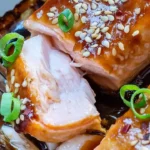
Baked Teriyaki Salmon
- Total Time: 25 minutes
- Yield: 4 servings 1x
- Diet: Gluten-Free
Description
Flaky and tender salmon with a delicious homemade teriyaki sauce, baked to perfection for an easy, healthier dinner option.
Ingredients
- 4 Skinless Salmon Fillets (about 6 oz each)
- 1 Green Onion (sliced)
- 1 tablespoon Sesame Seeds
- ⅓ Cup Low-sodium soy sauce
- ¼ Cup Fresh orange juice
- 2–3 tablespoons Water
- 2 tablespoons Honey
- 2 Garlic Cloves (minced)
- 1 tablespoon Minced fresh ginger
- 1 teaspoon Chili Flakes
- ½ Lemon (juiced)
- ½ tablespoon Gluten-free flour
Instructions
- Preheat: Preheat the oven to 400 degrees Fahrenheit.
- Mix: In a small bowl, whisk together all teriyaki sauce ingredients (soy sauce, orange juice, water, honey, garlic, ginger, chili flakes, lemon juice, and gluten-free flour).
- Prepare: Spray a baking dish with non-stick cooking spray and place the 4 Skinless Salmon Fillets in the dish.
- Bake: Pour the sauce over, then bake in the preheated oven for 12-15 minutes until cooked through and flaky.
- Glaze: Once the salmon is cooked, remove from the oven and spoon over with the thickened sauce from the baking dish.
- Garnish: Garnish with 1 tablespoon Sesame Seeds and 1 Green Onion (sliced).
Notes
Store leftovers in the fridge for up to 3 days or freeze for up to 3 months. You may use honey, brown sugar, maple syrup, or agave as sweeteners.
- Prep Time: 10 minutes
- Cook Time: 15 minutes
- Category: Main Course
- Method: Baking
- Cuisine: Asian
Nutrition
- Serving Size: 1 fillet
- Calories: 316 kcal
- Sugar: 11 g
- Sodium: 794 mg
- Fat: 12 g
- Saturated Fat: 2 g
- Unsaturated Fat: 10 g
- Trans Fat: 0 g
- Carbohydrates: 16 g
- Fiber: 1 g
- Protein: 36 g
- Cholesterol: 94 mg
Keywords: baked teriyaki salmon, gluten-free salmon, easy dinner, Asian salmon