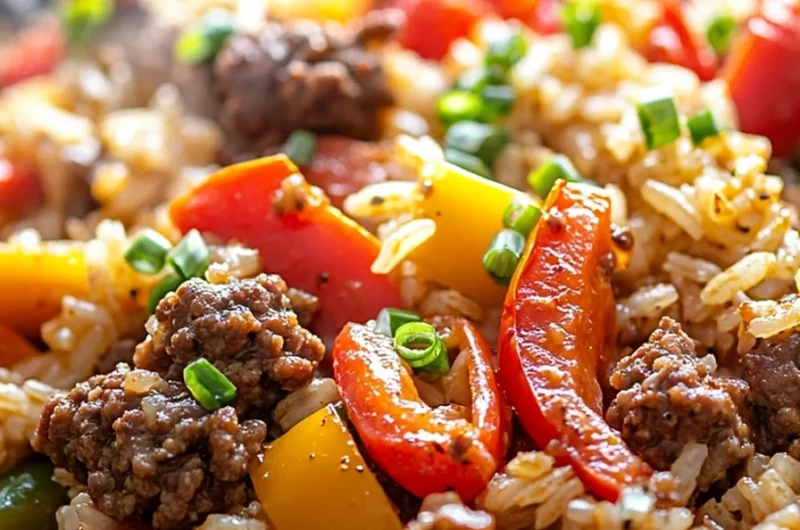
This one-pan beef and rice skillet is a practical solution for quick weeknight dinners. It combines lean protein, colorful vegetables, and hearty grains for a balanced meal with minimal cleanup.
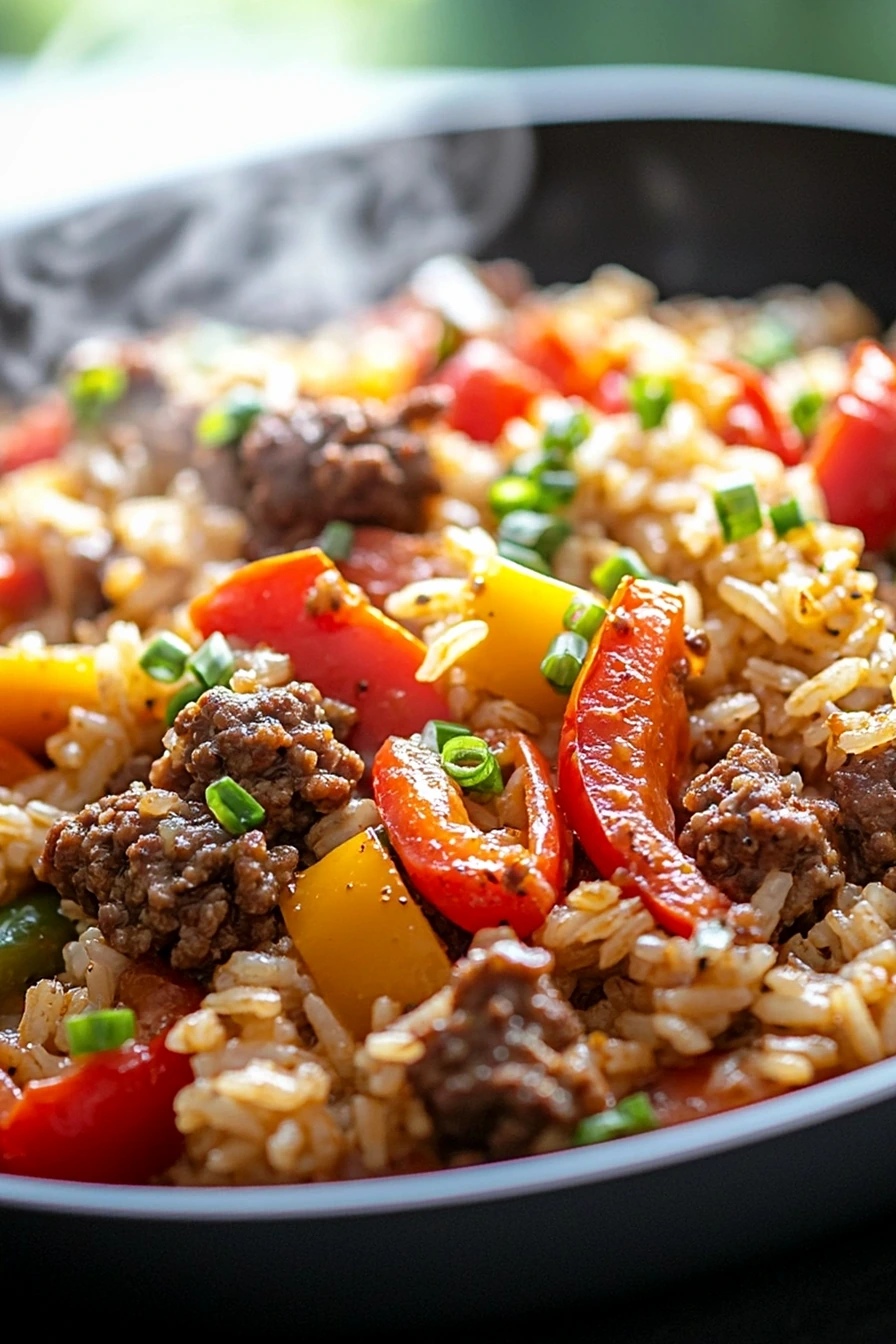
List of ingredients
- 1 lb ground beef – provides the protein and heartiness of the dish.
- 3 cups cooked rice – acts as the fluffy base that absorbs the savory seasonings.
- 1 red bell pepper, chopped – adds a touch of sweetness and vibrant color.
- 1 yellow bell pepper, chopped – contributes a mild sweetness and visual appeal.
- 1 green bell pepper, chopped – adds a crisp texture and a fresh, slightly bitter note.
- 1 small onion, diced – creates a savory depth when sautéed.
- 2 cloves garlic, minced – enhances the overall aroma and adds a sharp kick.
- 2 tbsp soy sauce – provides an umami flavor and seasons the beef and rice.
- 1 tbsp olive oil – used for sautéing vegetables and browning the meat.
- 2 green onions, chopped – serves as a fresh, bright garnish for the final presentation.
step-by-step instructions
- Sauté the onions: Heat olive oil in a skillet and sauté diced onions until softened.
- Brown the beef: Add ground beef and cook until browned and fully cooked.
- Add garlic: Stir in garlic and cook for 1 minute.
- Cook peppers: Add chopped bell peppers and sauté for 5-6 minutes.
- Combine rice and sauce: Mix in cooked rice and soy sauce; stir to combine everything well.
- Finish and serve: Cook for 2-3 more minutes; garnish with chopped green onions and serve hot.
Essential Cooking Tips for Best Results
Use Day-Old Chilled Rice
Using rice that has been refrigerated overnight is the best way to prevent the dish from becoming mushy. Cold rice grains are drier and separate more easily when stir-fried in the skillet. This ensures each grain remains distinct and absorbs the soy sauce without clumping together.
Achieve a Deep Brown on the Beef
Allow the ground beef to sear without stirring too frequently at first. This helps create a browned crust known as the Maillard reaction, which significantly deepens the savory flavor of the meal. Ensure the pan is sufficiently hot before adding the meat to avoid steaming the beef in its own juices.
Prevent Garlic from Burning
Garlic has a low burn point and can become bitter if cooked for too long. Always add the minced garlic after the beef is browned and just before the bell peppers. Cooking it for only one minute allows the aroma to bloom without scorching the cloves.
Maintain Texture in Bell Peppers
Sauté the bell peppers for the recommended 5-6 minutes to achieve a tender-crisp consistency. Overcooking the peppers will make them soft and lose their vibrant color. Stirring them occasionally over medium-high heat ensures they cook evenly while retaining a slight snap.
Ingredient Substitutions and Alternatives
Swap White Rice for Brown Rice
Brown rice is an excellent alternative that adds more fiber and a nuttier flavor to the skillet. Since brown rice has a firmer texture, it holds up very well during the final heating process. Ensure the brown rice is fully cooked and cooled before adding it to the pan.
Use Quinoa for a Protein Boost
Substituting cooked quinoa for rice increases the protein and mineral content of the dish. Quinoa has a slightly different texture but absorbs the soy sauce and beef juices just as effectively. Use the same 3-cup measurement for a consistent ratio.
Plant-Based Meat Alternatives
For a meatless version, replace the ground beef with plant-based ground crumbles or cooked lentils. If using lentils, add them during the rice step as they do not require browning like beef. Adjust the seasoning with a bit more soy sauce to maintain the umami profile.
Soy-Free Umami Options
If you need to avoid soy, substitute the soy sauce with coconut aminos or tamari. Coconut aminos provide a similar savory flavor with a slightly sweeter undertone and lower sodium content. Tamari is a great alternative for those seeking a gluten-free option with a traditional soy taste.
Flavor Variations to Try
Adding Spicy Elements
To introduce heat, stir in a tablespoon of Sriracha or a pinch of red pepper flakes during the rice mixing step. You can also add diced jalapeños along with the bell peppers for a fresh, spicy crunch. These additions complement the salty soy sauce and rich beef perfectly.
Incorporating Extra Vegetables
Expand the nutritional value by adding diced carrots, frozen peas, or corn. Carrots should be added with the onions as they take longer to soften, while peas and corn can be stirred in with the rice. This creates a more diverse range of textures and flavors.
Creating a Teriyaki-Style Glaze
For a sweeter finish, whisk a teaspoon of honey or brown sugar into the soy sauce before adding it to the skillet. Adding a pinch of ground ginger will further enhance the Asian-inspired flavor profile. This creates a glossy glaze that coats the rice and beef.
Adding Eggs for Extra Texture
Push the beef and vegetable mixture to the side of the skillet and crack two eggs into the center. Scramble the eggs until they are just set, then fold them into the rest of the ingredients. This adds richness and a soft texture to the hearty meal.
Serving and Pairing Suggestions
Pairing with Fresh Side Salads
Serve the skillet alongside a crisp green salad dressed with a light vinaigrette. The acidity of a lemon or apple cider vinegar dressing cuts through the richness of the beef. This balance makes the meal feel lighter and more refreshed.
Serving as Low-Carb Lettuce Wraps
For a lighter option, scoop the beef and rice mixture into large Romaine or iceberg lettuce leaves. This turns the dish into a handheld wrap, reducing the overall volume of grains while keeping the flavor. Top each wrap with extra green onions and a squeeze of lime.
Adding a Fried Egg Garnish
Place a sunny-side-up fried egg on top of each individual serving of the skillet. The runny yolk acts as a natural sauce that adds creaminess to the rice. This is a common technique in many rice-based bowls to increase satiety and flavor.
Using Tortillas for a Fusion Wrap
Spoon the mixture into warmed flour or corn tortillas to create a fusion-style burrito. Add sliced avocado or a dollop of Greek yogurt to complement the savory beef. Fold the tortillas and lightly toast them in a pan for a crispy exterior.
Proper Storage and Reheating Methods
Refrigerator Storage Guidelines
Store any leftover beef and rice skillet in an airtight glass or plastic container. Keep it in the main body of the refrigerator, where it will remain fresh for up to four days. Ensure the food has cooled slightly before sealing to prevent excess condensation from making the rice soggy.
Freezing for Long-Term Use
This recipe is well-suited for meal prep and can be frozen for up to two months. Divide the portions into individual freezer-safe containers to make reheating easier. Leave a small amount of space at the top of the container to allow for expansion during freezing.
Reheating in the Microwave
When reheating in the microwave, add a teaspoon of water or a damp paper towel over the rice. This creates steam that re-hydrates the grains, preventing them from becoming hard or dry. Heat on medium power in one-minute intervals, stirring in between.
Reheating in a Skillet for Texture
For the best texture, reheat the leftovers in a skillet over medium heat with a drizzle of olive oil. This allows the rice to crisp up slightly and the beef to regain its browned character. Stir occasionally until the mixture is heated through and steaming.
Common Troubleshooting and FAQs
Why is my rice mushy?
Mushy rice usually occurs if you use freshly cooked, warm rice or if too much liquid was added. Using chilled, day-old rice prevents this. If the rice is already mushy, try cooking it on higher heat for a few minutes to evaporate excess moisture.
How do I reduce the sodium content?
The primary source of sodium in this dish is the soy sauce. You can replace standard soy sauce with a low-sodium version or coconut aminos. Additionally, omitting added salt during the beef browning phase will keep the sodium levels low.
Can I use frozen vegetables?
Yes, frozen bell peppers and onions can be used as a time-saver. However, frozen vegetables release more water than fresh ones. Sauté them on high heat first to evaporate the moisture before adding the beef and rice to avoid a watery consistency.
What to do if the beef releases too much fat?
Depending on the lean-to-fat ratio of your ground beef, you may find excess grease in the pan. Carefully drain the excess fat using a spoon or paper towel before adding the garlic and peppers. This prevents the dish from becoming overly oily.
Print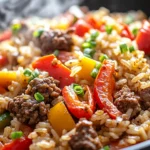
Beef and Rice Skillet
- Total Time: 30 minutes
- Yield: 4 servings 1x
- Diet: General
Description
Looking for the best beef and rice skillet recipe? This easy one-pan meal is healthy hearty and quick! Perfect for weeknight dinners simple meal prep or lunchbox ideas. Whether you’re after comfort food or quick dinner ideas this is one of the best healthy skillet meals you’ll find. Great for using up leftovers and easy to customize!
Ingredients
- 1 lb ground beef
- 3 cups cooked rice
- 1 red bell pepper, chopped
- 1 yellow bell pepper, chopped
- 1 green bell pepper, chopped
- 1 small onion, diced
- 2 cloves garlic, minced
- 2 tbsp soy sauce
- 1 tbsp olive oil
- 2 green onions, chopped
Instructions
- Step: Heat olive oil in a skillet and sauté diced onions until softened.
- Step: Add ground beef and cook until browned and fully cooked.
- Step: Stir in garlic and cook for 1 minute.
- Step: Add chopped bell peppers and sauté for 5-6 minutes.
- Step: Mix in cooked rice and soy sauce; stir to combine everything well.
- Step: Cook for 2-3 more minutes; garnish with chopped green onions and serve hot.
Notes
Use leftover rice to save time and reduce food waste. Try brown rice or quinoa for a healthier twist. Add hot sauce or red pepper flakes for spice. Freeze for up to 2 months in airtight containers.
- Prep Time: 10 minutes
- Cook Time: 20 minutes
- Category: Main Dish
- Method: Skillet
- Cuisine: American
Nutrition
- Serving Size: 1 bowl
- Calories: 480 kcal
- Sugar: 5 g
- Sodium: 720 mg
- Fat: 22 g
- Saturated Fat: 8 g
- Unsaturated Fat: 11 g
- Trans Fat: 0.5 g
- Carbohydrates: 40 g
- Fiber: 3 g
- Protein: 28 g
- Cholesterol: 70 mg
Keywords: beef and rice skillet, one-pan meal, healthy dinner, quick weeknight meal, meal prep