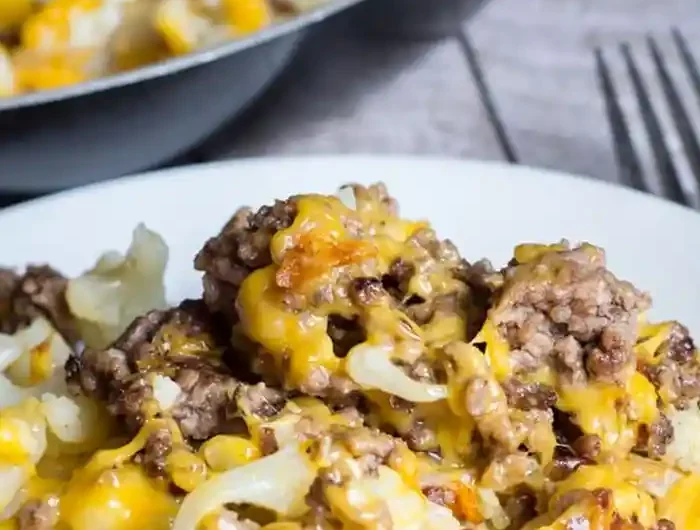
This hearty low-carb meal combines savory ground beef with tender cauliflower and melted cheese. It is a fast, one-pan dinner that takes only 25 minutes from start to finish.
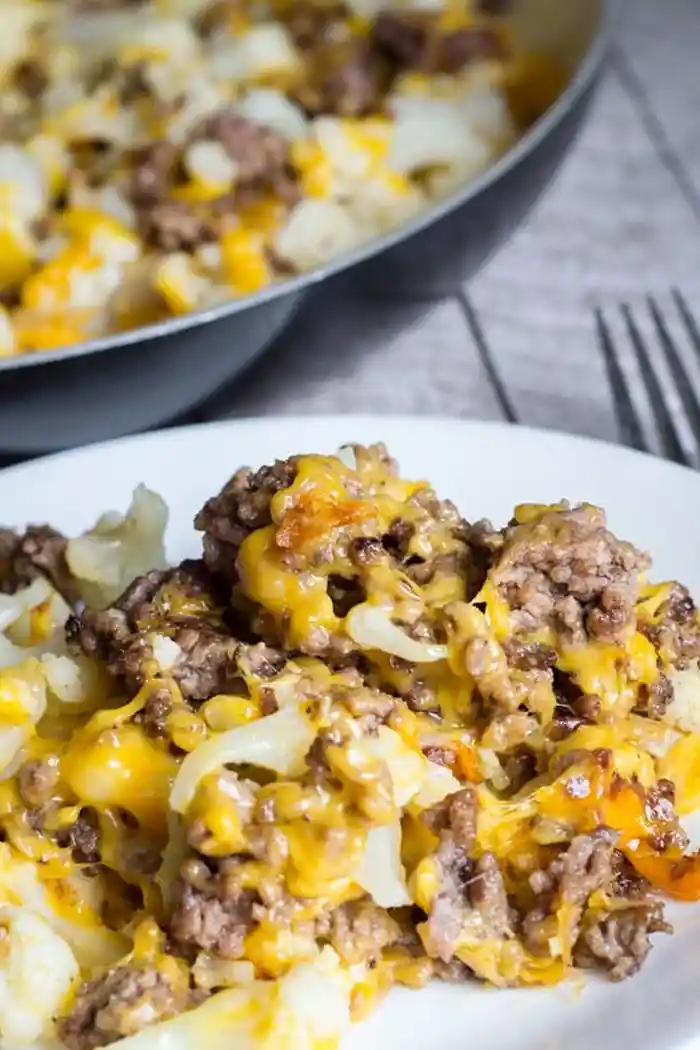
List of ingredients
- 16 oz. bag frozen cauliflower – defrosted and drained well
- 1 lb. lean ground beef – provides the protein base
- 2 c. shredded cheddar cheese – for a rich, melted topping
- 1 tsp. garlic powder – adds aromatic depth
- salt and pepper to taste – for basic seasoning
step-by-step instructions
- Brown the beef: Place the ground beef in a large skillet over medium heat. Cook until fully browned and then drain the excess grease from the pan.
- Combine and sauté: Return the beef to the pan and stir in the defrosted cauliflower, garlic powder, salt, and pepper. Cook and stir frequently until the cauliflower becomes tender.
- Melt the cheese: Sprinkle the shredded cheddar cheese evenly over the beef and cauliflower mixture. Reduce the heat to low, cover the pan with a tight-fitting lid, and let it sit until the cheese is completely melted.
Optimizing Your Beef Selection
Choosing the Right Lean-to-Fat Ratio
For this hash, a lean ground beef such as 90% lean or 93% lean is ideal. Using a leaner cut reduces the amount of grease you need to drain, which keeps the cauliflower from becoming overly oily. If you use a higher-fat beef like 80/20, ensure you drain the pan thoroughly to maintain a clean flavor profile.
Achieving a Proper Sear
To maximize flavor, let the pan heat up before adding the beef. Avoid stirring the meat constantly at first; let it sit for a few minutes to develop a brown crust. This caramelization, known as the Maillard reaction, adds a savory depth that complements the mild cauliflower.
Breaking Up the Meat
Use a sturdy spatula or meat masher to break the beef into small, uniform crumbles. Smaller pieces of beef integrate better with the cauliflower, ensuring that every bite has a balanced distribution of meat and vegetable. Avoid overworking the meat into a paste, as you still want some texture in the final dish.
Preparing the Cauliflower
Handling Frozen Cauliflower
When using frozen cauliflower, it is critical to defrost it completely before adding it to the pan. Frozen vegetables release a significant amount of water as they thaw. If added while frozen, the dish may steam rather than sauté, leading to a mushy consistency.
Removing Excess Moisture
After defrosting, place the cauliflower in a colander and press it firmly with the back of a spoon or a clean kitchen towel. Removing as much liquid as possible ensures the cauliflower browns slightly and absorbs the flavors of the beef and garlic powder. This step prevents the hash from becoming watery.
Using Cauliflower Rice for Texture
If you prefer a more uniform, grain-like texture, substitute the frozen florets with frozen cauliflower rice. This version cooks even faster and blends seamlessly with the ground beef. It creates a consistency similar to a traditional potato hash while remaining low-carb.
Processing Fresh Cauliflower
If you have fresh cauliflower, chop the florets into very small pieces using a knife or a food processor. Pulse the food processor briefly to avoid turning the vegetable into a puree. Sauté fresh cauliflower for a few minutes longer than the frozen version to ensure tenderness.
Cheese and Flavor Enhancements
Exploring Different Cheese Varieties
While cheddar is the classic choice for its sharp flavor, you can experiment with other melting cheeses. Pepper Jack is an excellent substitute if you want a spicy kick. Mozzarella provides a stretchier, milder taste, while Monterey Jack offers a creamy consistency that pairs well with beef.
Adding a Salted Finish
For an extra layer of flavor, consider folding in a tablespoon of grated Parmesan cheese just before adding the cheddar. Parmesan adds a salty, umami punch that enhances the savory nature of the beef. This creates a complex cheese profile that makes the dish feel more gourmet.
Integrating Fresh Herbs
Stir in freshly chopped parsley or cilantro during the final minute of cooking. Fresh herbs provide a bright, clean contrast to the richness of the beef and cheese. This addition not only improves the taste but also adds a pop of green color to the plate.
Customizing Your Hash
Adding Spicy Elements
To introduce heat, dice a fresh jalapeno and sauté it with the beef during the browning stage. Alternatively, add a pinch of cayenne pepper or red chili flakes along with the garlic powder. These additions cut through the richness of the cheese and beef.
Incorporating Additional Vegetables
Diced bell peppers or finely chopped onions can be added to the pan before the beef is fully browned. These vegetables add natural sweetness and nutritional value without significantly increasing the carb count. Sauté them until translucent before adding the cauliflower.
Creating a Loaded Style Hash
You can mimic a loaded baked potato by topping the finished hash with a dollop of sour cream and sliced green onions. Adding a few pieces of pre-cooked, crumbled turkey bacon also adds a smoky dimension to the meal. These toppings transform the simple hash into a more decadent dinner.
Perfect Serving Suggestions
Pairing with Fresh Greens
Serve this hash alongside a crisp garden salad featuring mixed greens, cucumbers, and a light vinaigrette. The acidity of a lemon or apple cider vinegar dressing helps balance the heaviness of the melted cheese. This combination ensures a well-rounded nutritional profile.
Adding Creamy Avocado
Fresh avocado slices or a scoop of guacamole provide healthy fats and a creamy texture that complements the beef. The coolness of the avocado contrasts well with the hot, melted cheese. Sprinkle the avocado with a bit of lime juice to prevent browning and add zest.
Selecting a Low-Carb Side
For those who want more volume, steamed asparagus or sautéed spinach are excellent low-carb pairings. These greens can be cooked quickly in a separate pan with a bit of butter and garlic. They provide a nutritional balance of vitamins and minerals to the protein-heavy main dish.
Storage and Preservation
Refrigeration Guidelines
Store leftovers in an airtight container in the refrigerator for up to four days. Ensure the hash has cooled slightly before sealing the lid to prevent excessive condensation. This helps maintain the texture of the cauliflower and prevents it from becoming soggy.
Freezing for Later
This dish can be frozen, although the texture of the cauliflower may soften slightly upon thawing. Allow the hash to cool completely, then transfer it to a freezer-safe bag or container. Press out as much air as possible to avoid freezer burn, and store for up to three months.
Thawing Leftovers
To thaw frozen hash, move it to the refrigerator overnight. This slow thawing process preserves the structural integrity of the ingredients. Avoid thawing in the microwave on high heat, as this can cause the cheese to separate and the beef to toughen.
Reheating Methods
Using the Stovetop
The stovetop is the best method for maintaining texture. Place the hash in a skillet over medium-low heat and add a teaspoon of water or beef broth to loosen the cheese. Cover and heat slowly, stirring occasionally until warmed through.
Microwave Reheating
For a quicker option, place a portion in a microwave-safe dish and cover it with a damp paper towel. Heat in 30-second intervals, stirring between each session. This prevents the cheese from becoming rubbery and ensures the center is hot.
Oven Reheating
Transfer the hash to a small baking dish and cover with foil. Heat at 325 degrees Fahrenheit for about 10 to 15 minutes. This method is ideal if you are reheating a large quantity for several people, as it heats the dish evenly.
Make-Ahead Strategies
Pre-Browning the Beef
You can brown the ground beef and drain the grease several days in advance. Store the cooked beef in the fridge and simply add it to the pan with the cauliflower when you are ready to cook. This reduces the active cooking time to under 10 minutes.
Preparing the Cauliflower Base
If using fresh cauliflower, chop it into the required size and store it in a sealed container. For frozen cauliflower, you can defrost it in the fridge the night before. Having these components ready eliminates the prep work on a busy weeknight.
Pre-Shredding Cheese
While pre-shredded cheese is convenient, shredding your own cheddar from a block ensures a better melt. Pre-shred the cheese and keep it in a container to speed up the final assembly step of the recipe.
Troubleshooting Common Issues
Fixing a Watery Hash
If the hash seems too liquid after adding the cauliflower, remove the lid and increase the heat to medium-high. Allow the excess moisture to evaporate through simmering before adding the cheese. This ensures the cheese sticks to the ingredients rather than floating in liquid.
Preventing Burnt Cheese
To avoid scorching the cheese, always reduce the heat to low before adding the cheddar. Using a lid is essential because it traps the steam, melting the cheese evenly without requiring high direct heat from the bottom of the pan.
Avoiding Overcooked Beef
Do not overcook the beef during the initial browning phase. Since the meat will continue to cook while the cauliflower tenderizes, remove it from the heat as soon as the pink color disappears. This keeps the beef juicy and tender.
Frequently Asked Questions
Can I use ground turkey instead of beef?
Yes, ground turkey is a suitable alternative. Since turkey is leaner than beef, you may need to add a tablespoon of olive oil to the pan to prevent sticking and to add a bit of richness to the dish.
Is this recipe suitable for a ketogenic diet?
Yes, this recipe is very keto-friendly. It is high in fats and protein while remaining very low in carbohydrates, especially if you use cauliflower rice.
Can I use fresh cauliflower instead of frozen?
Absolutely. Just ensure you chop the fresh cauliflower into small, uniform pieces. You may need to sauté the fresh pieces for 5 to 8 minutes longer than the frozen ones to ensure they are tender.
What can I use if I don’t have cheddar cheese?
Any hard melting cheese will work. Colby Jack, Gruyere, or a blend of mozzarella and parmesan are all great options that provide a similar flavor profile.
Do I have to drain the beef grease?
Yes, draining the grease is recommended. Too much oil in the pan can make the cauliflower greasy and may prevent the cheese from adhering properly to the beef and vegetables.
Print
Cheesy Cauliflower and Ground Beef Hash
- Total Time: 25 minutes
- Yield: 6 servings 1x
- Diet: Low Carb
Description
This cauliflower and ground beef hash will be your favorite go-to low carb dinner. It’s easy, cheesy and ready for the dinner table in about 20 minutes!
Ingredients
- 16 oz. bag frozen cauliflower (defrosted and drained)
- 1 lb. lean ground beef
- 2 c. shredded cheddar cheese
- 1 tsp. garlic powder
- salt and pepper to taste
Instructions
- Step 1: Brown the ground beef over medium heat and drain the grease.
- Step 2: Add it back to the pan along with the cauliflower, garlic, salt and pepper. Cook and stir until cauliflower is tender.
- Step 3: Add cheddar cheese on top of the cauliflower and beef mixture. Turn heat to low, cover pan with a lid, and allow cheese to melt.
Notes
Use cauliflower rice (available in your freezer section) to make this even easier.
- Prep Time: 5 minutes
- Cook Time: 20 minutes
- Category: Dinner
- Method: Stovetop
- Cuisine: Low Carb
Nutrition
- Serving Size: 1 serving
- Calories: 306 kcal
- Sugar: 0.8 g
- Sodium: 291 mg
- Fat: 17.2 g
- Saturated Fat: 9.7 g
- Unsaturated Fat: 7.5 g
- Trans Fat: 0 g
- Carbohydrates: 2.3 g
- Fiber: 1.1 g
- Protein: 32.9 g
- Cholesterol: 107 mg
Keywords: low carb, main course