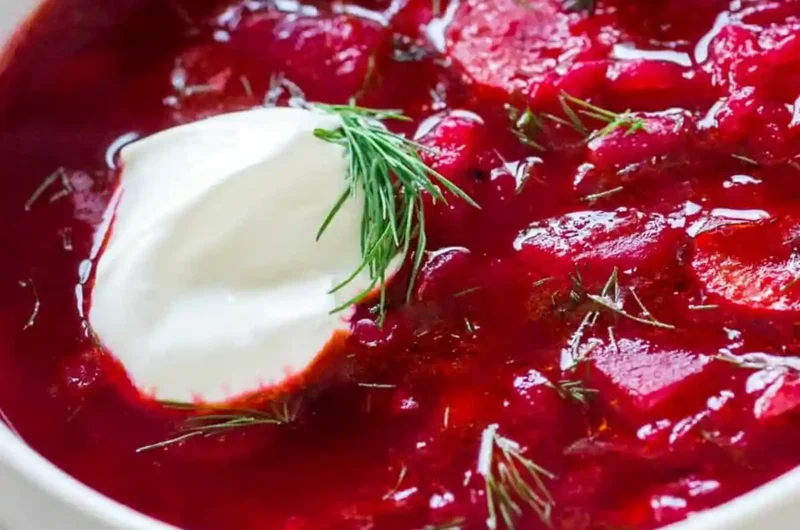
This nutrient-dense beet soup is a staple of Eastern European cuisine, combining earthy vegetables with a bright acidic finish. It is simple to prepare if you organize your ingredients and prep your vegetables before starting the heat.
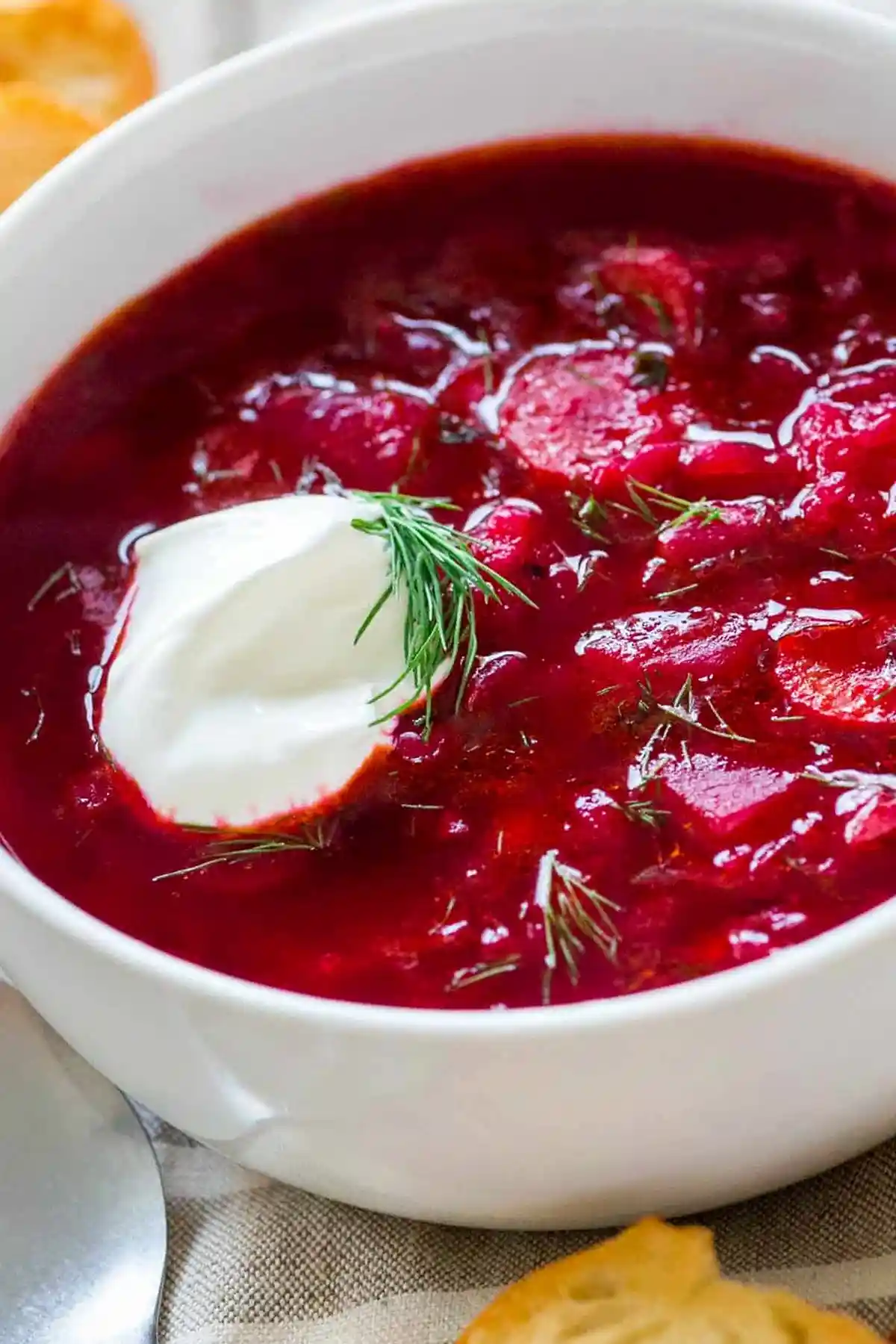
List of ingredients
- 3 medium beets – peeled and grated for a consistent texture.
- 4 Tbsp olive oil – divided between the pot and the skillet.
- 8 cups chicken broth – provides the savory base.
- 2 cups water – used to adjust the soup consistency.
- 3 medium yukon potatoes – peeled and sliced into bite-sized pieces.
- 2 carrots – peeled and thinly sliced.
- 2 celery ribs – trimmed and finely chopped.
- 1 small red bell pepper – finely chopped (optional for extra sweetness).
- 1 medium onion – finely chopped.
- 4 Tbsp ketchup or 3 Tbsp tomato sauce – adds thickness and tang.
- 1 can white cannelini beans – include the juice for added creaminess.
- 2 bay leaves – adds an aromatic herbal depth.
- 2-3 Tbsp white vinegar – helps preserve the vibrant red color.
- 1 tsp sea salt – or adjust to your personal taste.
- 1/4 tsp black pepper – freshly ground for better aroma.
- 1 large garlic clove – pressed for maximum flavor release.
- 3 Tbsp chopped dill – fresh herbs for the final finish.
step-by-step instructions
- Prepare Vegetables: Peel, grate, and slice all vegetables. Keep the sliced potatoes submerged in cold water to prevent them from browning, then drain them right before adding to the pot.
- Sauté Beets: Heat a large soup pot (at least 5 1/2 quarts) over medium-high heat with 2 Tbsp of olive oil. Add the grated beets and sauté for about 10 minutes, stirring occasionally until they are softened.
- Simmer Base Vegetables: Pour in the 8 cups of chicken broth and 2 cups of water. Stir in the sliced potatoes and carrots, then cook for 10-15 minutes or until the vegetables are easily pierced with a fork.
- Cook the Mirepoix: While the potatoes simmer, heat 2 Tbsp of oil in a large skillet over medium-high heat. Sauté the chopped onion, celery, and bell pepper for 7-8 minutes until softened and lightly golden.
- Add Tomato Component: Stir 4 Tbsp of ketchup into the skillet and fry for 30 seconds. Transfer this mixture immediately into the main soup pot.
- Final Seasoning: Add the canned beans with their juice, bay leaves, white vinegar, salt, black pepper, pressed garlic, and chopped dill. Simmer for another 2-3 minutes and taste to adjust salt and vinegar levels.
Optimizing Your Vegetable Preparation
Using a Food Processor for Grating Beets
A food processor is more efficient than a hand grater and produces a coarser texture that holds up better during the cooking process. This method also minimizes the amount of beet juice that splashes onto your countertops and clothing. Always use the grating disc rather than the slicing blade for this specific recipe.
Preventing Potato Oxidation
Potatoes begin to oxidize and turn brown as soon as they are peeled and sliced. Keeping them in a bowl of cold water stops this enzymatic browning and keeps the potatoes looking fresh. Make sure to drain the water thoroughly before adding them to the hot broth to maintain the soup’s temperature.
Precision Slicing for Uniform Cooking
Cut carrots and celery into consistent sizes to ensure they cook at the same rate. If the pieces are uneven, some will remain hard while others become mushy. Thinly slicing the carrots helps them release their sweetness more quickly into the broth.
Enhancing the Flavor Profile
Balancing Acidity with White Vinegar
Vinegar does more than just add tang; it reacts with the pigments in the beets to preserve the deep ruby color. Without an acidic component, the soup can fade to a dull orange or brown. Add the vinegar gradually and taste frequently to find the right balance between sweetness and tartness.
The Role of the Sautéed Mirepoix
The process of sautéing the onion, celery, and pepper separately creates a flavor concentration known as a zazharka. This step develops deeper notes through caramelization that cannot be achieved by boiling the vegetables. Adding this concentrated mixture at the end prevents the aromatics from overcooking.
Choosing the Right Tomato Base
Ketchup is a traditional choice because it provides both the necessary acidity and a hint of sweetness. If you prefer a more neutral flavor, tomato sauce or tomato paste diluted with a bit of broth works well. The tomato component adds body and a subtle richness to the liquid.
Ingredient Alternatives and Customizations
Adding Shredded Cabbage for Texture
Adding 1/4 to 1/2 of a small head of thinly shredded cabbage is a common variation that adds fiber and bulk. Incorporate the cabbage when the potatoes are halfway cooked to ensure it softens without disintegrating. This adds a slight crunch and a different layer of sweetness to the dish.
Substituting Canned Beans
While cannellini beans provide a creamy texture, you can use kidney beans or chickpeas for a heartier bite. If using dried beans, ensure they are soaked overnight and pre-cooked before adding them to the soup. The liquid from the can is valuable for thickening the broth, so do not drain it.
Using Vegetable Broth for a Meat-Free Version
To make this soup entirely plant-based, replace the chicken broth with a high-quality vegetable broth. Ensure the vegetable broth is low in sodium so you can control the salt levels yourself. This substitution maintains the savory depth without altering the core flavor of the beets.
Serving and Presentation
Adding Traditional Creamy Toppings
A dollop of sour cream or a spoonful of real mayonnaise is essential for balancing the acidity of the vinegar. The fat in the cream cuts through the sharpness of the beets and creates a richer mouthfeel. Stir the cream in individually for each bowl to maintain a marbled visual effect.
Garnishing with Fresh Herbs
Fresh dill is the most traditional herb for this soup, providing a bright, citrusy contrast to the earthy beets. Finely chopped parsley can also be used for a milder herbal note. Add the herbs at the very end of the cooking process or as a garnish to keep their color vibrant.
Pairing with Rye Bread
Serve the soup with toasted dark rye bread or pumpernickel to complement the deep flavors of the root vegetables. Rubbing a clove of raw garlic on the toasted bread adds an extra layer of aroma. This pairing provides a necessary textural contrast to the soft vegetables in the soup.
Storage and Preservation
Refrigerator Storage Duration
Borscht tastes better the next day as the flavors have more time to meld together. Store the soup in an airtight container in the refrigerator for up to 5 days. Keep the container tightly sealed to prevent the soup from absorbing other smells from the fridge.
Freezing Borscht Safely
While the soup can be frozen, the texture of the potatoes may become slightly grainy upon thawing. To avoid this, you can strain out the potatoes before freezing or simply accept the texture change. Store in freezer-safe containers with a small amount of headspace to allow for expansion.
Best Reheating Methods
The best way to reheat this soup is on the stovetop over medium-low heat. Stir gently to avoid breaking the vegetables and add a splash of water or broth if the soup has thickened too much. Avoid boiling the soup during reheating, as this can dull the bright red color.
Troubleshooting Common Issues
Fixing a Pale Soup Color
If the soup looks pale, it is usually due to a lack of acidity or undercooked beets. Adding an extra teaspoon of white vinegar often restores the vivid red hue instantly. Alternatively, you can sauté a small amount of fresh beet juice and stir it in.
Managing Excessive Saltiness
If the soup becomes too salty, avoid adding more water as it can dilute the flavor too much. Instead, add a peeled raw potato and simmer it for 10 minutes; the potato will absorb some of the excess salt. Remove the potato before serving.
Avoiding Mushy Vegetables
To prevent the vegetables from becoming too soft, monitor the cooking time of the potatoes closely. Add the beans and final seasonings only when the potatoes are just tender. Overcooking the soup after the beans are added can lead to a porridge-like consistency.
Frequently Asked Questions
Can I use red potatoes instead of Yukon Gold?
Yes, red potatoes work well because they hold their shape better during long simmering. Yukon Gold is preferred for its buttery flavor and creamy texture, but red potatoes are a great alternative if you prefer a firmer bite.
Why is vinegar necessary in this recipe?
Vinegar serves two purposes: it balances the natural sugars of the beets and carrots, and it chemically stabilizes the red pigments. Without it, the soup loses its iconic color and tastes flat.
Should I peel the carrots?
Peeling the carrots is recommended to remove the bitter outer skin and ensure a cleaner flavor. This allows the carrots to blend more seamlessly with the softness of the potatoes and beets.
How do I remove beet stains from my hands?
Rub your hands with a mixture of lemon juice and salt or use a strong dish soap and cold water. Avoiding hot water initially prevents the stain from setting further into the skin. Wearing gloves during the grating process is the most effective prevention.
Print
Classic Beet Soup (Borscht) Recipe
- Total Time: 1 hour 10 minutes
- Yield: 10 servings 1x
- Diet: Vegetarian
Description
Our family’s go-to recipe for Borscht (Red Beet Soup). It’s best to have all of the ingredients prepped and ready to go which makes this soup super easy and care free. Serve with a dollop of sour cream or real mayo.
Ingredients
- 3 medium beets, peeled and grated
- 4 Tbsp olive oil, divided
- 8 cups vegetable broth
- 2 cups water
- 3 medium yukon potatoes, peeled and sliced into bite-sized pieces
- 2 carrots, peeled and thinly sliced
- 2 celery ribs, trimmed and finely chopped
- 1 small red bell pepper, finely chopped, optional
- 1 medium onion, finely chopped
- 4 Tbsp ketchup or 3 Tbsp tomato sauce
- 1 can white cannelini beans with their juice
- 2 bay leaves
- 2–3 Tbsp white vinegar, or to taste
- 1 tsp sea salt, or to taste
- 1/4 tsp black pepper, freshly ground
- 1 large garlic clove, pressed
- 3 Tbsp chopped dill
Instructions
- Step 1: Peel, grate and/or slice all vegetables (keeping sliced potatoes in cold water to prevent browning until ready to use then drain).
- Step 2: Heat a large soup pot (5 1/2 Qt or larger) over medium/high heat and add 2 Tbsp olive oil. Add grated beets and sauté 10 minutes, stirring occasionally until beets are softened.
- Step 3: Add 8 cups broth and 2 cups water. Add sliced potatoes and sliced carrots then cook for 10-15 minutes or until easily pierced with a fork.
- Step 4: While potatoes are cooking, place a large skillet over medium/high heat and add 2 Tbsp oil. Add chopped onion, celery and bell pepper. Saute stirring occasionally until softened and lightly golden (7-8 minutes). Add 4 Tbsp Ketchup and stir fry 30 seconds then transfer to the soup pot to continue cooking with the potatoes.
- Step 5: When potatoes and carrots reach desired softness, add 1 can of beans with their juice, 2 bay leaves, 2-3 Tbsp white vinegar, 1 tsp salt, 1/4 tsp black pepper, 1 pressed garlic clove, and 3 Tbsp chopped dill. Simmer for an additional 2-3 minutes and add more salt and vinegar to taste.
Notes
Use gloves when handling beets to avoid staining fingers. If you prefer cabbage, add 1/4 to 1/2 small head of cabbage, thinly shredded, when the potatoes are halfway cooked.
- Prep Time: 30 minutes
- Cook Time: 40 minutes
- Category: Main Course, Soup
- Method: Simmering
- Cuisine: Russian, Ukrainian
Nutrition
- Serving Size: 1 serving
- Calories: 181 kcal
- Sugar: 5 g
- Sodium: 473 mg
- Fat: 7 g
- Saturated Fat: 1 g
- Unsaturated Fat: 6 g
- Trans Fat: 0 g
- Carbohydrates: 25 g
- Fiber: 5 g
- Protein: 8 g
- Cholesterol: 0 mg
Keywords: Borsch, Borscht, beet soup, Ukrainian, Russian