
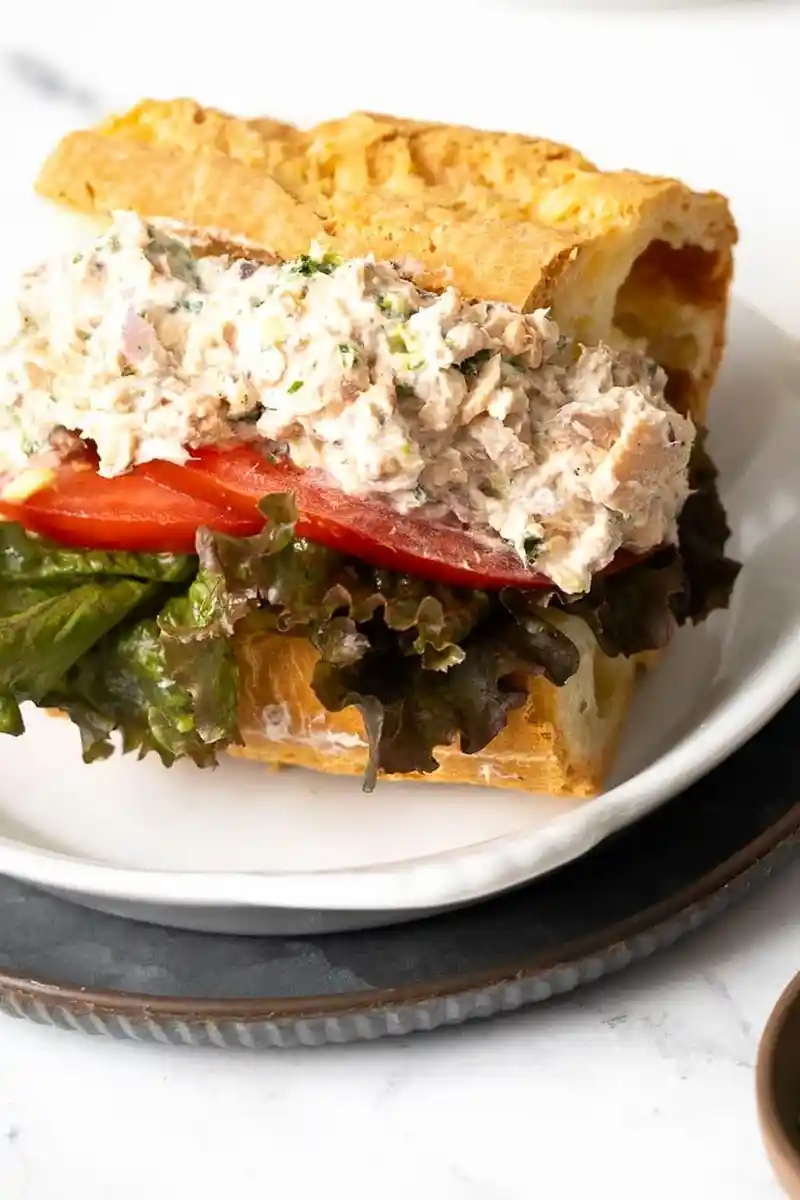
This canned salmon salad is a fast and nutrient-dense meal option perfect for busy weekdays. It works well as a standalone dish or as a filling for sandwiches and wraps.
List of ingredients
- 1 can salmon (drained) – use red or pink wild salmon.
- 1/2 cup mayonnaise – provides the creamy base.
- 2 Tablespoons sour cream – adds a tangy richness.
- 1 lemon (zest and juice) – for brightness and acidity.
- 1/3 cup diced celery (add celery leaves) – adds essential crunch.
- 1/4 cup diced red onion – provides a sharp contrast.
- 2 Tablespoons fresh parsley (minced) – adds a fresh herbal note.
- 1/2 teaspoon garlic powder – for a subtle savory depth.
- 1/2 teaspoon kosher salt – enhances all flavors.
- 1/2 teaspoon black pepper – provides a mild spicy warmth.
step-by-step instructions
- Prepare Salmon: Drain and flake the salmon into a medium bowl, removing any bones.
- Combine: Add the remaining ingredients and stir to combine.
- Serve: Serve salmon salad on bread, lettuce leaves or crackers. Also great paired with fresh veggies.
Ingredient Selection Guide
Choosing the Right Canned Salmon
Select red or pink wild canned salmon for the best flavor and nutritional profile. Salmon packed in water is the standard choice, though olive oil-packed salmon provides a richer taste. Ensure the can is free of dents to maintain food safety.
Selecting Quality Mayonnaise
Use a heavy-duty, full-fat mayonnaise for the best emulsion and creaminess. If you prefer a lighter version, light mayonnaise works, but the texture may be slightly thinner. Ensure it is stored properly to avoid oil separation.
Sour Cream vs. Plain Greek Yogurt
Sour cream provides a classic, velvety richness and mild tang. For a higher protein option with a sharper flavor, plain Greek yogurt is an excellent substitute. Keep the substitution ratio 1:1 to maintain the correct consistency.
Utilizing Fresh Citrus
Always use a fresh lemon rather than bottled juice for this recipe. The lemon zest contains essential oils that provide a deep citrus aroma that juice alone cannot replicate. Fresh juice provides the necessary acidity to cut through the fat of the mayonnaise.
Texture and Consistency Tips
Precision Dicing for Vegetables
Dice the celery and red onion into very small, uniform pieces. This ensures that you get a bit of crunch in every bite without overwhelming the salmon. Use a sharp chef’s knife to avoid bruising the onion, which can lead to a harsher taste.
Flaking the Salmon Correctly
Use a fork to break the salmon into small, bite-sized flakes. Avoid over-mashing the fish into a paste, as keeping some texture makes the salad more satisfying. Remove any large vertebrae while leaving smaller, soft bones if desired.
Achieving the Perfect Bind
Stir the ingredients gently to fold the salmon into the dressing. Over-mixing can cause the mayonnaise to break or the salmon to become too mushy. The goal is a cohesive mixture where the salmon is evenly coated but still distinct.
Flavor Enhancement Strategies
Balancing the Acidity
The lemon juice acts as a chemical balancer to the richness of the mayo and sour cream. If the salad tastes too heavy, add an extra teaspoon of lemon juice. If it is too tart, a tiny pinch of sugar can neutralize the sharpness.
Seasoning Precision
Kosher salt is preferred over table salt for a cleaner taste and easier measurement. Add the salt and pepper incrementally and taste after each addition. This prevents over-seasoning, especially if using a salted brand of canned salmon.
Integrating Fresh Herbs
While parsley is the base, adding fresh dill or chives can elevate the flavor profile. Parsley provides a clean, grassy finish that complements the fish. Chives add a mild onion flavor, and dill adds a classic Scandinavian touch.
Variations for Different Palates
Adding Extra Crunch
Incorporate finely diced cucumbers or shredded carrots for additional texture. These vegetables add a refreshing water content that balances the creaminess. Ensure cucumbers are seeded to prevent the salad from becoming watery.
Introducing Briny Elements
Add a tablespoon of capers or diced green olives for a salty, Mediterranean twist. These ingredients provide small bursts of intensity that contrast well with the mild salmon. Use a light hand to avoid clashing with the salt already in the recipe.
Adding a Spicy Kick
Mix in a teaspoon of Dijon mustard or a dash of sriracha for a bit of heat. Dijon adds a sophisticated tang and depth of flavor. Sriracha or chopped jalapeños provide a more direct, spicy punch to the salad.
Including Roasted Red Peppers
Finely diced roasted red bell peppers add a subtle sweetness and a pop of color. These peppers should be patted dry with a paper towel before adding. This prevents excess moisture from thinning the dressing.
Serving and Presentation Ideas
Choosing the Best Bread
Toasted sourdough or a hearty multigrain bread provides a sturdy base for the salmon. The toast prevents the bread from becoming soggy from the mayonnaise. For a softer option, use a buttery brioche bun.
Low-Carb Lettuce Wraps
Use large leaves of Romaine or Bibb lettuce as natural bowls. These greens provide a crisp, fresh contrast to the rich salmon mixture. They are an ideal choice for a light lunch or a keto-friendly meal.
Appetizer Style Presentation
Spoon small mounds of the salad onto buttery crackers or toasted baguette slices. Garnish each piece with a small sprig of fresh parsley or a slice of cornichon. This transforms the lunch recipe into a sophisticated party appetizer.
Serving Over Salad Greens
Place a large scoop of salmon salad atop a bed of mixed spring greens or baby spinach. Drizzle a light vinaigrette over the greens to complement the creamy salmon. This creates a full, balanced meal with added volume.
Storage and Preservation
Choosing the Right Container
Store the salmon salad in a glass, airtight container to keep it fresh. Glass does not absorb odors and provides a better seal than some plastic alternatives. This prevents the fish scent from permeating other items in the fridge.
Refrigeration Shelf Life
Keep the salad refrigerated and consume it within two days. The fresh vegetables will begin to release water over time, which can dilute the dressing. The mayonnaise and sour cream also have a limited peak freshness window.
Preventing Surface Oxidation
Press a piece of plastic wrap directly onto the surface of the salad before sealing the lid. This removes the air gap and prevents the top layer from drying out. It also helps maintain the bright green color of the parsley.
Meal Prep Logistics
Batch Preparation Methods
Prepare a large batch of the salmon mixture on Sunday to use throughout the work week. Keep the mixture separate from the bread or greens until the moment of serving. This ensures the serving vessel remains crisp.
Component Separation
If prepping for more than two days, store the diced vegetables separately from the salmon and dressing. Mix them together on the day of consumption. This preserves the maximum crunch of the celery and onion.
Packaging for Travel
Use an insulated lunch bag with a cold pack to keep the salad at a safe temperature. Mayonnaise-based salads are perishable and must stay below 40 degrees Fahrenheit. This prevents spoilage and maintains the creamy texture.
Common Troubleshooting
Solving a Watery Consistency
If the salad is too runny, it is usually due to insufficiently drained salmon or overly moist vegetables. Stir in an extra tablespoon of mayonnaise or a teaspoon of Greek yogurt to thicken the bind. In the future, pat the diced celery dry before adding.
Managing Strong Fish Flavors
If the canned salmon has a very strong aroma, increase the amount of lemon juice and zest. The citric acid neutralizes the trimethylamine, which is responsible for the fishy smell. Fresh parsley also helps mask overly potent flavors.
Adjusting the Thickness
For a thicker, dip-like consistency, reduce the sour cream slightly. If you want a looser salad for scooping with chips, add a teaspoon of olive oil. Always stir slowly to avoid breaking the emulsion of the mayo.
Frequently Asked Questions
Is it safe to eat the bones in canned salmon?
Yes, the bones and skin in canned salmon are soft and fully edible. They are a significant source of calcium and phosphorus. You can mash them with a fork to blend them into the salad or remove them if you prefer a smoother texture.
Can this recipe be made vegan?
Yes, replace the mayonnaise with a plant-based mayo and the sour cream with a vegan sour cream or thick cashew cream. Ensure the vegan mayo is an egg-free emulsion to maintain the same creamy profile.
Can I use frozen salmon instead of canned?
Yes, you can use cooked, chilled salmon fillets. Simply flake the cooked fish with a fork and follow the rest of the recipe. Ensure the salmon is completely cold before mixing to prevent the mayonnaise from melting.
What is the best substitute for lemon?
Apple cider vinegar or white wine vinegar are the best substitutes for lemon juice. Use slightly less vinegar than you would lemon juice, as it is more concentrated. You will lose the zest flavor, but the acidity will remain.
Print
Classic Canned Salmon Salad
- Total Time: 5 minutes
- Yield: 4 servings 1x
- Diet: General
Description
Elevate your lunch game with this Canned Salmon Salad! Versatile, flavorful, and packed with nutrients. Whether on a sandwich or salad, it’s a winner every time! Perfect for meal prep.
Ingredients
- 1 can salmon (drained)
- 1/2 cup mayonnaise
- 2 Tablespoons sour cream
- 1 lemon (zest and juice)
- 1/3 cup diced celery (add celery leaves)
- 1/4 cup diced red onion
- 2 Tablespoons fresh parsley (minced)
- 1/2 teaspoon garlic powder
- 1/2 teaspoon kosher salt
- 1/2 teaspoon black pepper
Instructions
- Step 1: Drain and flake the salmon into a medium bowl, removing any bones.
- Step 2: Add the remaining ingredients and stir to combine.
- Step 3: Serve salmon salad on bread, lettuce leaves or crackers. Also great paired with fresh veggies.
Notes
Store leftovers covered in the refrigerator for up to 2 days.
- Prep Time: 5 minutes
- Cook Time: 0 minutes
- Category: Main Course
- Method: Mixing
- Cuisine: American
Nutrition
- Serving Size: 1 serving
- Calories: 260 kcal
- Sugar: 2 g
- Sodium: 480 mg
- Fat: 22 g
- Saturated Fat: 4 g
- Unsaturated Fat: 18 g
- Trans Fat: 0 g
- Carbohydrates: 4 g
- Fiber: 1 g
- Protein: 9 g
- Cholesterol: 45 mg
Keywords: canned salmon salad, healthy lunch, meal prep, easy salmon recipe