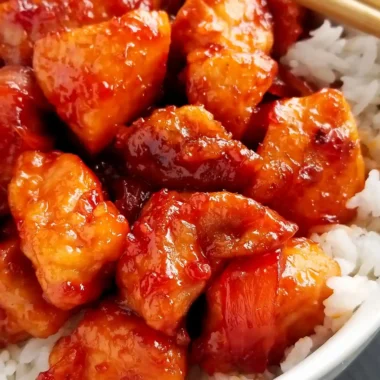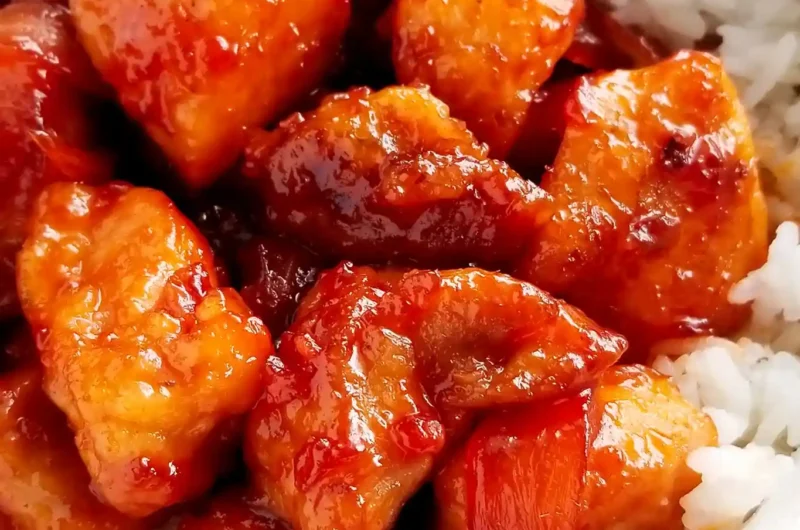
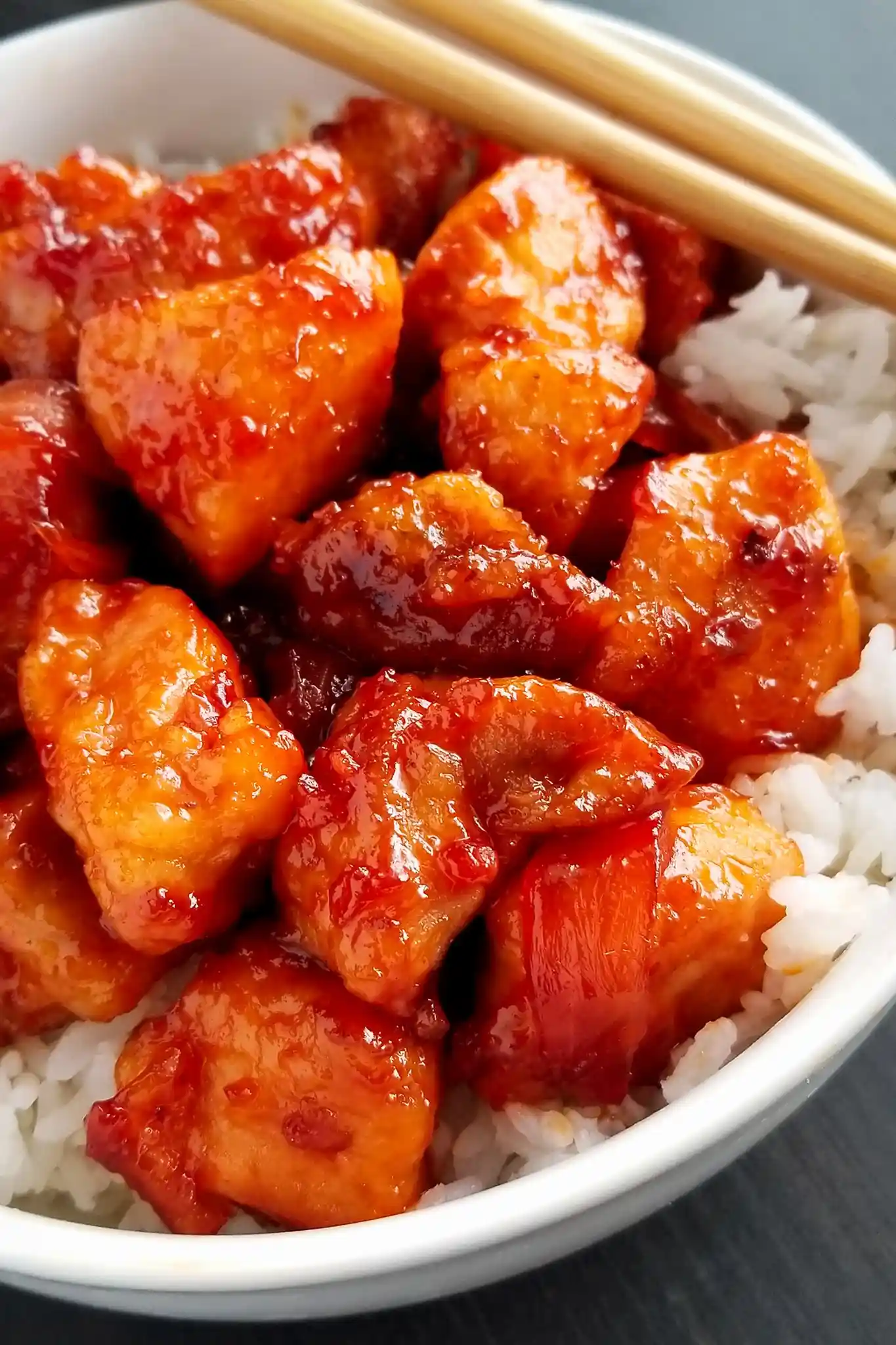
This homemade sweet and sour chicken captures the irresistible balance of tangy vinegar and sweet glaze found in your favorite restaurant dishes. By pan-frying the chicken to a perfect golden crisp and tossing it in a caramelized onion sauce, you create a satisfying meal that brings authentic flavor right to your kitchen table. It is a quick, straightforward process that yields tender results every single time you cook it.
List of ingredients
- 1.5-2 lbs chicken thighs (boneless, skinless)
- 1/4 cup cornstarch
- 1 egg
- 3 tbsp oil
- 1/2 cup apple cider vinegar
- 1/4 cup white sugar
- 2 tbsp brown sugar
- 1/4 cup ketchup
- 1 garlic clove (minced)
- 2 tbsp soy sauce
- 1/4 cup water
- 3 drops red food coloring (optional)
- 1/2 yellow onion (cut into 1″ slices)
step-by-step instructions
- Step: Add cubed chicken thighs to a large bowl. Toss to fully coat the chicken in cornstarch. In a small bowl, whisk the egg. Pour egg mixture over the chicken and gently toss to fully coat.
- Step: In a small saucepan over medium heat, add all sauce ingredients and whisk to fully mix. Add sliced onion and bring to a simmer until sauce reduces to about half.
- Step: In the meantime, heat a large skillet to medium-high heat and add the oil. Gently add chicken in an even layer to the hot pan. Let cook undisturbed until bottoms are nice and golden. Then, flip chicken over, breaking apart any pieces that are sticking together. Continue cooking until bottoms are golden.
- Step: Turn up the heat on the chicken skillet to high heat and slowly begin adding sauce while stir frying until all sauce is incorporated.
- Step: Serve chicken immediately over steamed rice or with steamed vegetables.
Practical Cooking Advice
Maintaining the Crunch
To ensure your chicken stays crispy rather than becoming soggy, always ensure your pan is fully preheated before adding the chicken. If the oil is not hot enough, the cornstarch coating will absorb the grease instead of searing, leading to a heavy texture. Furthermore, avoid dumping all the sauce in at once, as the steam can soften the crust if added too early.
The Role of Chicken Thighs
Using boneless, skinless chicken thighs is crucial for this recipe because they have a higher fat content than breasts. This fat renders during the frying process, keeping the meat moist even when cooked at high heat for a crust. If you must use chicken breast, be very careful not to overcook it, as it will lose its juiciness and become fibrous under high-heat stir-frying.
Perfecting the Sauce Consistency
The reduction step is vital because it concentrates the flavors and thickens the sauce without needing additional starch thickeners. Watch the saucepan closely once it reaches a simmer; it should have a syrupy, glaze-like consistency that coats the back of a spoon. If it becomes too thick before the chicken is ready, simply stir in a teaspoon of water to loosen it back up.
Substitutions and Adjustments
Vegetable Additions
While the recipe traditionally calls for yellow onion, you can easily incorporate other vegetables for added texture. Bell peppers or pineapple chunks are excellent additions that complement the sweet and sour profile beautifully. If you add these, stir them into the saucepan along with the onions during the reduction phase so they have time to soften.
Managing the Sweetness
The sugar levels provided create a classic balance, but you can adjust these to suit your personal palate. If you prefer a sharper, more vinegary sauce, reduce the total sugar amount by half a tablespoon. Conversely, if you enjoy a very mild sauce, you can increase the ketchup slightly, which provides a balanced, savory sweetness without being overly sugary.
Storing and Reheating Details
Optimal Cold Storage
Leftover chicken can be stored in an airtight container in the refrigerator for up to three days. It is best to keep the chicken and the sauce separate if you are planning to keep leftovers, as the sauce will eventually soften the crisp crust of the chicken. When kept together, the chicken will lose its signature crunch but will still taste delicious as the flavors continue to meld.
Restoring Texture During Reheating
To reheat, avoid the microwave, which will turn the crispy coating soft and mushy. Instead, place the chicken back into a hot skillet over medium-high heat for a few minutes until it is sizzling and hot. This brief pan-fry helps crisp up the exterior once again and returns the sauce to its proper glossy state.
FAQs
Can I make this dish without an egg?
Yes, you can substitute the egg with a simple slurry of cornstarch and water or even just a splash of neutral oil. However, the egg creates a specific protein structure that helps the breading hold its shape better during the frying process, so keep in mind that the texture may be slightly different.
Why does the chicken stick to the pan?
Sticking is usually a result of not using enough oil or not allowing the chicken to sear long enough before flipping. When the crust is fully formed, the chicken will naturally release from the surface of the pan. If you try to flip it while it is still soft, it will inevitably tear and stick to the bottom.
Is the food coloring necessary?
The food coloring is entirely aesthetic and does not impact the flavor profile of the dish. It is used in professional kitchens to achieve that classic bright red appearance seen in takeout establishments. You can omit it entirely and the dish will still look and taste wonderful, just with a more natural, caramelized brown hue.
How do I know when the sauce is ready?
The sauce is ready when the onions are translucent and tender, and the liquid has reduced enough to coat the back of a spoon without running off quickly. It should look glossy and deep in color. If you are uncertain, you can dip a fork into the sauce; if it leaves a thick, visible coating on the tines, it is perfectly reduced.
Print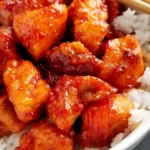
Classic Homemade Sweet and Sour Chicken
- Total Time: PT30M
- Yield: 4 servings 1x
- Diet: Non-Vegetarian
Description
Takeout style Chinese chicken recipe made with crispy chicken and caramelized onions in a delicious sweet and sour sauce.
Ingredients
- 1.5–2 lbs chicken thighs (boneless, skinless)
- 1/4 cup cornstarch
- 1 egg
- 3 tbsp oil
- 1/2 cup apple cider vinegar
- 1/4 cup white sugar
- 2 tbsp brown sugar
- 1/4 cup ketchup
- 1 garlic clove (minced)
- 2 tbsp soy sauce
- 1/4 cup water
- 3 drops red food coloring (optional)
- 1/2 yellow onion (cut into 1″ slices)
Instructions
- Step: Add cubed chicken thighs to a large bowl. Toss to fully coat the chicken in cornstarch. In a small bowl, whisk the egg. Pour egg mixture over the chicken and gently toss to fully coat.
- Step: In a small saucepan over medium heat, add all sauce ingredients and whisk to fully mix. Add sliced onion and bring to a simmer until sauce reduces to about half.
- Step: In the meantime, heat a large skillet to medium-high heat and add the oil. Gently add chicken in an even layer to the hot pan. Let cook undisturbed until bottoms are nice and golden. Then, flip chicken over, breaking apart any pieces that are sticking together. Continue cooking until bottoms are golden.
- Step: Turn up the heat on the chicken skillet to high heat and slowly begin adding sauce while stir frying until all sauce is incorporated.
- Step: Serve chicken immediately over steamed rice or with steamed vegetables.
Notes
Serve over steamed white rice, with a side of steamed vegetables, or your favorite Asian-style sides.
- Prep Time: PT5M
- Cook Time: PT25M
- Category: Main Course
- Method: Stir-fry
- Cuisine: Asian
Nutrition
- Serving Size: 1 serving
- Calories: 517 kcal
- Sugar: 23 g
- Sodium: 882 mg
- Fat: 23 g
- Saturated Fat: 4 g
- Unsaturated Fat: 17 g
- Trans Fat: 0 g
- Carbohydrates: 32 g
- Fiber: 0.4 g
- Protein: 42 g
- Cholesterol: 388 mg
Keywords: sweet & sour chicken, sweet and sour chicken, sweet and sour sauce