
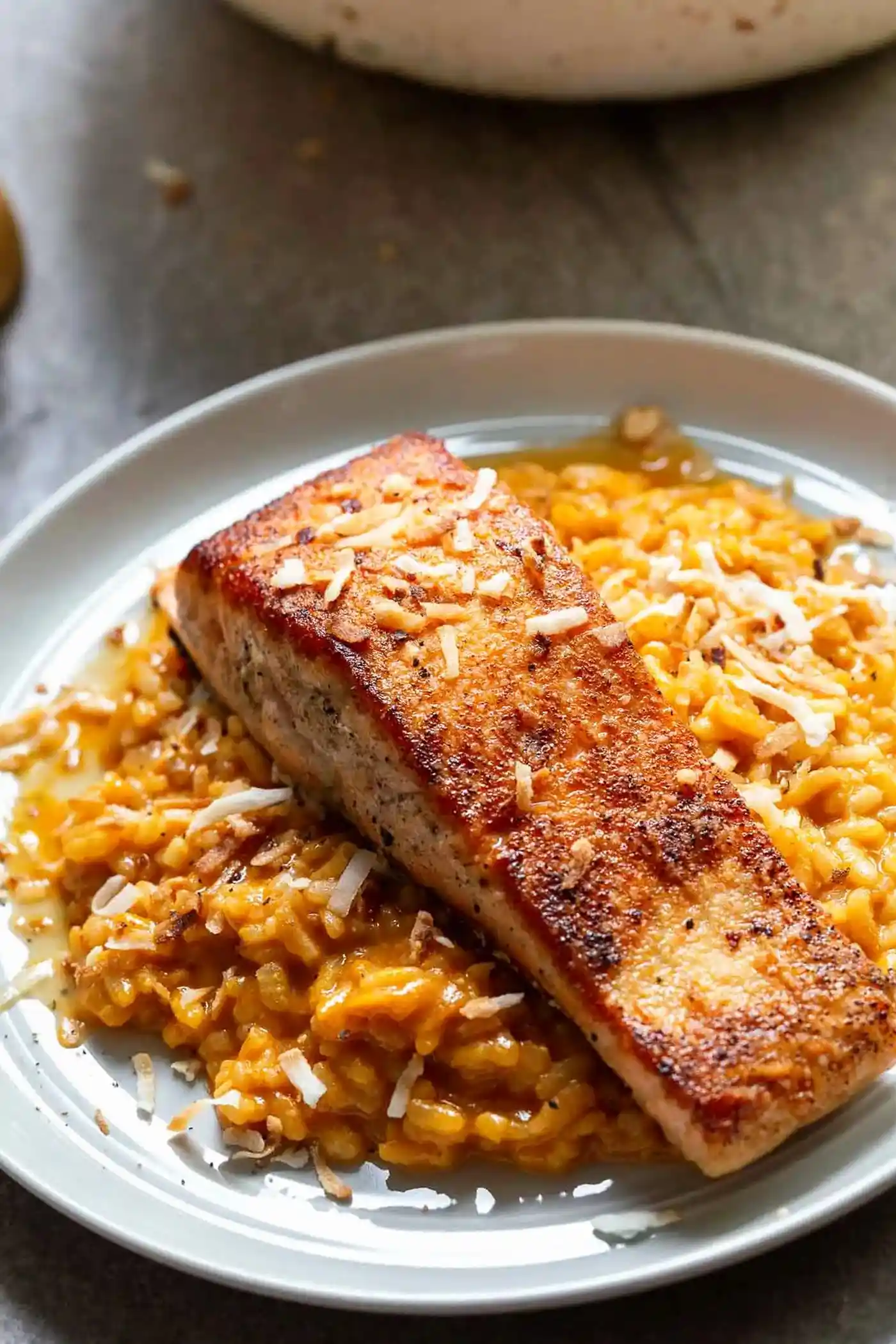
This creamy risotto blends Thai-inspired red curry and coconut milk for a rich base, topped with perfectly seared salmon. It is a sophisticated meal that combines a velvety texture with a crispy, savory finish.
List of ingredients
- 24-28 oz low-sodium chicken broth – keep hot during cooking.
- 1 tbsp coconut oil – for sautéing and richness.
- 1/2 cup diced onion – finely chopped for consistency.
- 2 tbsp Thai red curry paste – provides the primary flavor profile.
- 1 cup arborio rice – short-grain rice essential for risotto starch.
- 1/2 tsp kosher salt – for seasoning.
- 2 large garlic cloves, minced – adds aromatic depth.
- 1 – 13.5 oz can reduced fat coconut milk – creates the creamy texture.
- 1 tsp packed brown sugar (light or dark) – balances the curry heat.
- 4 – 5 oz portions center-cut salmon – ensures even cooking.
- 1/2 tsp ground ginger – for salmon seasoning.
- 1/2 tsp ground garlic powder – for salmon seasoning.
- 1/2 cup shredded coconut – for toasting and garnish.
step-by-step instructions
- Prepare the broth: Add 24 ounces of chicken stock to a medium pot. Bring it to a simmer, then turn the heat to low to keep it hot throughout the process.
- Sauté aromatics: Heat a dutch oven or large medium pot over medium heat. Add the coconut oil and sauté the diced onion for 2-3 minutes until translucent.
- Toast the rice: Add the arborio rice to the pot, stir and cook for 1-2 minutes. Stir in the minced garlic, salt, and Thai red curry paste, cooking for another 1-2 minutes.
- Incorporate the broth: Using a ladle, slowly add the hot chicken stock about 1/2 to 3/4 cup at a time. Stir with a wooden spoon frequently until the liquid is almost entirely absorbed before adding more. Repeat until all chicken stock is used and season with salt.
- Add coconut milk: Pour the coconut milk into the pot previously used for the chicken stock and bring to a simmer to keep it hot.
- Finish the risotto: Once the broth is gone, add the brown sugar and a ladle of hot coconut milk. Repeat the absorption process until all coconut milk has evaporated. Season with salt and pepper. If the consistency is too thick, stir in a small amount of additional hot chicken stock until the rice is creamy with a slight bite in the center. Set aside.
- Season the fish: Liberally season the salmon portions with salt. Evenly sprinkle the ground ginger and garlic powder over the fillets and set aside.
- Toast coconut: Heat a large cast-iron skillet over low heat. Add the shredded coconut and toast until golden brown, then remove and set aside.
- Sear the salmon: Increase the skillet heat to medium-high. Add the salmon and cook for 3-4 minutes until crispy. Flip the fillets and cook for another 2-3 minutes for a medium-well finish.
- Assemble: Serve the crispy salmon fillets on top of the coconut curry risotto and garnish with the toasted coconut.
Advanced Risotto Techniques
Maintaining Liquid Temperature
Always keep your broth or coconut milk simmering in a separate pot. Adding cold liquid to the rice drops the cooking temperature, which slows down the starch release and can lead to a mushy texture. Hot liquid ensures a consistent simmer and a better creaminess.
Managing the Stirring Frequency
You do not need to stir the rice constantly, but you must do so frequently. Stirring helps the arborio rice grains rub against each other, releasing the amylopectin starch that creates the signature creamy sauce. Monitor the pan to ensure the rice does not stick to the bottom.
Identifying the Perfect Al Dente Texture
The ideal risotto should be creamy on the outside but maintain a slight resistance or “bite” in the center. Do not overcook the rice into a porridge-like consistency. It should flow slightly on the plate rather than standing in a stiff clump.
Salmon Searing Strategies
Using Cast Iron for Superior Crust
A cast-iron skillet is ideal because it retains high heat better than stainless steel or non-stick pans. This creates a deep, golden-brown crust on the salmon without overcooking the interior. Ensure the pan is shimmering hot before the fish touches the surface.
Preparing the Salmon Surface
Pat the salmon fillets completely dry with paper towels before seasoning. Any surface moisture will create steam, which prevents the fish from searing and results in a pale, soggy crust. Dry skin and flesh are the keys to a professional sear.
Controlling the Heat for Even Cooking
Start with medium-high heat to achieve the initial sear, then lower the temperature slightly if the fish is browning too quickly. Use a fish spatula to flip the fillet gently to avoid breaking the delicate crust. This ensures the center reaches medium-well without burning the exterior.
Ingredient Substitutions and Variations
Alternative Protein Options
While salmon is the primary pairing, this risotto works well with other seafood. Large sautéed shrimp or seared scallops provide a similar flavor profile. For a different texture, grilled chicken breast seasoned with ginger and garlic is a practical alternative.
Using Different Broth Bases
Low-sodium chicken broth is the standard, but vegetable broth can be used for a lighter taste. If using vegetable broth, ensure it is a high-quality brand to maintain the depth of flavor. Avoid using overly salted broths as the curry paste already contains sodium.
Substituting Rice Varieties
If arborio rice is unavailable, Carnaroli rice is an excellent substitute and is often preferred by chefs for its superior starch content. Vialone Nano is another option that holds its shape well. Avoid using long-grain rice like Basmati, as it will not produce the creamy texture.
Adding Vegetables for Nutrition
Incorporating Sautéed Spinach
Fresh baby spinach can be stirred into the risotto during the final minute of cooking. The residual heat will wilt the leaves without overcooking them. This adds a vibrant green color and a boost of iron to the dish.
Using Frozen Peas
Frozen peas are a great addition that adds a pop of sweetness to balance the curry. Stir them in along with the final ladle of coconut milk. This ensures they are heated through and tender but still bright green.
Adding Sautéed Mushrooms
Sliced shiitake or cremini mushrooms can be sautéed with the onions at the beginning of the process. Mushrooms add an earthy, umami flavor that complements the richness of the coconut milk and the savoriness of the salmon.
Storage and Reheating Advice
Refrigerating Leftover Risotto
Store leftover risotto in an airtight container in the refrigerator for up to three days. Because risotto continues to absorb liquid as it cools, it will become quite thick and stiff. Do not be alarmed by this change in texture.
Reviving the Texture During Reheating
When reheating risotto, add a splash of chicken broth or water to the pan. Heat it over medium-low heat, stirring frequently to loosen the grains. This re-emulsifies the starch and restores the creamy consistency.
Managing Cooked Salmon
Reheat cooked salmon gently in a low oven or microwave to avoid drying out the fish. Alternatively, flake the cold salmon over the hot risotto. This prevents the fish from becoming rubbery due to overexposure to heat.
Common Troubleshooting
Solving Mushy Rice Texture
If the rice becomes too mushy, it is usually a sign of overcooking or adding too much liquid too quickly. To prevent this, ensure you only add the next ladle of broth once the previous one is fully absorbed. Stick to a timer to avoid over-simmering.
Fixing Overly Thick Risotto
If the risotto is too thick or “sticky,” stir in a tablespoon of warm broth or coconut milk just before serving. This adjusts the viscosity to a velvety state. The risotto should move slowly across the plate when tilted.
Preventing Burnt Toasted Coconut
Shredded coconut contains natural oils and sugars that burn very quickly. Keep the heat on low and stir the coconut constantly. Remove it from the pan the moment it turns golden brown, as it will continue to darken slightly after removal.
Frequently Asked Questions
Can I use green curry paste instead of red?
Yes, green curry paste can be used for a brighter, more herbal flavor. However, green curry is often spicier than red, so you may want to start with a smaller amount and adjust to your preference.
Do I have to stir the risotto constantly?
You do not need to stir every second, but you should stir every few minutes. This frequency is necessary to release the starch and prevent the rice from sticking to the bottom of the pot.
Which cut of salmon is best for this recipe?
Center-cut fillets are recommended because they have a uniform thickness. This ensures that all pieces cook at the same rate, preventing some from being underdone while others are overcooked.
Can I make the risotto ahead of time?
You can par-cook the risotto by completing the broth steps and stopping just before adding the coconut milk. Store it in the fridge and finish the final steps right before serving to ensure the best texture.
Is it necessary to toast the rice?
Toasting the rice in coconut oil for a few minutes helps seal the exterior of the grain. This prevents the rice from breaking down too quickly and adds a subtle nutty flavor to the final dish.
Print
Coconut Curry Risotto with Crispy Salmon
- Total Time: 40 minutes
- Yield: 4 servings 1x
- Diet: Gluten-Free
Description
Red curry-laced risotto packed with sweet coconut flavor and topped with a crispy salmon filet and toasted coconut.
Ingredients
- 24–28 oz low-sodium chicken broth
- 1 tbsp coconut oil
- 1/2 cup diced onion
- 2 tbsp Thai red curry paste
- 1 cup arborio rice
- 1/2 tsp kosher salt
- 2 large garlic cloves, minced
- 13.5 oz can reduced fat coconut milk
- 1 tsp packed brown sugar
- 4 – 5 oz portions center-cut salmon
- 1/2 tsp ground ginger
- 1/2 tsp ground garlic powder
- 1/2 cup shredded coconut
Instructions
- Step 1: Add 24 ounces chicken stock to a medium pot. Bring to a simmer, turn down to low and keep hot.
- Step 2: Heat a dutch oven or large medium pot to a medium heat. Add coconut oil. Add onion and sweat for 2-3 minutes until translucent. Add rice, stir and cook for 1-2 minutes. Add garlic, salt and red curry paste. Cook another 1-2 minutes.
- Step 3: Using a ladle, slowly start to add hot chicken stock, about 1/2-3/4 cup at a time to rice. Stir with a wooden spoon. Stir once or twice until almost all the liquid has absorbed. Repeat process until all chicken stock is gone. Season to taste with salt and you go. Add coconut milk to pot chicken stock was in and bring to a simmer, keep hot.
- Step 4: Once all the chicken stock has been absorbed, add brown sugar and a ladle of coconut milk. Repeat the same process until all coconut milk has evaporated. Season to taste with salt and pepper. If necessary, add a little bit more chicken stock. You want the rice to be creamy, have a soft outside and slight bite to the inside. Set aside.
- Step 5: Season salmon liberally with salt. Evenly sprinkle ginger and garlic powder over salmon. Set aside.
- Step 6: Heat a large cast-iron skillet to a low heat. Add coconut. Toast until golden brown, set aside. Heat the same pan to a medium-high heat. Add salmon, cook until crispy, about 3-4 minutes. Flip and cook another 2-3 minutes for medium-well.
- Step 7: Serve salmon over risotto. Sprinkle with toasted coconut.
Notes
To ensure perfect risotto, always use hot liquid to maintain the cooking temperature. Season the rice as you go rather than only at the end, and cook until the rice is creamy but still has a slight bite (al dente).
- Prep Time: 10 minutes
- Cook Time: 30 minutes
- Category: Main Course
- Method: Stovetop
- Cuisine: American
Nutrition
- Serving Size: 1 serving
- Calories: 599 kcal
- Sugar: 7 g
- Sodium: 521 mg
- Fat: 25 g
- Saturated Fat: 15 g
- Unsaturated Fat: 10 g
- Trans Fat: 0 g
- Carbohydrates: 54 g
- Fiber: 3 g
- Protein: 35 g
- Cholesterol: 78 mg
Keywords: coconut curry risotto, crispy salmon, Thai red curry, arborio rice, creamy risotto