
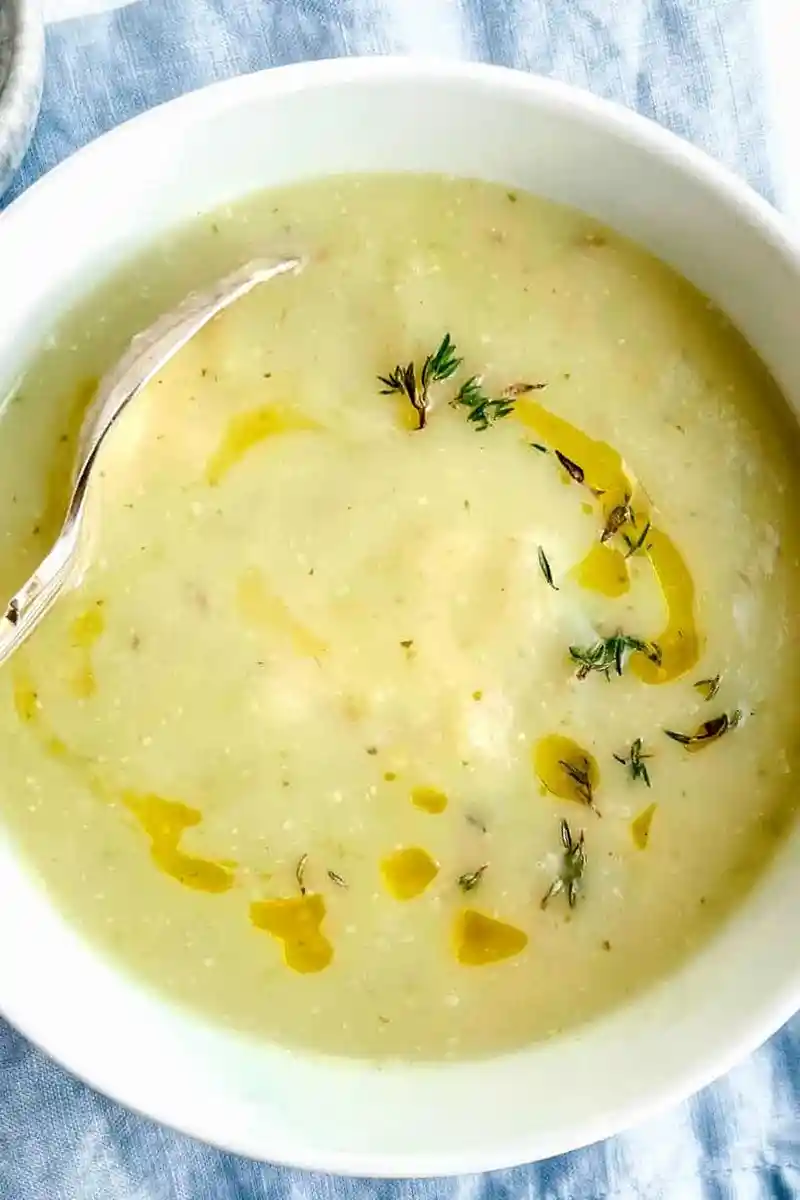
This celery and leek soup is a wonderful choice for a light yet satisfying meal that brings comfort to your table. The combination of fresh aromatics, earthy potatoes, and fragrant herbs creates a balanced flavor profile that warms you from the inside out. It is a straightforward, vegetable-forward recipe that works perfectly as a nutritious lunch or a gentle evening meal.
List of ingredients
- 1 tbsp olive oil
- 1 large leek (washed, diced)
- 3 celery sticks (diced)
- 2 medium russet potatoes (diced)
- 1/4 onion (diced)
- 2 garlic cloves (minced or finely diced)
- 2.5 cups vegetable stock
- 1 tsp dried thyme
- 1 tsp dried parsley
- 2 bay leaves
- 1/4 cup non-dairy milk
- pinch salt
- pinch black pepper
step-by-step instructions
- Step: Drizzle the olive oil into your pot and then add the onion, garlic and herbs. Fry on a low heat for 4-5 minutes or until the onion has softened.
- Step: Add the leeks and celery to the pot and cook for a few minutes, then tip in the diced potatoes. Season with salt and black pepper. Cook for 5-7 minutes. If the potato starts to stick, add a splash of water.
- Step: Pour in the vegetable stock and bring to a boil. Reduce the heat, give it a good stir and cook on a low to medium heat for 18-20 minutes until the potato is fork tender.
- Step: Pour in the non-dairy milk and stir again.
- Step: Remove the bay leaves. Use an immersion blender to blend the soup, or add batches to a food processor to blend.
- Step: Ladle into your bowls and top with fresh herbs if you wish. Serve immediately and enjoy!
Practical Cooking Advice
Cleaning Leeks Effectively
Leeks are notorious for hiding soil and grit between their many layers. To clean them properly, slice off the dark green tops and the root end, then split the white and light green stalk lengthwise. Rinse each layer thoroughly under cold running water, fanning them out to ensure every bit of dirt is washed away before you dice them.
Achieving the Best Texture
For an exceptionally smooth result, ensure the potatoes are completely tender before blending. If the soup feels a little too thick after pureeing, you can stir in an extra tablespoon of vegetable stock or non-dairy milk at a time until you reach your desired consistency. Using an immersion blender is generally the most efficient way to achieve a uniform, creamy texture without needing to transfer hot liquids to another vessel.
Selecting and Preparing Potatoes
Choosing the Right Potato Variety
Russet potatoes are excellent for this recipe because their high starch content breaks down during the long simmer, acting as a natural thickener for the broth. If you do not have russets, Yukon Gold potatoes are an equally fantastic choice as they provide a buttery flavor and a creamy mouthfeel when blended. Avoid waxy potatoes like red-skinned varieties, as they tend to hold their shape and may result in a slightly grainier soup consistency.
Deciding Whether to Peel
You can keep the skins on your potatoes for added fiber and rustic color. As long as you scrub the potatoes thoroughly under cold water to remove any debris, the skins will blend into the soup without negatively impacting the flavor. If you prefer a lighter-colored soup or a completely smooth finish, peeling the potatoes before dicing is a perfectly acceptable alternative.
Enhancing and Adjusting Flavors
Herbal Infusion Options
While the recipe calls for dried thyme and parsley, you can easily experiment with other herbs that complement leeks and celery. Fresh chives or a small amount of fresh sage added during the final minutes of cooking can elevate the aromatic profile. Always remove stems and woody parts of fresh herbs before blending to maintain a smooth texture.
Balancing the Saltiness
Because vegetable stocks can vary significantly in sodium content, it is best to start with a conservative pinch of salt during the initial cooking phase. Taste the soup just before you add the non-dairy milk, as this is the best time to adjust the seasoning to your specific preference. Remember that as the soup cools or sits, the flavors will continue to meld, so subtle adjustments are usually better than adding large amounts of salt all at once.
Storage and Reheating Guidelines
Keeping Leftovers Fresh
If you have extra soup, allow it to cool completely before transferring it to an airtight container. It can be stored in the refrigerator for up to three days. When ready to enjoy your leftovers, reheat the soup over low heat on the stovetop, stirring occasionally to prevent the bottom from scorching. You may find that the potato starch thickens the soup significantly while refrigerated, so add a splash of water or broth during the reheating process to loosen it back up.
Freezing for Later Use
This soup is a great candidate for freezing, provided you use a freezer-safe container and leave a little room at the top for expansion. It will maintain its quality for up to two months when kept at a consistent temperature in the freezer. Thaw the soup overnight in the refrigerator before reheating on the stove, which helps maintain the best possible texture after the freezing process.
Frequently Asked Questions
Can I use a different type of plant-based milk?
Yes, any unsweetened non-dairy milk will work well, though some varieties like almond or soy have a more neutral flavor profile than others. Avoid using sweetened or flavored versions like vanilla, as these will significantly alter the savory balance of the vegetable base.
How do I know if the soup is finished cooking?
The best way to test for doneness is to pierce a piece of potato with a fork. It should slide through the potato with no resistance. If there is any firmness remaining, continue to cook for another three to five minutes.
What is the benefit of adding the milk at the end?
Adding the non-dairy milk right before blending helps maintain the integrity of the liquid and prevents potential curdling that can sometimes happen if plant-based milks are boiled for an extended period. It also ensures the color of the soup remains bright and fresh.
Why should I remove the bay leaves before blending?
Bay leaves do not soften or break down during the cooking process, and their texture remains woody and tough even after long periods of simmering. Leaving them in while you use an immersion blender could result in hard, unpalatable fragments being incorporated into your smooth soup.
Print
Cozy Celery and Leek Soup
- Total Time: 35 minutes
- Yield: 4 servings 1x
- Diet: Vegan
Description
Delicious comfort food at its best, this celery and leek soup is packed with flavorful vegetables and lots of herbs. Enjoy for a cozy lunch or light dinner!
Ingredients
- 1 tbsp olive oil
- 1 large leek (washed, diced)
- 3 celery sticks (diced)
- 2 medium russet potatoes (diced)
- 1/4 onion (diced)
- 2 garlic cloves (minced or finely diced)
- 2.5 cups vegetable stock
- 1 tsp dried thyme
- 1 tsp dried parsley
- 2 bay leaves
- 1/4 cup non-dairy milk
- pinch salt
- pinch black pepper
Instructions
- Step: Drizzle the olive oil into your pot and then add the onion, garlic and herbs. Fry on a low heat for 4-5 minutes or until the onion has softened.
- Step: Add the leeks and celery to the pot and cook for a few minutes, then tip in the diced potatoes. Season with salt and black pepper. Cook for 5-7 minutes. If the potato starts to stick, add a splash of water.
- Step: Pour in the vegetable stock and bring to a boil. Reduce the heat, give it a good stir and cook on a low to medium heat for 18-20 minutes until the potato is fork tender.
- Step: Pour in the non-dairy milk and stir again.
- Step: Remove the bay leaves. Use an immersion blender to blend the soup, or add batches to a food processor to blend.
- Step: Ladle into your bowls and top with fresh herbs if you wish. Serve immediately and enjoy!
Notes
If you like a very herby flavor, you can add a little more of the dried herbs. Don’t forget to remove the bay leaves before blending! If the potato starts to stick add a splash of water to the pot.
- Prep Time: 10 minutes
- Cook Time: 25 minutes
- Category: Lunch
- Method: Boiling
- Cuisine: American
Nutrition
- Serving Size: 1 bowl
- Calories: 149 kcal
- Sugar: 4 g
- Sodium: 608 mg
- Fat: 4 g
- Saturated Fat: 1 g
- Unsaturated Fat: 3 g
- Trans Fat: 0 g
- Carbohydrates: 26 g
- Fiber: 2 g
- Protein: 3 g
- Cholesterol: 0 mg
Keywords: celery soup, leek soup, vegetable soup, vegan soup, gluten free soup, comfort food