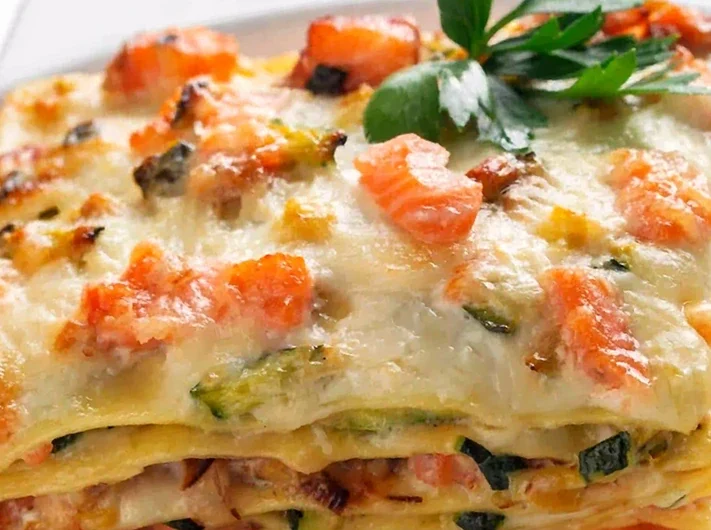
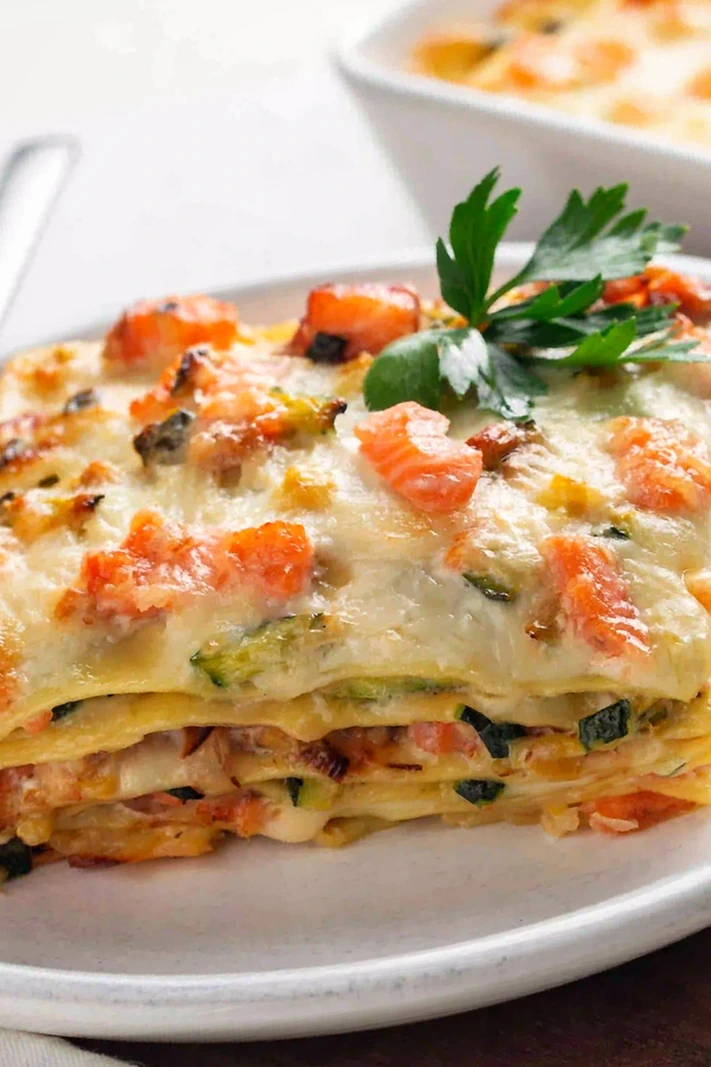
This elegant Salmon Lasagna reinvents the classic Italian baked pasta by replacing traditional meat with succulent, oven-roasted salmon. Layered with a velvety garlic-infused béchamel sauce and plenty of melted cheese, this dish offers a refined alternative to standard lasagna recipes. It is an ideal centerpiece for family gatherings or special dinners where you want to impress without spending excessive time in the kitchen.
List of ingredients
- 2 garlic cloves
- 1 teaspoon salt
- 1/2 teaspoon black pepper
- 4 tablespoon butter
- 3 tablespoon dill
- 1/4 cup all-purpose flour
- 4 cup milk
- 2 cup mozzarella cheese
- 1/2 cup parmesan cheese
- 9 oz lasagna noodles
- 1 1/2 lb salmon fillet
step-by-step instructions
- Step: Preheat your oven to 375°F (190°C).
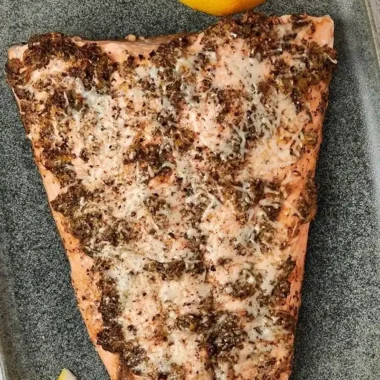
- Step: Place the salmon on a baking sheet. Bake for 20 minutes or until easily flaked with a fork. Once cool, flake the salmon into small pieces.
- Step: In a large pot of boiling salted water, cook lasagna noodles according to package instructions until al dente. Drain and set aside.
- Step: In a saucepan, melt butter over medium heat. Add finely minced garlic and cook for 1 minute. Stir in flour until smooth. Gradually whisk in milk. Bring to a boil; cook and stir for 2 minutes or until thickened. Season with salt and pepper.
- Step: Finely chop fresh dill. Stir into the béchamel sauce.
- Step: Spread a thin layer of béchamel sauce in the bottom of a 9×13 inch baking dish. Layer with 3 lasagna noodles, half of the flaked salmon, 1/3 of the remaining béchamel sauce, and 1/3 of the mozzarella cheese. Repeat layers. Top with remaining noodles, béchamel sauce, mozzarella, and all of the grated Parmesan cheese.
- Step: Cover with foil and bake for 25 minutes. Remove foil; bake for an additional 20 minutes or until bubbly and golden. Let stand for 10 minutes before serving.
Practical Preparation Tips
Selecting Quality Salmon
Always choose fresh, sustainably sourced salmon fillets for this recipe to ensure the best flavor and texture. Avoid frozen fillets that contain added water or brines, as these can release excess moisture into your lasagna during the baking process and cause the sauce to thin out.
Achieving the Perfect Sauce Consistency
When preparing the béchamel sauce, whisking the milk into the roux in small, slow additions is crucial to preventing lumps. If the sauce becomes too thick during the whisking process, simply add a splash more milk until you reach a consistency similar to heavy cream.
Managing Noodle Moisture
After boiling your lasagna noodles, lay them out individually on a kitchen towel or lightly greased parchment paper rather than stacking them in a colander. This simple trick prevents them from sticking together into a solid block, making assembly much easier and ensuring even coverage.
Refining Your Dish
Incorporating Fresh Vegetables
For extra color and nutrition, consider adding a layer of finely chopped fresh spinach or sautéed mushrooms between the salmon layers. Simply ensure these vegetables are cooked down and squeezed dry of any excess liquid to maintain the integrity of the sauce.
Adjusting Herb Profiles
If you prefer a different flavor profile, fresh parsley or chives can be used alongside the dill for a more subtle herbal scent. The combination of parsley and a pinch of lemon zest can lift the heaviness of the cheese and create a very bright, summer-inspired lasagna.
Enhancing the Crust
For a particularly crunchy top, mix your Parmesan cheese with a small handful of panko breadcrumbs before sprinkling it over the final layer of mozzarella. This will create a golden-brown, crispy lid that provides a pleasant texture contrast to the creamy pasta layers underneath.
Serving and Storage
Accompaniment Recommendations
Because this lasagna is quite rich due to the béchamel and cheese, it pairs beautifully with a side of acidic or crisp components. A simple green salad dressed with a bright lemon vinaigrette or a side of steamed asparagus will help cut through the richness of the creamy fish sauce.
Refrigeration and Storage
Leftover lasagna can be stored in an airtight container in the refrigerator for up to three days. To ensure the texture remains consistent, wrap the container tightly or use a dish with a secure lid to prevent the pasta from absorbing other flavors in the fridge.
Reheating Methods
To reheat individual slices, the oven is significantly better than the microwave for maintaining texture. Place the portion in an oven-safe dish with a tiny splash of water or milk to keep it moist, cover with foil, and heat at 350°F until warmed through.
Common Questions Addressed
Can I make this dish a day in advance?
Yes, you can assemble the lasagna completely but leave it unbaked, cover it tightly, and refrigerate it overnight. When you are ready to cook, simply remove it from the fridge while the oven preheats and add a few extra minutes to the initial covered baking time.
What is the best way to prevent the lasagna from being runny?
The key to a firm lasagna is allowing the béchamel to thicken sufficiently in the saucepan before assembly. Furthermore, letting the dish rest for at least 10 minutes after it comes out of the oven allows the sauce and cheese to set, which makes for much cleaner, more professional-looking slices.
Is it possible to use pre-cooked salmon?
While fresh-baked salmon is recommended for the best flavor, you can use canned or leftover cooked salmon if it is of high quality. If using canned salmon, be sure to drain the liquid completely and remove any stray pieces of skin or bone before flaking the meat into the lasagna.
How do I know if the pasta is cooked perfectly?
Aim for a true al dente stage, meaning the noodles should still have a slight bit of resistance when bitten. Because the noodles will continue to absorb moisture and soften while baking in the sauce, they should not be fully soft when you drain them from the boiling water.
Can I swap the mozzarella for other cheeses?
While mozzarella is ideal for its melting properties, you can mix in some Gruyère or fontina for a more complex, nutty flavor. Keep the total cheese amount consistent with the recipe to ensure the sauce-to-cheese ratio remains balanced and doesn’t become overly greasy.
Print
Creamy Baked Salmon Lasagna
- Total Time: 90 minutes
- Yield: 6 servings 1x
- Diet: Pescatarian
Description
This Salmon Lasagna combines the rich flavors of fresh salmon with creamy béchamel sauce and layers of lasagna noodles, creating a luxurious twist on the traditional Italian dish.
Ingredients
- 2 garlic cloves
- 1 teaspoon salt
- 1/2 teaspoon black pepper
- 4 tablespoon butter
- 3 tablespoon dill
- 1/4 cup all-purpose flour
- 4 cup milk
- 2 cup mozzarella cheese
- 1/2 cup parmesan cheese
- 9 oz lasagna noodles
- 1 1/2 lb salmon fillet
Instructions
- Step: Preheat your oven to 375°F (190°C).
- Step: Place the salmon on a baking sheet. Bake for 20 minutes or until easily flaked with a fork. Once cool, flake the salmon into small pieces.
- Step: In a large pot of boiling salted water, cook lasagna noodles according to package instructions until al dente. Drain and set aside.
- Step: In a saucepan, melt butter over medium heat. Add finely minced garlic and cook for 1 minute. Stir in flour until smooth. Gradually whisk in milk. Bring to a boil; cook and stir for 2 minutes or until thickened. Season with salt and pepper.
- Step: Finely chop fresh dill. Stir into the béchamel sauce.
- Step: Spread a thin layer of béchamel sauce in the bottom of a 9×13 inch baking dish. Layer with 3 lasagna noodles, half of the flaked salmon, 1/3 of the remaining béchamel sauce, and 1/3 of the mozzarella cheese. Repeat layers. Top with remaining noodles, béchamel sauce, mozzarella, and all of the grated Parmesan cheese.
- Step: Cover with foil and bake for 25 minutes. Remove foil; bake for an additional 20 minutes or until bubbly and golden. Let stand for 10 minutes before serving.
Notes
Ensure the salmon is fully cooled before flaking to maintain the best texture. Let the lasagna rest before serving to allow the layers to set.
- Prep Time: 45 minutes
- Cook Time: 45 minutes
- Category: Dinner
- Method: Baking
- Cuisine: Italian inspired
Nutrition
- Serving Size: 1 slice
- Calories: 520 kcal
- Sugar: 7 g
- Sodium: 850 mg
- Fat: 24 g
- Saturated Fat: 12 g
- Unsaturated Fat: 9 g
- Trans Fat: 0 g
- Carbohydrates: 42 g
- Fiber: 2 g
- Protein: 34 g
- Cholesterol: 110 mg
Keywords: salmon, lasagna, seafood dinner, baked pasta, creamy sauce