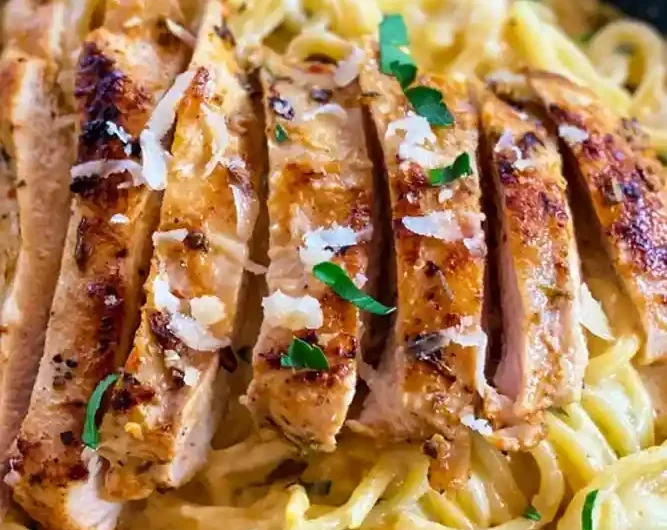
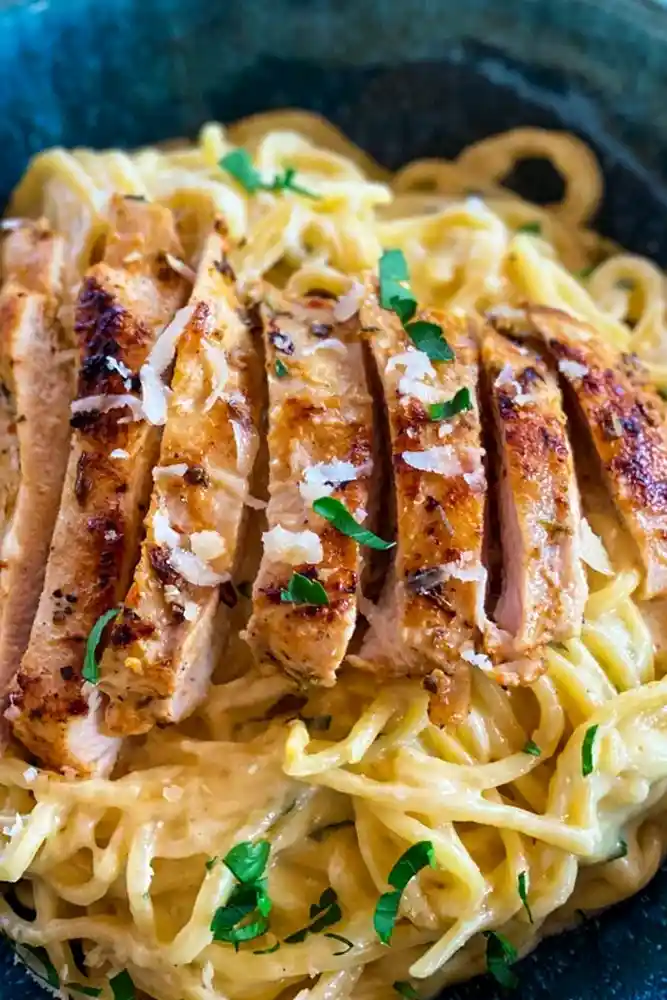
This recipe delivers a rich, velvety pasta dish combined with perfectly seared chicken breast. It is a satisfying meal that balances savory Parmesan cheese with a smooth cream sauce for a professional result at home.
List of ingredients
- 400 g chicken breast fillets – sliced thinly for even cooking.
- 300 g spaghetti – high-quality durum wheat pasta works best.
- 2 garlic cloves – finely diced for a subtle aromatic base.
- 80 g butter – used for sautéing and sauce richness.
- 200 ml cream – heavy cream ensures a thick, stable texture.
- 150 g Parmesan – freshly grated for optimal melting.
- 2 tbsp chopped parsley – used as a fresh garnish.
- 2 tsp chicken seasoning – for deep savory flavor.
- 2 tsp Italian herbs – a blend of oregano, basil, and thyme.
- 1 pinch nutmeg – enhances the cream and cheese notes.
- Salt & pepper – adjusted to taste.
- 3 tbsp olive oil – divided for marinating and searing.
step-by-step instructions
- Prepare the Chicken: Slice the chicken breast fillets in half lengthwise to create thinner pieces that cook quickly and evenly.
- Dice Aromatics: Peel the garlic cloves and cut them into very fine cubes to ensure they integrate into the sauce.
- Marinate: In a mixing bowl, combine the chicken with 2 tablespoons of olive oil, chicken seasoning, Italian herbs, and salt, rubbing the mixture thoroughly into the meat before setting it aside.
- Boil Pasta: Cook the spaghetti in a large pot of salted boiling water according to the package instructions until al dente.
- Melt Butter: Use a large pan over medium heat to melt the butter completely.
- Sauté Garlic: Add the diced garlic to the butter and sauté briefly until fragrant but not browned.
- Simmer Sauce: Stir in the cream and Parmesan cheese, then keep the pan on low heat, allowing the sauce to simmer gently for approximately 10 minutes.
- Sear Chicken: Heat 1 tablespoon of olive oil in a separate pan over high heat and sear the marinated chicken for 2-3 minutes per side until golden brown.
- Finish Sauce: Stir a pinch of nutmeg, salt, and pepper into the cream sauce, taste for seasoning, and then fold in the cooked spaghetti.
- Plate and Serve: Slice the seared chicken into strips, place them on top of the pasta, and garnish with freshly chopped parsley.
Pro Techniques for the Best Results
Use Freshly Grated Parmesan
Pre-shredded cheeses often contain cornstarch or cellulose to prevent clumping in the bag. These additives can make the Alfredo sauce grainy or prevent it from emulsifying properly. Grating a block of Parmesan by hand ensures a smooth, luxurious melt.
Manage the Sauce Temperature
Keep the sauce on low heat once the cheese is added. If the sauce boils too vigorously, the fats can separate from the proteins, resulting in an oily appearance. A gentle simmer allows the flavors to merge without breaking the emulsion.
Achieve a Golden Sear on Chicken
Ensure the pan is very hot before adding the chicken breast. Pat the chicken dry if there is excess moisture on the surface to avoid steaming the meat. Searing on high heat creates a Maillard reaction, which adds a deep, savory crust to the exterior.
Reserve a Bit of Pasta Water
Before draining your spaghetti, save about half a cup of the starchy cooking water. If the Alfredo sauce becomes too thick after adding the pasta, a splash of this water will loosen it. The starch in the water helps the sauce cling better to the noodles.
Optimize the Marination Time
Let the chicken sit in the oil and herb mixture for at least 15 minutes if time permits. This allows the salt to penetrate the meat, seasoning it from the inside out. It also creates a protective layer that keeps the chicken juicy during the high-heat searing process.
Ingredient Substitutions and Alternatives
Alternative Pasta Shapes
While spaghetti is traditional, fettuccine is the classic choice for Alfredo due to its wide surface area. For a more modern twist, use penne or rigatoni, as the hollow centers capture more of the thick cream sauce. Fusilli is also a great option for maximum sauce adhesion.
Using Different Cheeses
If Parmesan is unavailable, Pecorino Romano provides a saltier, sharper alternative. You can also use a mix of Parmesan and Grana Padano for a more complex flavor profile. Avoid using pre-sliced mozzarella or cheddar, as they do not melt into a smooth sauce.
Cream Alternatives for Texture
If you prefer a lighter sauce, you can substitute half of the cream with whole milk or a bit of Greek yogurt. Note that yogurt should be stirred in at the very end off the heat to prevent curdling. For a non-dairy option, use a high-fat cashew cream or soy cream.
Replacing Fresh Parsley
Fresh basil leaves provide a sweeter, more aromatic finish if parsley is not available. Dried parsley can be used in a pinch, though it lacks the bright color and freshness. Chives are another excellent herb for adding a mild onion-like flavor to the garnish.
Butter Substitutes for Sautéing
Unsalted butter is ideal for controlling sodium levels, but salted butter works if you reduce the added salt. For a dairy-free approach, use a plant-based butter substitute or a neutral oil like avocado oil. Ghee is another great option for a higher smoke point during the garlic sauté.
Flavor Variations and Additions
Adding Sautéed Mushrooms
Browned cremini or button mushrooms add an earthy depth to this dish. Sauté the sliced mushrooms in the same pan used for the chicken before starting the sauce. Ensure they are fully browned to avoid releasing too much water into the creamy base.
Incorporating Fresh Spinach
Fresh baby spinach can be stirred into the sauce during the last two minutes of simmering. The residual heat will wilt the leaves without overcooking them. This adds a pop of color and a boost of nutrients to the rich meal.
Adding a Citrus Note
A small squeeze of fresh lemon juice added at the end cuts through the richness of the cream and butter. You can also grate a small amount of lemon zest over the final plated dish. This acidity brightens the overall flavor profile and balances the saltiness of the Parmesan.
Increasing the Garlic Punch
For those who love a stronger garlic taste, increase the amount to four cloves. Roast the garlic first or use a mixture of fresh garlic and a pinch of garlic powder in the marinade. This creates layers of garlic flavor in both the meat and the sauce.
Adding Red Pepper Flakes
A pinch of crushed red pepper flakes added during the butter-sautéing phase introduces a subtle heat. This spicy element contrasts well with the cooling nature of the cream. It transforms the dish from a mild comfort food into a more dynamic meal.
Serving and Plating Ideas
Pairing with Garlic Bread
Warm, toasted baguette slices rubbed with garlic and butter are the perfect accompaniment. The crunch of the bread provides a textural contrast to the softness of the pasta. It also serves as a tool for scooping up any leftover sauce on the plate.
Adding a Side Salad
A light arugula or Caesar salad helps balance the heavy nature of the Alfredo sauce. Use a lemon-based vinaigrette to provide a sharp contrast to the creamy pasta. Fresh cherry tomatoes and cucumbers also add a refreshing element to the meal.
Plating for Presentation
Twirl the pasta into a high mound in the center of the plate using a carving fork. Arrange the chicken strips neatly on top or leaning against the side of the pasta. Finish with a final dusting of grated Parmesan and a sprinkle of bright green parsley.
Temperature Control for Serving
Warm your serving bowls in the oven or with hot water before plating. Cream sauces can thicken and cool quickly once they hit a cold plate. Pre-warming the dishes ensures the meal stays at the optimal temperature while eating.
Storage and Reheating Advice
Refrigerator Storage Guidelines
Store leftover pasta in an airtight container in the refrigerator for up to three days. Keep the chicken and pasta together, as the sauce will naturally soak into the noodles over time. Ensure the food is cooled slightly before sealing the lid to prevent excess condensation.
The Best Reheating Method
Reheat the pasta in a pan over low heat rather than in the microwave. Add a tablespoon of milk or water to the pan to loosen the sauce and restore its creamy consistency. Stir gently to avoid breaking the spaghetti strands.
Avoiding Sauce Separation
When reheating, do not let the sauce reach a rolling boil, as this will cause the fats to separate. Heat it slowly and stir constantly. If the sauce looks oily, whisk in a teaspoon of warm water to re-emulsify the mixture.
Freezing Considerations
It is generally not recommended to freeze cream-based sauces as they often split upon thawing. If you must freeze it, freeze the seared chicken separately. Prepare a fresh batch of sauce to toss with the thawed chicken and pre-cooked pasta.
Troubleshooting Common Issues
Preventing the Sauce from Breaking
If you notice the sauce separating into oil and solids, lower the heat immediately. Whisk in a small amount of cold cream or a teaspoon of cornstarch mixed with water. Constant stirring at a low temperature is the best way to maintain a stable emulsion.
Fixing an Overly Thick Sauce
If the sauce becomes too thick or sticky, it is likely due to the pasta absorbing the moisture. Slowly stir in warm milk or reserved pasta water one tablespoon at a time. Continue stirring until the sauce reaches a smooth, pourable consistency.
Stopping the Cheese from Clumping
Clumping usually happens if the cheese is added to a sauce that is too hot. Remove the pan from the heat for a moment before stirring in the Parmesan. Adding the cheese in small batches while stirring rapidly helps it integrate smoothly.
Preventing Dry Chicken Breast
Overcooking chicken breast leads to a rubbery texture. Use a meat thermometer to ensure the internal temperature reaches 165°F (74°C). Let the chicken rest for five minutes after searing before slicing to keep the juices inside.
Reducing Excessive Saltiness
Since Parmesan cheese is naturally salty, it is easy to over-season the dish. If the sauce is too salty, add a splash more cream or a pinch of sugar to balance the flavor. Adding fresh vegetables like spinach can also dilute the salt perception.
Frequently Asked Questions
What is the best pasta for Alfredo?
Fettuccine is the most traditional choice because its wide, flat shape holds the heavy sauce well. However, any long pasta like linguine or spaghetti works perfectly. For smaller bites, penne or bow-tie pasta are excellent alternatives.
Can I use a different kind of cream?
Heavy cream is best for stability and thickness. You can use half-and-half for a lighter version, though the sauce will be thinner. Avoid using low-fat milk alone, as it will not thicken and may curdle when mixed with cheese.
How do I stop the sauce from becoming grainy?
Graininess is usually caused by overheating the cheese or using pre-shredded cheese with additives. Keep the heat low and use high-quality, freshly grated Parmesan. Stirring constantly helps the cheese melt evenly into the cream.
Is it possible to make this dish with chicken thighs?
Yes, boneless, skinless chicken thighs are a great substitute. They are more flavorful and less likely to dry out than breasts. Follow the same marinating and searing process, though they may require an extra minute of cooking time.
Can I make the sauce in advance?
You can prepare the sauce ahead of time, but it will thicken significantly in the fridge. When you are ready to serve, reheat it slowly over low heat and add a splash of milk to bring back the original creaminess.
Why does my sauce look oily?
An oily sauce occurs when the emulsion breaks, often due to excessive heat. This causes the butter and cheese fats to separate from the liquid. To fix this, stir in a small amount of pasta water or cream over low heat.
What can I use instead of nutmeg?
Nutmeg is used to add a subtle warmth that complements dairy. If you don’t have it, a tiny pinch of mace or a small amount of white pepper can work. You can also omit it entirely without ruining the dish.
} Print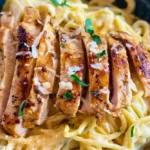
Creamy Chicken Alfredo Pasta
- Total Time: 30 minutes
- Yield: 3 servings 1x
- Diet: General
Description
This is the best pasta recipe ever. Pasta in an incredibly creamy Parmesan cream sauce with savory fried chicken. It is absolute soul food and perfect for the whole family or when guests visit and you want to prepare something especially delicious.
Ingredients
- 400 g chicken breast fillets
- 300 g spaghetti
- 2 garlic cloves
- 80 g butter
- 200 ml cream
- 150 g parmesan
- 2 tbsp chopped parsley
- 2 tsp chicken seasoning
- 2 tsp Italian herbs
- 1 pinch of nutmeg
- salt & pepper
- 3 tbsp olive oil
Instructions
- Step 1: Halve the chicken breast fillets lengthwise to make them thinner.
- Step 2: Peel and finely dice the garlic cloves.
- Step 3: Place the chicken, 2 tbsp olive oil, chicken seasoning, Italian herbs, and salt in a bowl and rub the fillets with the mixture. Set aside.
- Step 4: Prepare the pasta according to package instructions.
- Step 5: Melt the butter in a large pan.
- Step 6: Add the diced garlic and sauté briefly.
- Step 7: Add the cream and parmesan, stir, and let simmer on low heat for about 10 minutes.
- Step 8: Heat 1 tbsp olive oil in a pan and sear the chicken fillets on the highest heat. Turn them after about 2-3 minutes.
- Step 9: Add a pinch of nutmeg, salt, and pepper to the sauce. Taste and then add the pasta. Mix everything well.
- Step 10: Cut the chicken into strips, place them on top of the pasta, and serve with chopped parsley.
Notes
Marinate the chicken well before frying to keep it juicy. Simmer the sauce on low heat to prevent it from curdling. A squeeze of lemon juice can add a pleasant freshness to the dish.
- Prep Time: 10 minutes
- Cook Time: 20 minutes
- Category: Pasta & Rice
- Method: Sautéing
- Cuisine: Italian-American
Nutrition
- Serving Size: 1 serving
- Calories: 1153 kcal
- Sugar: 8 g
- Sodium: 1250 mg
- Fat: 65 g
- Saturated Fat: 32 g
- Unsaturated Fat: 33 g
- Trans Fat: 0 g
- Carbohydrates: 79 g
- Fiber: 4 g
- Protein: 62 g
- Cholesterol: 280 mg
Keywords: Pasta Chicken Alfredo, creamy pasta, easy recipe, soul food, dinner