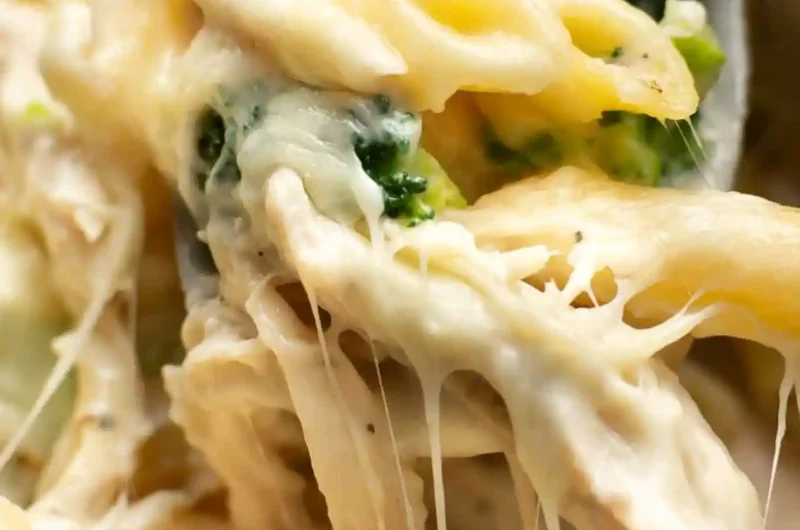
This creamy chicken and broccoli pasta bake is a convenient, all-in-one meal perfect for busy weeknights. It combines tender chicken and fresh broccoli in a rich cheese sauce for a satisfying dinner.
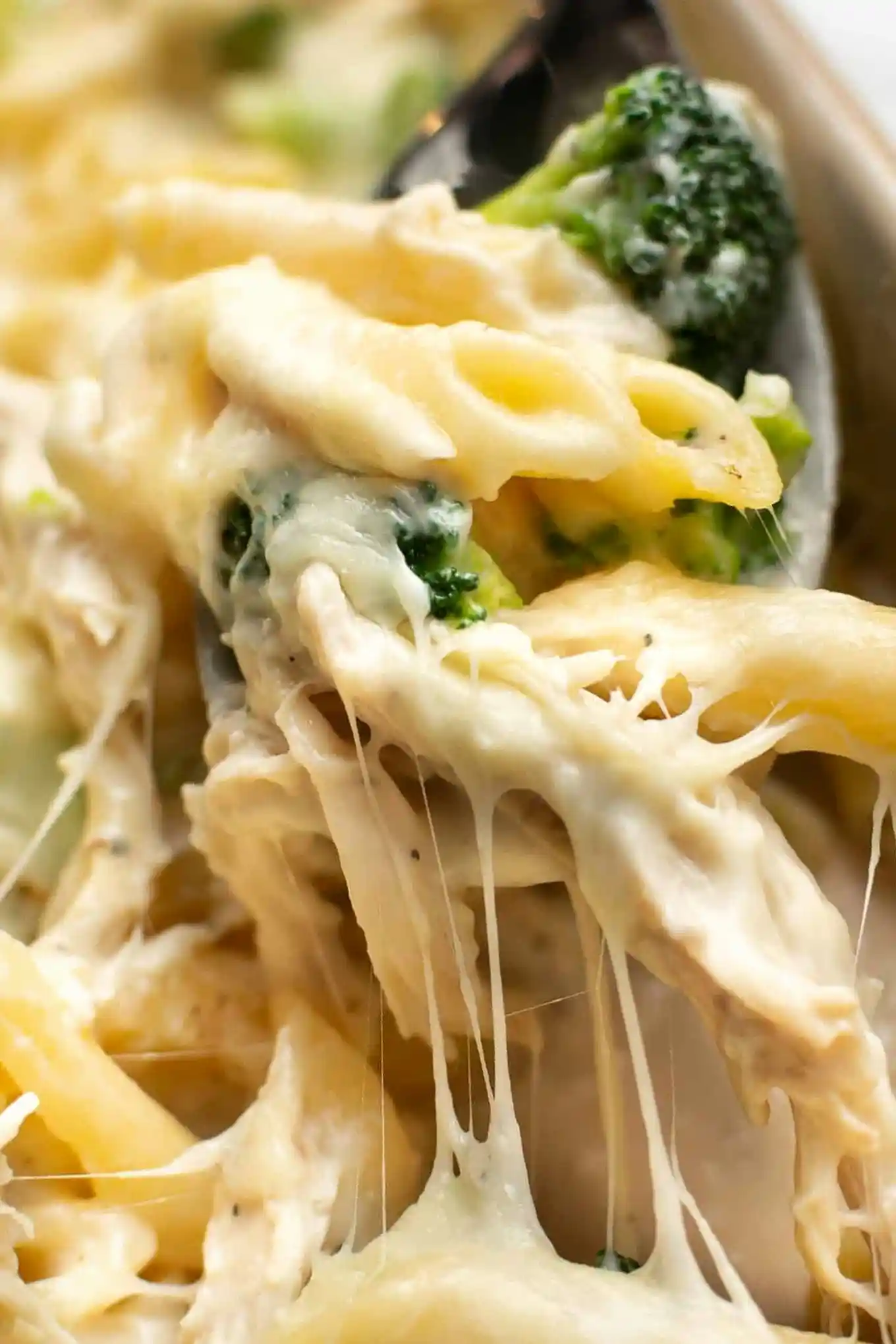
List of ingredients
- 8 ounces uncooked pasta – penne is recommended for its ability to hold sauce.
- 4 cups broccoli florets – fresh florets cut into bite-sized pieces.
- 2 cups cooked chicken – rotisserie chicken, shredded or chopped.
- 1 (15 ounce) jar Alfredo sauce – a standard jar of your preferred brand.
- 1/2 teaspoon Italian seasoning – a blend of dried herbs.
- 1/2 cup freshly grated parmesan cheese – provides a salty, nutty flavor.
- 2 cups shredded mozzarella – creates a melty, golden crust.
- Salt and pepper – added to taste for final seasoning.
step-by-step instructions
- Prepare the Oven: Preheat your oven to 375F and move the oven rack to the top third position to ensure the cheese browns properly.
- Cook Pasta and Broccoli: Boil a large pot of salted water. Cook the pasta for one minute less than the package instructions. Add the broccoli florets to the boiling water during the final two minutes of the pasta’s cooking time. Drain and transfer both to a 9×13 casserole dish.
- Combine Ingredients: Add the cooked chicken, Alfredo sauce, grated parmesan, and Italian seasoning directly into the casserole dish. Toss everything together until the pasta and vegetables are evenly coated.
- Layer the Cheese: Smooth the mixture into an even layer. Spread the shredded mozzarella evenly over the top.
- Bake and Finish: Bake uncovered for 15-20 minutes until the sauce is bubbly. Optionally, broil for a few minutes to brown the cheese, monitoring closely to avoid burning. Season with salt and pepper and serve.
Optimal Pasta Selection
Using Penne for Sauce Retention
Penne is the preferred choice because its tubular shape and ridges capture the thick Alfredo sauce effectively. This prevents the sauce from pooling at the bottom of the dish. Other sturdy shapes like rigatoni or ziti work equally well.
Alternatives to Penne
Farfalle, also known as bowties, are a great alternative if you prefer a different aesthetic. They provide a good surface area for the cheese to cling to. Avoid using very thin pastas like spaghetti or angel hair, as they may break or overcook during the baking process.
The Importance of Undercooking Pasta
Cooking the pasta for one minute less than the package directions is crucial. Since the pasta continues to cook in the oven with the sauce, undercooking it initially prevents a mushy texture. This ensures the pasta remains al dente after the bake is complete.
Managing Pasta Starch
Using a large pot of salted water ensures the pasta cooks evenly and tastes seasoned from the inside out. Be sure to drain the pasta thoroughly before transferring it to the baking dish. Excess water can dilute the Alfredo sauce and make the casserole watery.
Chicken Preparation Methods
Using Rotisserie Chicken
Pre-cooked rotisserie chicken is a time-saving option that adds deep flavor to the dish. Ensure you remove all skin and bones before shredding or chopping the meat. This ensures a consistent texture throughout the bake.
Preparing Fresh Chicken Breast
If you prefer fresh chicken, bake or pan-sear chicken breasts until fully cooked. Let the meat rest for a few minutes before slicing or cubing it. This keeps the chicken juicy when it is subjected to the oven’s heat during the baking phase.
Chicken Size and Distribution
Cut the chicken into uniform, bite-sized pieces. This ensures that every serving contains an equal amount of protein. Mixing the chicken thoroughly with the sauce and pasta prevents clumps of meat from forming in one area.
Broccoli Handling and Tips
Measuring Broccoli Florets
A pound of fresh broccoli typically yields about 4 cups of florets. Cut the florets into small, uniform pieces so they cook evenly in the boiling water. This ensures that the broccoli is tender but still holds its shape after baking.
Using Frozen Broccoli
If using frozen broccoli, add it to the boiling pasta water for only about one minute. Frozen broccoli is often blanched before freezing, meaning it requires significantly less cooking time. Overcooking frozen broccoli will result in a soft, mushy consistency.
Blanching for Texture
Adding broccoli to the pasta water for the final two minutes is a form of blanching. This process preserves the bright green color and ensures the vegetable is partially cooked. It also saves you from using a separate pot and strainer.
Cheese Selection and Quality
Benefits of Freshly Grated Parmesan
Grating your own parmesan from a wedge provides a better flavor and smoother melt. Pre-grated cheeses often contain anti-clumping agents like cellulose. These additives can prevent the cheese from integrating smoothly into the Alfredo sauce.
Choosing the Right Mozzarella
Low-moisture shredded mozzarella is best for this recipe as it melts evenly without releasing too much water. This keeps the top of the casserole golden and bubbly. You can use a mix of mozzarella and provolone for a slightly sharper taste.
Managing the Cheese Crust
To achieve a perfectly browned top, ensure the mozzarella is spread in a thin, even layer. Avoid piling the cheese in the center, as the edges may not melt as quickly. The top-third rack placement in the oven helps the heat hit the cheese more directly.
Sauce Customization
Adjusting Sauce Volume
If you prefer a very saucy pasta bake, consider using a 19-ounce jar instead of a 15-ounce jar. The pasta absorbs a significant amount of moisture during the baking process. Extra sauce prevents the dish from becoming dry, especially if you are using a larger amount of pasta.
Homemade Alfredo Alternatives
You can replace the jarred sauce with a homemade version made from butter, heavy cream, and parmesan. If making your own, double the standard recipe to ensure you have enough volume. Aim for approximately 2 cups of homemade sauce to match the jarred version.
Enhancing the Sauce Flavor
Adding a pinch of nutmeg or a squeeze of lemon juice to the Alfredo sauce can brighten the flavor. This cuts through the richness of the cream and cheese. Ensure these additions are stirred in before the pasta is added to the dish.
Baking and Browning Techniques
Oven Rack Placement
Positioning the rack in the top third of the oven is essential for a golden crust. This allows the heat to circulate more effectively around the top of the mozzarella. If the rack is too low, the bottom may overcook before the cheese browns.
Broiling for Extra Color
The broiler is an optional tool for those who prefer a deeply browned, toasted cheese layer. Use the broiler for only 2-3 minutes at the very end. Keep the oven door slightly open and watch the cheese closely to prevent it from burning.
Ensuring Even Heating
Using a 9×13 inch baking dish allows the ingredients to spread out, ensuring even heat distribution. If using a deeper dish, the center may take longer to heat through. Smooth the mixture into a flat layer to avoid cold spots in the middle.
Serving and Pairing Ideas
Complementary Bread Options
Cheesy garlic bread is a classic pairing that complements the creamy texture of the Alfredo sauce. A warm baguette or toasted ciabatta also works well for scooping up extra sauce. Buttered dinner rolls provide a soft contrast to the baked pasta.
Fresh Side Salads
A light side salad with a vinaigrette helps balance the richness of the cheese and cream. Spring mix with a balsamic dressing or a crisp Caesar salad are excellent choices. The acidity in the dressing cleanses the palate between bites.
Adding Extra Vegetables
To increase the nutritional value, consider adding sautéed mushrooms or frozen peas to the mix. Spinach is another great addition; stir in fresh baby spinach just before baking. The heat of the oven will wilt the spinach perfectly.
Storage and Reheating
Refrigeration Guidelines
Store leftover pasta bake in an airtight container in the refrigerator for 3 to 4 days. Ensure the dish has cooled slightly before sealing it to prevent excess condensation. This helps maintain the texture of the pasta and sauce.
Best Reheating Methods
Reheat the casserole in a covered saucepan over low heat for the best results. This allows you to add a splash of milk or extra Alfredo sauce to loosen the consistency. Alternatively, use a microwave in short intervals, stirring between each session.
Preventing Sauce Separation
Avoid reheating the pasta on high heat, as this can cause the dairy in the Alfredo sauce to separate. Low and slow heating keeps the sauce creamy and prevents the chicken from drying out. Adding a tablespoon of water or cream can help emulsify the sauce again.
Freezing Advice
Freezing this dish is not recommended due to the high dairy content. The sauce can become grainy or break upon thawing, and the broccoli may lose its texture. For the best quality, consume the bake within a few days of preparation.
Troubleshooting and FAQs
Why is my pasta bake watery?
Wateriness usually occurs if the pasta and broccoli were not drained thoroughly or if the pasta was overcooked. Ensure you use a colander to remove all excess water. Additionally, using fresh mozzarella with high water content can contribute to a runny sauce.
Can I use a different baking dish?
Yes, you can use any oven-safe casserole dish, but the size affects the cooking time. A larger dish results in a thinner layer that cooks faster. A smaller, deeper dish may require an additional 5-10 minutes of baking to ensure the center is hot.
How do I stop the cheese from burning?
If the cheese is browning too quickly, cover the dish loosely with aluminum foil. This protects the top while allowing the interior to finish heating. Always monitor the broiler closely, as cheese can go from golden to burnt in seconds.
What can I use instead of Italian seasoning?
You can substitute Italian seasoning with a mix of dried oregano, basil, and thyme. If you prefer a different profile, a pinch of garlic powder and onion powder also works well. Freshly chopped parsley added at the end provides a fresh, herbal finish.
Can I add more vegetables to the bake?
Yes, you can add diced carrots or zucchini. Sauté these vegetables briefly before adding them to the pasta to ensure they are tender. Avoid adding high-water vegetables like raw tomatoes, as they can make the sauce too thin.
Print
Creamy Chicken and Broccoli Pasta Bake
- Total Time: 40 minutes
- Yield: 6 servings 1x
- Diet: General
Description
This chicken and broccoli Alfredo bake recipe is a cheese lover’s delight! Rotisserie chicken and broccoli is a tried and true combo in this easy casserole.
Ingredients
- 8 ounces uncooked penne pasta
- 4 cups broccoli florets
- 2 cups cooked chicken, shredded or chopped
- 1 (15 ounce) jar Alfredo sauce
- 1/2 teaspoon Italian seasoning
- 1/2 cup freshly grated parmesan cheese
- 2 cups shredded mozzarella
- Salt & pepper to taste
Instructions
- Preheat: Preheat your oven to 375F and move the rack to the top third of the oven.
- Boil: Boil a large, salted pot of water for the pasta, and cook it for 1 minute less than the package directions indicate. Add the broccoli to the pot 2 minutes before the pasta is done. Drain and transfer to a 9×13 casserole dish.
- Combine: Add the chicken, Alfredo sauce, parmesan, and Italian seasoning to the casserole dish, and toss together.
- Layer: Smooth it out in an even layer, and then top it with the mozzarella.
- Bake: Bake, uncovered, for 15-20 minutes until hot and bubbly. Optional: broil it for a few minutes to brown the cheese. Season with salt & pepper as needed and serve immediately.
Notes
For frozen broccoli, add it to the boiling water for only one minute to prevent mushiness. If you prefer a saucier bake, use a 19 oz jar of Alfredo sauce.
- Prep Time: 10 minutes
- Cook Time: 30 minutes
- Category: Main Course
- Method: Baking
- Cuisine: American
Nutrition
- Serving Size: 1 serving
- Calories: 519 kcal
- Sugar: 4 g
- Sodium: 919 mg
- Fat: 26 g
- Saturated Fat: 13 g
- Unsaturated Fat: 11 g
- Trans Fat: 0 g
- Carbohydrates: 38 g
- Fiber: 3 g
- Protein: 32 g
- Cholesterol: 118 mg
Keywords: chicken broccoli alfredo bake, pasta casserole, easy dinner, chicken alfredo