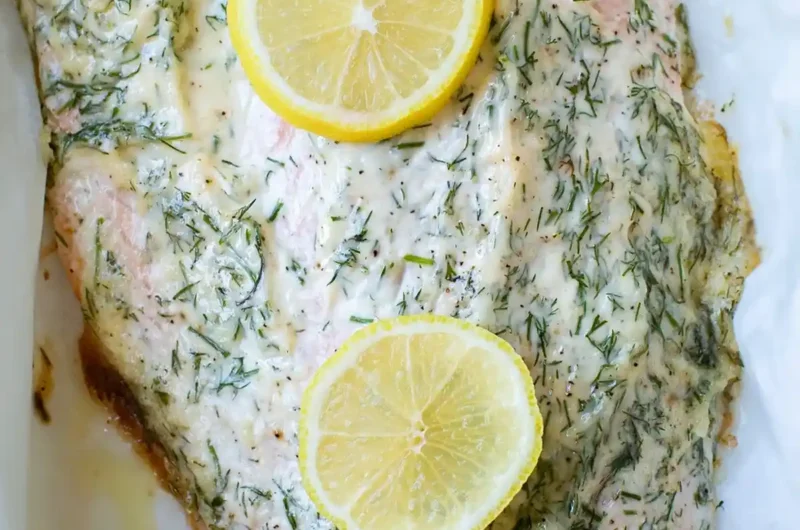
This method uses a creamy mayonnaise-based marinade to keep salmon moist and tender during the roasting process. It is a practical, high-protein meal that can be prepared quickly and baked in under 30 minutes.
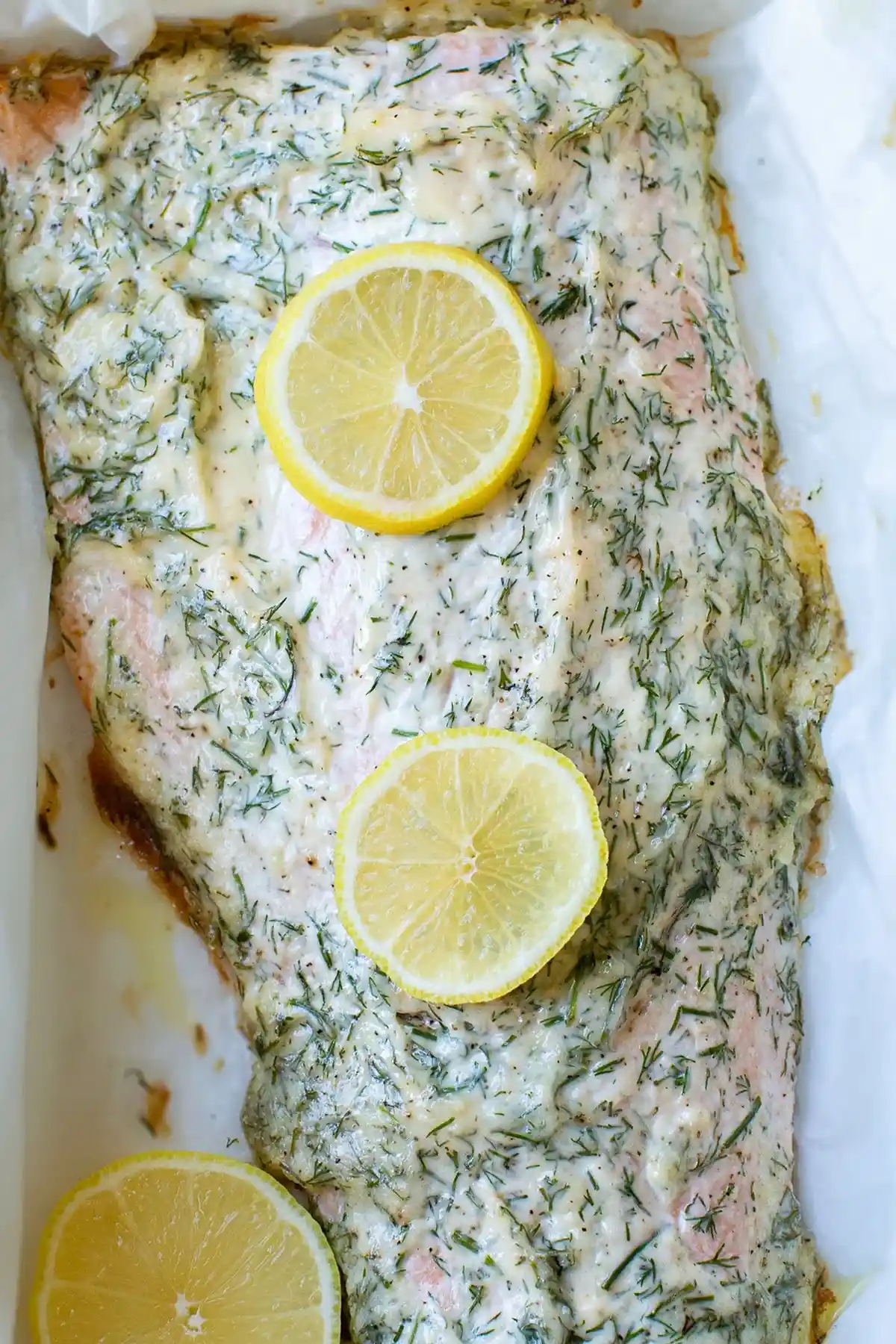
List of ingredients
- 2 lbs fresh salmon fillet (skin on) – use a whole fillet for best results.
- 1/2 cup mayonnaise (slightly heaping) – serves as the moisture barrier.
- 8 cloves garlic (crushed) – provides a strong savory base.
- 5 oz fresh dill (chopped) – adds a bright, herbaceous flavor.
- 1/2 tsp salt – enhances the natural taste of the fish.
- 1/4 tsp black pepper – provides a mild spice.
step-by-step instructions
- Prepare the fish: Wash the salmon fillet and pat it completely dry using paper towels to ensure the marinade adheres.
- Line the pan: Place a sheet of parchment paper in a 13×9 inch baking dish and position the salmon fillet in the center.
- Apply the base: Spoon the mayonnaise over the top of the salmon fillet, covering the surface evenly.
- Season: Distribute the crushed garlic, chopped dill, salt, and black pepper over the mayonnaise layer.
- Mix the topping: Gently stir the seasonings into the mayonnaise and spread the mixture across the top of the fish.
- Marinate: Cover the dish and refrigerate it overnight to allow the garlic and dill flavors to penetrate the fish.
- Preheat oven: Set your oven to 400°F.
- Bake: Cover the dish with aluminum foil and bake for 20 minutes.
- Finish: Transfer the fillet to a serving platter and squeeze fresh lemon juice over the top before slicing.
Selecting the Ideal Salmon
Wild Caught Salmon
Wild caught salmon is often preferred for its deeper color and higher omega-3 content. It typically has a firmer texture and a more pronounced fish flavor than farmed varieties.
Atlantic Salmon
Atlantic salmon is widely available and usually has a higher fat content. This makes it very forgiving during the baking process as it is less likely to dry out.
Sockeye Salmon
Sockeye is known as red salmon and is prized for its rich, bold flavor. Because it is leaner than Atlantic salmon, it may cook slightly faster.
Steelhead Trout
While technically a trout, steelhead is often sold as salmon. It is more delicate and flaky, though it contains less fat than traditional salmon species.
Pink Salmon
Pink salmon is generally smaller and has a milder taste. It works well in this recipe, though it may require a slightly shorter cooking time if the fillet is thin.
Identifying Fresh Fillets
Look for salmon with a vibrant, consistent pink or orange color. Avoid any fillets with brown spots or a strong, unpleasant fishy odor, as these are signs of spoilage.
Optimizing the Baking Process
Maintaining High Oven Temperatures
Baking salmon at 400°F ensures that the exterior sets while the interior remains juicy. Low temperatures can lead to overcooking the fish before it reaches the desired color, resulting in a dry texture.
Using Aluminum Foil for Moisture
Covering the pan with foil traps the steam released by the fish and the mayonnaise. This creates a humid environment that prevents the top of the fillet from scorching or drying out.
Verifying Internal Temperature
The safest and most accurate way to check for doneness is using a meat thermometer. Salmon is fully cooked when the internal temperature reaches 145°F.
Adjusting for Individual Fillets
If you slice the whole fillet into individual portions before baking, reduce the cooking time to 8-12 minutes. Smaller pieces have more surface area exposed to heat and cook significantly faster.
Suggested Side Dish Pairings
Potato-Based Accompaniments
Mashed potatoes or roasted baby potatoes complement the richness of the garlic mayo sauce. For a healthier option, bake a whole Idaho potato or prepare potato wedges in the oven.
Grain and Pasta Options
Serving the salmon over a bed of stovetop rice or buttered noodles helps soak up the excess sauce. Pasta with a light lemon-butter sauce is particularly effective for this dish.
Fresh Vegetable Side Dishes
Steamed broccoli and asparagus provide a crisp texture that balances the creamy topping. A fresh salad of diced cucumbers and tomatoes with a vinaigrette adds necessary acidity.
Low-Carb Serving Ideas
For a low-carb meal, wrap leftover salmon pieces in large lettuce leaves to create tacos. This replaces the need for tortillas or bread while keeping the meal light.
Storage and Preservation
Refrigeration Guidelines
Cooked salmon can be stored in the refrigerator for up to 4 days. Ensure it is cooled slightly before placing it in a container to prevent excessive condensation.
Freezing Raw Fillets
Raw salmon should be frozen if not used by the package expiration date. Thaw the fillets completely in the refrigerator before applying the marinade for the best results.
Airtight Container Use
Always use an airtight glass or plastic container for storage. This prevents the salmon from absorbing other fridge odors and keeps the fish from drying out.
Reheating Methods for Best Quality
The Oven Steaming Method
Place the salmon in a pan with a small amount of water and cover it tightly with foil. Bake at 350°F for approximately 8 minutes to steam the fish back to tenderness.
The Stovetop Skillet Method
Heat a skillet over medium heat with a splash of water or a small amount of butter. Gently warm the salmon pieces until they are heated through without searing the exterior.
Why to Avoid the Microwave
Microwaving fish often leads to uneven heating and can make the proteins rubbery. This process frequently dries out the fish, removing the juiciness provided by the original marinade.
Recipe Variations and Tweaks
Adding a Crispy Cheese Crust
For added texture, sprinkle grated parmesan cheese or panko breadcrumbs over the mayo layer before baking. This creates a golden-brown crust that contrasts with the tender fish.
Air Fryer Preparation
Cut the salmon into individual fillets and place them in the air fryer basket. Cook at 450°F for 7-8 minutes, depending on the thickness of the cut.
Using Different Fresh Herbs
While dill is traditional, you can substitute it with fresh parsley or chives. Fresh tarragon is another excellent alternative that pairs well with the garlic and lemon.
Troubleshooting Common Issues
Preventing Dry Salmon
Dryness usually occurs from overcooking or using too low a temperature. Always check the internal temperature and remove the fish from the oven as soon as it hits 145°F.
Removing the Skin After Cooking
The skin helps hold the fillet together and retain moisture during baking. To remove it, gently slide a sharp knife between the skin and the flesh or peel it away with a fork.
Dealing with Frozen Salmon
Do not bake salmon while it is still frozen, as this leads to uneven cooking. Thaw the fish in the refrigerator for 12-24 hours before prepping the marinade.
Frequently Asked Questions
Can I skip the overnight marination?
Yes, you can bake the salmon immediately after applying the sauce. However, marinating overnight allows the garlic and dill to penetrate deeper into the fish for a stronger flavor.
How many calories are in one serving?
One serving, based on dividing a 2-pound fillet into 6 equal portions, contains approximately 358 calories.
What is the best way to tell if salmon is done?
The flesh should change from a deep red/orange to a lighter pink and become opaque. It should flake easily when pressed with a fork.
Print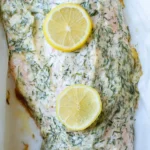
Baked Salmon with Garlic Dill Mayo Sauce
- Total Time: 24 hours 30 minutes
- Yield: 6 servings 1x
- Diet: General
Description
Baked salmon fish in a creamy garlic dill sauce! So juicy and flaky! The mayonnaise makes a simple marinade for this baked salmon recipe that gets cooked in the oven in 20 minutes!
Ingredients
- 2 lbs fresh salmon fillet (skin on)
- 1/2 cup mayonnaise (slightly heaping)
- 8 cloves garlic (crushed)
- 5 oz fresh dill (chopped)
- 1/2 tsp salt
- 1/4 tsp black pepper
Instructions
- Prep: Wash and pat dry the salmon fillet.
- Arrange: Place onto a 13×9 baking dish, lined with parchment paper.
- Season: Spoon mayo over the top with the garlic, dill, salt, and pepper.
- Spread: Stir and spread out the topping over the fish.
- Marinate: Cover and refrigerate overnight.
- Preheat: Preheat oven to 400°F.
- Bake: Bake the salmon covered with foil for 20 minutes.
- Finish: Squeeze one lemon over the top before serving.
Notes
Cook salmon covered to keep the fish as juicy and moist as possible. Salmon is done when the internal temperature reads 145°F.
- Prep Time: 10 minutes
- Cook Time: 20 minutes
- Category: Main Dish
- Method: Baking
- Cuisine: American
Nutrition
- Serving Size: 1 serving
- Calories: 358 kcal
- Sugar: 0.1 g
- Sodium: 394 mg
- Fat: 24 g
- Saturated Fat: 4 g
- Unsaturated Fat: 19.97 g
- Trans Fat: 0.03 g
- Carbohydrates: 3 g
- Fiber: 1 g
- Protein: 31 g
- Cholesterol: 91 mg
Keywords: baked salmon, garlic dill sauce, creamy salmon, oven baked fish