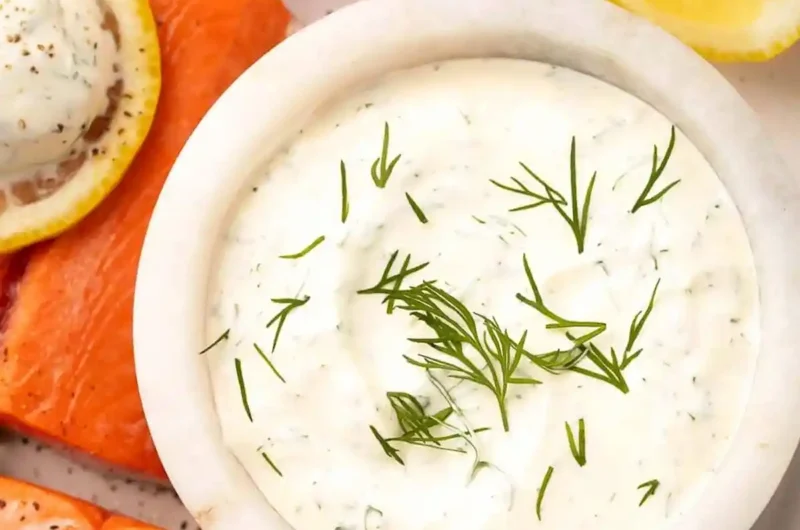
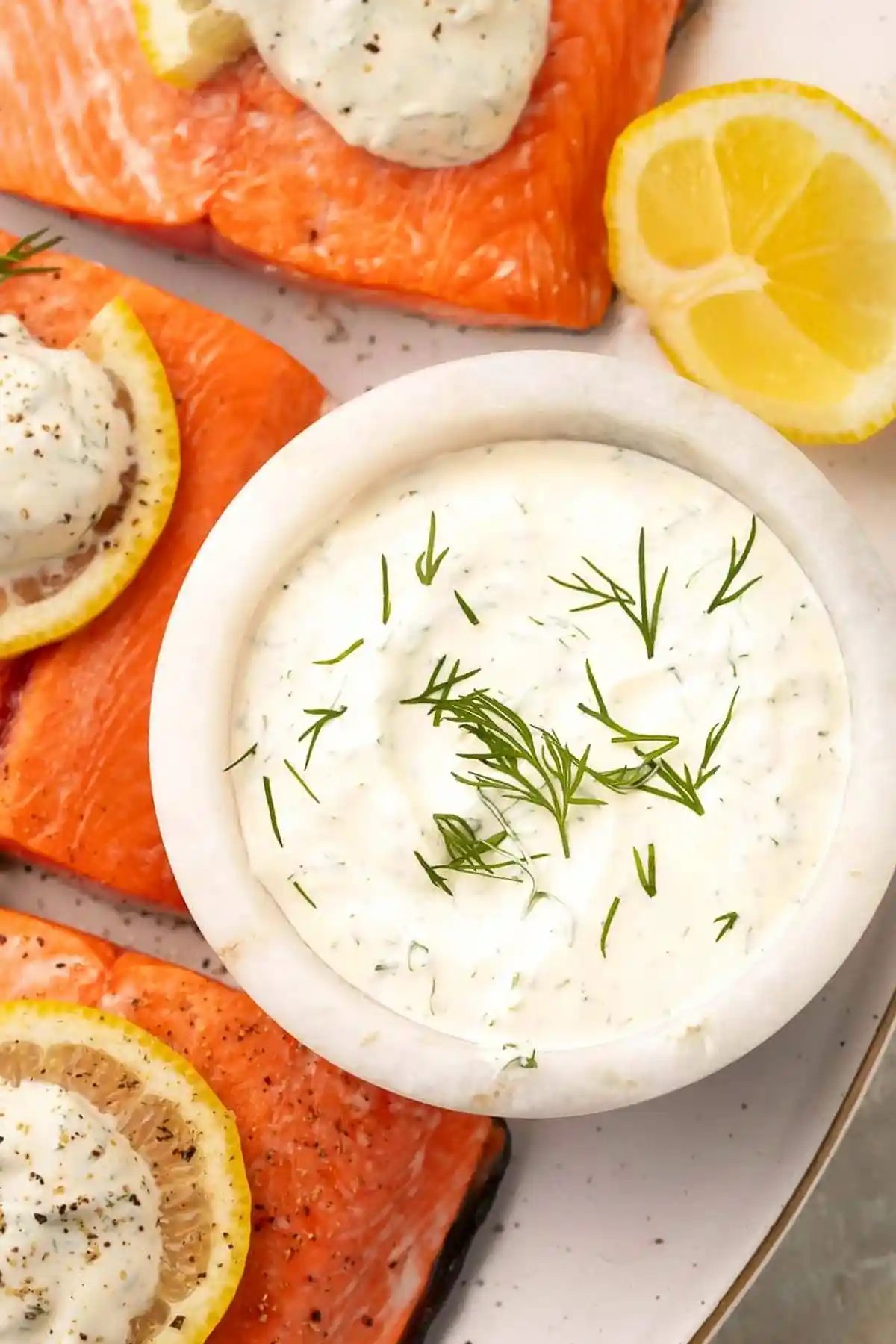
This creamy dill sauce provides a refreshing and tangy contrast to rich seafood dishes. It takes only five minutes to prepare and requires no cooking, making it an ideal quick accompaniment.
List of ingredients
- 1/4 cup mayonnaise – provides a smooth and rich base.
- 3/4 cup sour cream – adds a thick consistency and tangy flavor.
- 1 tablespoon fresh lemon juice – approximately one small lemon, used to balance the richness.
- 4 tablespoons chopped fresh dill – adds a bright, herbal note.
- 1/8 teaspoon sea salt – enhances all the other flavors.
- 1/8 teaspoon freshly cracked white pepper – provides a mild heat without black specks.
- Fresh dill sprigs – used for the final garnish.
step-by-step instructions
- Combine Ingredients: Add 1/4 cup mayonnaise, 3/4 cup sour cream, 1 tablespoon fresh lemon juice, 4 tablespoons chopped fresh dill, 1/8 teaspoon sea salt, and 1/8 teaspoon freshly cracked white pepper to a small mixing bowl.
- Mix Thoroughly: Stir all ingredients together until the mixture is fully combined and smooth.
- Adjust Seasoning: Taste the sauce and add more lemon juice, salt, or pepper as desired to match your flavor preference.
- Garnish and Serve: Once the flavor is satisfactory, garnish the sauce with fresh dill sprigs and serve immediately.
Optimal Salmon Pairing Methods
Pan-Seared Salmon Fillets
Pan-searing salmon creates a crisp exterior that contrasts well with the cool temperature of the dill sauce. The acidity in the lemon juice helps cut through the natural oils of the fish. Apply a dollop of sauce directly on top of the hot fillet right before serving.
Grilled Salmon with Char Marks
Grilling salmon adds a smoky dimension to the meal. This sauce complements the char by providing a creamy, cooling element. Brush the sauce over the fish after it has rested for three minutes to prevent the cream from breaking.
Air-Fried Salmon Bites
Air frying salmon results in a concentrated flavor and a firm texture. Use the creamy dill sauce as a dipping agent rather than a topping. This allows you to control the amount of sauce per bite while keeping the fish crispy.
Slow-Baked Salmon Fillets
Baked salmon is often more tender and moist than seared versions. The sauce adds a layer of brightness that prevents the dish from tasting too heavy. Serve the sauce on the side to maintain the moisture levels of the fish.
Ingredient Substitutions and Alternatives
Substituting Greek Yogurt for Sour Cream
Plain Greek yogurt is a direct 1:1 substitute for sour cream. It increases the protein content and offers a slightly sharper tang. Ensure you use full-fat Greek yogurt for the closest match in texture and mouthfeel.
Using Dried Dill Instead of Fresh
If fresh dill is unavailable, dried dill can be used, but the ratio must change. Use 1 tablespoon of dried dill for every 4 tablespoons of fresh dill. Let the sauce sit for 30 minutes before serving to allow the dried herbs to rehydrate.
Replacing Lemon Juice with Lime Juice
Lime juice provides a more tropical, citrusy profile compared to lemon. While it changes the traditional flavor, it pairs exceptionally well with salmon. Keep the measurement at 1 tablespoon to maintain the correct pH balance of the sauce.
Low-Fat Mayonnaise Options
You can use light mayonnaise to reduce the overall calorie count of the sauce. Be aware that light mayo often contains more sugar or thickeners, which may slightly alter the taste. Full-fat mayo is recommended for the most authentic creamy texture.
Flavor Enhancements and Variations
Adding Minced Garlic for Depth
Adding one clove of finely minced garlic or 1/4 teaspoon of garlic powder introduces a savory depth. This variation works particularly well if you are serving the sauce with grilled vegetables. Ensure the garlic is minced into a paste to avoid large chunks in the smooth sauce.
Incorporating Onion Powder for Savory Notes
A pinch of onion powder adds a subtle sweetness and complexity. It rounds out the sharpness of the lemon and sour cream. This is a useful addition when using the sauce as a dip for raw vegetables.
Using Capers for a Briny Taste
Fold in one tablespoon of drained, chopped capers to create a tartar-style dill sauce. The saltiness of the capers complements the dill and the fish perfectly. Reduce the added sea salt in the recipe if you choose this variation.
Adding Lemon Zest for Intense Aroma
Zesting half a lemon before adding the juice increases the aromatic quality of the sauce. The zest contains essential oils that provide a punchier citrus flavor than the juice alone. Stir the zest in during the first mixing step.
Storage and Preservation Guidelines
Optimal Refrigeration Times
Store the prepared sauce in the refrigerator for up to 24 hours. Because it contains fresh dairy and herbs, the quality degrades quickly after the first day. Keep it chilled at or below 40 degrees Fahrenheit to ensure food safety.
Using Airtight Glass Containers
Transfer the sauce to a glass jar with a tight-fitting lid. Glass prevents the sauce from absorbing odors from other foods in the fridge. It also makes it easier to stir the sauce before serving if it has settled.
Why You Should Not Freeze This Sauce
Avoid freezing this sauce as the emulsion in the mayonnaise and sour cream will break. Upon thawing, the sauce will separate into oil and water, resulting in a grainy texture. Always make fresh batches or keep them refrigerated.
Texture Adjustments and Troubleshooting
Thinning the Sauce with Milk
If the sauce is too thick for your preference, stir in one teaspoon of whole milk at a time. Continue adding milk until the desired consistency is reached. Avoid adding too much, as this will dilute the lemon and dill flavors.
Increasing Thickness with Mayonnaise
To achieve a stiffer consistency, such as for a spread, add an extra tablespoon of mayonnaise. This increases the fat content and stabilizes the structure of the sauce. This is ideal for using the sauce on salmon burgers.
Balancing Excessive Acidity
If the sauce tastes too sour, add a small pinch of sugar or a bit more sour cream. The fat in the dairy helps neutralize the citric acid from the lemon juice. Taste after each small adjustment to avoid over-sweetening.
Alternative Serving Suggestions
Dipping Sauce for Fresh Vegetables
This sauce works as a healthy dip for raw crudités. It pairs especially well with sliced cucumbers, bell peppers, and raw carrots. The dill and lemon provide a fresh contrast to the sweetness of the vegetables.
Spreading on Grilled Chicken Breast
While designed for salmon, the sauce is an excellent topping for lean chicken breasts. The creaminess compensates for the dryness that can occur during grilling. Apply it as a thin layer over sliced chicken.
Pairing with Roasted Asparagus
Roasted asparagus has a natural earthiness that is complemented by the tang of this sauce. Drizzle the sauce over the asparagus just before serving. This combination is a classic pairing for a complete seafood dinner.
Using as a Base for Tartar Sauce
This recipe serves as a streamlined version of tartar sauce. To make it a full tartar sauce, add chopped pickles and capers. This makes it versatile for fish sticks, fried shrimp, or crab cakes.
Frequently Asked Questions
Can I make this sauce a day in advance?
Yes, you can prepare the sauce up to 24 hours before serving. Store it in an airtight container in the refrigerator. Stir it well before serving to re-incorporate any separated ingredients.
How do I prevent the sauce from separating?
Ensure that all ingredients are at a similar temperature, ideally cool or room temperature. Do not expose the sauce to high heat, as the mayonnaise and sour cream can break down and separate.
What is the best way to chop fresh dill?
Use a sharp chef’s knife and a rocking motion to mince the dill. Avoid over-chopping or bruising the leaves, as this can cause the herb to turn dark and lose its bright flavor.
Can I use a food processor to mix the sauce?
A food processor is not recommended for this recipe. Over-processing the dill will turn the sauce a muddy green color rather than keeping the distinct green flecks. A simple whisk or spoon is more effective.
Print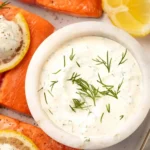
Creamy Dill Sauce for Salmon
- Total Time: 5 minutes
- Yield: 4 servings 1x
- Diet: Gluten Free, Keto, Low Carb
Description
This simple, flavorful sauce is the perfect finishing touch to salmon and other seafood dishes.
Ingredients
- ¼ cup mayonnaise
- ¾ cups sour cream
- 1 tablespoon fresh lemon juice
- 4 tablespoons chopped fresh dill
- ⅛ teaspoon sea salt
- ⅛ teaspoon freshly cracked white pepper
- fresh dill sprigs
Instructions
- Combine: Add ¼ cup mayonnaise, ¾ cups sour cream, 1 tablespoon fresh lemon juice, 4 tablespoons chopped fresh dill, ⅛ teaspoon sea salt, and ⅛ teaspoon freshly cracked white pepper to small mixing bowl.
- Mix: Stir all ingredients together until fully combined. Taste sauce and adjust ingredients as desired to taste.
- Garnish: When satisfied with flavor of prepared sauce, garnish with fresh dill sprigs and serve immediately.
Notes
You can replace the sour cream with Greek yogurt if desired. For maximum creaminess, use full-fat mayo and sour cream.
- Prep Time: 5 minutes
- Cook Time: 0 minutes
- Category: Sauce
- Method: Mixing
- Cuisine: American
Nutrition
- Serving Size: 1 serving
- Calories: 183 kcal
- Sugar: 2 g
- Sodium: 177 mg
- Fat: 19 g
- Saturated Fat: 6 g
- Unsaturated Fat: 13 g
- Trans Fat: 0.03 g
- Carbohydrates: 3 g
- Fiber: 0.1 g
- Protein: 1 g
- Cholesterol: 31 mg
Keywords: creamy dill sauce, salmon sauce, seafood dipping sauce, keto sauce, gluten free