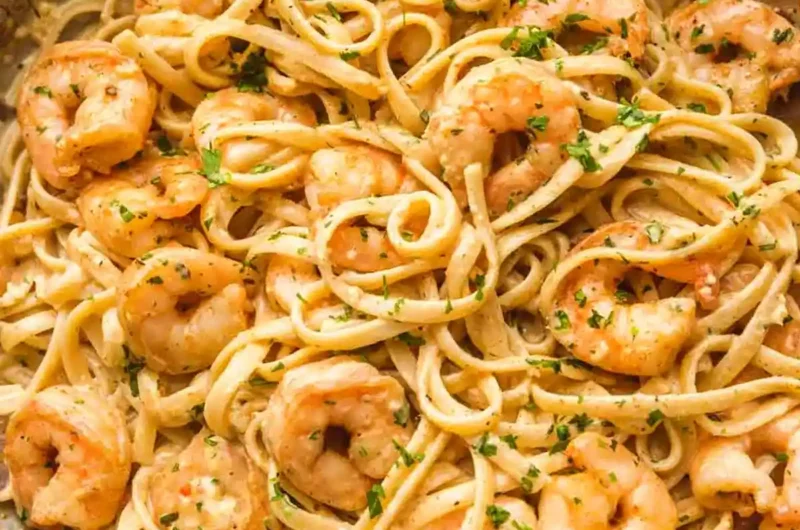
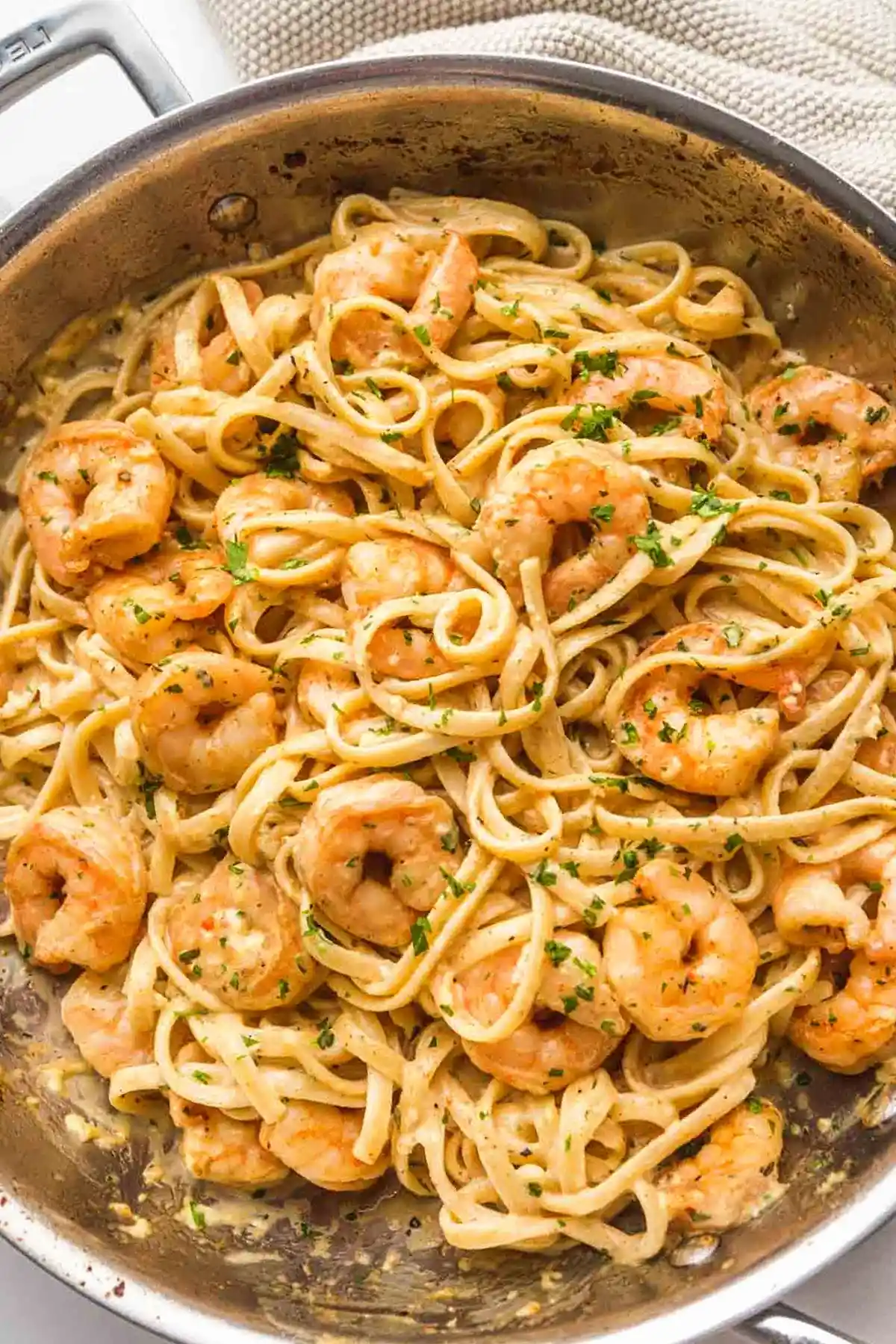
This elegant shrimp pasta combines rich garlic butter and a silky cream sauce for a sophisticated meal. It is remarkably quick to prepare, making it an ideal choice for busy weeknights or a romantic dinner. You can have this restaurant-quality dish on your table in just 15 minutes.
List of ingredients
- 8 ounces linguine pasta – use a high-quality durum wheat variety for best texture.
- 1 tablespoon olive oil – helps prevent the butter from burning.
- 1 ½ tablespoons butter, divided – provides a rich, nutty base for the sauce.
- 1 pound raw shrimp – peeled and deveined; frozen shrimp work well if thawed.
- ½ teaspoon salt – to enhance the natural seafood flavors.
- ¼ teaspoon ground black pepper – adds a subtle heat.
- 1 tablespoon Old Bay seasoning (optional) – smoked paprika or Cajun seasoning are great alternatives.
- 1 clove garlic, minced – use fresh garlic for the strongest aroma.
- ½ cup heavy cream – double cream in the UK creates the thickest sauce.
- ½ cup parmesan cheese, grated – provides an umami saltiness and helps thicken.
- ¼ cup chopped fresh parsley – adds a burst of color and freshness.
step-by-step instructions
- Boil the pasta: Fill a medium saucepan with water and add a generous pinch of salt. Cook the linguine according to the package directions until it reaches an al dente texture. Reserve 1 cup of the starchy pasta water before draining the noodles.
- Sear the shrimp: Place a skillet over medium heat and melt 1 tablespoon of butter with the olive oil. Add the shrimp and cook for one minute, then season them with salt, pepper, and Old Bay, paprika, or Cajun seasoning.
- Finish the shrimp: Continue cooking the shrimp until they turn pink and opaque. If you are using a small pan, cook the shrimp in batches to avoid crowding and steaming. Remove the shrimp to a separate plate and set them aside.
- Sauté the garlic: In the same skillet, melt the remaining butter and add the minced garlic. Sauté for about 30 seconds until the garlic is fragrant but not browned.
- Create the cream base: Pour in the heavy cream and use a spatula to deglaze the pan, scraping up any browned bits from the shrimp. Stir in the parmesan cheese and let it melt into the sauce.
- Thicken and emulsify: Gradually stir in the reserved pasta water to loosen the sauce to your preferred consistency. Let the mixture simmer for one minute, then taste and add more salt or pepper if needed.
- Combine and serve: Toss the cooked linguine into the pan until every strand is well coated. Return the shrimp to the pan to warm through gently, garnish with fresh parsley, and serve immediately.
Professional Preparation Secrets
Thawing Shrimp Completely for Better Texture
If using frozen shrimp, ensure they are fully thawed and patted dry with paper towels before cooking. Excess moisture creates steam in the pan, which prevents the shrimp from searing properly. A dry surface ensures a better golden color and a firmer snap.
Timing the Pasta for Al Dente Results
Cook your pasta for one to two minutes less than the package instructions suggest. Since the pasta will simmer in the cream sauce at the end, undercooking it slightly prevents it from becoming mushy. This maintains the structural integrity of the noodles.
The Role of Starchy Pasta Water in Emulsification
Never discard all your pasta water, as the released starches act as a natural binder. When added to the cream and cheese, it helps the sauce emulsify and cling to the pasta. This prevents the sauce from pooling at the bottom of the plate.
Using High-Quality Grated Parmesan
Avoid using pre-shredded cheese from a bag, as these often contain anti-clumping agents like cellulose. Freshly grated parmesan melts more smoothly and integrates better into the heavy cream. This results in a velvety texture without any graininess.
Ingredient Substitutions and Tweaks
Choosing Alternative Pasta Shapes
While linguine is traditional, fettuccine or spaghetti work equally well for this recipe. If you prefer a shape that captures more sauce, try penne or farfalle. Just be sure to adjust the cooking time according to the specific pasta type used.
Swapping Heavy Cream for Lighter Options
You can substitute heavy cream with half-and-half for a lighter feel, though the sauce will be thinner. To thicken a lighter substitute, let the sauce simmer slightly longer or add an extra tablespoon of parmesan. For a dairy-free version, full-fat coconut cream is a viable alternative.
Adjusting Seasonings for Different Flavor Profiles
Old Bay provides a classic coastal flavor, but smoked paprika adds a deep, woody aroma. If you prefer a spicy kick, use Cajun seasoning or add a pinch of red pepper flakes. These adjustments allow you to customize the heat level to your preference.
Using Olive Oil Instead of Butter
If you prefer to avoid butter, you can use a mixture of olive oil and a small amount of cornstarch slurry. However, butter provides a specific richness and flavor that complements the shrimp perfectly. A blend of both ensures the oil prevents the butter from burning.
Serving and Pairing Suggestions
Pairing with Fresh Garden Salads
A crisp green salad with a lemon vinaigrette helps cut through the richness of the cream sauce. Mix arugula, baby spinach, and cherry tomatoes for a refreshing contrast. The acidity of the dressing cleanses the palate between bites of pasta.
Adding Garlic Bread for Texture
Warm, toasted garlic bread or homemade breadsticks are perfect for soaking up every drop of the leftover sauce. Brush a baguette with garlic butter and parsley, then broil until golden. This adds a satisfying crunch to the meal.
Complementing with Steamed Green Vegetables
Roasted asparagus or steamed broccoli florets add necessary nutrients and a bright color to the plate. Toss the vegetables in a bit of lemon juice and olive oil to match the profile of the seafood. This makes the meal feel more balanced and complete.
Best Beverage Pairings for Seafood Pasta
Sparkling water with a squeeze of fresh lime is a refreshing non-alcoholic option that complements the garlic. A chilled white grape juice or a sparkling apple cider also pairs well with the creamy elements. Avoid overly sweet drinks that might mask the delicate shrimp flavor.
Storage and Reheating Guide
Proper Refrigeration Techniques
Store any leftovers in an airtight glass container to keep the pasta from drying out. The dish will stay fresh in the refrigerator for up to three days. Keep the container sealed tightly to prevent the pasta from absorbing other fridge odors.
Stovetop Reheating for Optimal Consistency
Reheat the pasta in a skillet over low-medium heat rather than using a microwave. Add a splash of water or a tablespoon of cream to loosen the sauce as it warms. This prevents the cheese from separating and restores the original creamy texture.
Microwave Reheating Tips
If using a microwave, heat the pasta in short 30-second intervals, stirring in between. Add a teaspoon of water to the bowl and cover it with a damp paper towel. This creates a steam environment that prevents the shrimp from becoming rubbery.
Why Freezing is Not Recommended
Cream-based sauces typically break or separate when frozen and thawed, leading to a grainy texture. Additionally, shrimp can become tough and watery after the freezing process. For the best quality, it is better to eat this dish fresh or refrigerated.
Cooking Challenges and Fixes
Preventing Shrimp from Becoming Rubbery
The most common mistake is overcooking the shrimp. Remove them from the heat the moment they turn pink and form a C-shape. If they curl into a tight O-shape, they are likely overcooked and will be tough.
Fixing a Separated Cream Sauce
If the sauce looks oily or separated, whisk in a tablespoon of warm pasta water or a small knob of cold butter. Stir vigorously over low heat to bring the emulsion back together. This happens most often when the heat is too high.
Preventing Garlic from Burning
Garlic burns quickly and becomes bitter if exposed to high heat for too long. Keep the skillet at medium heat and only sauté the garlic for 30 seconds. Immediately add the heavy cream to stop the garlic from browning further.
Managing the Sauce Thickness
If the sauce is too thick, add the reserved pasta water one tablespoon at a time until it reaches a silky consistency. If it is too thin, simmer the sauce for an additional minute or stir in more parmesan cheese. The starch in the water is the key to a perfect balance.
Frequently Asked Questions
Can I use pre-cooked shrimp?
Yes, you can use pre-cooked shrimp, but do not sear them at the start. Simply add them to the sauce at the very end for one minute just to warm them through. Cooking pre-cooked shrimp twice will make them tough.
How do I make this recipe spicier?
To increase the heat, add a pinch of crushed red pepper flakes when sautéing the garlic. You can also increase the amount of Cajun seasoning or add a dash of hot sauce to the cream. This adds layers of heat without overpowering the garlic.
Which type of parmesan is best for this sauce?
Parmigiano-Reggiano is the gold standard for this recipe due to its sharp, salty profile. However, a high-quality grated parmesan will also work well. Always choose a hard cheese that is intended for grating to ensure it melts properly.
Can I use a different type of cream?
While heavy cream is best for thickness, you can use double cream for an even richer result. If you use half-and-half, be aware that you may need to simmer the sauce longer or add more cheese to achieve the same thickness. Avoid using milk, as it is too thin and will not emulsify.
Print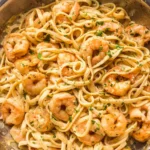
Creamy Garlic Butter Shrimp Pasta
- Total Time: 15 minutes
- Yield: 4 servings 1x
- Diet: General
Description
Creamy garlic butter shrimp pasta is an elegant pasta dish with big flavors! It’s so quick and easy, and perfect for a weeknight dinner as it’s ready in just 15 minutes.
Ingredients
- 8 ounces linguine pasta
- 1 tablespoon olive oil
- 1 ½ tablespoons butter, divided
- 1 pound raw shrimp, peeled and deveined
- ½ teaspoon salt
- ¼ teaspoon ground black pepper
- 1 tablespoon Old Bay seasoning (optional)
- 1 clove garlic, minced
- ½ cup heavy cream
- ½ cup parmesan cheese, grated
- ¼ cup fresh parsley, chopped
Instructions
- Step 1: In a medium-sized saucepan, boil water and salt it. Add your pasta, and cook according to the package instructions until al dente. When the pasta is cooked, reserve 1 cup of the pasta water and drain the pasta.
- Step 2: In a skillet over medium heat, melt 1 tablespoon of the butter, and add olive oil. Cook the shrimp for a minute, then season with salt, pepper, and Old Bay Seasoning or paprika if using.
- Step 3: Continue to cook the shrimp until it’s pink. Do this in batches if you’re worried that you may overcook the shrimp. Remove the shrimp onto a plate and set aside.
- Step 4: In the same pan, melt the remaining butter and add garlic, cook for 30 seconds or until it’s fragrant. Add the heavy cream, and with the spatula deglaze the pan.
- Step 5: Add parmesan, let it melt then loosen the sauce with reserved pasta water and allow to simmer for a minute. Taste the sauce and see if more salt and pepper is needed.
- Step 6: Toss the pasta with the sauce until it’s well coated. Add the shrimp back in to reheat it gently, garnish with freshly chopped parsley and serve.
Notes
Thaw shrimp completely before cooking for better results. Reserve pasta water to loosen the sauce. Store in the fridge in a sealed container for up to 3 days.
- Prep Time: 0 minutes
- Cook Time: 15 minutes
- Category: Main Course
- Method: Stovetop
- Cuisine: American
Nutrition
- Serving Size: 1 serving
- Calories: 515 kcal
- Sugar: 3 g
- Sodium: 1147 mg
- Fat: 24 g
- Saturated Fat: 12 g
- Unsaturated Fat: 10 g
- Trans Fat: 0.2 g
- Carbohydrates: 46 g
- Fiber: 2 g
- Protein: 28 g
- Cholesterol: 196 mg
Keywords: Garlic Shrimp Pasta, Creamy Pasta, Shrimp Recipe, Quick Dinner