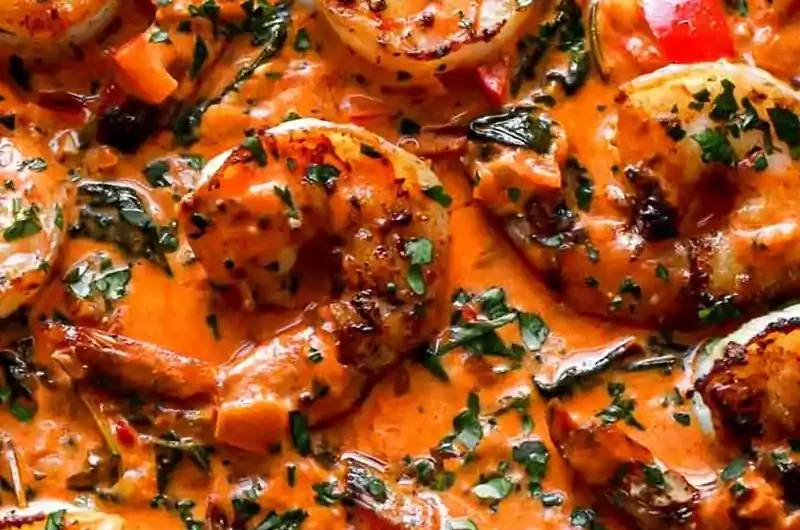
This creamy garlic-paprika shrimp skillet is a fast, flavorful dinner that comes together in just 30 minutes. It features pan-seared shrimp, fresh spinach, and red peppers in a rich, zesty sauce.
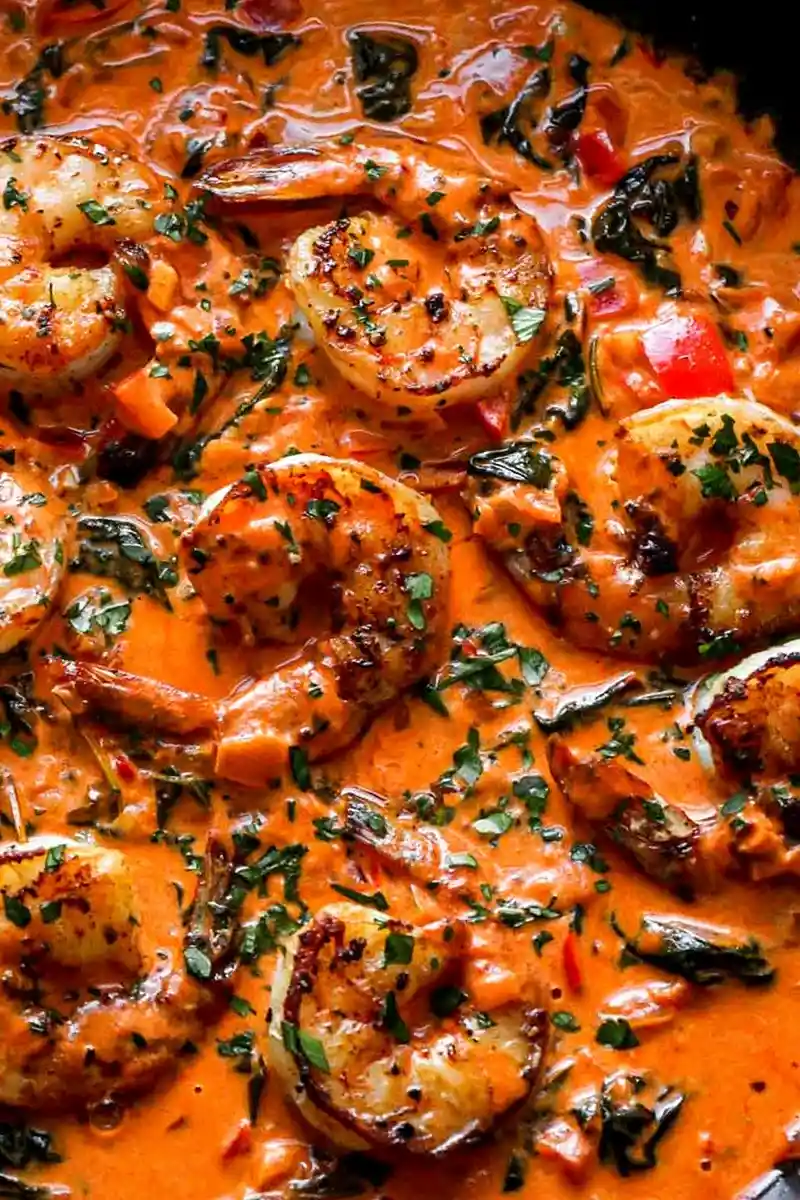
List of ingredients
- 1 lb. peeled and deveined raw shrimp
- 1 tsp. sea salt, divided (reduce to 3/4 tsp. if using fine table salt)
- 3/4 tsp. cracked black pepper, divided
- 3 Tbsp. extra-virgin olive oil
- 1 large shallot, finely chopped (about 1/2 cup)
- 1/2 cup finely chopped red bell pepper
- 4 garlic cloves, minced
- 2 Tbsp. tomato paste
- 1/2 tsp. crushed red pepper flakes
- 3/4 cup lower-sodium vegetable or chicken broth
- 2 tsp. paprika
- 2 handfuls fresh baby spinach
- 1/2 cup heavy cream
- 1-2 Tbsp. fresh lemon juice (from 1 lemon)
- 2 Tbsp. chopped fresh parsley leaves
- Cooked orzo or rice, or crusty bread for dipping (for serving)
step-by-step instructions
- Sear the shrimp: Pat shrimp dry with a paper towel, and season evenly with 1/2 tsp. each of salt and black pepper. Heat 2 Tbsp. of the oil in a large skillet over medium-high. Once hot, arrange shrimp in pan, avoiding any overlap (if possible), and cook 3 minutes. Flip, and cook 1 more minute, until the shrimp are firm to the touch and no longer opaque. Transfer to a plate.
- Sauté the aromatics: Reduce heat to medium. Add remaining 1 Tbsp. oil to pan, along with shallots and red bell pepper. Cook 3 to 4 minutes, until soft. Add garlic, tomato paste, and red pepper flakes; cook 2 to 3 minutes, until garlic is aromatic and tomato paste is caramelized.
- Simmer the sauce: Pour in broth to deglaze pan; simmer 5 minutes, or until liquid is reduced by about half. Stir in paprika and spinach; cook 1 to 2 minutes, until spinach is wilted. Finally, stir in heavy cream and lemon juice, and season with remaining 1/2 tsp. sea salt and 1/4 tsp. black pepper.
- Combine and serve: Nestle cooked shrimp back into skillet and garnish with fresh parsley. Serve over rice or orzo, or enjoy with crusty bread.
Essential Shrimp Cooking Techniques
Preventing Overcooked Shrimp for a Tender Texture
Shrimp cook very quickly and can become rubbery if left in the pan too long. Watch for the flesh to turn opaque and the body to curl into a ‘C’ shape. If they curl tightly into an ‘O’ shape, they are likely overcooked.
Achieving a Proper Sear by Patting Shrimp Dry
Moisture on the surface of the shrimp creates steam, which prevents a golden-brown crust from forming. Always use paper towels to pat the shrimp completely dry before seasoning. This ensures the oil can sear the protein quickly at high heat.
Managing Pan Space to Avoid Crowding
Avoid overcrowding the skillet, as this drops the pan temperature and causes shrimp to boil in their own juices. If your skillet is small, sear the shrimp in two separate batches. This maintains the high heat needed for a proper sear.
Ingredient Substitutions and Alternatives
Replacing Shallots with Yellow Onion
If you do not have shallots, a finely diced yellow or white onion is a suitable replacement. Yellow onions provide a bolder, more pungent flavor compared to the mild sweetness of shallots. Use roughly the same volume for a similar result.
Using Different Colors of Bell Peppers
While red bell pepper adds a specific sweetness, orange or yellow peppers work equally well. These alternatives provide the same crunch and nutritional benefits. The flavor profile remains consistent regardless of the pepper color chosen.
Using Cashew Cream for a Dairy-Free Option
For a plant-based version of the sauce, replace the heavy cream with an equal amount of cashew cream. Blend soaked cashews with a little water until smooth. This maintains the creamy consistency without the use of dairy.
Adapting the Recipe for Salmon or Chicken
This sauce pairs well with other proteins like salmon fillets or diced chicken breast. Adjust the cooking time based on the protein; chicken will require more time to cook through than shrimp. Keep the sauce preparation and sequence exactly the same.
Flavor Enhancement Tips
Caramelizing Tomato Paste for Depth
Cooking the tomato paste until it turns a deep brick red is essential for unlocking umami flavors. This process, known as caramelization, removes the raw metallic taste of the paste. Stir it constantly for 2 to 3 minutes before adding the broth.
Balancing the Sauce with Fresh Lemon Juice
The acidity of fresh lemon juice cuts through the richness of the heavy cream and butter. Adding it at the very end prevents the acid from curdling the cream during the simmering process. It brightens the overall flavor profile of the dish.
Selecting the Right Type of Paprika
Use sweet or classic paprika for this recipe to complement the natural sweetness of the shrimp. Smoked paprika can be used, but it will introduce a strong campfire flavor that may overpower the garlic and lemon. Stick to sweet paprika for a traditional Mediterranean feel.
Serving Suggestions
Pairing with Grains like Rice or Orzo
Serving the skillet over rice or orzo allows the grains to soak up the creamy garlic sauce. Basmati or jasmine rice provide a light fragrance, while orzo offers a pasta-like texture. Ensure the grains are fully cooked before adding the shrimp mixture on top.
Using Crusty Bread for Dipping
A toasted baguette or a piece of sourdough bread is ideal for cleaning the pan of remaining sauce. The crunch of the bread contrasts well with the tender shrimp and wilted spinach. Lightly brush the bread with olive oil and toast it in the oven for best results.
Adding Roasted Vegetables as a Side
Roasted broccoli or cauliflower adds a healthy, charred element to the meal. Roast the vegetables at 400 degrees Fahrenheit until the edges are browned. This adds a different texture and nutritional variety to the plate.
Complementing with a Refreshing Side Salad
A crisp cucumber and avocado salad provides a cool contrast to the warm, creamy shrimp. Use a simple dressing of lemon juice and olive oil to keep the flavors light. This helps balance the richness of the heavy cream in the main dish.
Storage and Reheating Guidelines
Refrigerating Leftovers Safely
Store any remaining shrimp and sauce in an airtight container in the refrigerator. The dish will stay fresh and safe to eat for up to 3 days. Keep the cooked grains in a separate container to prevent them from absorbing too much sauce.
Reheating on the Stovetop
For the best texture, gently reheat the leftovers in a nonstick skillet over medium heat. Add a splash of water or broth if the sauce has thickened too much in the fridge. Stir occasionally to avoid burning the cream.
Using the Microwave for Quick Reheating
Heat individual portions in the microwave in 30-second increments. Stop and stir between each interval to ensure the heat is distributed evenly. This prevents the shrimp from overcooking and becoming tough.
Freezing and Thawing Procedures
Freeze the skillet mixture in a freezer-safe container for up to 3 months. Thaw the meal overnight in the refrigerator before reheating it on the stove. Note that the texture of the shrimp may become slightly softer after freezing.
Troubleshooting the Sauce
Fixing a Sauce That Is Too Thick
If the sauce reduces too much and becomes overly thick, stir in a tablespoon of vegetable broth or water. Do this slowly over low heat until the desired consistency is reached. This restores the silkiness without diluting the flavor.
Adjusting a Sauce That Is Too Thin
To thicken a sauce that is too runny, let it simmer for an additional 2 to 3 minutes without a lid. This allows more liquid to evaporate and concentrates the cream. Avoid adding flour, as it can change the smooth texture of the sauce.
Managing the Spinach Wilt Process
Add the spinach only at the end of the cooking process to prevent it from becoming mushy. Stir it in for just 1 to 2 minutes until it barely wilts. This keeps the color vibrant and the texture slightly firm.
Frequently Asked Questions
Can I use frozen shrimp for this skillet recipe?
Yes, frozen shrimp work perfectly as long as they are fully thawed. Thaw them in the refrigerator overnight or place them in a bowl of cold water for 20 minutes. Be sure to pat them very dry before seasoning to ensure a good sear.
How do I prevent the cream from curdling?
Prevent curdling by adding the heavy cream at the end of the cooking process and avoiding a rolling boil. Stir the cream in over medium-low heat and remove the pan from the heat once it is incorporated. The lemon juice should be added last.
What is the best way to peel and devein shrimp?
Use a small paring knife to make a shallow slit along the back of the shrimp. Use the tip of the knife or a toothpick to lift out the dark vein. If buying pre-peeled shrimp, double-check that the vein has been removed.
Can I add more vegetables to the skillet?
You can add sliced mushrooms, diced zucchini, or frozen peas to the sauce. Sauté mushrooms with the shallots to ensure they brown properly. Add peas during the final minute of simmering so they stay bright green.
Print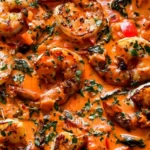
Creamy Garlic-Paprika Shrimp Skillet
- Total Time: 30 minutes
- Yield: 4 servings 1x
- Diet: General
Description
Creamy Garlic-Paprika Shrimp Skillet comes together in just 30 minutes for a simple, flavorful weeknight dinner. Featuring pan-seared shrimp, spinach, and red peppers in a creamy garlic sauce with parsley and lemon.
Ingredients
- 1 lb. peeled and deveined raw shrimp
- 1 tsp. sea salt, divided
- 3/4 tsp. cracked black pepper, divided
- 3 Tbsp. extra-virgin olive oil
- 1 large shallot, finely chopped
- 1/2 cup finely chopped red bell pepper
- 4 garlic cloves, minced
- 2 Tbsp. tomato paste
- 1/2 tsp. crushed red pepper flakes
- 3/4 cup lower-sodium vegetable or chicken broth
- 2 tsp. paprika
- 2 handfuls fresh baby spinach
- 1/2 cup heavy cream
- 1–2 Tbsp. fresh lemon juice
- 2 Tbsp. chopped fresh parsley leaves
Instructions
- Sauté Shrimp: Pat shrimp dry with a paper towel, season with 1/2 tsp. salt and black pepper, and cook in 2 Tbsp. oil in a large skillet over medium-high for 3 minutes, flip and cook 1 more minute, then transfer to a plate.
- Cook Aromatics: Reduce heat to medium, add remaining 1 Tbsp. oil, shallots, and red bell pepper; cook 3 to 4 minutes, then stir in garlic, tomato paste, and red pepper flakes and cook 2 to 3 minutes.
- Deglaze and Simmer: Pour in broth and simmer 5 minutes until reduced by half, then stir in paprika and spinach until wilted, followed by heavy cream, lemon juice, and remaining salt and pepper.
- Final Assemble: Nestle cooked shrimp back into the skillet, garnish with fresh parsley, and serve over rice, orzo, or with crusty bread.
Notes
Store leftovers in the refrigerator for up to 3 days. Reheat gently in a nonstick skillet over medium heat or in the microwave in 30-second increments. Freeze in an airtight container for up to 3 months.
- Prep Time: 10 minutes
- Cook Time: 20 minutes
- Category: Dinner
- Method: Sautéing
- Cuisine: American, Mediterranean
Nutrition
- Serving Size: 1 cup
- Calories: 310 kcal
- Sugar: 3 g
- Sodium: 980 mg
- Fat: 24 g
- Saturated Fat: 8.5 g
- Unsaturated Fat: 15.5 g
- Trans Fat: 0 g
- Carbohydrates: 12 g
- Fiber: 2 g
- Protein: 17 g
- Cholesterol: 150 mg
Keywords: shrimp skillet, creamy garlic shrimp, paprika shrimp, 30 minute dinner, seafood dinner