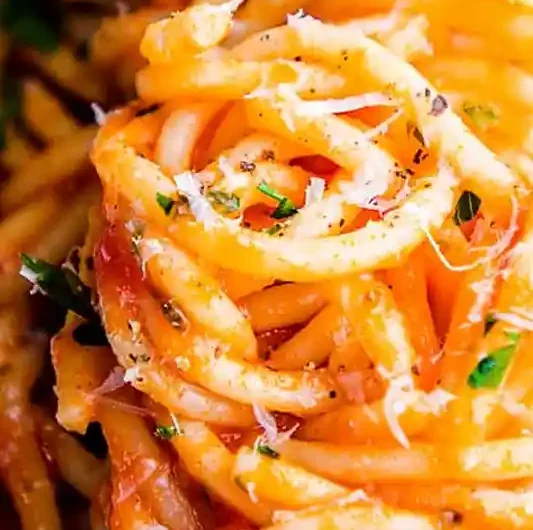
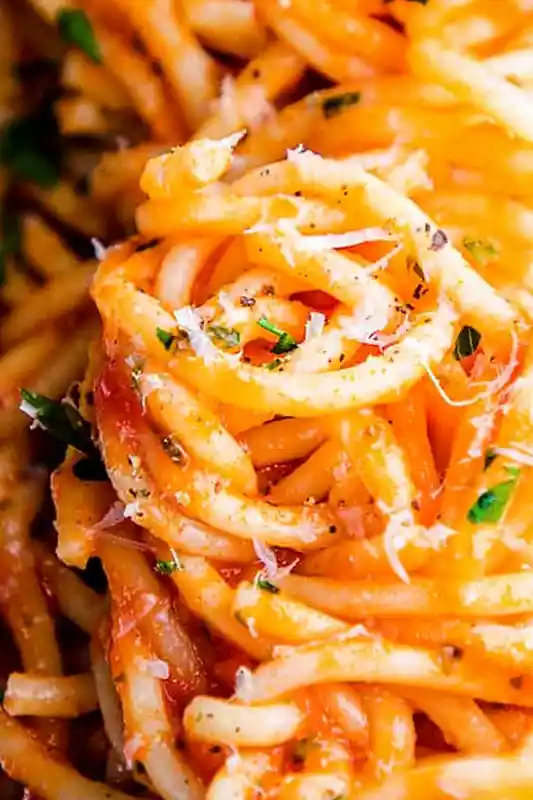
This recipe recreates the comforting and flavorful spaghetti sauce featured in the show The Bear. It uses a blend of San Marzano tomatoes and oil-infused garlic for a rich, silky texture.
List of ingredients
- 1 lb spaghetti – dried durum wheat pasta.
- ½ cup extra virgin olive oil – for infusing garlic and basil.
- 10 whole peeled garlic cloves – kept whole for the infusion.
- A good handful of fresh basil – including the stems for maximum flavor.
- Two 28 oz cans of San Marzano tomatoes – 56 oz total, preferably DOP certified.
- Kosher salt and freshly ground pepper – added to taste throughout the process.
- 1 tablespoon fresh basil or parsley – finely chopped for the final garnish.
step-by-step instructions
- Prepare the pasta: Bring a large pot of heavily salted water to a boil. Cook the spaghetti until it is slightly underdone. Reserve about one cup of the starchy pasta water, then drain the noodles and set them aside.
- Infuse the oil: In a small saucepan, combine the olive oil, whole peeled garlic cloves, and fresh basil. Simmer gently for 2 to 3 minutes until the basil wilts. Remove the basil and set it aside, then continue cooking the garlic until it is light golden. Remove from heat and let the mixture cool to room temperature.
- Blend the sauce: Use a blender or food processor to puree the canned tomatoes, cooked garlic, reserved wilted basil, and 2 tablespoons of the infused oil. Process until the sauce is completely smooth.
- Simmer and thicken: Pour the puree into a shallow skillet over medium heat. Season with salt and pepper. Bring the sauce to a boil, then lower the heat and simmer for about 10 minutes to thicken.
- Final seasoning: Stir in the chopped herbs and taste for seasoning. Adjust salt if necessary. If making a smaller portion, reserve 2 cups of the sauce for another meal and store it.
- Combine pasta and sauce: Add the undercooked spaghetti to the skillet. Toss thoroughly to coat the noodles. Continue cooking until the pasta reaches an al dente texture. Add a splash of reserved pasta water if the sauce becomes too thick.
- Serve: Perform a final taste test for seasoning and add salt if needed. Serve immediately with grated Parmesan cheese.
Selecting High Quality Ingredients
Choosing DOP San Marzano Tomatoes
Look for the DOP seal on the can to ensure the tomatoes are grown in the volcanic soil of Mount Vesuvius. These tomatoes are naturally sweeter and have lower acidity than standard canned varieties. If unavailable, whole Roma tomatoes are the best alternative for a similar texture.
Selecting Extra Virgin Olive Oil
Use a high-quality extra virgin olive oil for the infusion process. This oil provides a fruity, peppery base that carries the garlic and basil flavors throughout the sauce. Avoid refined olive oils as they lack the depth required for a smooth, aromatic emulsion.
Utilizing Basil Stems
Do not discard the basil stems when preparing the oil infusion. The stems contain a concentrated amount of aromatic oils that enhance the sauce’s depth. Pureeing them along with the leaves ensures no flavor is wasted.
Preparing Fresh Garlic
Use fresh, whole cloves rather than pre-minced garlic. Whole cloves brown more evenly and provide a mellow, nutty flavor when simmered in oil. This prevents the harsh, acrid taste often associated with over-browned minced garlic.
Professional Cooking Techniques
The Art of Finishing Pasta in Sauce
Cooking the spaghetti until it is slightly underdone allows the noodles to absorb the sauce during the final few minutes of cooking. This process binds the sauce to the pasta rather than letting it slide off. It ensures every strand of spaghetti is thoroughly seasoned.
Creating a Stable Emulsion
Adding two tablespoons of the infused garlic oil back into the blender with the tomatoes helps emulsify the sauce. This creates a silky, creamy consistency without needing dairy. The oil encapsulates the tomato acidity, resulting in a smoother mouthfeel.
Using Starchy Pasta Water
Reserved pasta water contains released starches that act as a natural thickener. When added to the skillet, it helps the sauce adhere to the pasta and adjusts the consistency without diluting the flavor. Always salt your pasta water well to season the noodles from the inside out.
Controlling Garlic Oxidation
Cook the garlic only until it reaches a light golden color. If the garlic turns dark brown, it becomes bitter and can overpower the sweetness of the tomatoes. Removing the pan from the heat immediately once golden stops the residual cooking process.
Customizing Your Sauce
Adding Heat with Red Pepper Flakes
To introduce a spicy element, add a pinch of red pepper flakes to the olive oil during the garlic infusion. The heat is distributed evenly through the oil and integrates seamlessly into the puree. This provides a subtle warmth that balances the sweetness of the San Marzano tomatoes.
The Browned Onion Method
For a deeper, savory flavor, cut an onion in half and sear it cut-side down in butter until deeply browned. Simmer the browned onion in the tomato sauce for several minutes to infuse the liquid, then remove and discard the onion before adding the pasta. This adds a caramelized note to the final dish.
Adjusting the Herb Profile
While basil is traditional, you can substitute some of the fresh basil with flat-leaf parsley for a cleaner, brighter taste. Adding a small amount of oregano during the simmering phase can also move the flavor profile toward a more traditional marinara.
Introducing Vegetable Depth
For added nutrition, finely diced carrots or celery can be sautéed in the infused oil before adding the tomato puree. This adds a subtle sweetness and complexity to the sauce. Ensure the vegetables are diced very small so they blend into the texture of the spaghetti.
Storage and Preservation
Refrigerating Leftover Sauce
Store any extra sauce in an airtight glass container to prevent it from absorbing other fridge odors. The sauce will remain fresh and flavorful for up to three days. Ensure the sauce is cooled slightly before sealing the container to avoid excessive condensation.
Freezing for Long Term Use
The tomato puree freezes exceptionally well for up to three months. Allow the sauce to cool completely before transferring it to a freezer-safe bag or container. This is an efficient way to prepare large batches for quick weeknight meals.
Thawing Frozen Sauce
Thaw the sauce slowly in the refrigerator overnight to maintain its emulsion. Avoid thawing in the microwave, as this can cause the oil to separate from the tomato solids. Once thawed, stir well before reheating on the stove.
Managing Pasta Storage
If you must store the combined pasta and sauce, undercook the pasta by an additional minute. When reheating, the pasta will continue to soften, reducing the risk of it becoming mushy. Store in a shallow container for more even reheating.
Reheating and Serving Advice
Stovetop Reheating Method
Reheat leftovers in a skillet over medium-low heat. Add a tablespoon of water or a splash of olive oil to loosen the sauce as it warms. This method preserves the texture of the pasta and prevents the sauce from drying out.
Pairing with Hard Cheeses
Serve the dish with freshly grated Parmesan or Pecorino Romano. The saltiness of these hard cheeses cuts through the richness of the olive oil and enhances the acidity of the tomatoes. Grate the cheese finely to ensure it melts evenly into the hot pasta.
Complementary Side Dishes
Pair this spaghetti with a crisp arugula salad dressed with lemon and olive oil to balance the richness. Garlic bread toasted with butter and parsley also complements the garlic-forward profile of the sauce.
Serving Temperature Tips
Warm your serving bowls slightly before plating the pasta. This prevents the sauce from cooling too quickly, which can cause the oil to thicken and the flavors to mute. Serve immediately after tossing to maintain the al dente texture.
Troubleshooting Common Issues
Fixing a Sauce That Is Too Thick
If the sauce becomes too dense during the simmering process, add the reserved pasta water one tablespoon at a time. Stir constantly until the desired consistency is reached. The starch in the water will keep the sauce creamy rather than watery.
Correcting Over-Salted Sauce
If you accidentally over-season the sauce, add a small amount of unsalted tomato puree or a pinch of sugar to balance the salt. Alternatively, increasing the volume of pasta can help distribute the salt more evenly across the entire dish.
Preventing Garlic Bitterness
If your garlic tastes bitter, it was likely overheated during the infusion. To fix this, you can blend in a small amount of unsalted butter or a pinch of sugar to mellow the flavor. In the future, maintain a medium-low heat to ensure a slow, golden browning.
Dealing with Oil Separation
If the oil separates from the sauce upon reheating, whisk in a small amount of hot pasta water. The agitation and the starch will help re-emulsify the sauce into a smooth consistency. Avoid boiling the sauce aggressively during reheating.
Frequently Asked Questions
Can I use canned crushed tomatoes instead?
Yes, you can use crushed tomatoes, but the texture may be slightly different. San Marzano whole peeled tomatoes provide a cleaner flavor and a more consistent puree when blended. If using crushed tomatoes, you may need to simmer the sauce for a few minutes longer.
Is it possible to make this sauce without a blender?
While you can hand-crush the tomatoes, you will not achieve the same silky, emulsified texture. The blender is essential for integrating the infused oil and the wilted basil into a smooth, cohesive sauce.
Which type of spaghetti works best for this sauce?
Traditional dried spaghetti made from durum wheat is ideal because it holds its shape during the finishing process. Bronze-cut pasta is especially recommended as its rougher surface helps the smooth sauce cling more effectively to the noodle.
Can I substitute the olive oil with butter?
Substituting butter for olive oil will change the flavor profile significantly, making it creamier and richer. However, the olive oil is necessary for the specific Mediterranean flavor and the emulsion process described in the recipe.
Print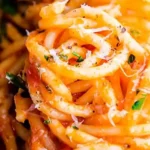
Family Meal Spaghetti (From The Bear)
- Total Time: 25 minutes
- Yield: 6 servings 1x
- Diet: Vegetarian
Description
A delicious and easy spaghetti sauce made with 10 garlic cloves, a bunch of fresh basil, and San Marzano tomatoes. Perfect for any night of the week.
Ingredients
- 1 lb spaghetti
- ½ cup extra virgin olive oil
- 10 whole peeled garlic cloves
- A good handful of fresh basil (including stems)
- Two 28 oz cans of San Marzano tomatoes
- Kosher salt (to taste)
- Freshly ground pepper (to taste)
- 1 tablespoon fresh basil or parsley
Instructions
- Step 1: In a large pot, bring salted water to a boil to cook the pasta. Cook the pasta until it’s slightly underdone. Reserve about a cup of the cooked pasta water, then drain the pasta and set it aside.
- Step 2: In a small saucepan, combine the olive oil, whole peeled garlic cloves, and fresh basil. Simmer the mixture gently for 2 to 3 minutes until the basil is wilted. Remove the basil and set it aside. Continue cooking the garlic until it turns slightly golden. Remove the saucepan from heat and let it cool to room temperature.
- Step 3: Use a blender or food processor to puree the tomatoes, cooked garlic, reserved basil, and 2 tablespoons of the oil from the garlic mixture until you have a smooth sauce.
- Step 4: Transfer the tomato mixture to a shallow skillet over medium heat. Add salt and pepper to taste. Bring the mixture to a boil, then reduce the heat to low and let it simmer for about 10 minutes to thicken.
- Step 5: Add the chopped herbs to the sauce and taste for seasoning. Adjust with more salt if needed. Reserve 2 cups of the sauce for later use; store the remaining sauce for another occasion.
- Step 6: Add the partially cooked spaghetti to the skillet and toss it well to coat with the sauce. Continue cooking until the pasta reaches al dente texture. If the sauce appears too thick, you can add a bit of the reserved pasta water to achieve the desired consistency.
- Step 7: Taste the dish for seasoning again and add more salt if necessary. Serve the pasta with grated microbial-rennet Parmesan cheese at the table.
Notes
This recipe makes enough sauce for two meals. To make the variation, add red pepper flakes to the garlic mixture and brown a halved onion in butter before adding the sauce.
- Prep Time: 5 minutes
- Cook Time: 20 minutes
- Category: Dinner
- Method: Stovetop
- Cuisine: Italian American
Nutrition
- Serving Size: 1 serving
- Calories: 532 kcal
- Sugar: 14 g
- Sodium: 355 mg
- Fat: 20 g
- Saturated Fat: 3 g
- Unsaturated Fat: 16 g
- Trans Fat: 0 g
- Carbohydrates: 77 g
- Fiber: 8 g
- Protein: 15 g
- Cholesterol: 10 mg
Keywords: Family Meal Spaghetti, The Bear, San Marzano tomatoes, Italian American, simple pasta sauce