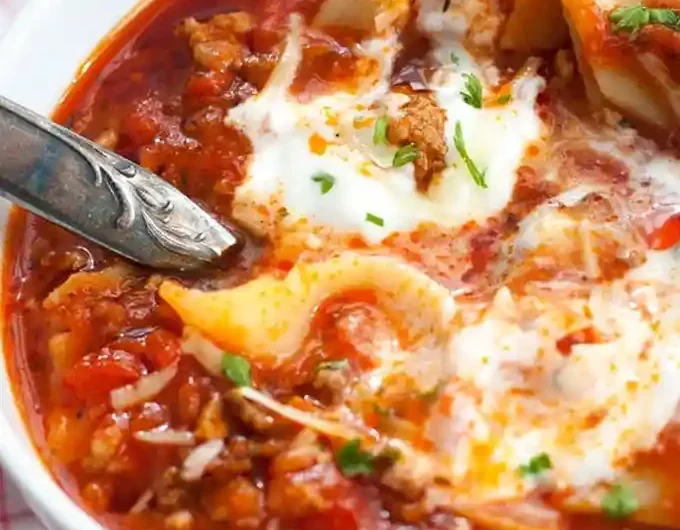
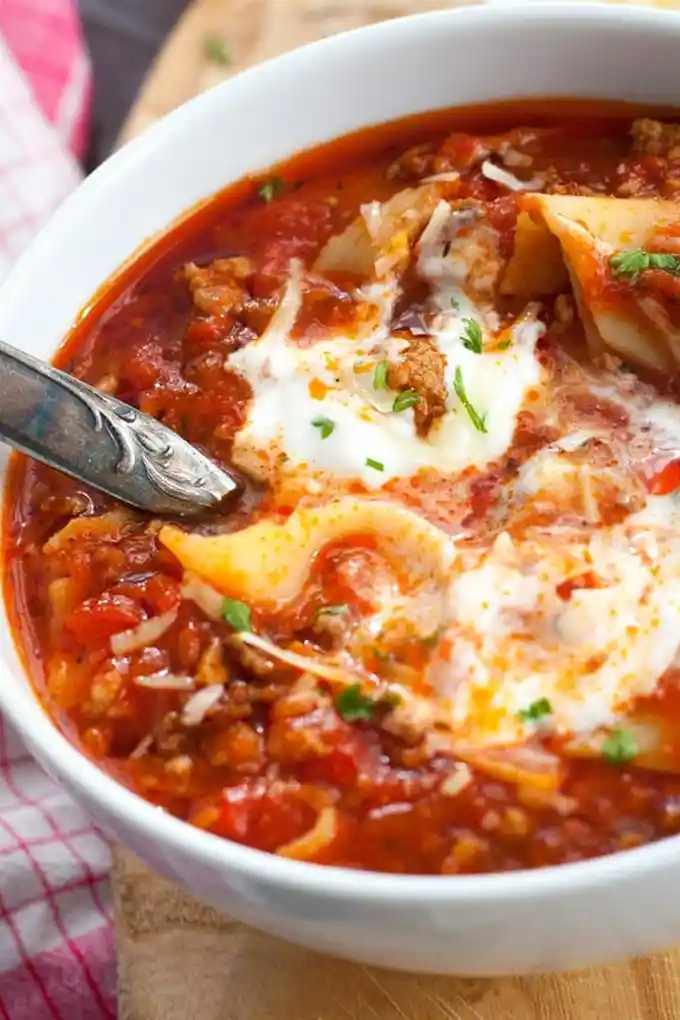
This hearty lasagna soup captures the essence of a classic baked pasta dish in a convenient, simmered format. It is an efficient meal for busy weeknights that delivers rich, cheesy comfort without the need for layering or long oven times.
List of ingredients
- 2 tbsp olive oil – used for searing the meat.
- 500 g ground beef – provides the protein base and savory depth.
- 1 onion, diced – adds aromatic sweetness.
- 3 garlic cloves, minced – provides a pungent, savory layer.
- 3 tbsp tomato paste – concentrates the tomato flavor and adds color.
- 1 L beef broth – the liquid base for the soup.
- 2 cans (400 g each) chopped tomatoes – creates a thick, chunky sauce.
- 3 tsp Italian herbs – a blend of oregano, basil, and thyme for authenticity.
- 10 lasagna sheets – broken into bite-sized pieces for texture.
- 150 g crème fraîche – adds creaminess and balances the acidity.
- Grated Parmesan – used for topping and salty richness.
- Salt and pepper – for seasoning to taste.
step-by-step instructions
- Brown the meat: Heat the olive oil in a large pot over medium-high heat. Add the ground beef, season with salt and pepper, and fry until the meat is browned and crispy.
- Sauté the aromatics: Stir in the diced onion and cook for approximately two minutes until translucent. Add the minced garlic and tomato paste, sautéing for another 30 seconds to release the flavors.
- Simmer the base: Pour in the beef broth and chopped tomatoes, and stir in the Italian herbs, salt, and pepper. Cover the pot with a lid and let it simmer on low heat for 20 minutes.
- Prepare the pasta: While the soup simmers, break the lasagna sheets into mouth-sized pieces. Boil them in a separate pot of salted water according to the package instructions until al dente.
- Combine and serve: Drain the cooked noodles and stir them into the completed soup. Taste and adjust seasoning, then serve each bowl with a dollop of crème fraîche and a sprinkle of grated Parmesan.
Professional Cooking Techniques
Maximizing Meat Flavor with Searing
To achieve the best flavor, do not crowd the pot when browning the beef. Let the meat sit undisturbed for a few minutes to develop a deep brown crust. This process, known as the Maillard reaction, creates complex roasted notes that enhance the overall broth.
Correctly Sautéing Garlic and Paste
Always add garlic and tomato paste after the onions have softened. Garlic burns quickly at high temperatures, which can make the soup taste bitter. Sautéing the tomato paste for a short time removes the raw metallic taste and deepens the red color of the soup.
Controlling the Simmer
Keep the heat low once the lid is on the pot. A gentle simmer prevents the liquid from evaporating too quickly and ensures the meat remains tender. If the soup bubbles too vigorously, reduce the heat to avoid scorching the bottom of the pot.
Pasta Management and Texture
Avoiding Mushy Noodles
The most effective way to keep the pasta firm is to cook it in a separate pot. By boiling the lasagna pieces al dente and adding them at the very end, you prevent them from overcooking. This ensures the noodles maintain a pleasant bite against the liquid.
Using Alternative Pasta Shapes
While lasagna sheets are traditional, you can substitute them with penne, fusilli, or farfalle. These shapes are easier to eat with a spoon and hold onto the broth well. Simply follow the same separate boiling method to maintain the correct texture.
Implementing the One-Pot Method
If you prefer a one-pot approach, add the dry pasta directly into the simmering soup. Be aware that the starch from the noodles will thicken the broth significantly, turning it into a stews-like consistency. You will likely need to add an extra 250ml of broth to compensate for the absorption.
Flavor Balancing and Adjustments
Reducing Tomato Acidity
Depending on the brand of canned tomatoes, the soup may taste too acidic. Adding a small pinch of granulated sugar or a teaspoon of honey can neutralize the sharpness. This creates a more rounded, balanced flavor profile typical of Italian sauces.
Using Fresh Herb Variations
While dried Italian herbs are convenient, adding fresh basil or parsley at the end boosts the aroma. Stir in chopped fresh basil just before serving to keep the leaves bright green. This adds a fresh contrast to the heavy, savory components of the beef and cheese.
Adding Nutritional Depth with Vegetables
You can increase the nutrient density by adding finely diced carrots and celery during the onion sauté. These vegetables provide a base of sweetness and earthiness. Spinach or kale can also be stirred in during the final minute of cooking for added color and vitamins.
Dietary Substitutions
Creating a Vegetarian Version
Replace the ground beef with brown lentils or a plant-based mince alternative. Use vegetable broth instead of beef broth to keep the dish meat-free. This version retains the hearty texture while remaining suitable for vegetarians.
Dairy-Free Creamy Alternatives
For a dairy-free option, swap the crème fraîche for a cashew-based cream or a thick coconut cream. Use nutritional yeast or a vegan Parmesan alternative for the salty topping. These substitutes provide the necessary creaminess and umami without animal products.
Gluten-Free Pasta Options
Substitute the traditional wheat lasagna sheets with gluten-free alternatives made from corn, brown rice, or chickpeas. Note that gluten-free pasta often cooks faster or slower than wheat pasta. Check the package carefully to avoid overcooking the noodles.
Serving and Presentation
The Art of the Garnish
To make the soup visually appealing, place a centered dollop of crème fraîche on top of each serving. Use a toothpick or spoon to swirl the cream into the red broth. This creates a professional look and allows the diner to mix the cream to their preferred consistency.
Optimal Cheese Pairings
While Parmesan is the standard, adding shredded mozzarella can create a stringy, melted texture. For a sharper taste, try a small amount of Pecorino Romano. Mixing both Parmesan and mozzarella provides a balance of salty and creamy notes.
Recommended Side Dishes
Pair this soup with toasted garlic bread or a crisp green salad. The acidity of a vinaigrette-based salad cuts through the richness of the creamy soup. Garlic bread provides a crunchy texture that complements the soft pasta and meat.
Storage and Preservation
Refrigeration Best Practices
Store the soup in an airtight container in the refrigerator for up to three days. To prevent the pasta from absorbing all the broth and becoming bloated, store the noodles in a separate container. Combine them only when reheating.
Freezing the Soup Base
The meat and tomato base freezes exceptionally well for up to three months. Do not freeze the soup with the pasta or the crème fraîche, as the noodles will turn mushy and the cream may separate. Thaw the base in the fridge overnight before reheating.
Reheating for Freshness
Reheat the soup on the stovetop over medium heat, adding a splash of water or broth if it has thickened too much. If using a microwave, heat in short intervals and stir frequently. Add the crème fraîche and cheese only after the soup is hot.
Troubleshooting Common Issues
Fixing a Thick Consistency
If the soup becomes too thick during simmering or reheating, stir in small amounts of beef broth or water. Add the liquid gradually until the desired soup consistency is reached. This is common if the pasta was cooked in the pot.
Preventing Separation of Cream
To avoid the crème fraîche curdling, ensure it is added at the very end or as a garnish on top. Do not boil the soup once the cream has been stirred in. Keep the temperature just below boiling to maintain a smooth, emulsified texture.
Balancing Over-Salted Broth
If the broth is too salty, add more chopped tomatoes or a splash of unsalted water. You can also stir in a small amount of unsalted heavy cream. The fat in the cream helps mask the perception of excess salt on the palate.
Frequently Asked Questions
Can I use different ground meat?
Yes, you can use ground turkey or ground chicken for a leaner alternative. These meats have a milder flavor, so you may want to add an extra teaspoon of Italian herbs or a bit more black pepper to maintain the savory depth.
How do I stop the soup from separating?
Separation usually occurs if the soup is boiled too aggressively after adding dairy. Stir the crème fraîche in gently at the end of the process. Using a high-fat cream helps stabilize the emulsion.
Is this soup suitable for toddlers?
Yes, it is a great meal for children. However, ensure the lasagna sheets are broken into very small pieces or chopped with scissors after cooking to prevent choking hazards and make it easier for toddlers to eat.
Print
Creamy Lasagna Soup
- Total Time: 35 minutes
- Yield: 6 servings 1x
- Diet: General
Description
The best lasagna soup recipe: ready in 35 minutes and extra cheesy. A simple, comforting alternative to classic lasagna that the whole family will love.
Ingredients
- 2 tbsp olive oil
- 500 g ground beef
- 1 onion, diced
- 3 garlic cloves, chopped
- 3 tbsp tomato paste
- 1 L beef broth
- 2 cans (400 g each) chopped tomatoes
- 3 tsp Italian herbs
- 10 lasagna sheets
- 150 g creme fraiche
- Grated parmesan
- Salt and pepper
Instructions
- Step 1: Heat oil in a large pot. Crumble in ground meat, season with salt and pepper, and fry until crispy. Add onion and sauté for about two minutes until translucent. Add garlic and tomato paste and sauté for another 30 seconds.
- Step 2: Add beef broth, chopped tomatoes, Italian herbs, salt and pepper, and let simmer for 20 minutes with a closed lid on low heat.
- Step 3: In the meantime, cook the lasagna noodles. Break lasagna sheets into bite-sized pieces and cook according to package instructions.
- Step 4: Add the drained noodles to the finished soup. Season again and serve with a dollop of creme fraiche and some grated parmesan.
Notes
For a one-pot version, cook the noodles directly in the soup, but add extra broth and tomatoes. For meal prep, store the noodles and soup separately to prevent them from becoming too soft.
- Prep Time: 15 minutes
- Cook Time: 20 minutes
- Category: Main Course
- Method: Simmering
- Cuisine: Italian
Nutrition
- Serving Size: 1 serving
- Calories: 420 kcal
- Sugar: 11 g
- Sodium: 880 mg
- Fat: 21 g
- Saturated Fat: 9 g
- Unsaturated Fat: 12 g
- Trans Fat: 0 g
- Carbohydrates: 32 g
- Fiber: 4 g
- Protein: 24 g
- Cholesterol: 75 mg
Keywords: Easy soup, family recipe, lasagna soup, quick soup