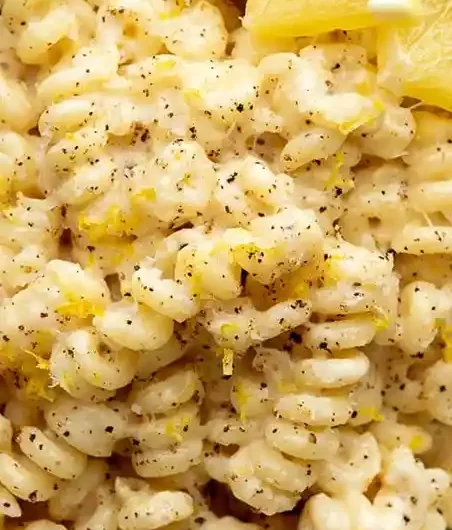
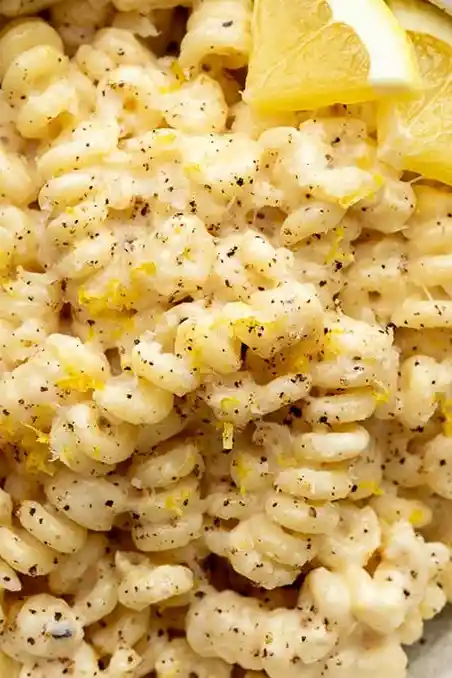
This recipe delivers a bright and velvety pasta dish in just 20 minutes. It uses simple pantry staples to create a restaurant-style meal perfect for busy weeknights.
List of ingredients
- 8 ounces pasta – any shape works well.
- 1 lemon – zest and juice.
- 4 tablespoons butter – cut into 1 tablespoon chunks and divided.
- 1 cup heavy cream – for a rich, velvety texture.
- 2 cloves garlic – finely minced.
- 3/4 cup parmesan – finely grated.
- Salt and fresh black pepper – to taste.
- 1 teaspoon of flour – optional, used only if a thicker sauce is desired.
step-by-step instructions
- Boil the pasta: Cook the pasta according to package directions until al dente. Keep it slightly undercooked as it will finish cooking in the sauce. Reserve 1/2 cup of the starchy pasta water before draining.
- Sauté the garlic: When the pasta has 5 minutes remaining, melt 1 tablespoon of butter in a large skillet over medium heat. Add the minced garlic and sauté for approximately 2 minutes.
- Simmer the cream: Whisk in the lemon zest and heavy cream. Continue whisking until the mixture reaches a gentle simmer.
- Incorporate butter: Add the remaining butter chunks one tablespoon at a time. Stir continuously until all butter is fully melted. Remove the skillet from heat if the pasta is not yet ready.
- Combine with pasta: Return the skillet to medium heat and whisk in the 1/2 cup of reserved pasta water. Transfer the cooked pasta into the skillet and stir to coat thoroughly.
- Finish the sauce: Mix in the grated parmesan until completely melted. Stir in the lemon juice. If the sauce is too thin, sprinkle in a teaspoon of flour and stir to thicken.
- Season and serve: Add salt and fresh black pepper to taste. Serve immediately while hot.
Optimal Pasta Selection
Choose Fusilli or Rotini for Maximum Sauce Adherence
Spiral-shaped pastas like fusilli or rotini are ideal because their grooves act as traps for the heavy cream and parmesan. This ensures that the sauce clings to the pasta rather than sliding off. You will get a more consistent flavor in every bite.
Select Linguine for a Traditional Silkiness
Linguine or spaghetti provide a classic experience and a smooth surface for the glossy lemon butter sauce. These long noodles allow the sauce to coat the strands evenly. They are particularly effective if you plan to add shrimp or scallops.
Use Penne for a Heartier Bite
Penne is a great choice if you prefer a more substantial texture. The hollow center of the tube captures some of the sauce inside, while the ridged exterior holds the cream on the outside. This creates a balanced distribution of flavor.
Experiment with Farfalle to Capture Pockets of Cream
Bowtie pasta, or farfalle, offers a unique combination of a pinched center and flat edges. The center provides a firmer chew, while the wings hold onto the lemon cream. This shape is visually appealing for dinner parties.
Adapt with Gluten-Free Pasta for Dietary Needs
Corn, brown rice, or chickpea pastas work well with this creamy sauce. Be cautious with cooking times, as gluten-free varieties can go from al dente to mushy very quickly. Always rinse them if specified by the package to remove excess starch.
Perfecting the Citrus Element
Use a Microplane for Fine Lemon Zest
A microplane zester allows you to get the finest particles of lemon skin. This ensures the lemon flavor is distributed evenly throughout the cream without leaving large chunks. Fine zest blends seamlessly into the butter and cream.
Extract Maximum Juice from Fresh Lemons
Roll the lemon on the counter with firm pressure before cutting it to break the internal membranes. This makes it much easier to squeeze out every drop of juice. Freshly squeezed juice is essential for the bright acidity required for this dish.
Avoid the Bitter White Pith
When zesting, only grate the yellow outer layer of the lemon. The white layer underneath, known as the pith, contains bitter oils that can ruin the cream sauce. Stop zesting as soon as you see the white layer appearing.
Consider Meyer Lemons for a Sweeter Profile
Meyer lemons are a cross between a regular lemon and a mandarin orange. They offer a floral, sweeter aroma and a less aggressive acidity. This can make the pasta taste more delicate and fragrant.
Dairy and Fat Management
Use Unsalted Butter to Control Sodium Levels
Using unsalted butter allows you to control the total amount of salt in the dish. Since parmesan cheese is naturally salty, adding salted butter can sometimes lead to an over-seasoned sauce. You can always add more salt at the end.
Maintain Low Heat to Prevent Cream Curdling
Heavy cream can separate or curdle if it is boiled too violently or exposed to high acid too early. Keep the heat at a medium or low simmer. Adding the lemon juice at the very end further protects the stability of the sauce.
Substitute Heavy Cream with Half and Half
If you prefer a slightly lighter sauce, half and half can be used instead of heavy cream. However, because it has a lower fat content, the sauce may be thinner. You may need to use the optional teaspoon of flour to achieve the desired thickness.
Emulsify with Reserved Pasta Water
The starchy water from the pasta pot acts as an emulsifier. It binds the fats from the butter and cream with the acidity of the lemon. This creates a smooth, cohesive sauce that doesn’t separate on the plate.
Cheese Selection and Preparation
Grate Parmesan Fresh for Better Melting
Always grate your parmesan from a block rather than using pre-shredded versions. Pre-shredded cheeses are coated in potato starch or cellulose to prevent clumping. These additives prevent the cheese from melting smoothly into the sauce.
Use a Fine Grating Hole for Instant Incorporation
The finer the grate, the faster the cheese melts. Using a fine-hole grater prevents the cheese from forming clumps in the skillet. This results in a perfectly homogenous, silky cream sauce.
Balance Saltiness with Pecorino Romano
For a sharper, saltier flavor, you can substitute half of the parmesan with Pecorino Romano. Pecorino is made from sheep’s milk and provides a bolder tang. Be sure to reduce the additional salt added at the end if you use this substitution.
Protein Pairings
Pair with Pan-Seared Shrimp
Shrimp and lemon are a natural pairing. Sauté the shrimp in a separate pan with garlic and butter, then toss them into the pasta at the final stage. This keeps the shrimp tender and prevents them from overcooking.
Add Grilled Chicken Breast for Volume
Sliced grilled chicken breast adds lean protein and makes the meal more filling. Season the chicken with salt, pepper, and a pinch of paprika for color. Stir the cooked slices into the pasta just before serving.
Complement with Flaked Salmon
Baked or pan-seared salmon flakes beautifully into a creamy lemon sauce. The richness of the fish complements the acidity of the lemon. Gently fold the salmon in at the end to avoid breaking the pieces too small.
Use Crispy Tofu for a Plant-Based Protein
Press firm tofu to remove excess water, cube it, and sauté until golden brown. Toss the crispy tofu with the pasta to add a satisfying crunch and protein. This keeps the dish hearty while remaining vegetarian.
Vegetable Additions
Stir in Fresh Baby Spinach
Add a handful of baby spinach to the skillet during the final minute of cooking. The residual heat will wilt the spinach without overcooking it. This adds a pop of color and a boost of iron to the meal.
Blanch Asparagus Tips for Crunch
Briefly blanch asparagus tips in the pasta water for 2 minutes before draining. Toss them into the sauce for a fresh, earthy contrast to the rich cream. Asparagus pairs exceptionally well with lemon and parmesan.
Add Sweet Frozen Peas
Frozen peas can be added directly to the sauce in the final step. They require very little cooking time and add a subtle sweetness. Peas provide a bright green color that makes the dish look more vibrant.
Mix in Sautéed Zucchini
Dice zucchini into small cubes and sauté them in butter until tender. Stir them into the pasta to add volume and a mild vegetable flavor. Zucchini absorbs the lemon cream sauce very effectively.
Troubleshooting the Sauce
Fix a Broken Sauce with Extra Pasta Water
If the sauce looks oily or separated, it is likely because the emulsion has broken. Whisk in a tablespoon of warm pasta water or a splash of cream over low heat. Stir vigorously to bring the fats and liquids back together.
Thicken a Thin Sauce with Flour
If the sauce is too runny, sprinkle a teaspoon of all-purpose flour over the mixture. Stir continuously for one to two minutes as the sauce simmers. The starch in the flour will bind the liquid and create a thicker consistency.
Correct Over-Salted Sauce with More Cream
If you accidentally added too much salt or the parmesan was too salty, add a tablespoon of heavy cream. The fat in the cream helps neutralize the saltiness. Alternatively, adding a bit more pasta (without salt) can balance the flavor.
Prevent Garlic from Burning
Garlic burns quickly over medium heat, which creates a bitter taste. Ensure you sauté it for no more than 2 minutes. If the garlic begins to brown too quickly, immediately add the cream to lower the pan temperature.
Storage and Freshness
Cool the Pasta Quickly Before Storage
To prevent the pasta from becoming mushy, cool the leftovers quickly. Transfer them to a shallow container rather than a deep bowl. This allows the heat to escape faster, stopping the cooking process.
Use Airtight Containers for Freshness
Store the pasta in a BPA-free airtight container in the refrigerator. This prevents the cream sauce from absorbing odors from other foods. The pasta will stay fresh and tasty for up to 3 to 4 days.
Avoid Freezing Cream-Based Sauces
Freezing is not recommended for this dish because the cream and butter emulsion often breaks upon thawing. This results in a grainy texture and a separated sauce. It is best enjoyed fresh or from the fridge.
Reheating Methods
Reheat Slowly on the Stovetop
The best way to reheat is in a small pot over medium-low heat. Adding the pasta slowly prevents it from sticking to the bottom. Stir frequently to ensure the heat is distributed evenly.
Restore Creaminess with a Splash of Milk
Cream sauces naturally thicken and absorb into the pasta while cooling in the fridge. Add a splash of whole milk, heavy cream, or water during reheating. This loosens the sauce and restores its original velvety texture.
Warm Evenly in the Microwave
For a quick reheat, place a portion in a microwave-safe bowl and cover it with a damp paper towel. Heat in 30-second intervals, stirring in between. This prevents the edges from drying out while the center stays cold.
Frequently Asked Questions
Can I make lemon pasta without cream?
Yes, you can create a lighter version by omitting the heavy cream. Increase the amount of butter and use more reserved pasta water to create a silky lemon butter emulsion.
Can I add vegetables or protein?
Absolutely. This pasta pairs perfectly with sautéed spinach, asparagus, peas, shrimp, chicken, or tofu. Simply cook your chosen additions separately and stir them in at the end.
Why add pasta water to the sauce?
Pasta water contains starch released from the noodles during boiling. This starch helps the sauce thicken and cling to the pasta, preventing it from pooling at the bottom of the plate.
What is the best pasta shape for this recipe?
While any pasta works, fusilli or rotini are best for maximum sauce adherence. Long noodles like linguine are best for a traditional, glossy finish.
How do I prevent the sauce from curdling?
Keep the heat at a gentle simmer and avoid boiling the cream aggressively. Most importantly, stir in the lemon juice at the very end after removing the pan from high heat.
Print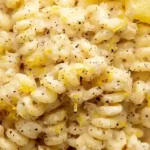
Creamy Lemon Garlic Pasta
- Total Time: 20 minutes
- Yield: 4 servings 1x
- Diet: General
Description
This Creamy Lemon Pasta is a simple yet flavorful pasta recipe made with garlic, butter, parmesan, and fresh lemon. It’s rich, bright, and ready in about 20 minutes — perfect for an easy weeknight dinner.
Ingredients
- 8 ounces pasta
- 1 lemon (zest and juice)
- 4 tablespoons butter
- 1 cup heavy cream
- 2 cloves garlic (finely minced)
- ¾ cup parmesan (finely grated)
- Salt and fresh black pepper to taste
- 1 teaspoon flour (optional)
Instructions
- Step: Cook the pasta according to package directions until al dente. Be sure to save ½ cup of the pasta water.
- Step: Melt 1 tablespoon of the butter in a large skillet over medium heat. Add in the garlic and sauté for 2 minutes. Whisk in the lemon zest and cream and continue to whisk until the liquid comes to a gentle simmer.
- Step: Add the remaining butter in, 1 tablespoon at a time, stirring continuously until all of the butter is added and melted. If your pasta is not yet done, remove the sauce from the heat.
- Step: Once the pasta is done, return the sauce skillet to the heat over medium and whisk in ½ cup of the pasta water. Then transfer the pasta to the skillet with the sauce and stir to coat.
- Step: Mix in the parmesan until it’s fully melted. Finally, add in the lemon juice and stir to combine. If you think it’s too thin, you can sprinkle on a teaspoon of flour and stir to mix.
- Step: Season to taste with additional salt and pepper. Serve and enjoy!
Notes
Store leftovers in an airtight container in the fridge for up to 3 to 4 days. Do not freeze. To reheat, gently rewarm on the stovetop over medium-low heat, splashing in cream, milk or water as needed to loosen the sauce, or use a microwave.
- Prep Time: 5 minutes
- Cook Time: 15 minutes
- Category: Dinner
- Method: Stovetop
- Cuisine: American
Nutrition
- Serving Size: 1 serving
- Calories: 597 kcal
- Sugar: 4 g
- Sodium: 411 mg
- Fat: 39 g
- Saturated Fat: 24 g
- Unsaturated Fat: 12 g
- Trans Fat: 0.5 g
- Carbohydrates: 48 g
- Fiber: 3 g
- Protein: 16 g
- Cholesterol: 110 mg
Keywords: creamy lemon pasta, pasta al limone, quick dinner, buttery pasta