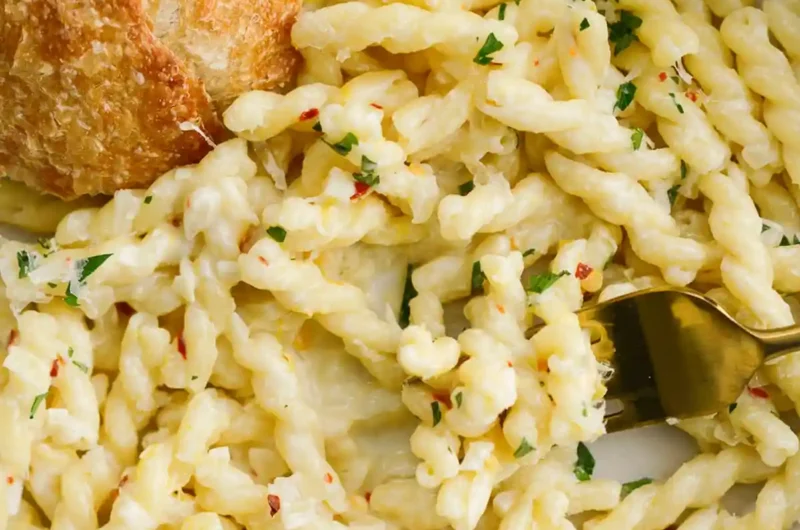
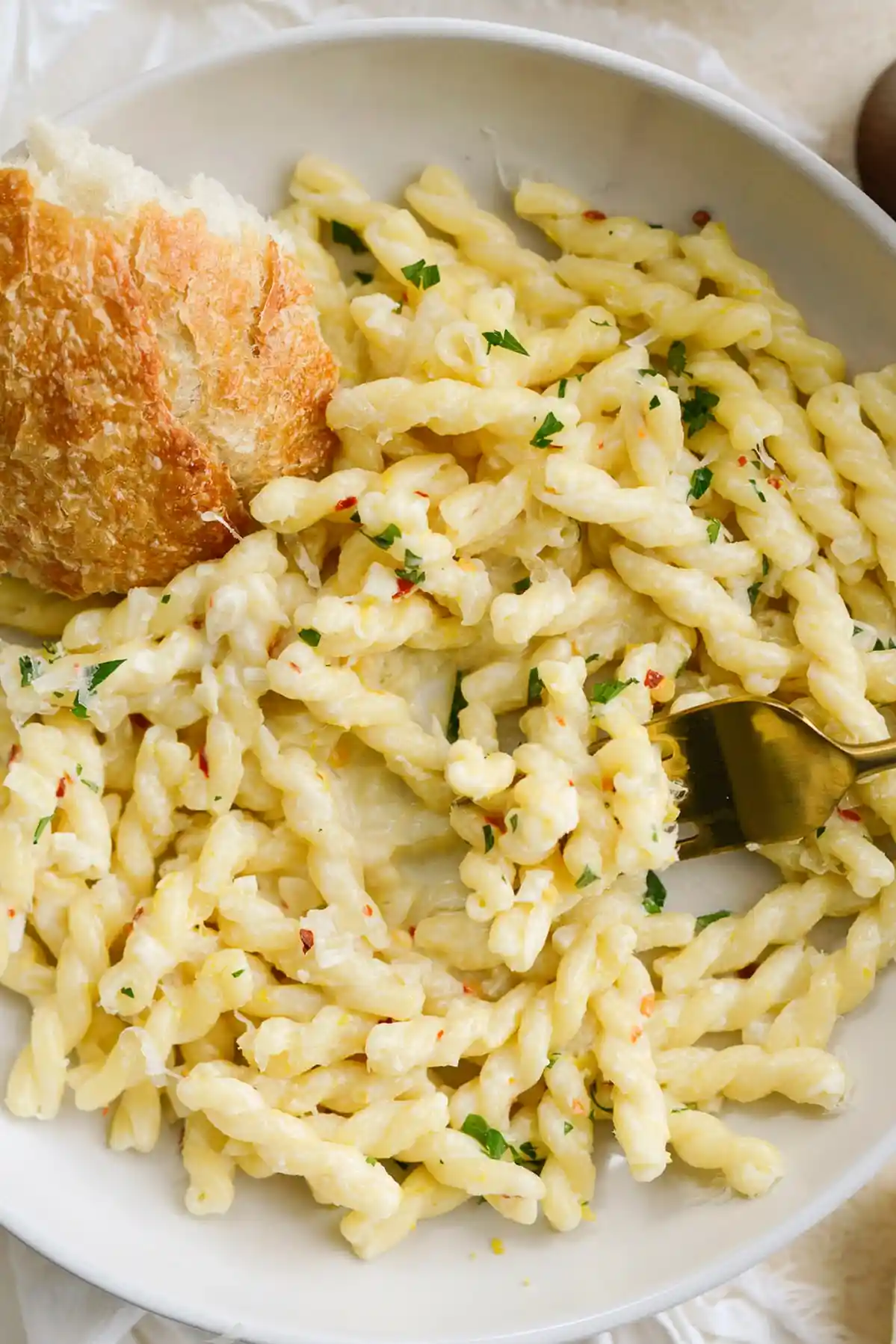
This rich pasta dish combines bright citrus notes with a velvety parmesan cream sauce for a sophisticated yet quick meal. It is an ideal choice for a fast dinner for two or as a side dish for a larger group.
List of ingredients
- 8 ounces gemelli pasta – use a similar twisted shape if unavailable.
- Palmful of sea salt – for seasoning the pasta water.
- 2 teaspoons olive oil – for sautéing aromatics.
- 2 tablespoons unsalted butter – adds richness to the base.
- 1/2 cup yellow onion – finely diced for a subtle sweetness.
- 3 large cloves garlic – minced for deep flavor.
- 1 pinch kosher salt – plus additional amount to taste.
- 1 teaspoon red pepper flakes – provides a mild, warming heat.
- 2 teaspoons lemon zest – about one large lemon for citrus aroma.
- 3 to 4 tablespoons fresh lemon juice – about one lemon for acidity.
- 1/2 cup heavy cream – creates the creamy texture.
- 1/4 cup freshly grated parmesan cheese – plus extra for garnishing.
- 1 tablespoon fresh parsley – minced for a fresh finish.
step-by-step instructions
- Boil Pasta: Bring a pot of water to a boil and add a palmful of sea salt. Add the gemelli pasta and cook according to the package directions.
- Save Water: Before draining the pasta, reserve 1 cup of the starchy pasta water to use for adjusting the sauce consistency.
- Sauté Aromatics: Heat olive oil and unsalted butter in a 10-inch skillet over medium-low heat. Add diced onion, minced garlic, and a pinch of kosher salt, stirring until the vegetables are soft and translucent.
- Add Seasoning: Stir in the red pepper flakes and lemon zest once the onions have softened.
- Create Sauce: Pour in the fresh lemon juice and stir while slowly pouring in the heavy cream. Keep the mixture simmering over medium-low to low heat until the pasta is ready.
- Combine: Add the cooked pasta to the skillet and grate the parmesan cheese directly into the pan. Toss everything together until the pasta is evenly coated.
- Adjust Texture: Taste the dish and add more salt if needed. Stir in small splashes of the reserved pasta water to thin the sauce to your preferred consistency.
- Final Touch: Serve immediately in shallow bowls topped with extra parmesan cheese and minced parsley.
Optimizing Your Pasta Selection
Selecting the Right Pasta Shape for Sauce Adherence
Gemelli is an excellent choice because its twisted, helical shape creates ridges that trap the creamy sauce. If you cannot find gemelli, fusilli or rotini are great alternatives that offer similar surface area for the sauce to cling to. Avoid smooth pastas like spaghetti if you want the maximum amount of sauce in every bite.
Using Freshly Grated Parmesan for Better Melting
Always grate your parmesan cheese from a block rather than using pre-shredded options. Pre-shredded cheeses are often coated in cornstarch or cellulose to prevent clumping, which can make your sauce grainy. Freshly grated cheese melts smoothly into the cream, creating a cohesive and velvety emulsion.
Managing Pasta Cooking Times
Aim for al dente pasta, which means cooking it for one to two minutes less than the package directions. Since the pasta continues to cook slightly while tossing in the hot cream sauce, this prevents the noodles from becoming mushy. Firm pasta also maintains better structural integrity when combined with heavy sauces.
Advanced Sauce Techniques
Preventing Cream Sauce Curdling
Keep the heat on medium-low to low when adding the lemon juice and heavy cream. High heat can cause the acidity of the lemon to break the fat molecules in the cream, leading to a separated or curdled sauce. A gentle simmer ensures the flavors meld without compromising the smooth texture.
The Role of Starchy Pasta Water
Reserved pasta water is a powerful tool for achieving the perfect sauce consistency. The starch released from the pasta acts as a natural thickener and emulsifier, helping the oil and cream bind together. Adding it incrementally allows you to control the viscosity without adding more heavy cream.
Maximizing Lemon Flavor Extraction
Zesting the lemon before juicing makes the process more efficient. Use a microplane to remove only the yellow outer layer, as the white pith underneath is bitter and can ruin the flavor profile. The zest provides the aromatic oils, while the juice provides the sharp acidity.
Ingredient Substitutions
Alternative Dairy Options for the Cream Base
If heavy cream is unavailable, you can use half-and-half, though you may need to simmer it slightly longer to achieve the same thickness. For a lighter version, a mixture of whole milk and a small amount of cornstarch slurry can mimic the creaminess. Ensure the substitute is added slowly to maintain a smooth consistency.
Replacing Yellow Onion with Shallots
Shallots are a sophisticated substitute for yellow onion, offering a milder, more refined flavor with a hint of garlic. Use two large shallots, finely minced, to replace the half-cup of diced onion. This change results in a more delicate base that lets the lemon shine through more prominently.
Plant-Based Parmesan Alternatives
To make a dairy-free version of the cheese element, use a nutritional yeast-based parmesan substitute. Blend cashews, nutritional yeast, and salt to create a savory, salty crumble that mimics the flavor of aged cheese. Note that the melting properties will differ, so you may need more pasta water for smoothness.
Customizing the Flavor Profile
Adding Lean Protein for a Hearty Meal
Grilled chicken breast or sautéed shrimp are the best protein additions for this recipe. Cook the protein separately in the same skillet before starting the aromatics to keep the meat sear intact. Stir the cooked protein back into the pasta at the very end to avoid overcooking.
Incorporating Fresh Greens
Stirring in two cups of fresh baby spinach during the final tossing phase adds color and nutrients. The residual heat from the pasta and sauce will wilt the spinach in about 60 seconds without requiring extra cook time. Arugula is another option, though it should be added just before serving to maintain some crispness.
Introducing Umami with Sun-Dried Tomatoes
Adding chopped sun-dried tomatoes provides a sweet and salty contrast to the tart lemon. Sauté them along with the onions and garlic to release their oils into the sauce. This addition adds depth and a rich color to the overall presentation of the dish.
Serving and Presentation Ideas
Pairing with Crusty Bread
Serve this pasta with a toasted baguette or a warm loaf of sourdough. The bread is perfect for soaking up the remaining lemon cream sauce from the bottom of the bowl. Brush the bread with olive oil and a pinch of garlic powder before toasting for extra flavor.
Selecting a Complementary Side Salad
A light arugula salad with a simple balsamic vinaigrette balances the richness of the cream sauce. The peppery notes of arugula and the acidity of balsamic vinegar cut through the fat of the parmesan and cream. Avoid creamy dressings for the side salad to prevent the meal from feeling too heavy.
Plating for Maximum Visual Impact
Use shallow wide bowls to allow the pasta to spread out, preventing it from clumping into a ball. Top the dish with a fresh sprinkle of parmesan and a pinch of extra lemon zest for a pop of color. A final drizzle of high-quality extra virgin olive oil adds a professional finishing touch.
Storage and Reheating Guidance
Storing Leftovers Correctly
Place leftover pasta in an airtight container and refrigerate immediately after cooling. The sauce will naturally thicken and absorb into the pasta as it sits in the fridge. It is best consumed within two to three days to ensure the lemon flavor remains bright.
Reheating Without Breaking the Sauce
Avoid using a microwave on high heat, as this can cause the cream sauce to separate. Instead, reheat the pasta in a skillet over low heat, adding a tablespoon of water or milk to loosen the sauce. Stir gently and constantly until the pasta is heated through and the sauce is creamy again.
Why Freezing is Not Recommended
Cream-based sauces do not freeze well because the emulsion breaks during the freezing and thawing process. Upon reheating, the sauce often separates into oil and clumps of cheese, resulting in a grainy texture. It is better to make only what you need or store leftovers in the refrigerator.
Troubleshooting Common Issues
Fixing a Sauce That Is Too Thick
If the sauce becomes too thick or sticky after adding the cheese, stir in more reserved pasta water one tablespoon at a time. The starch in the water thins the sauce while maintaining its glossy appearance. Continue stirring until the sauce glides easily over the pasta.
Adjusting Excessive Acidity
If the lemon juice makes the dish too tart, you can balance the flavor with a tiny pinch of granulated sugar. The sugar neutralizes the sharp acidity without making the dish taste sweet. Alternatively, adding an extra tablespoon of heavy cream can mellow out the citrus punch.
Preventing Garlic from Burning
Garlic burns much faster than onions, which can lead to a bitter taste in the sauce. Always add the garlic after the onions have already begun to soften. Keep the heat at medium-low and stir frequently to ensure the garlic turns golden but not brown.
Frequently Asked Questions
Can I use bottled lemon juice instead of fresh?
Fresh lemon juice is highly recommended because bottled versions often contain preservatives and have a more metallic, less vibrant taste. If you must use bottled juice, reduce the quantity slightly as the flavor can be more concentrated and acidic.
How do I adjust the spice level?
The red pepper flakes provide a mild heat, but you can easily scale this. For a spicier kick, increase the flakes to two teaspoons or add a pinch of cayenne pepper. For those sensitive to heat, omit the flakes entirely or use a tiny pinch of white pepper.
Is it possible to use a different type of cream?
You can use heavy whipping cream or double cream for the best results. If you use a lower-fat cream, the sauce will be thinner and more prone to curdling when the lemon juice is added. To prevent this with thinner creams, whisk in a small amount of cornstarch before heating.
Can this dish be made ahead of time?
You can prepare the sauce base (onion, garlic, lemon, cream) in advance and store it in the fridge. However, the pasta should be cooked and combined with the sauce immediately before serving. Pre-cooked pasta tends to absorb the sauce and become overcooked when reheated.
Print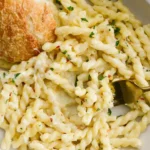
Creamy Lemon Parmesan Pasta
- Total Time: 25 minutes
- Yield: 2 servings 1x
- Diet: Vegetarian
Description
Tender cooked pasta tossed in a slightly spicy, lemon, garlic and parmesan cream sauce.
Ingredients
- 8 ounces gemelli pasta
- palmful of sea salt
- 2 teaspoons olive oil
- 2 tablespoons unsalted butter
- 1/2 cup yellow onion, finely diced
- 3 cloves garlic, minced
- 1 pinch kosher salt
- 1 teaspoon red pepper flakes
- 2 teaspoons lemon zest
- 3 to 4 tablespoons lemon juice
- 1/2 cup heavy cream
- 1/4 cup parmesan cheese, freshly grated
- 1 tablespoon fresh parsley, minced
Instructions
- Boil: Bring a pot of salted water to boil.
- Cook Pasta: Add in pasta and cook following the package directions.
- Reserve Water: Reserve 1 cup of pasta water before draining the cooked pasta.
- Heat Pan: In a 10-inch skillet, add olive oil with unsalted butter and heat over medium-low.
- Sauté: Once melted, add the onion, garlic and a pinch of kosher salt; stir and sauté until soft and translucent.
- Season: When the onions are soft, add in red pepper flakes and lemon zest.
- Simmer: Pour in the lemon juice and stir while pouring in the heavy cream; simmer over medium-low to low heat.
- Combine: Add the cooked pasta and grate in the parmesan cheese; toss to combine.
- Adjust: Taste and season with more salt if desired.
- Thin Sauce: Add a few splashes of pasta water to thin or loosen up the sauce as needed.
- Serve: Serve in shallow bowls topped with more parmesan cheese and minced parsley.
Notes
Can be served as 2 main dishes or 4 sides. To bulk up this meal, serve with a salad or add protein such as cooked chicken.
- Prep Time: 15 minutes
- Cook Time: 10 minutes
- Category: Mains & Entrees
- Method: Stovetop
- Cuisine: Italian
Nutrition
- Serving Size: 1 serving
- Calories: 837 kcal
- Sugar: 7 g
- Sodium: 248 mg
- Fat: 42 g
- Saturated Fat: 24 g
- Unsaturated Fat: 15 g
- Trans Fat: 0.5 g
- Carbohydrates: 94 g
- Fiber: 5 g
- Protein: 22 g
- Cholesterol: 106 mg
Keywords: creamy lemon parmesan pasta, Italian pasta, vegetarian main, quick dinner