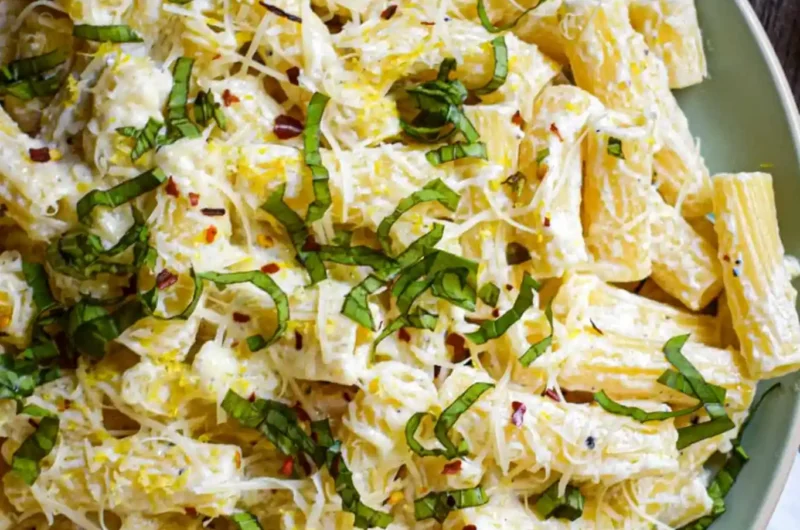
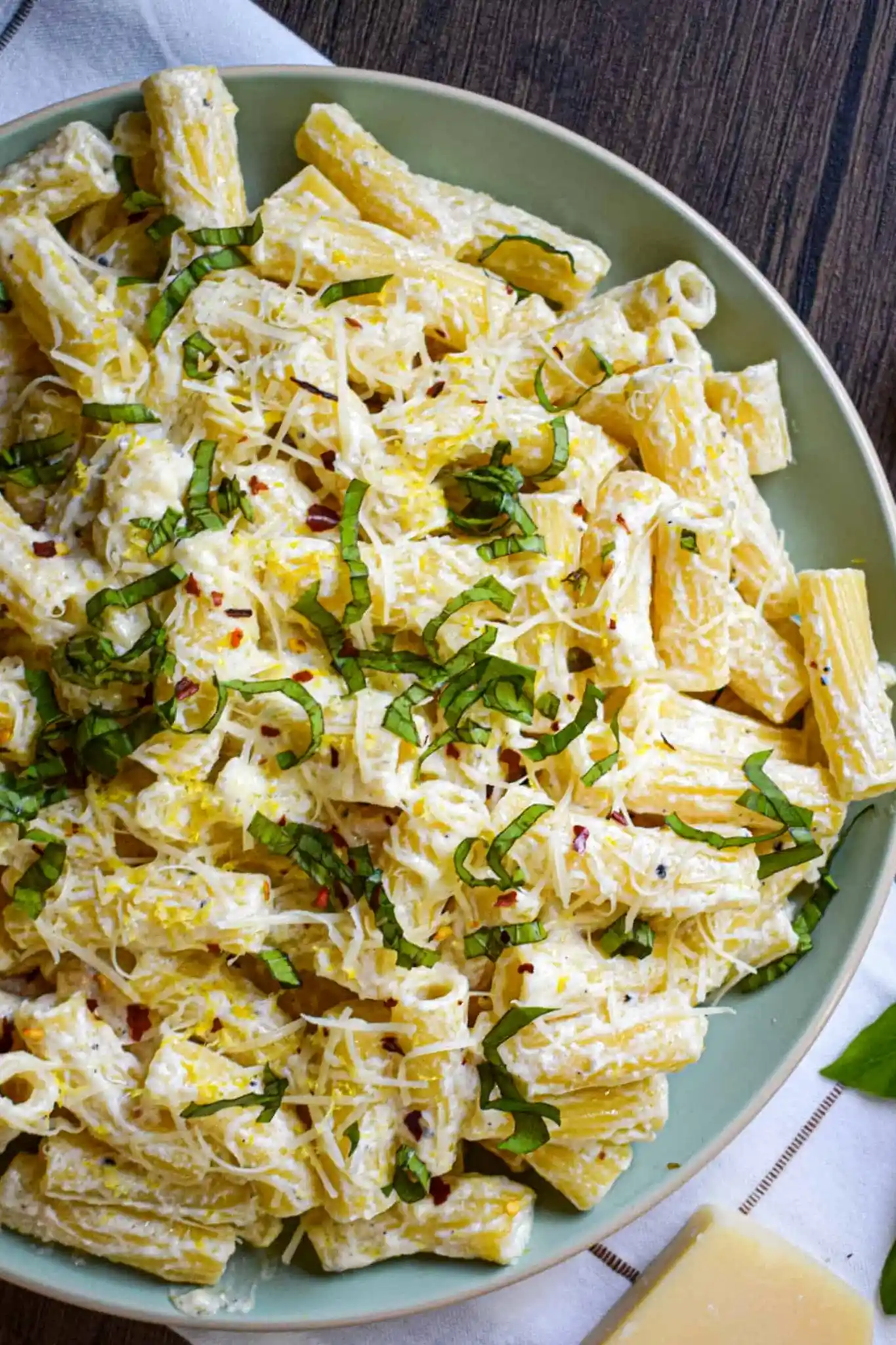
This bright and creamy pasta dish is a fast solution for a satisfying dinner. It blends fresh citrus and rich cheese to create a restaurant-quality meal in under 20 minutes.
List of ingredients
- 1 lb tortiglioni pasta – you can also use rigatoni or fusilli.
- 1 cup ricotta cheese, full fat – provides the best creaminess.
- 1 lemon, juice and zest – ensures a bright, tangy flavor.
- 1/4 cup olive oil – creates a smooth emulsion.
- 1/4 cup grated or finely shredded parmesan – use freshly grated for better melting.
- 1 tsp white truffle oil (optional) – adds an earthy, luxurious depth.
- Pinch of red pepper flakes – adds a subtle hint of heat.
- Salt and pepper – for essential seasoning.
- Fresh basil, thinly sliced – used for a fragrant garnish.
- Grated parmesan – for serving on top.
step-by-step instructions
- Boil the pasta: Bring a large pot of salted water to a boil over high heat. Add the pasta and cook until al dente, usually about one minute less than the package instructions. Turn off the burner and reserve 1 cup of the starchy pasta water before draining the pasta in a colander; do not rinse the pasta.
- Prepare the sauce: While the pasta is boiling, combine the ricotta, lemon juice, lemon zest, olive oil, parmesan cheese, optional truffle oil, red pepper flakes, salt, and black pepper in a bowl. Stir until the ingredients are well combined and smooth.
- Combine and heat: Immediately return the drained pasta to the pot and place it on the warm (but not lit) burner. Stir in the ricotta lemon mixture and 1/2 cup of the reserved pasta water. Continue stirring over the warm burner for a few minutes until the sauce is creamy and heated through, adding more pasta water if needed to reach your desired consistency. Taste and add more salt or pepper if necessary.
- Garnish and serve: Top the finished pasta with thinly sliced fresh basil and extra grated parmesan cheese. Serve immediately while hot.
Pasta Selection and Cooking Techniques
Choosing Tortiglioni for Maximum Sauce Retention
Tortiglioni is an ideal choice because its ridges and hollow center effectively capture the thick ricotta sauce. This ensures that every bite is fully coated in flavor. If you cannot find this shape, rigatoni is a near-perfect alternative.
The Importance of Al Dente Texture
Cooking pasta al dente means it retains a slight firmness in the center. This prevents the noodles from becoming mushy when you stir them into the warm sauce. Aim for about one minute less than the package’s suggested time.
Utilizing Starchy Pasta Water
Reserved pasta water contains starch that acts as a natural binder for the sauce. Adding it to the ricotta mixture helps the sauce emulsify and cling to the pasta. Without it, the sauce may separate or seem too thick.
Why You Should Never Rinse Your Pasta
Rinsing pasta removes the surface starches that are necessary for the sauce to adhere. It also lowers the temperature of the noodles rapidly. Keeping the pasta hot and starchy leads to a more cohesive final dish.
Salting the Water for Depth
Adding a generous amount of salt to the boiling water seasons the pasta from the inside out. This provides a foundational layer of flavor that cannot be achieved by salting the sauce alone. Use a coarse sea salt for the best results.
Optimizing Your Sauce Ingredients
Benefits of Full Fat Ricotta
Full fat ricotta provides a richer mouthfeel and a more stable texture. Low fat versions often have a higher water content, which can make the sauce thin or grainy. The fat carries the lemon flavor more effectively across the palate.
Maximizing Flavor from Fresh Lemons
Using fresh lemon juice and zest provides a vibrant acidity that bottled juices cannot match. The zest contains essential oils that add a deep citrus aroma without adding too much liquid. Always zest the lemon before juicing it for easier handling.
Selecting High-Quality Olive Oil
Extra virgin olive oil adds a fruity, peppery note that complements the ricotta. A high-quality oil ensures the sauce feels silky and luxurious. Avoid using refined oils that lack distinct flavor profiles.
Using Freshly Grated Parmesan
Freshly grated parmesan melts more smoothly into the sauce than pre-shredded varieties. Pre-shredded cheeses are often coated in cornstarch to prevent clumping, which can affect the sauce’s texture. A block of parmesan is always the superior choice.
Enhancing Depth with White Truffle Oil
White truffle oil is a potent ingredient that adds a sophisticated, earthy aroma. Because it is very strong, a single teaspoon is enough to elevate the entire dish. It provides a gourmet contrast to the bright acidity of the lemon.
Creative Ingredient Additions
Adding Sautéed Baby Spinach
Stirring in fresh baby spinach during the final mixing stage adds a pop of color and nutrition. The residual heat from the pasta will wilt the greens perfectly without overcooking them. This adds a mild, earthy flavor to the creamy sauce.
Incorporating Sweet Frozen Peas
Adding frozen peas during the last minute of pasta boiling provides a sweet contrast to the salty parmesan. They add a nice burst of texture and a vibrant green color. Simply drain them with the pasta for a quick addition.
Using Sliced Cherry Tomatoes
Halved cherry tomatoes can be stirred in at the end for a fresh, juicy element. Their slight sweetness balances the tartness of the lemon juice. This addition makes the dish feel more like a complete summer meal.
Including Roasted Garlic
Folding in a tablespoon of roasted garlic paste adds a mellow, caramelized sweetness. It deepens the savory profile of the ricotta and parmesan. This is a great way to add complexity without overpowering the lemon.
Topping with Toasted Pine Nuts
Toasted pine nuts provide a buttery crunch that contrasts with the soft pasta and creamy sauce. Toast them in a dry pan for two minutes until golden brown. Sprinkle them over the top just before serving.
Serving and Pairing Guide
Pairing with a Crisp Arugula Salad
A simple salad of arugula tossed with lemon juice and olive oil complements this pasta. The peppery notes of the arugula cut through the richness of the ricotta. This creates a balanced and light meal experience.
Serving with Garlic Crostini
Toasted baguette slices rubbed with fresh garlic and olive oil are an excellent accompaniment. They provide a crunchy texture and a savory flavor that pairs well with the creamy sauce. Use them to scoop up any remaining sauce on the plate.
Non-Alcoholic Beverage Pairings
A chilled glass of sparkling water with a squeeze of lime or a crisp iced tea works best. These drinks cleanse the palate between bites of rich cheese. Avoid heavy drinks that might mask the delicate lemon flavor.
Plating for an Elegant Presentation
Use a wide pasta bowl to allow the noodles to spread out. Place the basil leaves centrally and sprinkle the parmesan in a concentrated circle. This creates a visually appealing contrast of green, white, and yellow.
Proper Storage and Reheating Methods
Storing Leftovers in Airtight Containers
Place leftover pasta in a shallow, airtight container to keep it fresh. Store it in the refrigerator for up to three days. Ensure the container is fully sealed to prevent the ricotta from absorbing other fridge odors.
Reheating to Maintain Creaminess
Reheat the pasta on a stovetop over low heat rather than in a microwave. Adding a splash of water or milk helps to re-emulsify the sauce. Stir gently to prevent the pasta from breaking apart.
Preventing the Sauce from Separating
When reheating, avoid high temperatures that can cause the cheese to break and become oily. Low and slow heat is the best way to keep the sauce smooth. Stir constantly until the mixture is just heated through.
Freezing Considerations for Ricotta Pasta
Ricotta-based sauces generally do not freeze well as the texture can become grainy. It is recommended to consume this dish within a few days of preparation. If you must freeze it, expect a change in the creamy consistency.
Solving Common Cooking Issues
Fixing a Sauce That is Too Thick
If the sauce feels too heavy or clumpy, stir in an additional tablespoon of reserved pasta water. Continue stirring over low heat until the desired silkiness is achieved. The starch in the water helps smooth out the ricotta.
Correcting an Overly Tart Flavor
If the lemon is too overpowering, stir in a small amount of extra parmesan or a pinch of salt. The salt and fat from the cheese help neutralize excessive acidity. Always taste the sauce before adding more lemon juice.
Solving Grainy Ricotta Textures
Graininess can occur if the ricotta is too cold when added to the pasta. Let the ricotta reach room temperature before mixing, or whisk it thoroughly before combining. Using full-fat ricotta also reduces the likelihood of graininess.
Balancing the Salt Levels
If the dish tastes bland, add a small pinch of salt and a crack of black pepper. Remember that the parmesan and pasta water are already salty, so add seasoning incrementally. Taste after every small addition.
Frequently Asked Questions
Can I use low-fat ricotta?
You can, but the sauce will be less creamy and may separate more easily. For the best results, use full-fat ricotta to ensure a rich and stable emulsion.
What is the best way to zest a lemon?
Use a microplane or a fine grater to remove only the yellow outer skin. Avoid grating into the white pith, as it has a bitter taste that can ruin the sauce.
Can I make this dish vegan?
You can substitute the ricotta with a cashew-based ricotta and use nutritional yeast instead of parmesan. Use a vegan-friendly pasta and ensure your olive oil is pure.
How long does the prepared pasta last?
The pasta will stay fresh in the refrigerator for about three days. Beyond that, the lemon flavor may fade and the texture of the cheese may change.
Is this recipe suitable for meal prep?
It is best served fresh, but it can be prepped by making the sauce ahead of time. Store the sauce separately and toss it with freshly cooked pasta when you are ready to eat.
Print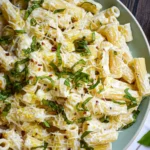
Creamy Lemon Ricotta Pasta
- Total Time: 20 minutes
- Yield: 5 servings 1x
- Diet: Vegetarian
Description
This Lemon Ricotta Pasta is packed with fresh, delicious flavors and takes less than 20 minutes from start to finish! A perfect vegetarian dish for meatless Monday or any day of the week!
Ingredients
- 1 lb tortiglioni pasta
- 1 cup ricotta cheese, full fat
- 1 lemon, juice and zest
- 1/4 cup olive oil
- 1/4 cup grated or finely shredded parmesan
- 1 tsp white truffle oil (optional)
- pinch of red pepper flakes
- salt & pepper
- fresh basil, thinly sliced
- grated parmesan (for serving)
Instructions
- Step 1: Bring a large pot of salted water to a boil over high heat. Add the pasta and cook until al dente, usually about a minute less than package instructions. Turn off the burner and reserve 1 cup of the starchy pasta water. Then drain pasta in a colander. (Do not rinse the pasta.)
- Step 2: While the pasta is cooking combine ricotta, lemon juice and zest, olive oil, parmesan cheese, truffle oil (if using), a pinch of red pepper flakes and a pinch of salt and black pepper. Stir until well combined.
- Step 3: After draining the pasta immediately add back back to the pot and place on the warm (but not lit) burner. Immediately stir in ricotta lemon mixture and about 1/2 cup of the reserved pasta water. Continue to stir over the warm burner for a few minutes until the mixture is heated through and creamy. Add additional pasta water to thin out the sauce if needed. Taste and add additional salt & pepper as necessary.
- Step 4: Top the pasta with thinly sliced basil and grated parmesan cheese. Enjoy!
Notes
Freshly shredded parmesan is best. For pasta, you can substitute tortiglioni with rigatoni, cavatappi, calamarata, gemelli, or fusilli. Do not rinse the pasta to ensure the sauce adheres better.
- Prep Time: 5 minutes
- Cook Time: 15 minutes
- Category: Lunch, Main Course, Side Dish
- Method: Stovetop
- Cuisine: Italian
Nutrition
- Serving Size: 1 serving
- Calories: 524 kcal
- Sugar: 5.1 g
- Sodium: 160 mg
- Fat: 20.9 g
- Saturated Fat: 7.3 g
- Unsaturated Fat: 13.6 g
- Trans Fat: 0 g
- Carbohydrates: 67.8 g
- Fiber: 3 g
- Protein: 16.3 g
- Cholesterol: 32.9 mg
Keywords: basil, Easy, lemon, Parmesan, Pasta, Ricotta