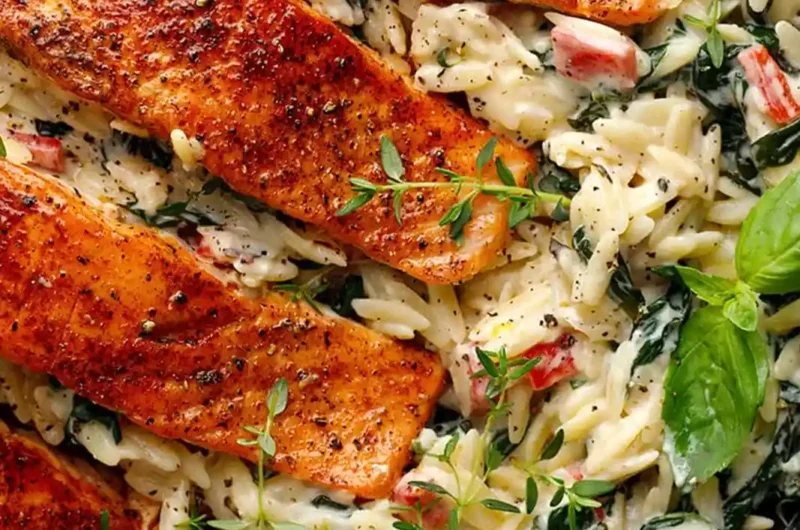
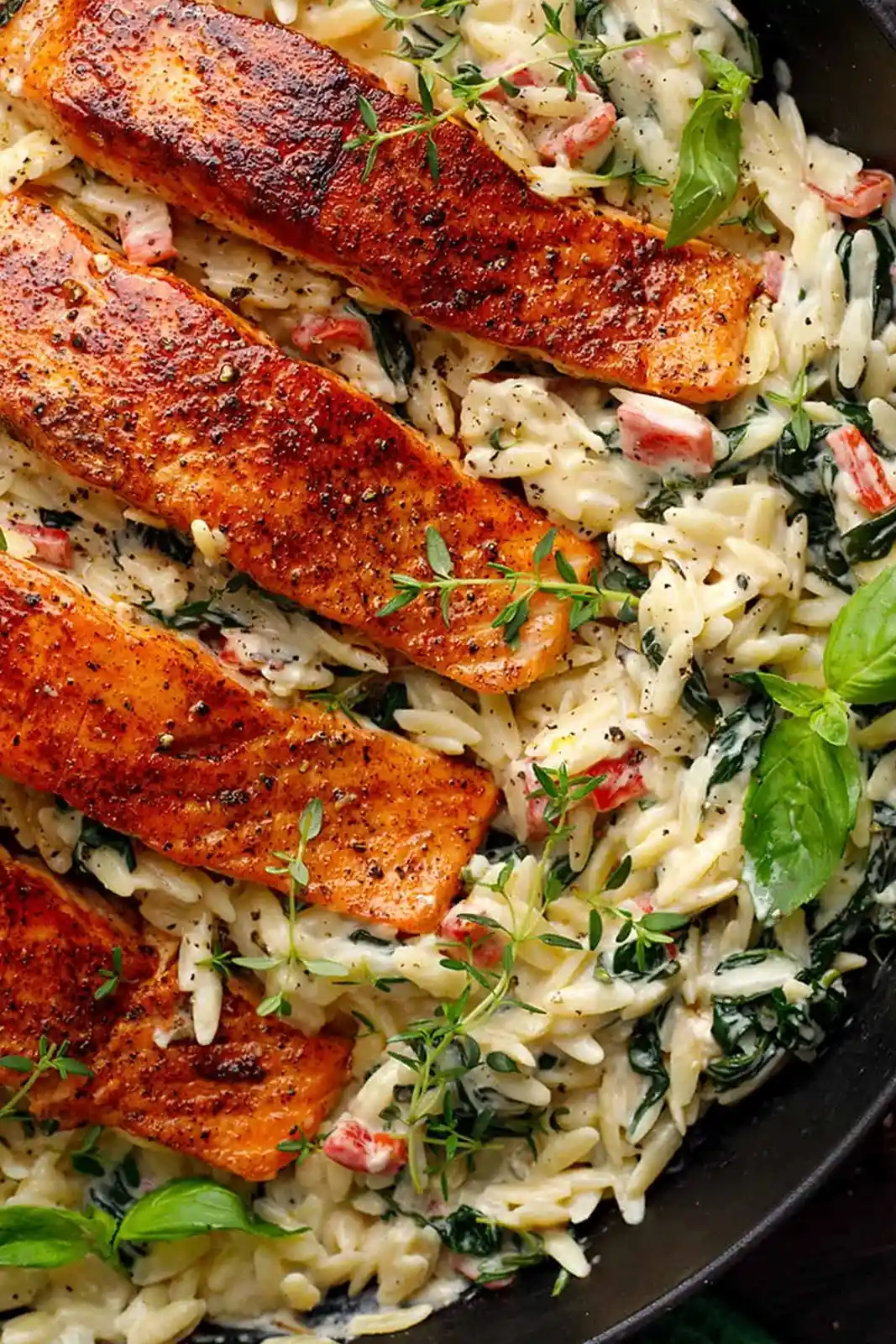
This creamy one-pan salmon orzo is a fast, nutrient-dense dinner that comes together in just 30 minutes. It combines tender, flaky fish with a rich, cheesy pasta base and vibrant vegetables for a complete meal.
List of ingredients
- 4 fillets salmon – skin-on, boneless fillets are recommended.
- ½ teaspoon smoked paprika – provides a subtle woodsy depth.
- ½ teaspoon salt – enhances the natural flavors of the fish.
- ¼ teaspoon freshly ground black pepper – adds a touch of spice.
- 2 tablespoons olive oil – used for searing the salmon fillets.
- 2 tablespoons olive oil – used for sautéing the aromatics.
- 1 medium yellow onion (chopped) – adds a sweet, savory base.
- 4 cloves garlic (minced) – provides a pungent aromatic quality.
- ½ teaspoon Italian seasoning – a blend of dried herbs for depth.
- 1 cup orzo (uncooked) – small, rice-shaped pasta.
- 2 cups chicken stock – the primary cooking liquid for the pasta.
- ½ cup heavy cream – creates the luxurious, creamy sauce.
- ½ cup roasted red bell peppers (chopped) – canned or jarred for sweetness.
- ½ cup Parmesan cheese (freshly grated) – adds salty, cheesy richness.
- 4 oz fresh spinach – adds color and essential nutrients.
- 1 tablespoon freshly squeezed lemon juice – brightens the final flavor profile.
step-by-step instructions
- Prepare the Fish: Pat the salmon fillets dry using a paper towel and season them evenly with smoked paprika, salt, and pepper.
- Sear the Salmon: Heat a large, high-sided skillet on medium-high heat for 2-3 minutes. Add olive oil, then place salmon fillets skin-side up and sear for 3-4 minutes before flipping and cooking for another 2-3 minutes.
- Clear the Pan: Carefully remove the salmon fillets from the skillet and set them aside. Use a paper towel to wipe off any excess fat if necessary.
- Sauté Aromatics: Add more olive oil and the chopped onion to the skillet. Sauté for 2-3 minutes until soft and translucent, then stir in the minced garlic and Italian seasoning for 30-60 seconds.
- Cook the Orzo: Add the uncooked orzo to the pan and toast it for 1-2 minutes. Pour in the chicken stock, bring to a boil, then reduce heat to medium-low and simmer, stirring occasionally, for 6-10 minutes until the pasta is tender.
- Build the Cream Sauce: Stir in the heavy cream, chopped roasted red peppers, Parmesan cheese, spinach, and lemon juice. Continue cooking and stirring occasionally until the spinach has completely wilted.
- Combine and Serve: Return the cooked salmon fillets to the skillet. Let them warm through on medium heat, then garnish the dish with fresh basil and coarsely ground black pepper.
Professional Searing Techniques
Achieving a Golden Brown Crust
The key to a professional sear is ensuring the salmon fillets are completely dry before they hit the pan. Moisture on the surface of the fish creates steam, which prevents the Maillard reaction and results in a pale, soft exterior. Use high-quality paper towels to pat every side of the fillet thoroughly.
Managing Pan Temperature
Wait until the skillet is truly hot before adding the oil and the fish. A cast iron skillet is ideal because it retains heat consistently across the entire surface. If the oil begins to shimmer or lightly smoke, the pan is ready to provide that characteristic crisp sear.
Handling the Salmon Skin
Cooking the salmon skin-side up first helps set the top of the fillet. When you flip the fish, the skin side will crisp up beautifully, which helps keep the fillet intact. Avoid moving the fish too often in the pan, as this can tear the delicate flesh.
Optimizing the Orzo Process
The Importance of Toasting Pasta
Toasting the uncooked orzo in oil before adding liquid develops a deeper, nuttier flavor. This process allows the edges of the pasta to brown slightly, which also prevents the grains from clumping together. It adds a layer of complexity to the dish that boiling alone cannot achieve.
Controlling Liquid Absorption
Orzo absorbs liquid quickly, so it is important to use the full 2 cups of chicken stock. Stirring the pasta occasionally prevents it from sticking to the bottom of the pan. If you notice the liquid evaporating too quickly before the pasta is tender, add a small splash of extra stock.
Testing for Al Dente Texture
Start tasting the orzo around the 6-minute mark to ensure it does not overcook. You want the pasta to be tender but still have a slight bite, known as al dente. Overcooking the pasta will lead to a mushy texture that cannot be reversed.
Ingredient Alternatives and Swaps
Substituting the Base Pasta
If you do not have orzo, you can use other small pasta shapes like ditalini or pearl couscous. For a gluten-free option, long-grain rice or a gluten-free certified pasta works well. If using a larger pasta shape, you may need to boil it separately and stir it in at the end.
Dairy-Free Creamy Options
To make this recipe dairy-free, replace the heavy cream with full-fat coconut milk or cashew cream. For the cheese, use a plant-based Parmesan alternative. These swaps maintain the creamy consistency while catering to dietary restrictions.
Alternative Leafy Greens
While baby spinach is the standard choice, you can substitute it with chopped kale or arugula. Kale requires a few more minutes of cooking time to soften properly. Arugula should be stirred in at the very last second to prevent it from becoming too limp.
Protein Variations
This method works exceptionally well with other fish like trout or scallops. If using shrimp, sear them quickly for 1-2 minutes per side and remove them from the pan. Add them back at the final step to prevent them from becoming rubbery.
Flavoring the Cooking Liquid
Chicken stock is traditional, but vegetable broth is an excellent alternative for a lighter flavor. For more depth, you can use a seafood stock or a low-sodium broth to control the salt levels. Ensure the liquid is at room temperature or warm to avoid dropping the pan temperature.
Serving and Presentation Ideas
Choosing the Right Garnish
Fresh basil leaves add a vibrant green color and a sweet, peppery contrast to the rich sauce. Coarsely ground black pepper provides a visual punch and a sharp flavor. A few thin slices of fresh lemon placed on top can enhance the professional look of the plate.
Complementary Side Dishes
Because this is a hearty one-pan meal, a light side dish is best. A simple arugula salad with a lemon-olive oil vinaigrette cuts through the richness of the cream sauce. Roasted asparagus or steamed broccoli also pair well with the flavors of the salmon.
Plating for Visual Appeal
Use a shallow bowl to showcase the creaminess of the orzo while keeping the salmon fillet prominently on top. Spoon a bit of the spinach and red pepper mixture around the fish. This ensures every serving has a balanced ratio of protein and vegetables.
Storage and Reheating Advice
Refrigerator Storage Guidelines
Store any leftovers in an airtight container in the refrigerator for up to 2 to 3 days. Note that the orzo will continue to absorb the cream sauce as it sits, making the dish thicker. Keep the container tightly sealed to prevent the fish from picking up other fridge odors.
Best Methods for Reheating
When reheating, add a tablespoon of water or chicken broth to the pasta to restore the creamy consistency. You can use a microwave on medium power, stirring halfway through. For the best results, gently warm the dish in a skillet over low heat.
Preventing Sauce Separation
To avoid the cream sauce breaking during reheating, avoid using high heat. Warming the dish slowly allows the fats to emulsify again without separating. Stirring gently will help redistribute the moisture and the cheese.
Troubleshooting Common Issues
Fixing a Dry Orzo Base
If the final dish seems too thick or dry, stir in a tablespoon of warm chicken stock or heavy cream. Do this just before serving to loosen the sauce. The heat from the pan will quickly incorporate the extra liquid into the pasta.
Preventing Mushy Pasta
Mushy pasta usually happens from over-simmering or stirring too aggressively. Stir only enough to prevent sticking and stop the cooking process as soon as the orzo is tender. Remember that the pasta continues to cook slightly when you add the cream and cheese.
Avoiding Overcooked Salmon
Salmon can dry out quickly if left in the pan too long. Use a meat thermometer to check the internal temperature, aiming for 125°F for medium-rare or 140°F for medium. Remove the fillets the moment they flake easily with a fork.
Frequently Asked Questions
When should I add the lemon juice?
Add the lemon juice at the very end of the cooking process. Adding it too early can cause the cream sauce to curdle or lose its bright, fresh citrus flavor. Stirring it in with the spinach ensures the flavor remains vivid.
Should I keep the salmon skin on?
Yes, keeping the skin on is recommended because it acts as a barrier that locks in moisture. This prevents the fillet from drying out during the searing process. The skin can be easily lifted off after cooking if you prefer not to eat it.
How do I know when the salmon is done?
The salmon is done when the flesh changes from translucent to opaque and flakes easily when pressed with a fork. For precision, use a thermometer to check the center of the thickest part of the fillet.
When and how should I remove the skin?
Remove the skin after the salmon has finished cooking and has rested for a minute. Use a knife or fork to gently lift the edge of the skin, and it should peel away from the flesh easily. This is the best time to remove it to avoid tearing the fish.
Print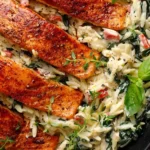
Creamy Salmon and Orzo Skillet with Spinach
- Total Time: 30 minutes
- Yield: 4 servings 1x
- Diet: General
Description
Creamy Salmon & Spinach Orzo is my go-to one-pan dinner when I need something quick, easy, and delicious. It’s ready in 30 minutes and packed with tender & flaky salmon, creamy orzo, spinach, roasted red bell peppers, Parmesan, and a splash of lemon juice.
Ingredients
- 4 fillets salmon
- ½ teaspoon smoked paprika
- ½ teaspoon salt
- ¼ teaspoon freshly ground black pepper
- 2 tablespoon olive oil
- 2 tablespoons olive oil
- 1 medium yellow onion (chopped)
- 4 cloves garlic (minced)
- ½ teaspoon Italian seasoning
- 1 cup orzo (uncooked)
- 2 cups chicken stock
- ½ cup heavy cream
- ½ cup roasted red bell peppers (chopped (canned or jarred))
- ½ cup Parmesan cheese (freshly grated)
- 4 oz fresh spinach
- 1 tablespoon freshly squeezed lemon juice
Instructions
- Step: Pat the salmon fillets dry using a paper towel. Season with smoked paprika, salt, and pepper.
- Step: Heat a large, high-sided skillet on medium-high heat for about 2-3 minutes. Once hot, add olive oil and swirl to evenly coat the skillet. Place the salmon fillets in the skillet, skin-side up. Sear the salmon for about 3-4 minutes, then flip carefully and cook for an additional 2-3 minutes.
- Step: Carefully remove the salmon fillets from the skillet. Use a paper towel to wipe off excess fat, if needed.
- Step: Add olive oil and chopped onion to the same skillet. Sauté for about 2-3 minutes or until translucent and soft. Then, add minced garlic and Italian seasoning. Sauté for an additional 30-60 seconds or until fragrant.
- Step: Add uncooked orzo and toast for 1-2 minutes. Pour in chicken stock. Bring to a boil and reduce the heat to medium-low. Let it simmer, stirring occasionally, for about 6-10 minutes or until the orzo is tender and cooked through.
- Step: Add in heavy cream, chopped roasted red pepper, Parmesan cheese, spinach, and lemon juice. Cook, stirring occasionally, until the spinach wilts.
- Step: Return the cooked salmon back to the skillet. Let it warm through on medium heat. Garnish with fresh basil and coarsely ground black pepper.
Notes
Use a high-sided, heavy skillet like cast iron or stainless steel to ensure even cooking. Pat the salmon fillets dry to ensure a crispy, golden crust. Avoid overcooking the salmon to prevent it from becoming dry. For a spicy version, add red pepper flakes, chili powder, or cayenne pepper. Add fresh baby spinach at the end so it stays tender.
- Prep Time: 5 minutes
- Cook Time: 25 minutes
- Category: Main Course
- Method: One-pan
- Cuisine: American
Nutrition
- Serving Size: 1 serving
- Calories: 725 kcal
- Sugar: 5 g
- Sodium: 1012 mg
- Fat: 41 g
- Saturated Fat: 13 g
- Unsaturated Fat: 28 g
- Trans Fat: 0 g
- Carbohydrates: 39 g
- Fiber: 3 g
- Protein: 48 g
- Cholesterol: 139 mg
Keywords: salmon orzo