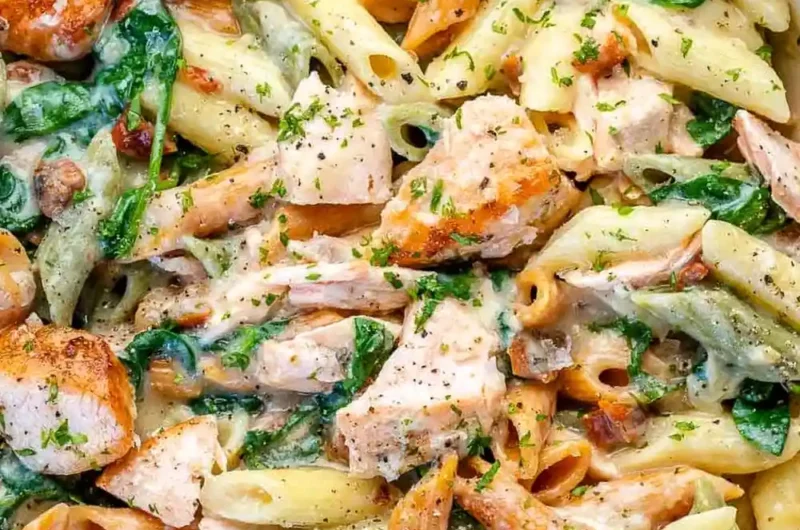
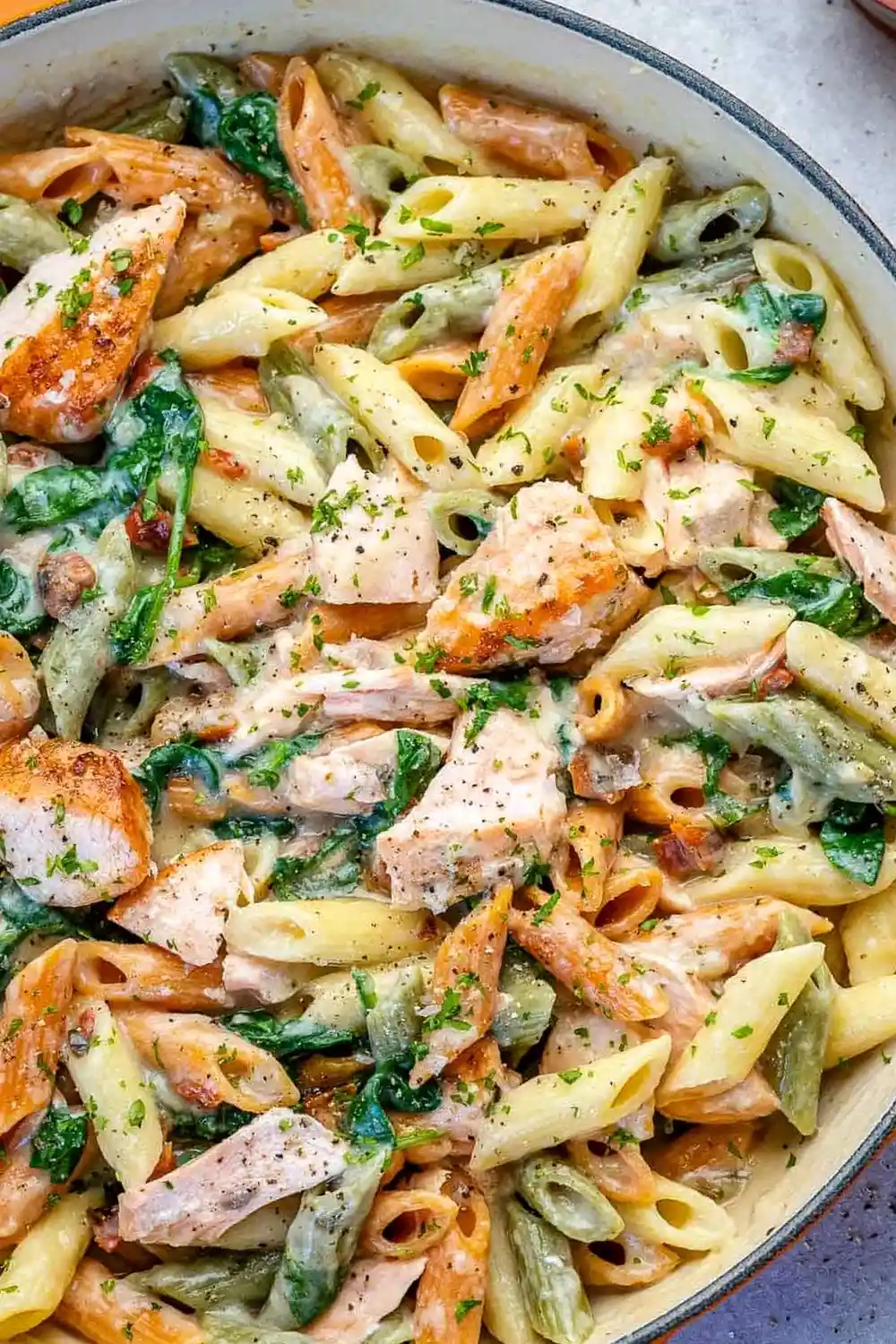
This creamy salmon pasta is a nutritious, one-pan meal that combines seared fish with a garlic-infused sauce. It is designed for quick weeknight preparation, taking less than 30 minutes from start to finish.
List of ingredients
- 8 ounces short pasta of choice (or lentil pasta) – any small shape like penne or fusilli works best.
- 1 tablespoon olive oil (or avocado oil) – used for searing the salmon.
- Kosher salt and ground pepper – to taste for seasoning.
- 1 pound skinless salmon fillets – cut into portions for even cooking.
- 1/2 teaspoon Italian seasoning – provides a blend of aromatic herbs.
- 3-4 cloves garlic (minced) – adds a pungent, savory base to the sauce.
- 1/4 cup sun-dried tomatoes (chopped) – adds a concentrated sweet and tangy flavor.
- 1 tablespoon gluten-free flour (or any flour) – used as a thickening agent for the cream sauce.
- 1 1/2 cup skimmed milk (or any other milk) – the liquid base for the creamy texture.
- 5 ounces fresh spinach (or frozen, strained) – adds color and essential nutrients.
step-by-step instructions
- Boil the Pasta: Cook 8 ounces of short pasta according to the package directions until it reaches an al dente texture. Drain the water, drizzle with a small amount of oil, and season with salt and pepper before setting it aside.
- Prepare the Fish: Season the 1 pound of skinless salmon fillets on both sides with kosher salt, ground pepper, and 1/2 teaspoon of Italian seasoning.
- Sear the Salmon: Heat 1 tablespoon of olive oil in a large non-stick skillet over medium heat. Add the salmon and cook for 3-5 minutes per side, or until the fish is flaky and cooked through, then move the fillets to a plate.
- Sauté Aromatics: In the same skillet, add 3-4 minced garlic cloves and 1/4 cup of chopped sun-dried tomatoes. Cook for about one minute until fragrant.
- Thicken the Sauce: Stir in 1 tablespoon of flour and cook briefly. Gradually pour in 1 1/2 cups of milk, stirring continuously to prevent lumps until a smooth sauce forms.
- Wilt the Greens: Add 5 ounces of fresh spinach to the sauce and stir until the leaves have wilted. Season the mixture with salt and pepper according to your preference.
- Combine Pasta: Add the cooked pasta to the skillet and stir for a few minutes until the noodles are thoroughly heated through.
- Integrate Salmon: Use a fork to flake the cooked salmon into bite-sized pieces. Gently stir the salmon into the pasta and immediately remove the pan from the heat.
- Final Touch: Garnish the dish with freshly chopped parsley and a sprinkle of ground pepper if desired. Serve immediately.
Optimal Protein Selection
Using Fresh Atlantic Salmon
Fresh Atlantic salmon is preferred for its rich omega-3 content and buttery texture. Ensure the fillets are skinless to make flaking easier during the final assembly of the pasta.
Substituting with Shrimp
If you prefer shrimp, peel and devein them before seasoning with Italian herbs. Sauté shrimp for only 2-3 minutes per side to avoid a rubbery texture.
Using Chicken Breast
Boneless, skinless chicken breast is a lean alternative for those who avoid fish. Cube the chicken into small pieces and sear them until fully cooked before starting the sauce.
Choosing the Right Pasta Shape
Best Short Pasta Varieties
Shapes like penne, rotini, or farfalle are ideal because they hold the creamy sauce in their ridges and folds. This ensures every bite is evenly coated in the garlic and milk base.
Lentil Pasta for Extra Protein
Lentil pasta is a great choice for increasing the protein and fiber content of the meal. Be careful not to overcook lentil pasta, as it can become mushy faster than wheat pasta.
Chickpea Pasta Considerations
Chickpea pasta offers a gluten-free alternative with a nuttier flavor profile. Rinse it well after draining to remove excess starch and prevent the sauce from becoming too sticky.
Mastering the Creamy Sauce
Milk Alternatives for Different Diets
Skimmed milk provides a light consistency, but unsweetened almond or soy milk can be used for dairy-free options. Avoid sweetened milks, as they will clash with the savory garlic and salmon flavors.
Using Cornstarch Instead of Flour
If you prefer not to use flour, you can create a cornstarch slurry by mixing 1 teaspoon of cornstarch with cold water. Whisk this into the simmering milk for a glossy, translucent finish.
Preventing Sauce Clumping
To ensure a smooth sauce, pour the milk in small increments while whisking constantly. This allows the flour to incorporate fully without creating small doughy lumps.
Vegetable Variations and Tips
Replacing Spinach with Kale
Kale is a heartier alternative to spinach and adds a slightly bitter edge to the dish. Since kale is tougher, stir it into the sauce a few minutes earlier than you would with spinach.
Handling Frozen Spinach
When using frozen spinach, ensure it is completely thawed and squeezed dry with a paper towel. Excess water from frozen spinach can dilute the sauce and make it runny.
Enhancing Flavor with Different Tomatoes
While sun-dried tomatoes provide a concentrated tartness, fresh cherry tomatoes can be used for a brighter taste. Sauté them until they burst to release their natural juices into the sauce.
Salmon Cooking Techniques
Pan-Searing for Texture
Searing salmon in a non-stick skillet creates a golden exterior while keeping the inside moist. Use medium heat to ensure the fish cooks evenly without burning the exterior.
Baking as an Alternative
If you prefer to avoid frying, bake the salmon at 400 degrees F for about 12-15 minutes. Once baked, flake the fish and stir it into the pasta sauce at the very end.
Checking for Doneness with a Thermometer
Use a digital food thermometer to ensure the salmon reaches an internal temperature of 145 degrees F. This ensures the fish is safe to eat while remaining tender.
Proper Storage and Preservation
Refrigerator Storage Duration
Store leftover salmon pasta in an airtight glass or plastic container in the refrigerator. It will remain fresh and safe for consumption for up to 3 days.
Avoiding Freezer Burn
Creamy pasta dishes generally do not freeze well because the milk sauce may separate upon thawing. It is recommended to eat this dish fresh or store it only in the fridge.
Identifying Spoiled Seafood
Always check your salmon for a strong fishy odor or a slimy texture before cooking. Fresh salmon should have a mild scent and a firm, springy feel to the touch.
Effective Reheating Strategies
Stovetop Reheating for Texture
The best way to reheat this pasta is in a skillet over low heat. Add a tablespoon of milk or water to restore the creaminess of the sauce as it warms.
Microwave Reheating Tips
If using a microwave, cover the dish with a damp paper towel to trap steam. Heat in 30-second intervals, stirring in between to ensure the salmon doesn’t overcook.
Restoring Sauce Consistency
If the sauce has thickened too much in the fridge, whisk in a teaspoon of olive oil or a splash of skimmed milk. This emulsifies the sauce and returns it to its original silkiness.
Serving and Presentation
Pairing with Side Salads
A light arugula salad with a lemon vinaigrette balances the richness of the cream sauce. The acidity of the lemon cuts through the fat of the salmon and milk.
Fresh Herb Garnish Ideas
Freshly chopped parsley is the classic choice, but dill or chives also pair exceptionally well with salmon. Add the herbs just before serving to maintain their bright color.
Plating for Visual Appeal
Use a wide shallow bowl to showcase the colors of the green spinach and red sun-dried tomatoes. Place the largest flakes of salmon on top for a professional look.
Common Cooking Fixes
Thinning Out a Thick Sauce
If the sauce becomes too thick after adding the pasta, stir in a tablespoon of the reserved pasta cooking water. The starch in the water helps thin the sauce while maintaining a smooth texture.
Fixing Over-seasoned Pasta
If the dish tastes too salty, add a squeeze of fresh lemon juice or a bit more milk. The acid and fat will help neutralize the excess saltiness.
Preventing Salmon from Breaking
To keep the salmon in larger chunks, fold it into the pasta gently using a spatula. Avoid aggressive stirring, which can break the fish into too many small fragments.
Frequently Asked Questions
What spices pair well with salmon?
Salmon pairs exceptionally well with Italian seasoning, dill, basil, parsley, thyme, and rosemary. These herbs complement the natural richness of the fish without overpowering it.
Is it better to bake or pan fry salmon?
Pan-frying is generally faster and provides a better sear, while baking is more hands-off and can be healthier. Both methods are effective as long as the internal temperature is monitored.
What temperature should salmon be cooked at?
The FDA recommends cooking fish to an internal temperature of 145 degrees F. Using a food thermometer is the most reliable way to ensure the salmon is cooked through.
Print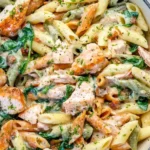
Creamy Salmon Pasta with Spinach and Sun-Dried Tomatoes
- Total Time: 30 minutes
- Yield: 4 servings 1x
- Diet: General
Description
Creamy and Delicious pasta recipe made with almond milk, garlic, sun dried tomatoes, and then tipped with seared salmon.
Ingredients
- 8 ounces Short Pasta of Choice (or lentil pasta)
- 1 tablespoon olive oil (or avocado oil)
- Kosher salt and ground pepper (to taste)
- 1 pound skinless salmon fillets
- 1/2 teaspoon Italian seasoning
- 3–4 cloves garlic (minced)
- 1/4 cup sun-dried tomatoes (chopped)
- 1 tablespoon gluten-free flour (or any flour)
- 1 1/2 cup skimmed milk (or any other milk)
- 5 ounces fresh spinach (or frozen, strained)
Instructions
- Step: Cook the 8 ounces Short Pasta of Choice according to package directions, just until done to al dente. Drain, drizzle with a tiny bit of oil and season with salt and pepper; Toss well then set aside.
- Step: Season the 1 pound skinless salmon fillets with Kosher salt and ground pepper and 1/2 teaspoon Italian seasoning on both sides.
- Step: Heat the 1 tablespoon olive oil in a large non-stick skillet over medium heat.
- Step: Add salmon and cook for 3-5 minutes, then gently flip and cook for 3-4 minutes more, or until flaky. Set aside on a plate.
- Step: To the same preheated skillet add 3-4 cloves garlic (minced) and 1/4 cup sun-dried tomatoes. Cook for a minute then stir in the 1 tablespoon gluten-free flour. Pour the 1 1/2 cup skimmed milk little by little, stirring continuously until a smooth sauce forms.
- Step: Add the 5 ounces fresh spinach and stir until wilted. Season with salt and pepper to your taste.
- Step: Add cooked pasta to the sauce and cook for a couple of minutes more, just until heated through.
- Step: Meanwhile, flake the salmon with a fork and once the pasta is hot, stir it in and take off the heat.
- Step: Garnish with freshly chopped parsley and freshly ground pepper if desired. Serve immediately and enjoy!
Notes
Serving size: one bowl (approx 2 cups). Salmon substitutes: chicken breast or shrimp. Pasta substitutes: lentil or chickpea pasta. Spinach substitutes: frozen spinach or kale. Flour substitutes: cornstarch. Store leftovers in an airtight container in the fridge for up to 3 days.
- Prep Time: 10 minutes
- Cook Time: 20 minutes
- Category: Main Course
- Method: Pan-searing
- Cuisine: American
Nutrition
- Serving Size: 2 cups
- Calories: 482 kcal
- Sugar: 9 g
- Sodium: 213 mg
- Fat: 14 g
- Saturated Fat: 3 g
- Unsaturated Fat: 11 g
- Trans Fat: 1 g
- Carbohydrates: 54 g
- Fiber: 4 g
- Protein: 35 g
- Cholesterol: 69 mg
Keywords: creamy salmon pasta, healthy dinner, seafood pasta, easy weeknight meal