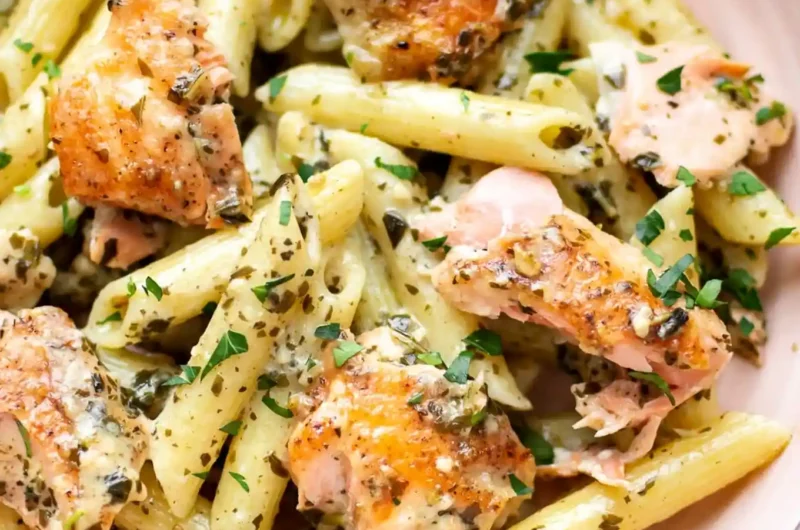
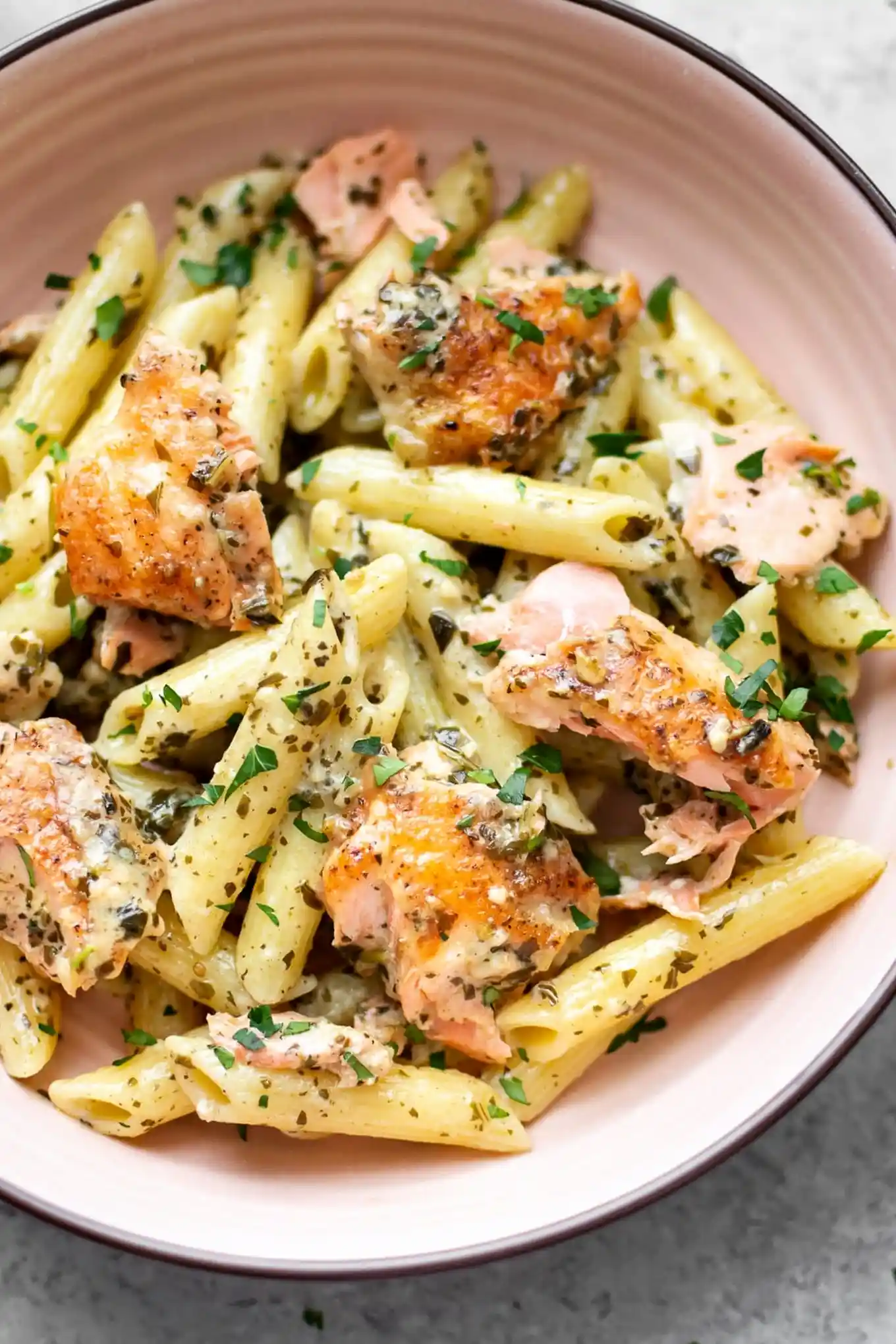
This creamy salmon pesto pasta is a fast and elegant dish perfect for weeknight dinners. It combines pan-seared salmon with a rich pesto cream sauce for a restaurant-quality meal at home.
List of ingredients
- 8 ounces uncooked pasta – penne is recommended to capture the sauce.
- 1 pound fresh salmon – skin removed or kept based on preference.
- 1/4 teaspoon garlic powder – used to season the fish directly.
- Salt & pepper to taste – essential for enhancing the salmon flavor.
- Flour – used for dredging to create a golden crust.
- 1 tablespoon olive oil – for high-heat searing.
- 1 tablespoon butter – adds richness and helps with browning.
- 1/3 cup chicken broth – used for deglazing the skillet.
- 1/3 cup pesto – use a high-quality jarred variety or homemade.
- 1/4 cup heavy/whipping cream – provides a luxurious, smooth texture.
- 1/2 teaspoon lemon juice – adds acidity to balance the richness.
- Freshly grated parmesan cheese – optional for serving.
step-by-step instructions
- Cook the pasta: Boil a pot of salted water and cook the pasta until al dente according to the package directions.
- Prepare the salmon: Sprinkle the salmon fillets with garlic powder, salt, and pepper, then coat all sides evenly with flour.
- Sear the fish: Heat olive oil and butter in a skillet over medium-high heat; cook the salmon for approximately 3 minutes per side until lightly golden.
- Degrease the pan: Move the salmon to a plate and pour out the excess fat from the skillet, ensuring you leave the browned bits attached to the bottom.
- Build the base: Return the pan to the burner, add chicken broth and pesto, and cook for 30 seconds while scraping the browned bits.
- Finish the sauce: Stir in the heavy cream and lemon juice, letting the mixture bubble for about one minute.
- Combine and simmer: Add the salmon back into the pan, break it into smaller pieces with a spoon, and simmer on low heat for 3-5 minutes until the fish is cooked through and the sauce thickens.
- Toss and serve: Drain the cooked pasta and toss it thoroughly with the sauce; serve immediately with optional parmesan cheese.
Mastering the Salmon Sear
Patting the Fish Dry for Better Browning
Before seasoning, use paper towels to pat the salmon fillets completely dry. Removing surface moisture prevents the fish from steaming in the pan, which allows for a superior golden-brown crust.
The Purpose of Dredging with Flour
Lightly coating the salmon in flour creates a thin barrier that protects the fish from sticking. It also helps the salmon develop a crispier exterior and slightly thickens the final sauce.
Managing Pan Heat to Prevent Sticking
Ensure the oil and butter are shimmering before adding the fish to the skillet. If the pan is too cold, the salmon will stick; if it is too hot, the butter will burn before the fish sears.
Knowing When to Flip the Fillets
Do not attempt to move the salmon until it releases naturally from the pan. Once a golden crust has formed, the fish will lift easily, indicating it is time to flip to the other side.
Handling Skin-On Salmon
If using skin-on salmon, sear the skin side first to get it crispy. If you prefer not to eat the skin, you can easily peel it off after the searing step before returning the fish to the sauce.
Optimizing Your Pesto Sauce
Choosing High-Quality Jarred Pesto
When using store-bought pesto, look for brands that list extra virgin olive oil and fresh basil as primary ingredients. Avoid varieties with excessive fillers or artificial flavorings to ensure a clean taste.
Balancing the Saltiness of Pesto
Pesto varies significantly in salt content depending on the brand or recipe. Taste your sauce before adding extra salt to the dish to avoid over-seasoning the final meal.
Maintaining a Vibrant Green Color
To keep the pesto from turning brown, avoid boiling the sauce for extended periods. Adding the cream and lemon juice at the end helps preserve the bright color and fresh basil flavor.
Adjusting Pesto for Creaminess
The ratio of pesto to cream determines the intensity of the basil flavor. If you prefer a milder taste, increase the heavy cream slightly or add a touch more chicken broth.
Controlling Oil Separation
If your pesto seems oily, whisk it thoroughly before adding it to the pan. The addition of heavy cream helps emulsify the oil, resulting in a cohesive and smooth sauce.
Pasta Selection and Preparation
Selecting the Best Pasta Shape for Sauce
Penne or rigatoni are ideal because their hollow centers and ridges trap the creamy pesto sauce. Shorter pasta shapes are also easier to toss with chunks of flaked salmon.
Achieving the Perfect Al Dente Texture
Cook your pasta for one minute less than the package directions suggest. Since the pasta will simmer briefly in the sauce, undercooking it slightly prevents it from becoming mushy.
The Importance of Salting the Pasta Water
Use a generous amount of salt in the boiling water to season the pasta from the inside out. This ensures the noodles taste flavorful even after being coated in the sauce.
Saving Pasta Water for Sauce Adjustment
Before draining the pasta, reserve a small cup of the starchy cooking water. If the final sauce becomes too thick, a splash of this water can loosen it without diluting the flavor.
Preventing Pasta from Sticking After Draining
Do not rinse the pasta after draining, as the surface starch helps the sauce cling to the noodles. Toss the pasta immediately into the skillet to keep it moist.
Sauce Consistency and Flavor Balance
The Role of Heavy Cream in Texture
Heavy cream provides a luxurious mouthfeel and mellows the sharp intensity of the basil and garlic. It acts as a stabilizer, preventing the pesto from separating during the simmering process.
Using Lemon Juice to Cut Through Richness
The acidity of lemon juice is crucial for balancing the fat from the butter, cream, and salmon. It brightens the overall flavor profile and prevents the dish from tasting too heavy.
Deglazing the Pan for Maximum Flavor
Adding chicken broth to the hot pan allows you to scrape up the fond, or browned bits, from the salmon. This process incorporates deep, savory flavors back into the sauce.
Controlling the Reduction Process
Simmer the sauce gently rather than boiling it vigorously. A slow reduction allows the flavors to meld and the sauce to thicken without breaking the emulsion of the cream.
Adjusting the Sauce Thickness
If the sauce is too thin, simmer it for an additional minute before adding the pasta. If it is too thick, whisk in an extra tablespoon of chicken broth or cream to reach your desired consistency.
Ingredient Substitutions and Variations
Using Alternative Broths
While chicken broth is recommended for depth, vegetable broth is an excellent substitute. It maintains the savory quality of the sauce while remaining a plant-based liquid option.
Adding Fresh Vegetables for Nutrition
Chopped asparagus or baby spinach are great additions to this dish. Sauté asparagus after searing the salmon, or stir in spinach during the final minute of sauce simmering.
Swapping Salmon for Other Fish
Trout or cod can be used as alternatives to salmon. While the flavor profile will change, the dredging and searing method remains the same for most firm white fish.
Alternatives to Heavy Cream
If you prefer a lighter sauce, you can omit the cream and use a bit more pasta water and butter. Avoid using milk or half-and-half, as the acidity from the lemon may cause them to curdle.
Changing the Type of Cheese
While parmesan is traditional, Pecorino Romano offers a saltier, sharper punch. Grana Padano is another great option for a slightly milder, nutty flavor.
Serving and Pairing Recommendations
Best Breads to Serve on the Side
Crusty sourdough or warm garlic knots complement the creamy sauce perfectly. These breads are ideal for scooping up any remaining pesto sauce left on the plate.
Fresh Salad Pairings for Balance
A simple arugula salad with a lemon vinaigrette provides a peppery contrast to the rich pasta. A classic Caesar salad also pairs well with the flavor profile of the salmon.
Adding a Garnish of Fresh Herbs
Finish the dish with a sprinkle of freshly chopped parsley or basil leaves. This adds a pop of color and a fresh aromatic element to the plated meal.
Plating for an Elegant Presentation
Use shallow bowls to serve the pasta, ensuring the flaked salmon is distributed evenly on top. A final dusting of parmesan and a lemon wedge on the side enhance the visual appeal.
Suggesting Non-Alcoholic Beverage Pairings
A sparkling water with a twist of lime or a chilled white grape juice pairs well. These options provide the necessary acidity to cleanse the palate between bites.
Storage and Preservation
Proper Refrigeration Methods
Store leftover pasta in an airtight glass container to maintain freshness. Ensure the dish is cooled slightly before sealing to prevent excess moisture from building up inside the container.
Maximum Safe Storage Duration
Keep the salmon pesto pasta in the refrigerator for 2 to 3 days. Because of the cream and fish, it is important to consume the leftovers within this timeframe for safety.
Why Freezing is Not Recommended
Freezing this dish can change the texture of the salmon, making it rubbery. Additionally, the cream-based sauce is likely to separate upon thawing, affecting the quality.
Preventing Fish from Overcooking During Reheat
Reheat the pasta gently over low heat on the stove rather than using a microwave. Add a splash of cream or broth to restore the sauce’s silkiness without overcooking the salmon.
Common Cooking Troubleshooting
What to Do if the Sauce Curdles
Curdling usually happens if the heat is too high or the cream is too thin. To fix it, remove the pan from heat and whisk in a small amount of warm pasta water or extra cream.
Handling Salmon That Breaks Apart Too Early
If the salmon flakes too quickly, you may be stirring too aggressively. Use a gentle folding motion when combining the fish with the sauce to keep the chunks intact.
Fixing a Sauce That Is Too Salty
If the pesto and broth make the sauce too salty, add a squeeze more lemon juice or a pinch of sugar. You can also stir in a bit more heavy cream to dilute the saltiness.
Adjusting for Overcooked Pasta
If the pasta is already overcooked, reduce the simmering time in the sauce. Toss the noodles in quickly and serve immediately to prevent them from softening further.
Managing Pesto That Separates
If you notice oil pooling on top of the sauce, whisk the mixture vigorously over low heat. The fat in the cream should eventually bind the pesto oil back into the sauce.
Frequently Asked Questions
Can I use frozen salmon?
Yes, but ensure the salmon is fully thawed and patted very dry before dredging. Thawing in the refrigerator overnight is the best method to preserve the fish’s texture.
How do I make this for more people?
Double the ingredients and use a larger skillet to avoid overcrowding the salmon. Sear the fish in batches to ensure each piece gets a proper golden crust.
Can I use a different type of cream?
Heavy whipping cream is best for stability and texture. While you can use coconut cream for a dairy-free alternative, be aware that it will add a distinct coconut flavor to the dish.
Is the flour dredging necessary?
While optional, the flour is highly recommended for achieving a professional sear. It prevents sticking and adds a slight thickness to the sauce that enhances the overall experience.
Can I use a slow cooker?
This specific recipe is designed for a skillet to achieve a sear on the fish. A slow cooker would result in poached salmon and a different sauce consistency, which is not recommended for this version.
Print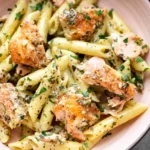
Creamy Salmon Pesto Pasta
- Total Time: 30 minutes
- Yield: 4 servings 1x
- Diet: General
Description
This salmon pesto pasta recipe comes together fast and makes an elegant meal that’s great for a quick weeknight dinner. You can either use jarred or homemade pesto!
Ingredients
- 8 ounces uncooked pasta
- 1 pound fresh salmon
- 1/4 teaspoon garlic powder
- Salt & pepper (to taste)
- Flour (for dredging)
- 1 tablespoon olive oil
- 1 tablespoon butter
- 1/3 cup chicken broth or vegetable broth
- 1/3 cup pesto
- 1/4 cup heavy/whipping cream
- 1/2 teaspoon lemon juice
- Freshly grated parmesan cheese (optional)
Instructions
- Boil: Boil a salted pot of water for your pasta and cook it al dente according to package directions.
- Season: Sprinkle the salmon with the garlic powder and some salt & pepper. Coat it in flour on all sides.
- Sear: In a skillet, heat the oil and butter over medium-high heat. Cook the salmon for about 3 minutes/side until lightly golden.
- Remove: Take the pan off the heat. Remove the salmon to a plate and set aside. Pour the fat out of the skillet, but leave the nice browned bits that are stuck on the bottom of the pan.
- Deglaze: Add the chicken broth and pesto and return the pan to the burner. Cook for about 30 seconds while scraping up the brown bits from the bottom of the pan.
- Simmer: Add in the cream and lemon juice and let the sauce bubble for about a minute. Add the salmon back in and break it into pieces with your spoon. Reduce the heat and let it gently cook for another 3-5 minutes or so until the salmon is cooked through and the sauce thickens up a bit more.
- Combine: Drain the pasta and toss it with the sauce. Serve immediately with freshly grated parmesan cheese if desired.
Notes
I don’t recommend subbing the cream for milk or half-and-half because the sauce won’t be the same, and they are likely to curdle. You can leave it out if you need to. Some jarred pestos already have lemon in it, so if yours is particularly lemony, you may want to skip it. If you have skin-on salmon and don’t want to eat it, you can easily peel it off after you transfer it to a plate.
- Prep Time: 10 minutes
- Cook Time: 20 minutes
- Category: Main Course
- Method: Pan Frying
- Cuisine: American
Nutrition
- Serving Size: 1 serving
- Calories: 567 kcal
- Sugar: 2 g
- Sodium: 349 mg
- Fat: 28 g
- Saturated Fat: 8 g
- Unsaturated Fat: 20 g
- Trans Fat: 0 g
- Carbohydrates: 46 g
- Fiber: 2 g
- Protein: 32 g
- Cholesterol: 92 mg
Keywords: salmon pesto pasta, creamy salmon pasta, easy dinner, pesto salmon