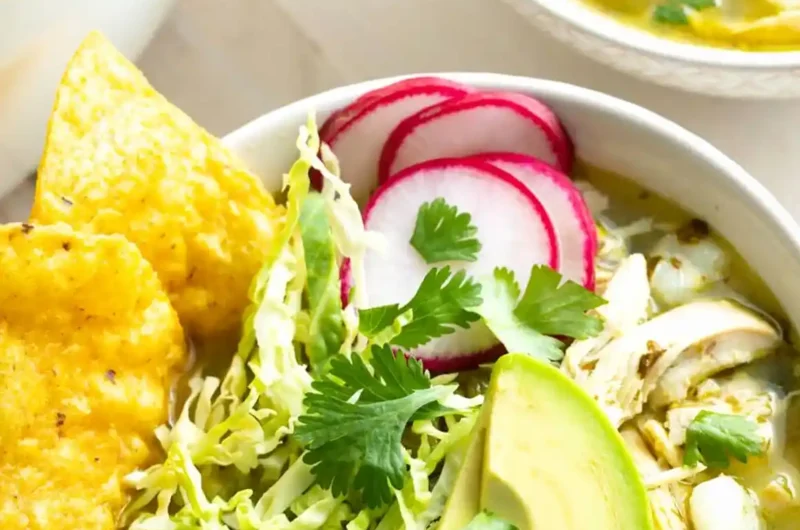
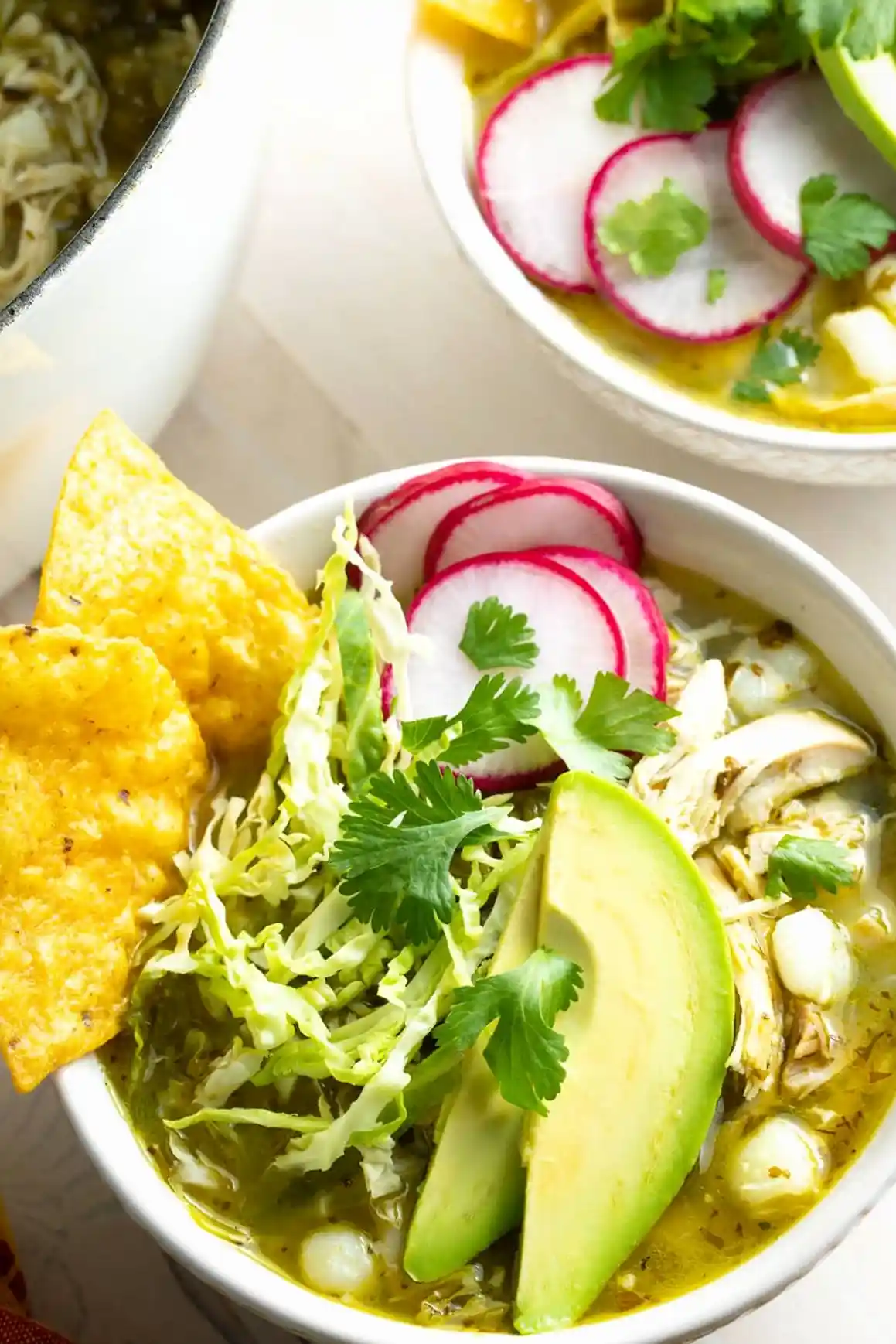
This Green Chicken Pozole is a rich, savory stew characterized by its tangy tomatillo base and hearty hominy. It is a satisfying one-pot meal that balances mild spicy peppers with fresh herbs and tender chicken.
List of ingredients
- 2 tablespoons olive oil – used for sautéing the aromatic base.
- 1 large sweet onion – peeled and chopped.
- 6-8 cloves garlic – minced for deep flavor.
- 6 poblano peppers – seeded and chopped.
- 2-3 jalapeno peppers – seeded and chopped, optional for extra heat.
- 1/2 cup chopped cilantro – adds a fresh, herbal note.
- 3 pounds boneless chicken thighs – provides a tender and juicy texture.
- 1 1/2 pounds tomatillos – peeled and quartered for tanginess.
- 2 bay leaves – adds a subtle aromatic depth.
- 1 tablespoon dried oregano – provides earthy seasoning.
- 6 cups chicken broth or water – the liquid base for the stew.
- 2 – 15 ounce cans white hominy – drained and rinsed thoroughly.
- Salt and pepper – for seasoning to taste.
- Garnishes: tortilla chips, shredded cabbage, lime wedges, sliced avocado, sliced radishes, and chopped cilantro.
step-by-step instructions
- Sauté Aromatics: Place a heavy 6-8 quart dutch oven over medium heat and add the olive oil. Add the chopped onion and garlic, sautéing for 2 minutes. Then, stir in the chopped poblanos, jalapenos, and cilantro, and sauté for another 8 minutes while stirring regularly to prevent burning.
- Combine Main Ingredients: Place the whole chicken thighs, quartered tomatillos, bay leaves, dried oregano, chicken broth, and 1 teaspoon of salt into the pot.
- Simmer: Cover the pot with a tight-fitting lid and bring the liquid to a boil. Immediately lower the heat to a simmer and cook for 50-60 minutes, keeping the pot covered until the chicken is tender enough to shred.
- Shred Chicken: Carefully remove the chicken thighs and the bay leaves from the pot. Use two forks or tongs to shred the chicken into small, bite-sized chunks.
- Final Assembly: Return the shredded chicken to the pot and stir in the rinsed hominy. Simmer for another 2-3 minutes to ensure the hominy is heated through. Taste the stew and season with additional salt and pepper as needed.
- Garnish and Serve: Ladle the hot pozole into bowls. Top each serving with tortilla chips, shredded cabbage, sliced avocado, radishes, lime wedges, and fresh cilantro.
Managing Heat and Spice Levels
Evaluating Poblano Pepper Heat
Poblano peppers are generally mild, but their heat levels can vary significantly between individual peppers. Before adding them to the pot, smell the chopped peppers; a stronger, sharper scent often indicates a spicier pepper. If you prefer a very mild stew, consider using only half of the chopped poblanos.
Controlling Jalapeno Intensity
The jalapenos in this recipe are optional and provide the primary source of heat. To keep the spice low while retaining the flavor, remove all seeds and white membranes from the peppers before chopping. For a spicier version, include a few seeds or increase the number of peppers to four.
Adjusting Spice After Cooking
If the stew is too mild after the final simmer, you can stir in a small amount of diced fresh jalapenos or a dash of hot sauce. If it is too spicy, adding more chicken broth or an extra squeeze of lime juice can help balance the heat. Avoid adding sugar, as it may clash with the tangy tomatillos.
Ingredient Selection and Preparation
Choosing the Right Chicken Cut
Boneless chicken thighs are recommended because they contain more fat and connective tissue than breasts, allowing them to remain moist during the long simmering process. If you choose to use chicken breasts, reduce the simmering time by 10-15 minutes to prevent the meat from becoming dry and stringy.
Preparing Fresh Tomatillos
Tomatillos have a sticky residue on their husks that transfers to the fruit. Once you remove the papery husks, rinse the tomatillos under warm water and pat them dry before quartering. This removes the stickiness and ensures a cleaner flavor in the broth.
Handling Canned Hominy
Canned hominy is processed in a brine that can have a strong, metallic, or overly salty taste. Always drain the hominy into a colander and rinse it under cold running water for at least 30 seconds. This ensures that the natural flavor of the corn does not clash with the green broth.
Using Sweet Onions for Depth
Sweet onions, such as yellow or Vidalia varieties, provide a softer, more balanced sweetness when sautéed compared to white onions. This sweetness helps counteract the acidity of the tomatillos. Ensure the onion is chopped uniformly to allow for even caramelization during the initial sauté.
Serving Suggestions and Pairings
Optimizing Fresh Garnishes
The contrast of textures is essential for an authentic pozole experience. Shredded cabbage provides a crisp crunch, while sliced radishes add a peppery bite. Arrange these garnishes in separate bowls so guests can customize the texture and flavor of their own servings.
Adding Creamy Elements
Sliced avocado adds a rich, buttery quality that cuts through the acidity of the green broth. For an alternative, a dollop of sour cream or Greek yogurt can be added to the top of the bowl. This creates a creamy finish that complements the spicy notes of the poblano peppers.
Balancing with Citrus
Fresh lime wedges are not just for decoration; the citric acid brightens the entire dish. Squeezing fresh lime juice over the stew right before eating enhances the tanginess of the tomatillos. This step is crucial for cutting through the richness of the chicken thighs.
Suggested Side Dishes
While pozole is a complete meal, it pairs well with crispy shrimp quesadillas for added protein and texture. Puffy tortillas or toasted corn tortillas are also excellent options for dipping into the broth. A side of simple Mexican street corn can also complement the flavors.
Storage and Reheating Guidelines
Refrigeration Process
Allow the pozole to cool completely to room temperature before transferring it to an airtight container. This prevents condensation from forming, which can dilute the flavor. Store the stew in the refrigerator for up to 5 days, as the flavors often deepen and improve after a day of resting.
Freezing for Long Term
This recipe freezes exceptionally well for up to 3 months. Store the stew in freezer-safe containers or heavy-duty freezer bags, leaving a small amount of space at the top for expansion. Do not freeze the fresh garnishes, as they will lose their texture and flavor.
Best Reheating Methods
For the best results, reheat the pozole in a pot over medium-low heat on the stovetop. Add a splash of chicken broth or water if the stew has thickened too much during storage. Avoid reheating in the microwave on high power, as this can cause the chicken to toughen.
Managing Separated Liquids
It is normal for some fats to separate and rise to the top during cooling. You can either skim these off with a spoon before reheating or stir them back in for extra richness. If the broth appears too thick after freezing, whisk in a tablespoon of water at a time until the desired consistency is reached.
Troubleshooting and FAQ
Can I use chicken breast instead of thighs?
Yes, you can use boneless, skinless chicken breasts. However, you must monitor the cooking time closely and reduce the simmer period to avoid overcooking. Thighs are preferred for their ability to withstand longer cooking times without losing moisture.
What can I use if I cannot find tomatillos?
If tomatillos are unavailable, you can use a combination of green tomatoes and a tablespoon of lime juice. While the flavor is slightly different, the green tomatoes provide the necessary acidity and color to mimic the original recipe.
How do I prevent the chicken from becoming dry?
Ensure the pot remains covered with a heavy lid during the simmering process to trap steam. Also, check the internal temperature of the chicken; once it reaches 165 F, it is safe to eat. Overcooking beyond this point can lead to dry meat.
Can this recipe be adapted for a slow cooker?
Yes, you can adapt this for a slow cooker by sautéing the aromatics first in a pan. Combine the sautéed vegetables, chicken, broth, and seasonings in the crockpot and cook on low for 6-8 hours or high for 3-4 hours. Stir in the hominy during the last 30 minutes of cooking.
How can I make the broth thicker?
If you prefer a thicker consistency, you can blend a small portion of the cooked tomatillos and hominy and stir the puree back into the pot. Alternatively, mashing a few of the hominy kernels against the side of the pot will release starches that naturally thicken the soup.
Why is my pozole too acidic?
Too much acidity usually comes from the tomatillos or too much lime juice. To balance this, add a pinch of salt or a small amount of additional chicken broth. In some cases, a very small pinch of brown sugar can neutralize excess acidity without making the stew sweet.
Cooking Tips for Success
Maximizing Flavor Extraction
Sautéing the onions, garlic, and peppers for a full 10 minutes is critical. This process, known as sweating, allows the natural sugars in the vegetables to release and creates a deeper foundation of flavor. Do not rush this step or the broth may taste raw.
Proper Shredding Technique
To achieve the best texture, remove the chicken to a separate plate or bowl rather than shredding it inside the pot. This prevents the meat from overcooking in the hot liquid while you work. Use two forks to pull the meat apart along the natural grain of the muscle.
Ensuring Even Hominy Texture
Since canned hominy is already cooked, it only needs to be warmed through. Adding it at the very end prevents the kernels from becoming too mushy or breaking apart. A simmer of 2-3 minutes is sufficient to integrate the corn into the stew.
Maintaining the Vibrant Green Color
To keep the stew looking bright green, avoid over-boiling the broth once the tomatillos have been added. A gentle simmer preserves the chlorophyll in the peppers and herbs. Adding fresh cilantro as a garnish at the end also reinforces the visual appeal.
Print
Green Chicken Pozole Verde
- Total Time: 85 minutes
- Yield: 8 servings 1x
- Diet: Gluten-Free
Description
This easy Green Chicken Posole recipe features hominy, poblano peppers, and fresh tomatillos for a bold, flavorful Pozole Verde de Pollo.
Ingredients
- 2 tablespoons olive oil
- 1 large sweet onion, peeled and chopped
- 6–8 cloves garlic, minced
- 6 poblano peppers, seeded and chopped
- 2–3 jalapeno peppers, seeded and chopped (optional)
- ½ cup chopped cilantro
- 3 pounds boneless chicken thighs
- 1 ½ pounds tomatillos, peeled and quartered
- 2 bay leaves
- 1 tablespoon dried oregano
- 6 cups chicken broth or water
- 2 – 15 ounce cans white hominy, drained and rinsed
- Salt and pepper
- Garnishes: tortilla chips, shredded cabbage, lime wedges, sliced avocado, sliced radishes, chopped cilantro
Instructions
- Step: Set a heavy 6-8 quart dutch oven over medium heat, add the oil, and sauté chopped onion and garlic for 2 minutes.
- Step: Add chopped poblanos, jalapenos, and cilantro, and sauté for another 8 minutes, stirring regularly.
- Step: Place the chicken thighs, tomatillos, bay leaves, oregano, chicken broth, and 1 teaspoon salt in the pot, cover with a heavy lid, bring to a boil, then simmer for 50-60 minutes until the chicken is soft enough to shred.
- Step: Remove the chicken thighs and bay leaves, then shred the chicken into small chunks using tongs or forks.
- Step: Add the shredded chicken and rinsed hominy back to the pot, stir to combine, and simmer another 2-3 minutes.
- Step: Ladle the posole into bowls and garnish with tortilla chips, shredded cabbage, sliced avocado, radishes, lime wedges, and cilantro.
Notes
Poblano peppers are usually not spicy, but check them before adding. If you prefer a lighter option, chicken breasts can be used instead of thighs.
- Prep Time: 15 minutes
- Cook Time: 70 minutes
- Category: Main Course
- Method: Simmering
- Cuisine: Mexican
Nutrition
- Serving Size: 1 bowl
- Calories: 477 kcal
- Sugar: 8 g
- Sodium: 785 mg
- Fat: 33 g
- Saturated Fat: 8 g
- Unsaturated Fat: 25 g
- Trans Fat: 0 g
- Carbohydrates: 15 g
- Fiber: 4 g
- Protein: 31 g
- Cholesterol: 167 mg
Keywords: Pozole Verde, Chicken Posole, Mexican stew, hominy, tomatillos