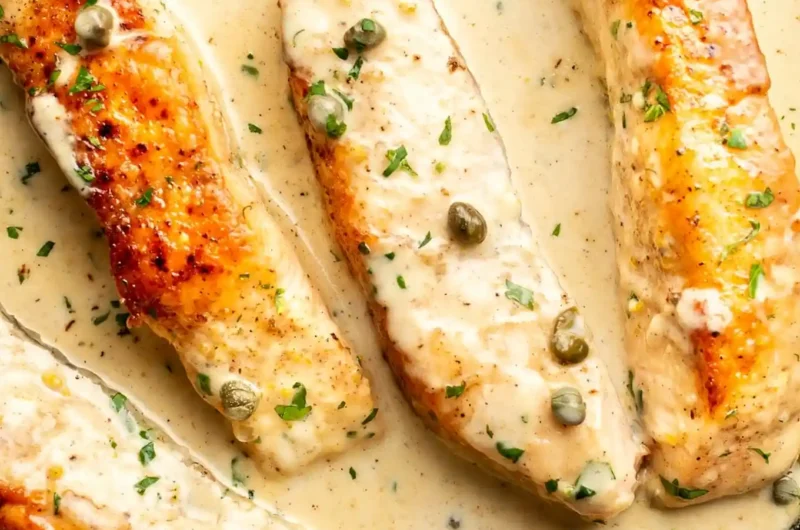
This quick creamy salmon piccata brings a bright, buttery flavor to your dinner table in just 20 minutes. It is a simple way to prepare tender fish in a rich lemon caper sauce.
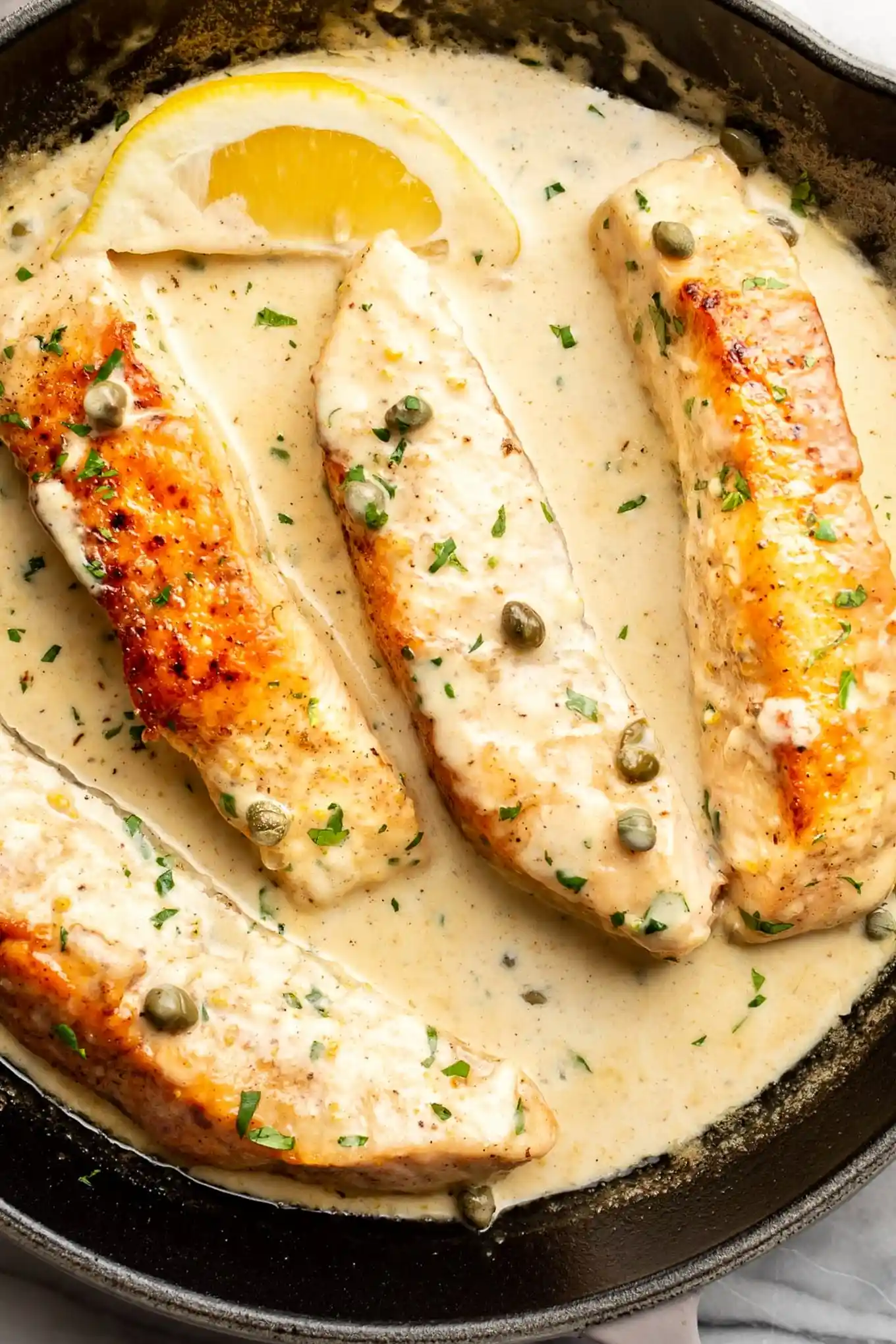
List of ingredients
- 1 pound fresh salmon (cut into 4 pieces) – center-cut fillets provide uniform cooking.
- 1/4 teaspoon garlic powder – adds a subtle savory depth.
- Salt & pepper (to taste) – for basic seasoning.
- Flour (for dredging) – creates a crust and thickens the sauce.
- 2 tablespoons butter – used for searing and richness.
- 1 tablespoon olive oil – prevents butter from burning.
- 1/2 cup chicken broth – used to deglaze the pan and build flavor.
- 2 tablespoons lemon juice + zest of 1 lemon – provides the essential acidity.
- 1-2 tablespoons brined capers (drained) – adds a salty, briny punch.
- 1 cup heavy/whipping cream – creates a luxurious, thick texture.
- Fresh chopped parsley (optional, for serving) – adds a fresh herbal finish.
step-by-step instructions
- Prepare the fish: Cut your salmon into 4 pieces. Sprinkle it with the garlic powder and season it generously with salt & pepper. Dredge each piece in flour on all sides.
- Sear the salmon: Add the butter and oil to a skillet over medium-high heat. When it’s hot, add the fish. Cook it for 3-4 minutes per side or until it’s browned. Be sure not to overcook the fish; it shouldn’t be cooked fully yet. Remove salmon to a plate and set aside.
- Reduce the base: Add the chicken broth, lemon juice, lemon zest, and capers to the pan. Let it cook for about 2 minutes, or until the liquid reduces by half.
- Thicken the sauce: Pour in the cream. Let it bubble for 2-3 minutes until it begins to thicken.
- Finish cooking: Place the salmon back into the pan. Cook for another 3-5 minutes, reducing the heat if necessary, until the fish is cooked through and flakes easily with a fork and the sauce has thickened.
- Final touch: Season with extra salt & pepper as needed. Serve immediately with fresh parsley sprinkled over top if desired.
Practical Cooking Tips
Understanding Salmon Color Changes
Watch the sides of the salmon as it sears in the pan. The fish will transition from a bright, translucent deep pink to an opaque light pink. This color change indicates that the heat is penetrating the center of the fillet.
Managing Pan Temperature and Sticking
Ensure the butter and oil are shimmering before adding the fish to prevent sticking. If the salmon feels stuck when you try to flip it, leave it alone for another 30 to 60 seconds. The fish will naturally release from the pan surface once a proper sear has formed.
Working with Salmon Skin
If your salmon fillets have skin on them and you prefer not to eat it, leave the skin on during the searing process. The skin protects the delicate flesh from direct heat. Simply peel the skin off with a spatula after the first searing step before setting the fish aside.
The Importance of Patting Fish Dry
Before dredging the salmon in flour, use paper towels to pat the fillets completely dry. Excess moisture on the surface of the fish creates steam, which prevents a golden-brown crust from forming and can make the flour coating gummy.
Ingredient Alternatives and Swaps
Using Full-Fat Heavy Cream
Always use heavy cream or whipping cream for this sauce. The high fat content is necessary to stabilize the emulsion when combined with the acidic lemon juice. Using milk or half-and-half will likely cause the sauce to curdle or break during the simmering process.
Selecting the Best Broth
Low-sodium chicken broth is recommended to keep the salt levels balanced, as capers are naturally very salty. If you prefer a different flavor profile, vegetable broth is a suitable alternative that maintains the savory depth of the sauce.
Substituting for Brined Capers
If you do not have capers, finely chopped green olives can provide a similar briny and salty flavor. Alternatively, you can increase the amount of lemon zest and add a pinch of extra salt to mimic the sharp taste of capers.
Gluten-Free Dredging Options
For a gluten-free version, replace the all-purpose flour with almond flour or cornstarch. While the crust may be slightly different, these alternatives still help thicken the sauce and protect the salmon from overcooking.
Recommended Side Dishes
Pairing with Grains and Starches
Garlic mashed potatoes are an ideal pairing as they soak up the lemon cream sauce. Simple white rice, a creamy risotto, or buttered noodles also work well to balance the richness of the dish.
Choosing the Best Green Vegetables
Steamed broccolini or sautéed green beans provide a crisp texture that contrasts with the tender fish. Stovetop asparagus is another excellent choice, as the earthy flavor complements the brightness of the lemon.
Fresh Salad Accents
A side salad of arugula topped with shaved parmesan and a light vinaigrette cuts through the heaviness of the cream sauce. Mixed greens with a basic Italian-style dressing also provide a refreshing palate cleanser between bites.
Storage and Proper Reheating
Storing Leftovers in the Fridge
Place leftover salmon and sauce in an airtight glass container. It can be stored in the refrigerator for up to three days. Ensure the dish has cooled slightly before sealing the lid to prevent excessive condensation.
Gently Reheating Creamy Salmon
Avoid using a microwave, as high heat can cause the cream sauce to separate and the fish to become rubbery. Instead, place the salmon and sauce in a small saucepan over low heat. Add a tablespoon of water or broth to loosen the sauce as it warms.
Avoiding the Freezer
This recipe is not suitable for freezing. The emulsion of the cream sauce will break upon thawing, resulting in a grainy texture. Additionally, the texture of the salmon often becomes mushy after being frozen and thawed in a sauce.
Common Cooking Troubleshooting
Preventing the Sauce from Breaking
Keep the heat at a gentle simmer once the cream has been added. Do not allow the sauce to reach a rolling boil, as excessive heat can cause the fat to separate from the liquid, leaving the sauce looking oily.
Adjusting Sauce Consistency
If the sauce becomes too thick while simmering, whisk in a teaspoon of chicken broth or water to reach your desired consistency. If the sauce is too thin, let it simmer for an additional two minutes before returning the fish to the pan.
Avoiding Overcooked Fish
Use the flake test to determine when the salmon is done. Gently press a fork into the thickest part of the fillet; if the flesh separates easily along the natural lines, it is cooked through. Overcooking will result in a dry, chalky texture.
Frequently Asked Questions
Can I use frozen salmon fillets?
Yes, you can use frozen salmon, but it must be completely thawed before cooking. Thaw them in the refrigerator overnight and pat them dry with paper towels to ensure they sear correctly in the pan.
What is the best tool for zesting a lemon?
A microplane or a fine zester is the best tool for this recipe. It allows you to remove only the bright yellow outer layer of the peel without hitting the bitter white pith underneath.
Can I make this without flour?
You can skip the flour, but the salmon will not have a golden crust and the sauce will be thinner. If you omit the flour, you may need to simmer the sauce slightly longer to achieve the desired thickness.
Which salmon cut is best for piccata?
Center-cut fillets are ideal because they have a consistent thickness. This ensures that every piece of fish cooks at the same rate and prevents the thinner tail ends from overcooking.
Print
Creamy Salmon Piccata
- Total Time: 20 minutes
- Yield: 4 servings 1x
- Diet: General
Description
This creamy salmon piccata recipe is a simple yet decadent weeknight treat! It’s easy to make this tender salmon in a bright lemon caper cream sauce.
Ingredients
- 1 pound fresh salmon (cut into 4 pieces)
- 1/4 teaspoon garlic powder
- Salt & pepper (to taste)
- Flour (for dredging)
- 2 tablespoons butter
- 1 tablespoon olive oil
- 1/2 cup chicken broth
- 2 tablespoons lemon juice + zest of 1 lemon
- 1–2 tablespoons brined capers (drained)
- 1 cup heavy/whipping cream
- Fresh chopped parsley (optional, for serving)
Instructions
- Step: Cut your salmon into 4 pieces. Sprinkle it with the garlic powder and season it generously with salt & pepper. Dredge each piece in flour on all sides.
- Step: Add the butter and oil to a skillet over medium-high heat. When it’s hot, add the fish. Cook it for 3-4 minutes/side or until it’s browned. Remove salmon to a plate and set aside.
- Step: Add the chicken broth, lemon juice/zest, and capers to the pan. Let it cook for about 2 minutes (or until it reduces by half).
- Step: Pour in the cream. Let it bubble for 2-3 minutes.
- Step: Return the salmon back into the pan. Cook for another 3-5 minutes or so until it’s cooked through and the sauce has thickened up some more.
- Step: Season with extra salt & pepper as needed. Serve immediately with fresh parsley sprinkled over top if desired.
Notes
The timing on this recipe is designed for a piece of salmon that’s about 1″ thick. If your salmon has skin on it and you don’t want to eat it, simply peel it off after the searing step. Do not substitute the heavy cream for lower fat options to prevent the sauce from curdling.
- Prep Time: 5 minutes
- Cook Time: 15 minutes
- Category: Main Course
- Method: Pan-Searing
- Cuisine: Italian American
Nutrition
- Serving Size: 1 serving
- Calories: 458 kcal
- Sugar: 1 g
- Sodium: 286 mg
- Fat: 39 g
- Saturated Fat: 19 g
- Unsaturated Fat: 20 g
- Trans Fat: 0 g
- Carbohydrates: 4 g
- Fiber: 1 g
- Protein: 24 g
- Cholesterol: 159 mg
Keywords: creamy salmon piccata, lemon caper salmon, pan seared salmon, Italian American