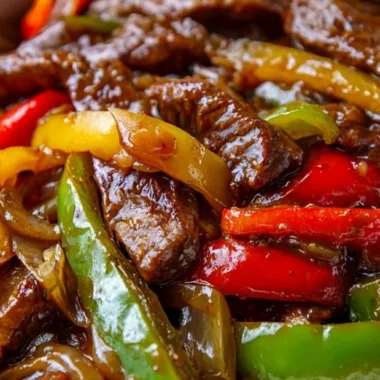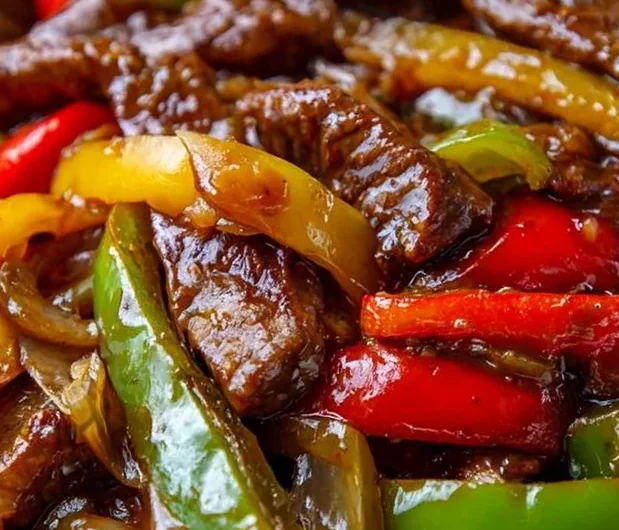
This slow cooker pepper steak provides a hearty dinner with minimal effort. Tender beef strips and vibrant bell peppers simmer in a savory-sweet glaze for a comforting meal.
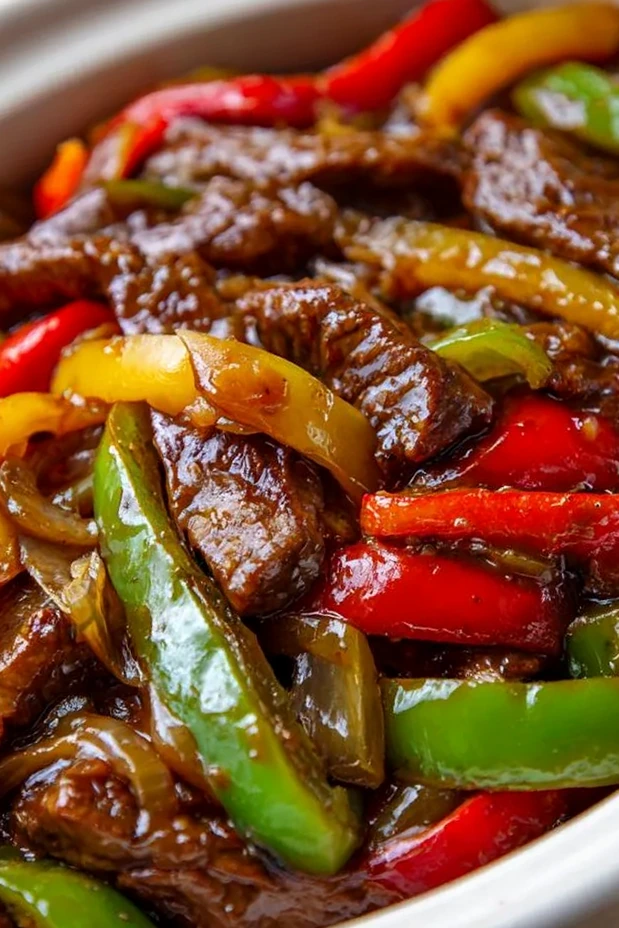
List of ingredients
- 2 lbs beef sirloin strips or sirloin steak, cut into slices – cut against the grain for maximum tenderness.
- 3 large colorful bell peppers, sliced thick – use a mix of red, yellow, and green for visual appeal.
- 1 large onion, sliced – sweet onions like Vidalia work best.
- 3 garlic cloves – minced fresh for the best aromatic flavor.
- 3/4 cup beef broth – used as the liquid base for the sauce.
- 3 beef bouillon cubes – adds deep, concentrated savory notes.
- 1/4 cup soy sauce – provides saltiness and umami.
- 2 teaspoon Worcestershire sauce – adds a complex, tangy depth.
- 2 tablespoon honey – balances the salt with a touch of sweetness.
- 1 teaspoon ground ginger – adds a warm, zesty undertone.
- 1/2 teaspoon black pepper – for a mild, earthy spice.
- 1/2 teaspoon salt – to enhance all other flavors.
- 2 tablespoon cornstarch or flour – used to thicken the sauce into a glaze.
step-by-step instructions
- Prepare the sauce: Combine hot beef broth, bouillon cubes, soy sauce, Worcestershire sauce, honey, ground ginger, black pepper, salt, and cornstarch or flour in a mixing glass. Stir vigorously to ensure the bouillon cubes are fully crushed and the thickener is dissolved.
- Layer the ingredients: Place the beef strips into the bottom of the slow cooker. Pour the prepared sauce evenly over the meat. Arrange the sliced peppers, onions, and garlic on top of the beef.
- Cook the meal: Cover and set the slow cooker to LOW for 6 hours or HIGH for 3 hours. If you are available, stir the ingredients gently halfway through the cooking time to distribute the sauce.
- Finalize and serve: Once the cooking time is complete, stir everything well to combine the vegetables and thickened sauce. Transfer to a serving dish and serve over rice, noodles, or mashed potatoes.
Maximizing Beef Tenderness
Slicing Against the Grain
To ensure the beef is tender, identify the muscle fibers running through the steak. Slice the meat perpendicular to these lines, which breaks the long fibers into shorter segments. This process makes the meat much easier to chew after slow cooking.
Selecting the Right Beef Cut
Sirloin is the preferred choice for this recipe because it balances flavor and tenderness. If sirloin is unavailable, flank steak is a viable alternative, though it requires precise slicing. Avoid using extremely lean cuts as they may become dry during the long cooking process.
Managing Slicing Thickness
Aim for strips that are approximately half an inch thick. Slices that are too thin may disintegrate during the six-hour cook time on low. Thicker slices may take longer to absorb the flavors of the sauce.
Sauce Consistency and Flavor Control
Achieving a Thick Glaze
Cornstarch is the best option for a glossy, silkier sauce. If the sauce remains too thin after cooking, create a slurry by mixing one tablespoon of cornstarch with two tablespoons of cold water. Stir this into the slow cooker and cook on HIGH for an additional 15 minutes.
Reducing Sodium Levels
To lower the salt content, substitute regular soy sauce with low-sodium soy sauce or coconut aminos. You can also use a no-salt-added beef broth and reduce the number of bouillon cubes. These changes maintain the flavor profile while reducing the total sodium intake.
Balancing Saltiness with Acid
If the final sauce tastes overly salty, stir in a teaspoon of brown sugar or a splash of apple cider vinegar. The acidity or extra sweetness helps neutralize the salt perception on the palate. This is a quick fix that does not require adding more bulk to the dish.
Adding Spicy Elements
For those who prefer more heat, add half a teaspoon of red pepper flakes to the sauce mixture. Alternatively, stir in a tablespoon of Sriracha or minced fresh jalapeños during the layering process. This adds a spicy kick that complements the sweetness of the honey.
Vegetable Preparation and Variations
Preventing Mushy Peppers
Cut the bell peppers into thick strips of about half an inch. Slicing them too thinly causes them to break down and become mushy over several hours. Keeping them thick allows them to retain a slight crunch and maintain their vibrant color.
Integrating Additional Vegetables
Sliced mushrooms and carrots are excellent additions that complement the beef. Add these alongside the peppers at the beginning of the process. For quicker-cooking vegetables like zucchini or snow peas, add them during the last 30 minutes of cooking.
Optimizing Garlic Usage
Freshly minced garlic provides the most pungent and aromatic flavor. If using jarred minced garlic, stir it directly into the sauce rather than layering it on top. This prevents the small pieces from burning or becoming too intense in one spot.
Choosing Pepper Colors
Using a combination of red, yellow, and green peppers creates a visually appealing dish. Red and yellow peppers tend to be sweeter, while green peppers offer a more bitter, earthy taste. A mix of all three provides a well-rounded flavor profile.
Serving and Pairing Ideas
Classic Grain Pairings
Fluffy white or brown rice is the most traditional accompaniment, as it absorbs the savory sauce. Wide egg noodles also work well, providing a buttery base for the beef. For a lighter option, try quinoa or farro for added texture and nutrition.
Low-Carb Base Options
Cauliflower rice is an excellent substitute for those avoiding grains, as it captures the sauce without adding many calories. Sautéed zucchini noodles or a bed of steamed spinach are also healthy alternatives. These options keep the meal satisfying while reducing the carbohydrate count.
Potato Side Dish Suggestions
Creamy mashed potatoes offer a comforting contrast to the savory-sweet glaze of the steak. Baked potatoes or roasted potato wedges are also great options. The starch in the potatoes helps balance the intensity of the soy and ginger flavors.
Adding Fresh Garnishes
Top the finished dish with toasted sesame seeds for a nutty crunch. Sliced green onions or chopped fresh parsley add a burst of color and a fresh, sharp contrast to the rich sauce. A drizzle of toasted sesame oil just before serving can enhance the aroma.
Storage and Preservation
Refrigeration Guidelines
Store leftover pepper steak in airtight containers, preferably glass to avoid odors. Ensure the food is cooled quickly by spreading it in a shallow container before sealing. The dish will remain fresh and safe to eat for up to three days in the refrigerator.
Freezing for Long-Term Storage
This recipe is freezer-friendly and can be stored for up to two months. Portion the meal into freezer-safe bags and remove as much air as possible to prevent freezer burn. Thaw the beef overnight in the refrigerator before reheating.
Preventing Sauce Separation
When storing the dish, the sauce may slightly separate or thicken further in the fridge. This is normal and will resolve once the meat is heated. Avoid over-stirring the leftovers while cold to keep the pepper strips intact.
Reheating Instructions
Microwave Reheating Method
Place a portion of the steak in a microwave-safe dish and add one tablespoon of water or beef broth. Cover the dish loosely with a lid or microwave-safe wrap to trap steam. Heat in one-minute bursts, stirring in between, until the sauce is bubbling and the meat is hot.
Stovetop Reheating Method
Transfer the leftovers to a skillet over medium-low heat. Add a splash of beef broth or water to loosen the sauce and prevent sticking. Stir frequently until the dish is heated through, which typically takes about five to seven minutes.
Maintaining Vegetable Texture During Reheat
Overheating can make the peppers excessively soft. To maintain some texture, reheat the beef and sauce first, then gently fold in the vegetables at the end. If you prefer a fresh crunch, you can add a few freshly sliced raw peppers to the hot dish.
Troubleshooting Common Issues
Solving Watery Sauce
Watery sauce often occurs if the beef was frozen or if the vegetables released too much moisture. To fix this, simmer the sauce in a pan on the stove to reduce it. Alternatively, use the cornstarch slurry method mentioned in the thickening section.
Addressing Tough Meat
If the beef remains tough, it is usually due to slicing with the grain or using a cut that is too lean. For future batches, ensure you cut perpendicular to the muscle fibers. If the meat is already cooked and tough, simmer it for another hour on low if the vegetables are still intact.
Fixing Overcooked Vegetables
If the peppers have turned to mush, there is no way to reverse the texture. To improve the presentation, you can stir in a handful of freshly sliced, raw bell peppers just before serving. The heat of the sauce will slightly soften them while adding a fresh crunch.
Frequently Asked Questions
Can I use frozen beef?
It is highly recommended to thaw the beef completely before adding it to the slow cooker. Adding frozen meat can lead to a watery sauce and may cause the meat to cook unevenly, resulting in a tougher texture.
Can I use a different sweetener?
Yes, brown sugar is a great substitute for honey and provides a similar depth of flavor. Maple syrup also works well, though it adds a distinct maple note. Use the same quantity as the honey called for in the recipe.
How do I make this gluten-free?
Replace the soy sauce with tamari or coconut aminos, which are naturally gluten-free. Ensure your beef broth and bouillon cubes are certified gluten-free. If using flour as a thickener, swap it for cornstarch or arrowroot powder.
Can I add other proteins?
While designed for beef, this sauce works well with chicken thighs or pork loin. Adjust the cooking time for chicken to about 4 hours on low. Ensure the protein is cut into similar sized pieces to ensure even cooking.
Is this recipe suitable for a meal prep?
Yes, this recipe is ideal for meal prep because the flavors often improve the next day. It reheats well and pairs easily with various grains, making it a convenient lunch option for the work week.
Print
Slow Cooker Savory Pepper Steak
- Total Time: 6 hours 15 minutes
- Yield: 6 servings 1x
- Diet: Low Lactose
Description
A simple and flavorful slow cooker pepper steak recipe with tender beef sirloin, colorful bell peppers, and a savory sauce.
Ingredients
- 2 lbs beef sirloin strips or sirloin steak, cut into slices
- 3 large colorful bell peppers, sliced thick
- 1 large onion, sliced
- 3 garlic cloves
- ¾ cup beef broth
- 3 beef bouillon cubes
- ¼ cup soy sauce
- 2 teaspoon Worcestershire sauce
- 2 tablespoon honey
- 1 teaspoon ground ginger
- ½ teaspoon black pepper
- ½ teaspoon salt
- 2 tablespoon cornstarch or flour
Instructions
- Step: Make the sauce. Combine hot beef broth, bouillon cubes, soy sauce, Worcestershire sauce, honey, ground ginger, black pepper, salt, and cornstarch/flour in a mixing glass. Stir well, crushing the bouillon cubes.
- Step: Place beef strips into the slow cooker. Pour sauce on top. Add peppers, onions, and garlic on top of the beef.
- Step: Set to LOW for 6 hours or HIGH for 3 hours. If possible, stir the ingredients halfway through.
- Step: When finished, stir well and transfer to a serving dish. Serve over rice or noodles or as a side with mashed or baked potatoes.
Notes
You can use any color of bell peppers for variety. For a thicker sauce, add an extra tablespoon of cornstarch. Leftovers store well in the fridge for up to 3 days.
- Prep Time: 15 minutes
- Cook Time: 6 hours
- Category: Main Dish
- Method: Slow Cooker
- Cuisine: American
Nutrition
- Serving Size: 1 serving
- Calories: 320 kcal
- Sugar: 8 g
- Sodium: 1200 mg
- Fat: 12 g
- Saturated Fat: 4 g
- Unsaturated Fat: 6 g
- Trans Fat: 0 g
- Carbohydrates: 18 g
- Fiber: 2 g
- Protein: 34 g
- Cholesterol: 85 mg
Keywords: crock pot pepper steak, slow cooker beef, hearty dinner, beef sirloin, pepper steak